Government EV Fleet and Charging Infrastructure Maintenance
By Taylor on March 10, 2026
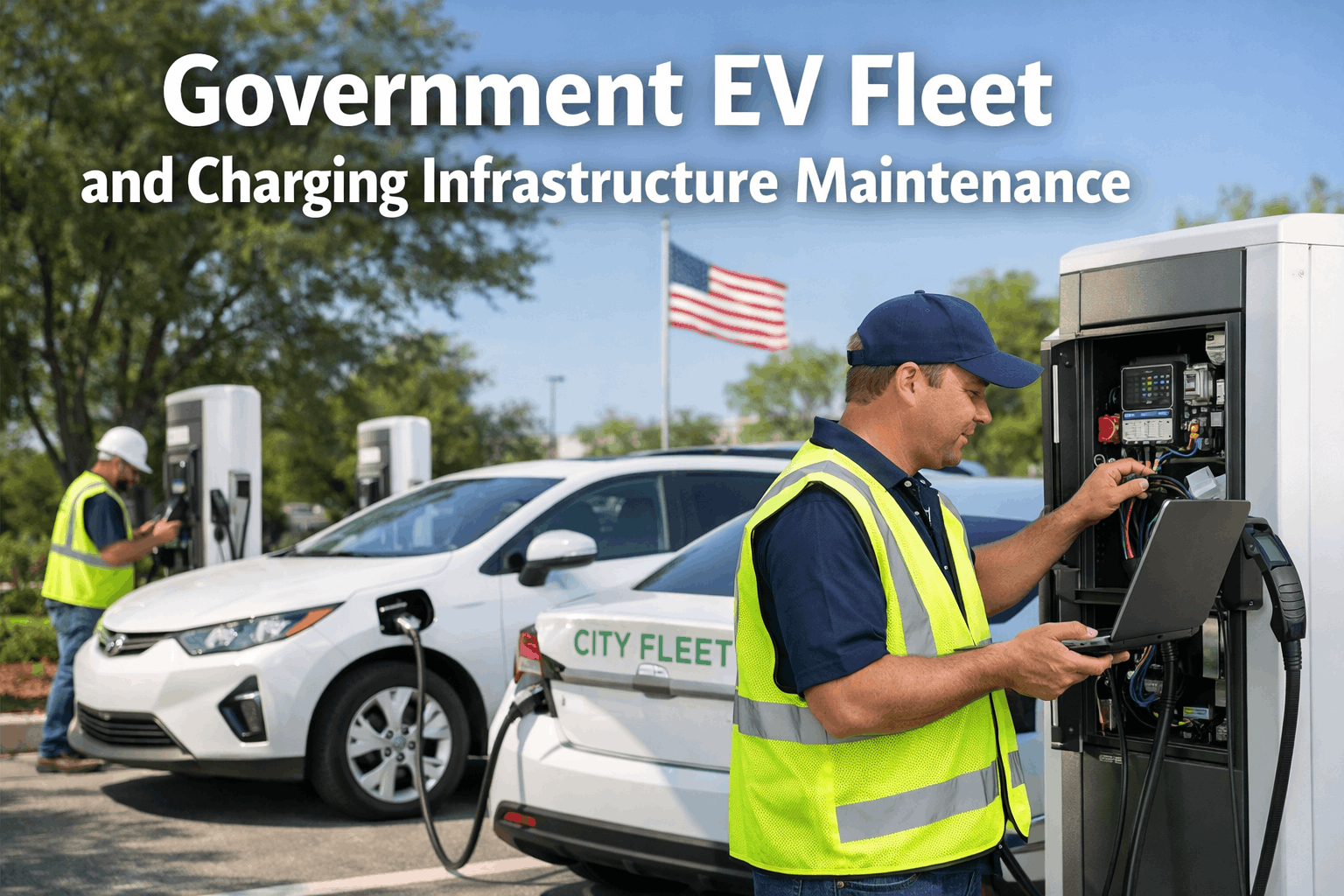
Every year, municipal and federal agencies manage thousands of operational vehicles — and the technology powering that critical fleet is shifting fast. A significant portion of government vehicle fleets is transitioning to electric, but the infrastructure supporting this change is often unmanaged or siloed. Traditional maintenance methods designed for internal combustion engines (ICE) — scheduled oil changes and manual fuel logs — are becoming obsolete. In 2026, an integrated platform for EV fleet and charging infrastructure is transforming how public works and government agencies monitor, maintain, and scale their electrification goals. Oxmaint AI integrates vehicle telematics, charger health, and battery analytics to automate inspections, reduce downtime, and ensure your fleet is always mission-ready. Start with Oxmaint for free and bridge the gap between fleet electrification and asset reliability.
The Real Cost of Failing EV Infrastructure Maintenance
Before evaluating charging hardware, it helps to understand what is at stake. The numbers behind neglected EV charging station maintenance are staggering — compounding as connectors wear, software lags, and power modules fail. Here is what public agencies face without a modern, EV-specific CMMS and IoT monitoring system.
25%
Average Downtime
Public chargers found inoperable due to lack of preventive maintenance
2030
Federal Deadline
Target year for many agencies to achieve 100% light-duty zero-emission fleets
40%
Lower Ops Costs
Potential maintenance savings of EV fleets over legacy ICE vehicles
These are not edge cases. They represent the daily reality for agencies operating without an integrated platform. The good news: public works agencies deploying automated charging maintenance and battery monitoring workflows report significantly higher fleet availability, lower long-term repair costs, and improved sustainability metrics. Book a demo with Oxmaint to see how these capabilities apply to your government EV transition.
What Separates Great EV Platforms from Basic Fleet Logs
Not every fleet management tool is ready for electricity. Many agencies invest in EVs only to discover that legacy software cannot track kilowatt-hour (kWh) consumption, charger "handshake" failures, or battery state-of-health (SoH). When evaluating an integrated platform for government EV fleet maintenance, these are the capabilities that turn hardware data into actionable work order automation.
Monitoring
Charging Station Health
IoT-connected monitoring identifies "ghost" outages and hardware faults in real-time. The system detects connector wear, cable cooling issues, and communication errors before a driver plugs in.
Analytics
Battery SoH Tracking
Advanced AI monitors battery degradation patterns across the municipal EV fleet. Predictive models identify cells at risk of premature failure, optimizing vehicle rotation and charging cycles.
Automation
Automated Work Orders
When a charger reports a fault code (OCPP logs), Oxmaint auto-generates a work order for a technician. No more waiting for a driver to report a broken station; the system handles it instantly.
Integration
OCPP & Telematics Sync
Oxmaint bridges the gap between vehicle telematics and charging hardware (OCPP 2.0.1). Unify vehicle health and energy infrastructure data into one comprehensive asset health dashboard.
Compliance
Sustainability Reporting
Auto-generate carbon offset reports and energy consumption summaries for government fleet sustainability audits. Document every kWh used to prove compliance with electrification mandates.
Strategy
EV Lifecycle Management
From procurement to decommissioning, track the unique lifecycle costs of EVs. AI analyzes total cost of ownership (TCO) including charging infrastructure maintenance and battery replacement cycles.
Oxmaint integrates EV telematics, charging station health, and AI analytics into one platform built for government. See why public works agencies choose Oxmaint to automate EV fleet maintenance.
Head-to-Head: Top Platforms for Government EV Maintenance 2026
We evaluated the most capable EV management platforms across criteria that matter to public agencies: charging station uptime tracking, battery health monitoring, CMMS integration, and ease of deployment. Here is an honest comparison for your municipal EV charging needs.
Recommended
Oxmaint AI
Government EV fleets & Public Works
Unified charger-to-vehicle pipelineAutomated OCPP fault-to-work-orderFree asset health dashboard available
High-power DC fast charging specialistsRobust industrial-grade hardwareAdvanced grid-balancing software
Equipment + Service contracts
EVConnect
Charging network management
Multi-vendor hardware supportWhite-label public charging appsFault-to-remediation workflows
Network fee per port
Platform capabilities reflect publicly available data as of early 2026. Transitioning vehicle fleets requires the right balance of hardware and software. Create a free Oxmaint account to connect your EV telematics and charging stations into one CMMS.
Why Oxmaint Wins for Government Fleet Electrification
Capturing data from a vehicle is one thing; making that data trigger a repair is another. Oxmaint’s real value lies in turning digital alerts from charging stations into actionable maintenance tasks. Here is how our integrated platform supports the municipal EV fleet lifecycle.
Fault-to-Work-Order Automation
Oxmaint listens to your charging stations via OCPP. If a ground fault or communication error occurs, the system auto-populates a work order with the fault code and station location, ensuring rapid public charging maintenance.
Predictive Battery Maintenance
AI analytics track the battery health of every government electric vehicle. Detect "parasitic" loads or abnormal heat profiles during charging cycles to prevent thermal events and maximize battery lifespan.
Centralized Asset Dashboard
Monitor charger uptime, vehicle range, energy costs, and maintenance backlogs in one view. Give fleet directors the data needed to justify electrification budgets. Sign up for Oxmaint to explore EV dashboards.
Public Infrastructure Reliability
Ensure public EV infrastructure remains operational for the community. Scheduled preventive maintenance (PM) checklists for cables, cooling fans, and housings keep stations running 24/7.
Before & After: The Transition from ICE to EV Fleet Management
The shift from internal combustion engines to electric vehicle fleets requires a complete overhaul of maintenance philosophy. Here is how asset management changes for government agencies adopting an integrated EV platform.
Legacy ICE Fleet Maintenance
Maintenance based on mileage/hours (oil, belts, filters)
Fueling infrastructure handled by third-party gas stations
Manual tracking of emissions and fuel tax receipts
Reactive repairs to fueling pumps and tank monitoring
Fragmented data between vehicle health and fuel usage
90%
of maintenance spend on mechanical wear and fluids
Electrified Fleet Maintenance
Maintenance based on battery cycles and thermal profiles
Agency-owned charging infrastructure requires digital upkeep
Automated carbon reporting via direct EV energy ingestion
Predictive maintenance for battery health and charging stations
Unified CMMS dashboard for chargers and vehicle telematics
2x
improvement in asset longevity with battery health optimization
Transition your fleet without the reliability risks. Oxmaint's free tier lets you run a real pilot on your EV charging infrastructure — seamlessly integrating vehicle and charger data.
Fleet directors need hard data to justify the transition to electric. The evidence from government agencies using EV-specific maintenance is clear — integrating telematics, charger health, and AI analytics reduces downtime and protects long-term battery value.
80%
Fewer Moving Parts
Massive reduction in mechanical maintenance versus ICE vehicles
95%+
Charger Uptime
Target availability for public EV infrastructure with proactive PM
50%
Battery Life Extension
Achievable through AI-optimized thermal and cycle management
70%
Automated Reporting
Reduction in admin time for fleet sustainability compliance
These improvements compound as AI models learn your fleet's unique duty cycles and local grid conditions. Create your free Oxmaint account and start tracking your EV fleet benchmarks right away.
Your 4-Step Path to Modern EV Fleet Management
Electrifying a government fleet is a complex journey. Use this framework to move from the pilot phase to full-scale operational electrification across your public infrastructure.
1
Audit Your Charging Infrastructure
Identify every charger’s location, hardware type, and network capability. Integrate them into Oxmaint via OCPP to begin monitoring connectivity and hardware health.
2
Establish EV-Specific PMs
Configure preventive maintenance checklists for charging station maintenance (cables, fans, housing) and vehicle battery thermal checks. Replace ICE-centric schedules with EV-centric logic.
3
Unify Telematics & Infrastructure
Sync vehicle telematics data with your charger logs. Confirm that AI analytics can accurately correlate vehicle charging behavior with station performance and battery SoH.
4
Scale with Predictive Analytics
Expand automated work orders across the entire municipal EV fleet. Utilize predictive maintenance data to plan future charging infrastructure expansions based on actual utilization heatmaps. Schedule a walkthrough to plan your agency's rollout.
Electrification is the biggest shift in fleet management in a century. The agencies that succeed aren't just buying the right vehicles; they are implementing the right digital infrastructure to keep those vehicles and chargers running reliably.
Director of Government Fleet Sustainability
Ensure Your EV Fleet is Always Ready for Duty
Oxmaint brings together EV telematics, charging station maintenance, and AI analytics in one CMMS integrated platform built for public fleets. Monitor battery health, automate charger work orders, and generate compliance reports to prove your fleet's sustainability progress.
How does Oxmaint track charging station maintenance?
Oxmaint connects to charging hardware via OCPP (Open Charge Point Protocol). It monitors for hardware errors and connectivity drops. When a fault is detected, the system automatically triggers a work order in your CMMS. Additionally, it schedules periodic physical inspections of cables, connectors, and internal components. Schedule a demo to see charger health tracking.
What is "predictive battery maintenance" for government EVs?
It is the use of AI to analyze battery voltage, temperature, and discharge rates over time. By identifying vehicles with high degradation rates or cell imbalances, fleet managers can intervene early — rotating vehicles to different duty cycles or adjusting charging behaviors to extend battery life.
How does the platform handle different EV charger brands?
Oxmaint is hardware-agnostic. As long as your municipal EV charging stations are OCPP-compliant, we can ingest their health data. This allows agencies to manage a diverse mix of Level 2 and DC Fast Chargers from different vendors in a single unified dashboard. Sign up for Oxmaint to test your hardware compatibility.
Does the system support government fleet sustainability audits?
Yes. Oxmaint automatically logs every kWh delivered to your government EV fleet. It correlates this data with vehicle mileage to generate energy efficiency reports, carbon offset calculations, and total cost of ownership (TCO) comparisons needed for government reporting.
How do I start a pilot for government EV fleet maintenance?
The best way is to start with a small sub-fleet or a single charging site. Use Oxmaint's free tier to link your OCPP charger data and vehicle telematics. Validate the automated work orders and reporting before scaling across the entire agency. Create your free account to get started today.