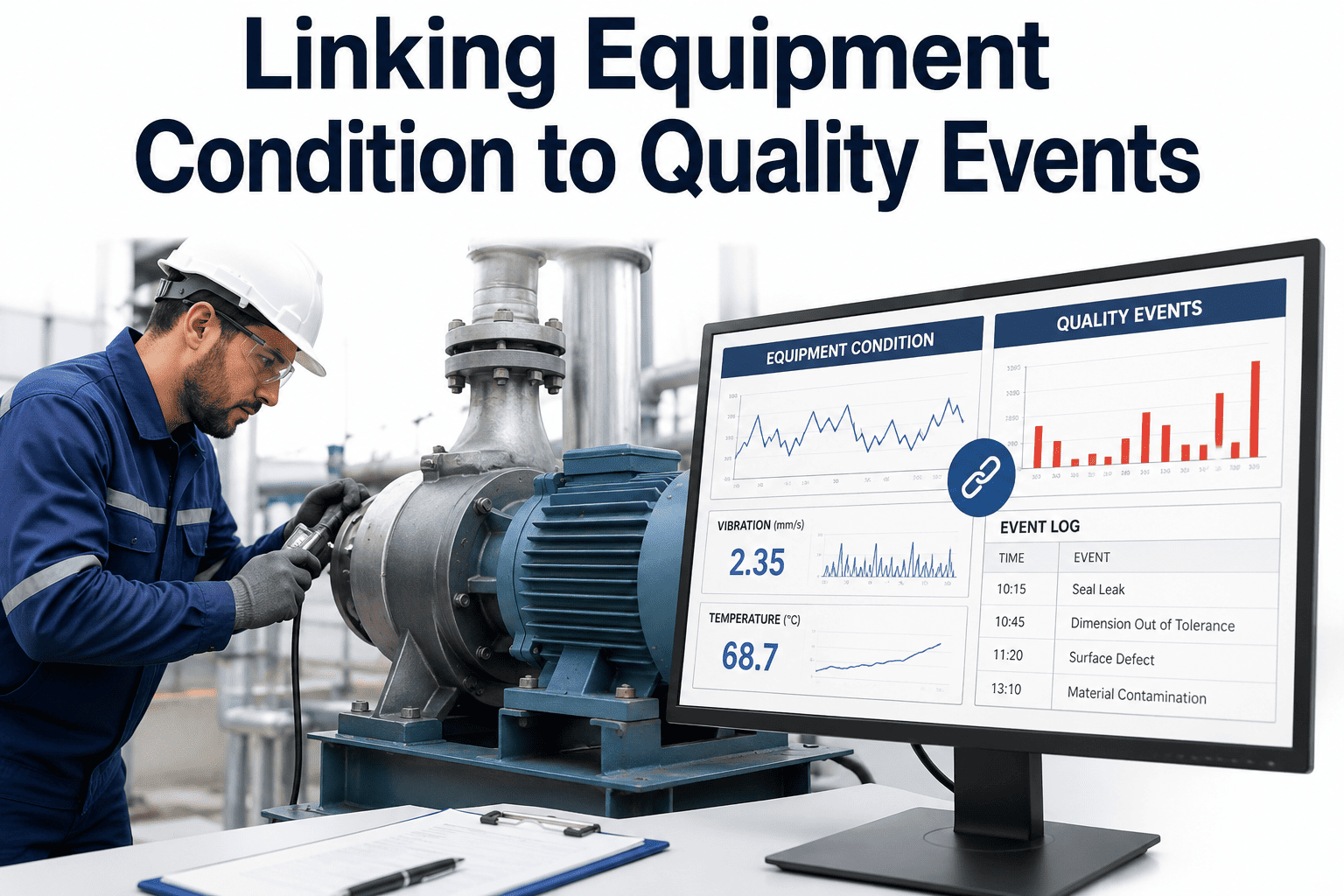
Linking equipment condition to quality events is the critical bridge between maintenance reliability and food safety outcomes — when a critical control point fails, the speed and accuracy of that linkage determines whether you catch a deviation in minutes or recall product in weeks. A CMMS food equipment quality linkage strategy connects vibration, temperature, pressure and runtime data from assets directly to quality deviations, CAPA records and HACCP logs, so reliability and QA teams investigate the same root cause instead of debating symptoms. Plants that build this condition-to-quality correlation typically cut unresolved quality events by 30–50% and shrink mean-time-to-root-cause from days to hours. This equipment quality guide walks through event tracking integration, root-cause workflow and the CMMS-QMS integration that turns every quality event into documented reliability improvement — and you can Start Free Trial to see the linkage live on your assets today.
Can your maintenance data explain your last quality deviation?
Most food plants log equipment condition and quality events in separate systems — then spend days reconstructing timelines during investigations. OxMaint links every asset condition event to quality outcomes automatically, so root-cause analysis starts with evidence, not guesswork.
Why equipment condition drives quality outcomes in food plants
In food manufacturing, equipment condition is a leading indicator of product quality. A pump running 12% below rated flow, a heat exchanger with fouling buildup, or a conveyor belt tension drift of just 3mm can trigger a quality deviation hours before anyone notices. The problem is not a lack of data — it is a lack of linkage between the maintenance system that records the condition and the quality system that records the deviation.
A 180-asset ready-meals plant spending $42K/yr on quality investigations was averaging 9 unresolved deviations per quarter. After implementing equipment-quality linkage in their CMMS, the team discovered that 6 of those 9 deviations correlated to a single filler head with intermittent pressure fluctuations — a condition event that had been logged 14 times in the maintenance system but never connected to the quality records. Fixing the valve and updating the PM plan eliminated $18K in scrap and reduced unresolved deviations to 2 per quarter within 90 days.
How to build a CMMS-QMS integration for equipment quality events
The integration between your CMMS and Quality Management System is the technical foundation of equipment-quality linkage. Without it, maintenance and quality teams operate in parallel universes — each holding half the evidence. Here is the step-by-step workflow that turns disconnected data into a single, auditable root-cause pipeline.
OxMaint capabilities that close the equipment-quality gap
OxMaint was built for maintenance and reliability teams in regulated food environments who need to prove that equipment condition is managed, monitored and linked to quality outcomes. These four capabilities turn the theory of equipment-quality linkage into daily practice — with measurable results.
Automatic Quality Team Notification on CCP Events
When a condition event is logged on an asset tagged as a Critical Control Point, OxMaint automatically notifies the quality team with the asset ID, condition reading, production batch and time window — cutting notification time from hours to under 2 minutes.
Condition-to-Quality Correlation Dashboard
A live dashboard overlays equipment condition data with quality deviation logs, highlighting correlated events in real time. Maintenance and QA teams see the same picture, eliminating the blame game and accelerating root-cause convergence.
Predictive Alerts Before Quality Impact
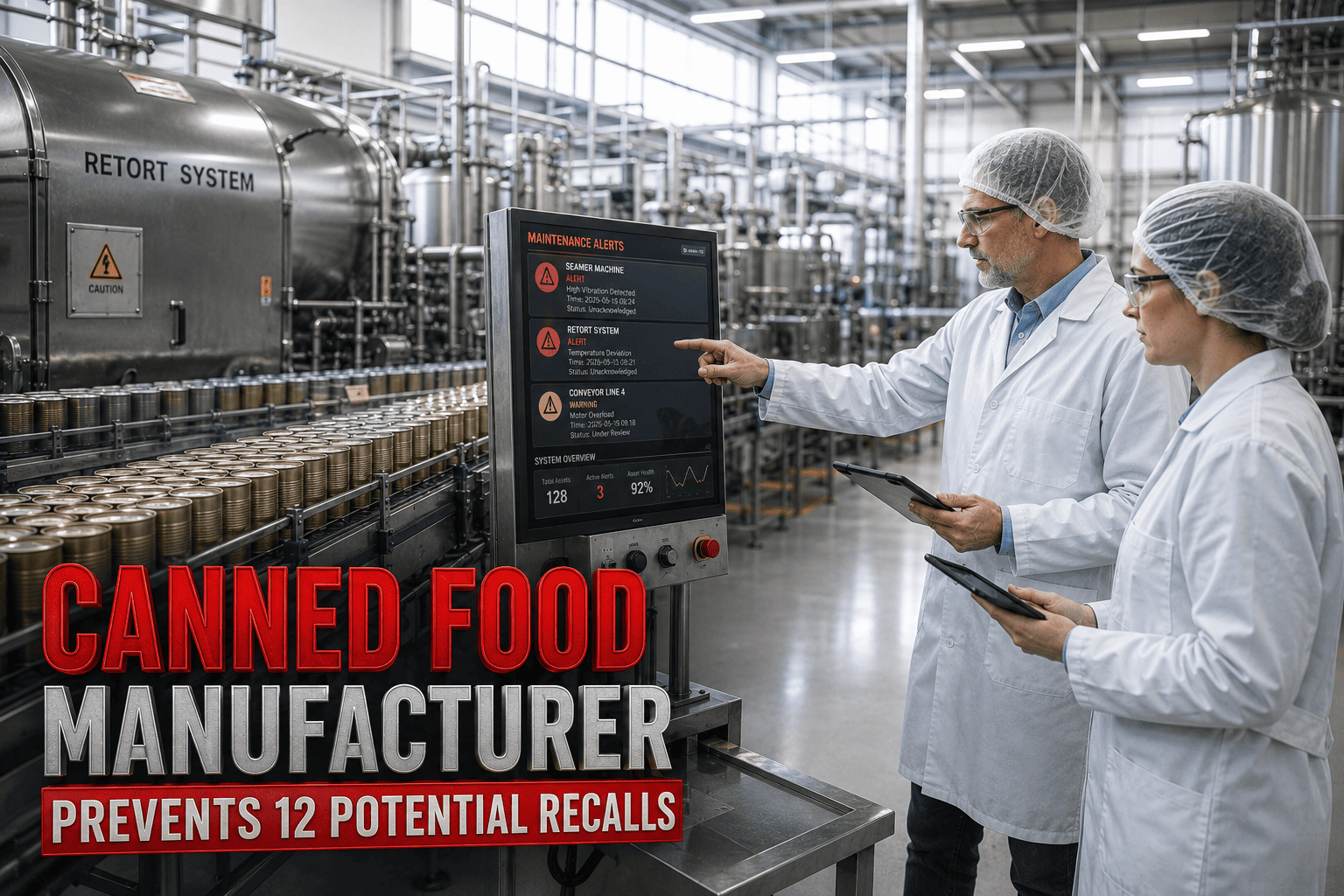
OxMaint's AI engine analyses vibration, temperature and pressure trends to flag degrading asset conditions before they cross the threshold into a quality-impacting event — giving maintenance teams a 3–7 day window to intervene.
Audit-Ready Documentation & CAPA Loop
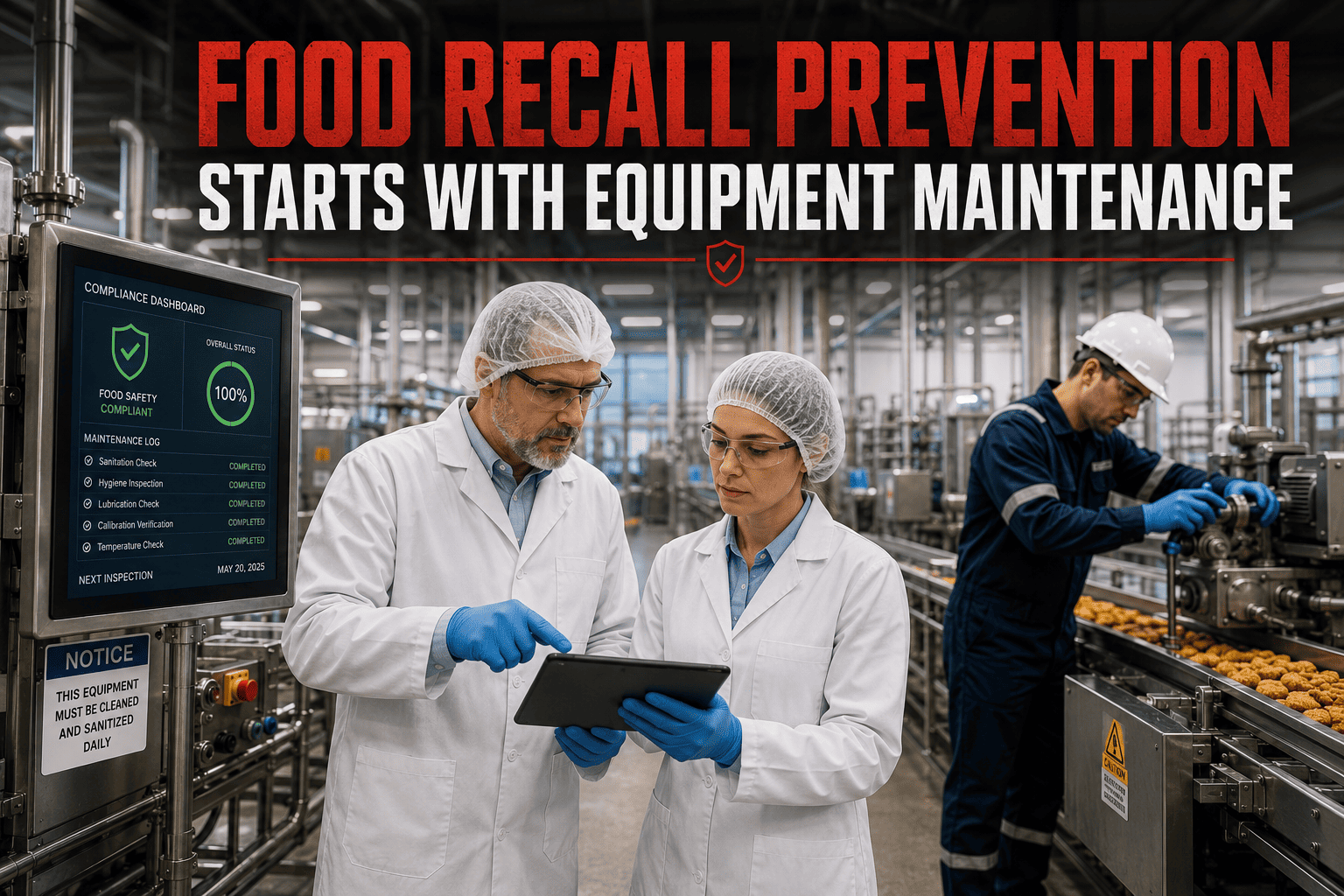
Every condition event, quality notification, root-cause analysis, corrective work order and PM update is automatically documented in a timestamped, exportable record. FDA, SQF and BRC audits become a report-generation exercise instead of a scramble.
From condition event to documented reliability improvement
The root-cause workflow is where equipment-quality linkage pays for itself. Without a structured workflow, even the best integration produces alerts that get ignored. With one, every quality event becomes a permanent reliability improvement — and the numbers compound over time.
| Workflow Stage | Without Linkage | With OxMaint Linkage | Measurable Impact |
|---|---|---|---|
| Detection | Quality deviation logged; equipment data checked manually days later | Condition event auto-matched to deviation within minutes | MTTR reduced 60–75% |
| Notification | Email chains between maintenance and QA; average 4–6 hour delay | Automated quality team notification with full context in under 2 min | Response time cut 95% |
| Investigation | Separate investigations; root cause found in 40% of cases | Joint root-cause workflow with linked data; root cause found in 85% of cases | Resolution rate doubled |
| Corrective Action | Quality holds product; maintenance fixes symptom; recurrence common | Corrective work order auto-created with root cause and PM update | Recurrence reduced 50% |
| Documentation | Manual CAPA records; audit prep takes 2–3 days per event | Full audit trail auto-generated; exportable in one click | Audit prep cut 90% |
What changes when equipment condition meets quality data
Plants that implement equipment-quality linkage through an AI-powered CMMS see measurable shifts across maintenance, quality and compliance KPIs within the first quarter. These are not projections — they are the median results from food manufacturing teams that switched from spreadsheet-based or siloed systems.
Before OxMaint, our maintenance and quality teams were investigating the same problems from different angles and reaching different conclusions. Once condition events were linked to quality deviations automatically, we cut our unresolved deviation backlog by half in one quarter — and our audit preparation went from a three-day fire drill to a one-click report.
See OxMaint link your equipment condition to quality events — live on your assets
Book a 30-minute demo and we will map your critical assets to quality checkpoints, show you the automatic notification flow and build a custom ROI projection for your plant.
Equipment quality linkage: questions maintenance and QA teams ask
What is equipment-quality linkage in a CMMS for food plants?
Equipment-quality linkage is the automatic connection between an equipment condition event (such as a temperature drift or vibration spike) recorded in the CMMS and a quality deviation logged in the QMS. In food plants, this linkage ensures that whenever a critical asset's condition changes, the quality team is notified immediately with the relevant asset, batch and time-window context — eliminating the manual cross-referencing that delays root-cause analysis.
How does CMMS food CCP quality notification work?
When an asset tagged as a Critical Control Point logs a condition event outside acceptable parameters, the CMMS automatically sends a notification to the quality team within minutes. The notification includes the asset ID, condition reading, production batch, time window and a link to the related work order. You can see this flow in action — Book a Demo and we will walk you through a live CCP notification on a real asset profile.
Can OxMaint integrate with our existing QMS and HACCP system?
Yes. OxMaint supports API-based integration with most major QMS platforms and can map asset-level condition events to HACCP control points, CCP records and quality check logs. The integration uses asset-criticality tags and time-window correlation to match condition events to quality deviations automatically — no duplicate data entry required.
How long does it take to implement equipment-quality linkage?
Most food plants with 100–500 assets are live in 2–4 weeks. The timeline depends on how quickly critical assets can be tagged and mapped to quality checkpoints. OxMaint's onboarding team handles asset import, criticality tagging, QMS integration setup and team training — and you can start with a Start Free Trial to explore the platform on your own assets immediately.
What ROI can we expect from linking equipment condition to quality events?
Food plants typically see a 30–50% reduction in unresolved quality deviations, $15K–$25K in annual scrap cost avoidance per 100 assets, and 85% faster audit preparation within the first quarter. The largest single ROI driver is catching condition events before they become quality-impacting failures — predictive alerts give maintenance teams a 3–7 day intervention window that prevents the deviation entirely.
Stop investigating quality deviations without equipment data
Link every condition event to quality outcomes, notify your QA team automatically and turn every deviation into a documented reliability improvement — with OxMaint.
Free 14-day trial · No credit card