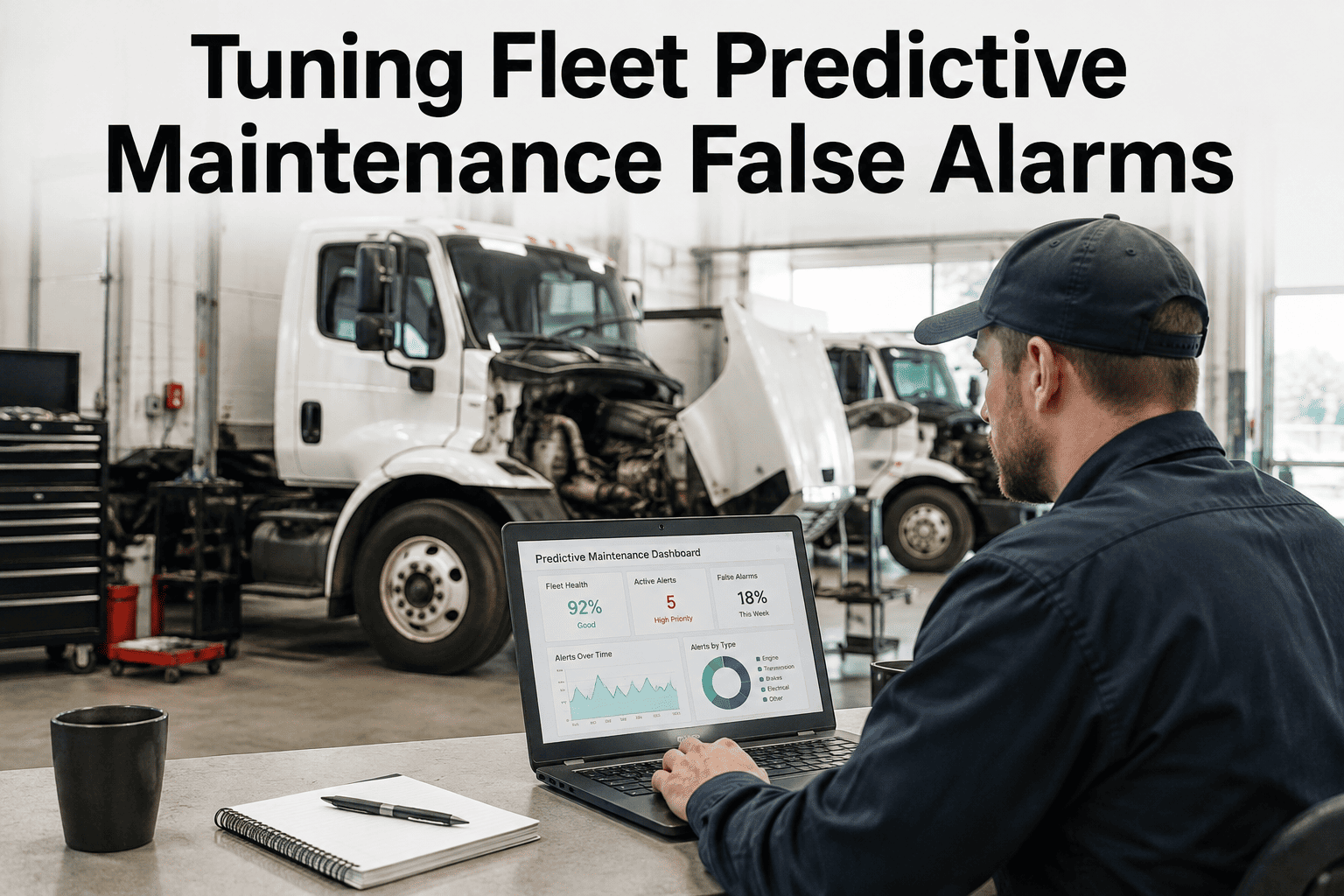
Tuning fleet predictive maintenance false alarms is the difference between a PdM program your technicians trust and one they mute. When more than 30–40% of alerts turn out to be false positives, crews start ignoring every alert — including the real ones — and your predictive maintenance investment quietly dies. The fix isn't more sensors or more data; it's disciplined fleet PdM false alarm tuning: alert threshold optimization, a structured feedback workflow, and false-positive analytics that keep every alert calibrated to real failure modes. OxMaint's AI-powered CMMS gives fleet reliability teams exactly that structure — so alerts stay actionable, not noise. You can Start Free Trial and see calibrated alerting on your own fleet data within days, not months.
What if 9 out of 10 fleet alerts actually meant something?
Most fleet predictive maintenance programs drown technicians in false positives within the first 90 days. Here's how to tune your alert thresholds, feedback loops, and analytics so every notification earns a wrench turn — and how OxMaint keeps them calibrated automatically.
Why fleet predictive maintenance false alarms destroy technician trust
A single false alarm costs 45–90 minutes of a technician's day — the inspection, the diagnosis, the paperwork, and the trip back. Multiply that across a 200-vehicle fleet generating 60 alerts a month, and a 50% false positive rate burns roughly 40+ labor hours monthly on ghosts. The deeper damage is behavioral: after three or four wasted inspections, technicians stop responding to alerts at all, and the one real bearing failure that mattered slips through.
Alert fatigue sets in fast
Research on alarm management (EEMUA 191) shows operators stop trusting systems once nuisance alarms pass ~20% of volume. Fleet PdM is no different — false positives compound into total disengagement within a single quarter.
Real failures get buried
When a coolant temp alert fires for the 12th time and 11 were sensor drift, the 12th — an actual water pump failure — gets the same shrug. Missed failures on a Class 8 truck average $8,000–$15,000 in roadside repair and towing.
The program loses funding
Executives kill PdM budgets when they can't see ROI. A noisy system shows cost (sensor spend, labor) without savings (avoided breakdowns), so the program gets cut — usually right before it would have matured.
The 5 most common causes of predictive maintenance false positives in fleets
Before you tune anything, know what you're tuning against. In fleet PdM, false alarms almost never come from "bad AI" — they come from five fixable configuration and data problems. Identifying which one dominates your alert stream is the first step in any fleet predictive alarm tuning effort.
| Root Cause | Typical Share of False Alarms | Symptom in Your Alert Feed | Primary Fix |
|---|---|---|---|
| Static thresholds on dynamic assets | 25–35% | Alerts spike in summer heat, cold starts, or heavy-load routes | Context-aware, condition-based thresholds |
| Sensor drift & poor installation | 20–30% | Same asset alerts repeatedly; inspection finds nothing | Sensor health checks + recalibration schedule |
| Insufficient baseline training data | 15–25% | New vehicles alert constantly for their first 60–90 days | Baseline learning period before alerting goes live |
| No alert suppression logic | 10–15% | One fault triggers 8 duplicate alerts across related parameters | Alert grouping, deduplication, and cooldown windows |
| Thresholds never reviewed | 10–15% | False alarm rate creeps up month over month | Monthly threshold review with false-positive analytics |
How to tune fleet PdM alerts: a 4-step calibration workflow
Effective fleet predictive maintenance tuning is a loop, not a project. Teams that reach sub-15% false positive rates follow the same four-step rhythm — and they run it every month, not once at setup.
Audit every alert from the last 90 days
Pull your full alert history and tag each one: true positive (led to a real repair), false positive (inspection found nothing), or duplicate. You can't tune what you haven't measured. Most fleets discover 3–5 alert rules generate 70%+ of the noise.
Rebuild thresholds around operating context
Replace single static limits with condition-aware bands: a transmission temp threshold that accounts for ambient temperature, load, and route grade. Set alert windows at the 95th percentile of normal behavior for that asset class — not a generic OEM number.
Add suppression, grouping, and severity tiers
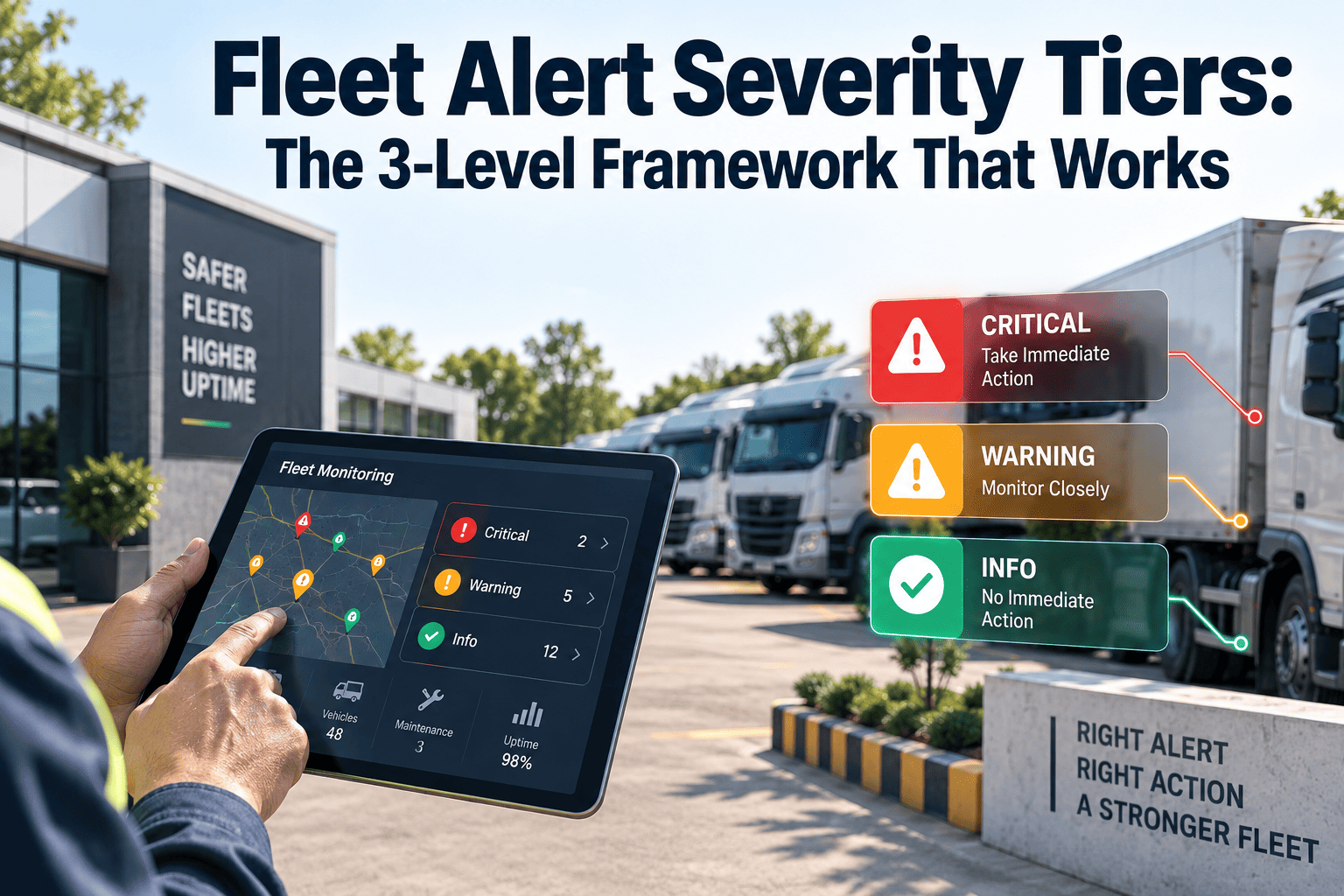
One root event should produce one work order, not nine notifications. Group correlated parameters (oil pressure + oil temp + vibration), apply a 24–72 hour cooldown per asset per fault code, and split alerts into monitor / plan / act-now tiers so technicians know what can wait.
Close the loop with technician feedback
Every alert-driven work order should end with a one-tap verdict: confirmed fault, early-stage wear, or false alarm. That feedback is the training data that improves predictive maintenance alert accuracy over time — and it's the step most fleets skip entirely.
What false alarm tuning is worth: a 120-vehicle fleet scenario
A regional delivery fleet running 120 vehicles was generating ~85 PdM alerts per month with a 55% false positive rate. Here's the math before and after a structured tuning program — the same pattern OxMaint customers typically see within two quarters.
Before tuning
- 85 alerts/month, 47 false positives (55%)
- ~59 technician hours/month on dead-end inspections
- Technicians acknowledging alerts within 4 hours: 31%
- 2 roadside breakdowns/month that alerts "predicted" but nobody acted on
After 6 months of tuning
- 52 alerts/month, 7 false positives (13%)
- ~9 technician hours/month on verification — 85% less waste
- Alert acknowledgment within 4 hours: 89%
- Breakdowns down to 0–1/month; ~$11K/month in avoided towing, rush parts & downtime
"We didn't add a single sensor. We just stopped lying to our technicians. Once the false alarm rate dropped under 15%, the crew started treating every alert like a work order — because it basically was one."
— Fleet Maintenance Manager, 120-vehicle regional fleetFleet predictive maintenance tuning, built into your CMMS
Most PdM tools generate alerts; almost none help you govern them. OxMaint connects predictive alerts directly to work orders, technician feedback, and analytics — so fleet PdM alarm tuning becomes a continuous, measurable process instead of a quarterly spreadsheet exercise.
Alert-to-work-order traceability
Every predictive alert in OxMaint auto-generates a trackable work order with the triggering data attached. When the job closes, the technician's verdict (confirmed / false alarm) is captured in one tap — building the ground-truth dataset your tuning depends on.
False-positive analytics dashboard
See false alarm rate by asset, alert rule, and failure mode at a glance. OxMaint surfaces your noisiest rules automatically — the 3–5 thresholds causing 70% of the noise — so monthly tuning sessions take 30 minutes, not 3 days.
Condition-aware threshold management
Configure thresholds per asset class with operating-context parameters, severity tiers, and cooldown windows — no data science team required. Changes are versioned, so you can prove what you tuned and when during audits.
AI that learns from your fleet
OxMaint's predictive models retrain on your confirmed-fault and false-alarm feedback, improving predictive fleet alert accuracy continuously. Fleets typically see false positive rates fall 40–60% within the first two quarters of closed-loop operation.
See your fleet's false alarm rate — live, in 30 minutes
Book a demo and we'll walk through OxMaint's false-positive analytics, threshold tuning, and feedback workflow using alert patterns from fleets like yours.
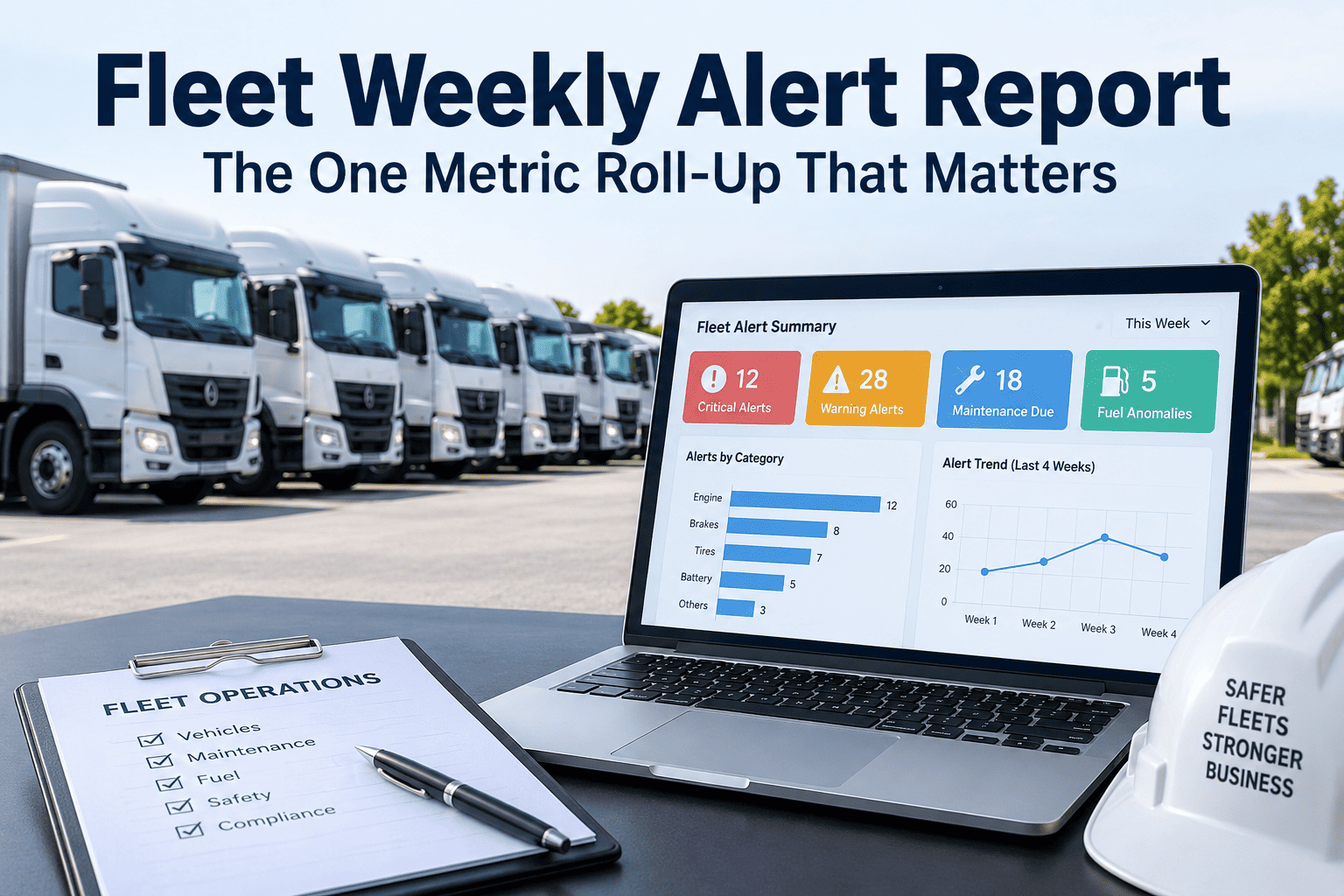
5 metrics to track fleet predictive alert accuracy every month
You can't hold a tuning program accountable without numbers. These five KPIs — all tracked automatically in OxMaint's maintenance analytics — tell you whether your fleet predictive maintenance accuracy is improving or quietly sliding back into noise.
False positive rate
False alarms ÷ total alerts. Target: under 15% within 6 months, under 10% at maturity. Trend it monthly per alert rule.
Precision
True positives ÷ (true + false positives). The mirror of FPR — aim for 85%+ so technicians learn an alert means work.
Recall (catch rate)
Failures predicted ÷ total failures. Tuning too aggressively kills recall — never let it drop below 90% to chase a lower FPR.
Mean time to acknowledge
How fast technicians respond to alerts. This is your trust metric — under 4 hours means the crew believes the system.
Lead time gained
Days between alert and failure. Healthy PdM gives 7–30 days of warning — enough to plan parts and labor, not scramble.
Cost per avoided failure
Program cost ÷ confirmed catches. Compare against the $8K–$15K average roadside event to prove ROI to leadership.
Fleet predictive maintenance false alarms: your questions answered
What is an acceptable false alarm rate for fleet predictive maintenance?
A healthy fleet PdM program runs below a 15% false positive rate; mature programs reach 5–10%. Above 30–40%, technician trust collapses and alerts get ignored — which is worse than having no alerts at all. New programs often start at 40–60% and tune down over 3–6 months.
Why does my fleet PdM system generate so many false positives?
The top causes are static thresholds that ignore operating context (heat, load, route), sensor drift or bad installation, insufficient baseline data on new vehicles, and missing alert suppression logic. In most fleets, just 3–5 misconfigured alert rules produce 70% or more of all false alarms.
How do I reduce false alarms without missing real failures?
Tune in small increments and watch recall (catch rate) alongside false positive rate — never let recall drop below 90%. Widen thresholds gradually, add cooldown windows and alert grouping, and use severity tiers instead of deleting rules. OxMaint's free trial lets you test threshold changes against historical alert data before pushing them live.
How often should fleet PdM alert thresholds be reviewed?
Review your noisiest rules monthly and your full threshold library quarterly. Also trigger a review after any major change — new vehicle models, seasonal shifts, route changes, or sensor replacements. Fleets that treat tuning as a monthly rhythm sustain sub-15% false positive rates; set-and-forget programs drift back above 40%.
Can a CMMS actually help tune predictive maintenance alerts?
Yes — the CMMS is where tuning becomes measurable. When every alert generates a work order and every work order captures a confirmed/false verdict, you get the ground-truth data needed to calculate precision, recall, and false alarm rate per rule. Book a demo to see how OxMaint closes this loop automatically, with false-positive analytics built in.
Turn fleet alert noise into alerts your technicians trust
OxMaint connects predictive alerts, work orders, technician feedback, and false-positive analytics in one AI-powered CMMS — so your PdM program gets sharper every month instead of noisier.
Free 14-day trial · No credit card · Set up in under an hour