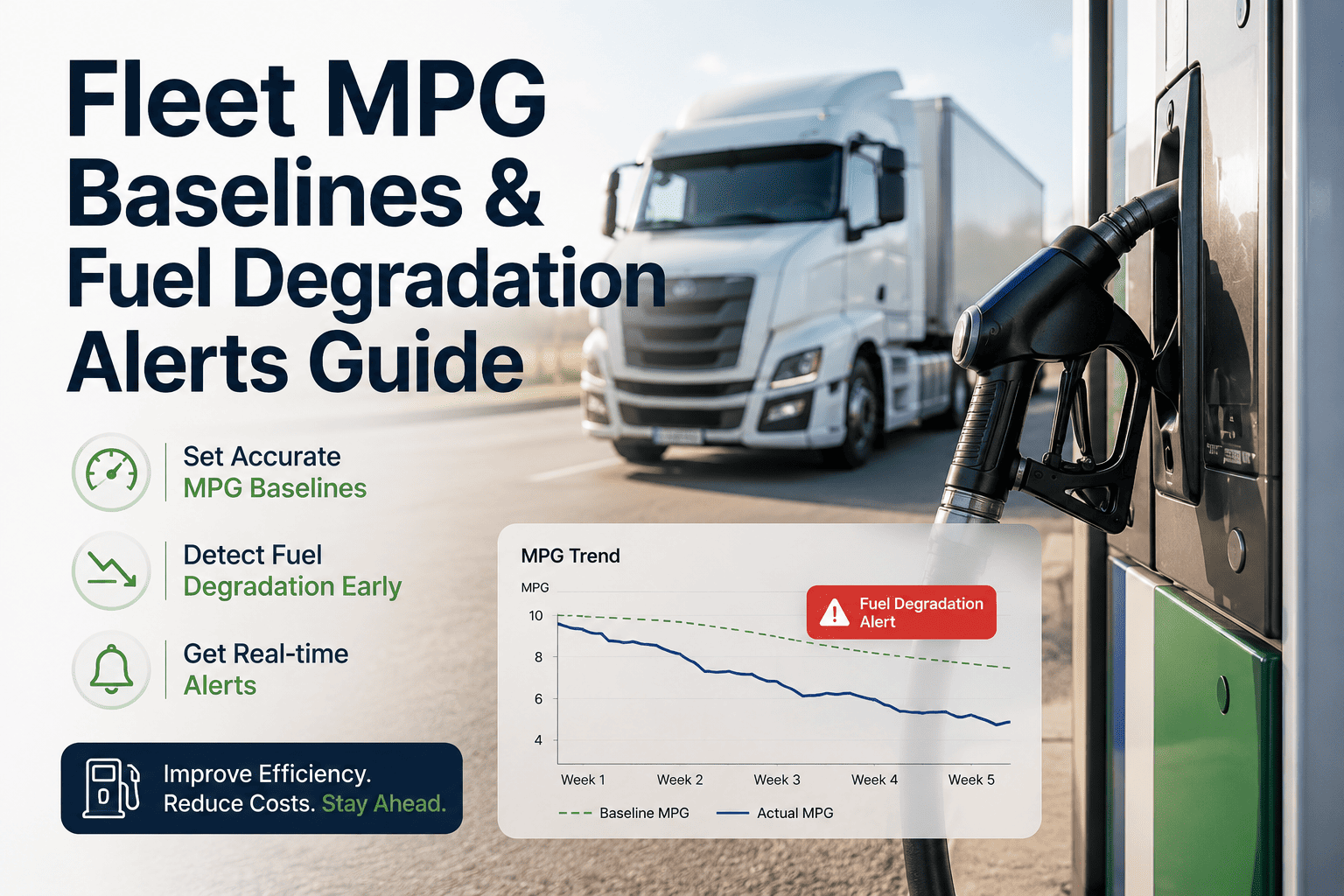
A fleet fuel efficiency baseline is the reference point every maintenance and reliability team needs to detect MPG degradation before a slow mechanical decline turns into a major expense. When you actively monitor fleet MPG, even a 3% drop in fuel economy can signal tire pressure loss, DPF restriction, fuel theft, or a dragging brake—issues that quietly drain thousands of dollars per vehicle each year. By setting a per-vehicle MPG baseline and configuring real-time fuel efficiency degradation alerts, fleet managers transform raw fuel data into predictive maintenance triggers and fuel loss prevention workflows. This guide breaks down how to establish a fleet fuel economy baseline, configure MPG monitoring alerts, and connect those signals directly to work orders using OxMaint's AI-powered CMMS platform. Ready to stop guessing at fuel loss? You can Start Free Trial today and see the difference immediately.
Is a 4% MPG Drop Quietly Costing Your Fleet $1,200 Per Vehicle Every Year?
A slow, almost invisible decline in fuel economy is often the first symptom of mechanical drag, under-inflated tires, or fuel theft. Without a fleet fuel efficiency baseline, those losses compound across hundreds of assets—draining your maintenance budget before a single dashboard warning ever lights up.
Why Fleet MPG Degradation Goes Unnoticed Until It's Expensive
Fleet managers rarely spot a slow MPG decline because fuel consumption fluctuates naturally with routes, loads, and weather—masking the underlying mechanical signal.
Consider a real-world scenario: a 180-vehicle regional delivery fleet averaging 6.5 MPG. If just 30% of those assets experience an undetected 4% MPG degradation due to deferred preventive maintenance, the fleet loses roughly $68,000 in excess fuel costs annually. When you establish a fleet fuel efficiency baseline and pair it with automated degradation alerts, those same losses become visible within days—triggering a work order long before the fuel receipts pile up.
How to Establish a Fleet Fuel Efficiency Baseline That Actually Works
Building an accurate fuel economy baseline fleet metric requires isolating vehicle performance from driver behavior and route variables. Here is the 4-phase timeline for deploying MPG baseline tracking.
Collect 30-60 Days of Clean Fuel Data
Pull ECM telematics or fuel card transaction data for every asset. Ensure records include miles driven, gallons consumed, and vehicle load context. Discard statistical outliers (e.g., idling-heavy days or refueling anomalies) to establish a true baseline MPG for each unit.
Normalize for Route and Seasonal Variables
Adjust the fleet MPG baseline for consistent variables. A truck hauling heavy loads on urban routes will have a lower baseline than the same truck on highway routes. Grouping assets by class and duty cycle prevents false degradation alerts.
Define Your MPG Degradation Alert Triggers
Set a statistical threshold—typically a 3% to 5% drop below the rolling baseline over a 3-tank average. Configuring fleet fuel efficiency alerts at this level filters out daily noise while catching mechanical drag early enough to prevent excess wear.
Trigger CMMS Work Orders Automatically
When fleet MPG monitoring detects a threshold breach, the system should automatically generate a diagnostic work order. Connecting the fuel efficiency degradation alert to your maintenance software ensures the issue is investigated, not ignored.
The MPG Degradation Alert Formula and Investigation Workflow
To calculate the financial impact of a fuel economy drop, maintenance managers need a reliable, repeatable formula.
Annual Miles ÷ (Current MPG) = Actual Gallons
(Actual Gallons − Baseline Gallons) × Cost per Gallon = $ Annual Loss
Once a fleet MPG degradation alert triggers, maintenance technicians need a structured root-cause workflow. The goal is to move from a software alert to a physical repair as efficiently as possible.
| MPG Drop Range | Most Likely Root Cause | Recommended Diagnostic Action |
|---|---|---|
| 1% - 3% | Tire pressure, air filter, driver behavior | Check PSI, inspect air intake, review idle time |
| 4% - 6% | DPF restriction, dragging brakes, bad sensors | Run ECM diagnostics, inspect brake drag, regen DPF |
| 7%+ or Erratic | Fuel theft, injector leak, major mechanical failure | Audit fuel card transactions, pressure test fuel system |
How OxMaint Converts Fleet MPG Alerts Into Predictive Maintenance
OxMaint closes the gap between fuel data and physical maintenance. Instead of tracking fuel economy in a spreadsheet and hoping someone acts on it, our AI-powered CMMS automates the entire fleet fuel efficiency tracking and repair lifecycle.
Per-Vehicle MPG Baselines
OxMaint ingests telematics data to automatically calculate and maintain rolling MPG baselines for every asset. As duty cycles shift, the baseline adjusts dynamically—reducing false alerts by up to 40%.
Automated Degradation Alerts
When an asset breaches the 3% fleet MPG degradation threshold, OxMaint instantly pushes an alert to the maintenance manager's dashboard and automatically generates a diagnostic work order.
Root-Cause Investigation Workflow
Technicians receive structured diagnostic checklists tied to the specific MPG drop range, ensuring they check tire pressure before fuel injectors. This standardizes inspections and cuts diagnostic time by 25%.
Predictive Analytics Integration
By correlating fleet fuel economy degradation with DTC fault codes and PM history, OxMaint's AI predicts component failures before they happen—helping you cut unplanned downtime by 30-50%.
Stop Guessing at Fuel Loss. Start Tracking Your Fleet MPG Baseline.
See how OxMaint connects fuel efficiency alerts directly to automated work orders. Book a 30-minute demo and let us map your ROI live.
Fleet MPG Monitoring and Degradation Alerts
What is a fleet fuel efficiency baseline?
A fleet fuel efficiency baseline is the established, normal MPG range for a specific vehicle operating under a known duty cycle. It is calculated using 30 to 60 days of clean fuel and mileage data, normalized for route and load. This baseline serves as the reference point for detecting future fuel economy degradation.
How does an MPG degradation alert work?
An MPG degradation alert triggers when a vehicle's rolling fuel economy drops below a predefined threshold—typically 3% to 5% below its baseline—over a multi-tank average. You can configure fleet MPG alerts automatically within OxMaint so the system generates a diagnostic work order the moment the threshold is breached.
How much fuel loss justifies setting up fleet MPG monitoring?
Even a 2% drop in fleet fuel economy can cost a 50-vehicle fleet over $10,000 annually in excess fuel. Because mechanical drag, tire under-inflation, and DPF restrictions develop slowly, fleet fuel efficiency tracking almost always pays for itself by catching the first month of degradation.
Can MPG baseline tracking detect fuel theft?
Yes. While normal mechanical wear causes a gradual MPG decline, fuel theft often presents as sudden, erratic spikes in fuel consumption that deviate sharply from the fleet fuel economy baseline. MPG monitoring alerts flag these anomalies for immediate physical and transactional audit.
How quickly can we deploy OxMaint for fleet fuel economy monitoring?
Most fleet maintenance teams are live on OxMaint within 2 to 4 weeks. Our team assists with integrating your existing telematics or fuel card data, configuring your per-vehicle MPG baselines, and setting up automated work order triggers. Book a demo to see your exact deployment timeline.
Turn Fuel Data Into Predictive Maintenance Today
Join the maintenance teams using OxMaint to eliminate reactive repairs, prevent fuel loss, and maximize asset reliability. Your fleet's ROI starts with a single baseline.
Free 14-day trial · No credit card required




.png)