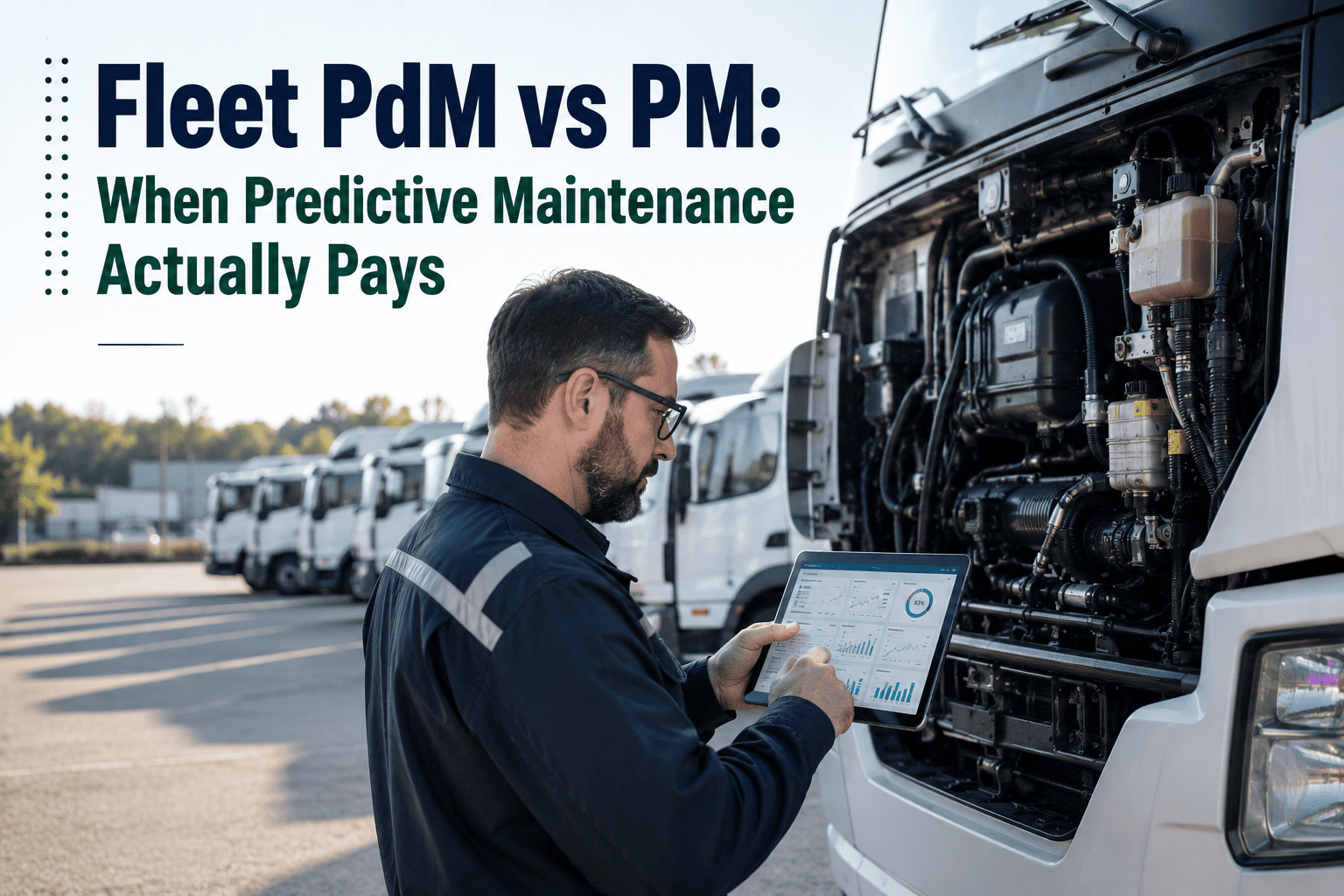
Every predictive maintenance pitch sounds the same: sensors catch the failure before it happens, downtime disappears, costs fall 30%. Some of that is true. What most pitches leave out is that predictive maintenance does not pay off the same way at every fleet size, and a 6-truck landscaping fleet chasing the same PdM stack as a 200-truck carrier is usually buying a dashboard nobody has time to read. The real question is not predictive versus preventive — it is which one your fleet's size, asset value, and data actually support right now. Sign in to OxMaint to run preventive and predictive side by side and let the data decide vehicle by vehicle.
Predictive vs Preventive Maintenance · Fleet ROI · OxMaint AI
PdM vs PM: When Predictive Maintenance Actually Pays — and When It Doesn't
Predictive maintenance delivers real, documented ROI — but only past a fleet size, asset value, and data-quality threshold. Below that line, a well-run preventive program with digital inspections wins on unit economics every time.
10
Vehicles — the rough floor where predictive maintenance math starts to work at all
25+
Vehicles — the fleet size where predictive ROI becomes consistently compelling
3–6 mo
Typical payback period for predictive maintenance at fleet sizes above the compelling threshold
66%
Share of leading fleet operators running a hybrid model — preventive for standard assets, predictive for critical ones
$80K
The annual per-unit maintenance spend where predictive economics flip positive, even for smaller fleets. Below that spend level and without high utilization or high asset value, the sensor cost and platform subscription rarely earn their keep — a strong preventive program is the better bet, and it builds the maintenance history predictive models need anyway.
Sign in to OxMaint to see where your own fleet's numbers land.
Three Questions That Actually Decide If PdM Pays
1
How Many Vehicles Are You Running?
Below roughly 10 units, sensor and platform cost per vehicle rarely clears the savings a well-run preventive program already delivers. Between 10 and 15, it depends on the next two questions. Past 25, the math is close to automatic.
2
How Valuable and How Utilized Is Each Asset?
A smaller fleet of vehicles worth $150,000 or more each, or running 1,500-plus hours a year, can justify predictive sooner — the cost of one unplanned failure is high enough to cover the platform on its own.
3
Do You Already Have Clean Maintenance Data?
Predictive models need a real history of repairs, mileage, and inspection results to train against. A fleet still doing paper inspections has to digitize first — that is a preventive-program job, not a predictive one.
OxMaint Fleet Maintenance Strategy
Run the Numbers on Your Own Fleet Before You Commit to Either
OxMaint runs preventive schedules and predictive alerts in the same platform, so you can size the decision to your actual vehicle count and data — not a vendor's average case.
PM vs PdM — Head to Head
Preventive Maintenance
Service scheduled by calendar or mileage interval, regardless of actual component condition
Low upfront cost — digital checklists and inspection records, no sensor hardware required
Some parts replaced early, wasting remaining life; others fail between scheduled intervals
Works well at any fleet size, and is the right starting point for fleets without clean data yet
VS
Predictive Maintenance
Service triggered by actual condition data — sensor readings, OBD telemetry, and trend analysis
Higher upfront cost — sensors, a data platform, and a maintenance history to train against
Parts run closer to their real end of life, and failures are caught while still preventable
Pays off past a fleet size, asset value, or utilization threshold — not before it
Predictive Maintenance ROI by Fleet Size
Where Your Fleet Actually Sits Today
Not Ready Yet
Digitize Preventive Maintenance First
Small fleet, paper or spreadsheet records, no consistent inspection data. The highest-return move right now is a digital PM program — it is cheaper, it works immediately, and it builds the history predictive tools will need later.
Getting There
Pilot Predictive on Critical Assets
Ten-plus vehicles, digital maintenance records in place, at least a few high-value or heavily-utilized units. Start predictive on those critical assets only, and keep preventive running everywhere else.
Ready Now
Go Predictive-Led Across the Fleet
Twenty-five-plus vehicles, clean telematics or OBD data flowing, annual maintenance spend that justifies the platform on its own. This is where predictive maintenance stops being a pilot and becomes the default.
How OxMaint Runs Both Strategies in One Platform
PM Engine
Calendar and mileage-based schedules with digital checklists, running from day one with no sensor hardware required
PdM Layer
OBD and telematics data feeds condition-based alerts on top of the same asset records, applied to whichever vehicles justify it
One Record
Every inspection, work order, and alert lands in the same asset history — the exact data a future predictive rollout will need
10
vehicles — the rough floor for predictive maintenance to make financial sense
10:1
to 30:1 — documented ROI ratios for well-implemented predictive programs
62%
typical reduction in unplanned downtime once predictive alerts are running on critical assets
1
platform needed to run preventive and predictive together, instead of two disconnected systems
Most fleets are told to pick a side — go all-in on predictive, or stay preventive and hope nothing breaks. Neither answer fits every vehicle in your yard.
OxMaint runs both, and lets your fleet's own size and data decide which vehicles get which.
Frequently Asked Questions — Predictive vs Preventive Maintenance
Is predictive maintenance ever worth it for a small fleet?
Yes, if the vehicles are high-value or heavily utilized — the cost of one avoided failure can cover the platform. Without that, a digital preventive program is usually the stronger move first.
Sign in to OxMaint to model both against your own fleet.
Do we need new sensors installed to start predictive maintenance?
Often not — most vehicles built in the last decade already report usable data through OBD or existing telematics. New sensors are typically only needed for specialized equipment without built-in diagnostics.
Can we run preventive and predictive maintenance at the same time?
Yes — most leading fleets do exactly this, applying predictive monitoring to critical or high-value assets while keeping standard preventive schedules everywhere else.
How long does it take to see a return on predictive maintenance?
Larger, high-utilization fleets often see payback in three to six months. Smaller fleets closer to the size threshold typically take twelve to eighteen months, if the ROI case holds at all.
What should we do if our maintenance records are still on paper?
Digitize preventive maintenance first. Predictive models need a real history to learn from, and a digital PM program builds exactly that history while already saving money on its own.
Book a demo to see the migration path.
The Right Strategy Isn't Predictive or Preventive. It's Both, Sized to Your Fleet.
OxMaint runs digital preventive schedules and condition-based predictive alerts in one platform, so every vehicle gets the strategy its size, value, and data actually support.