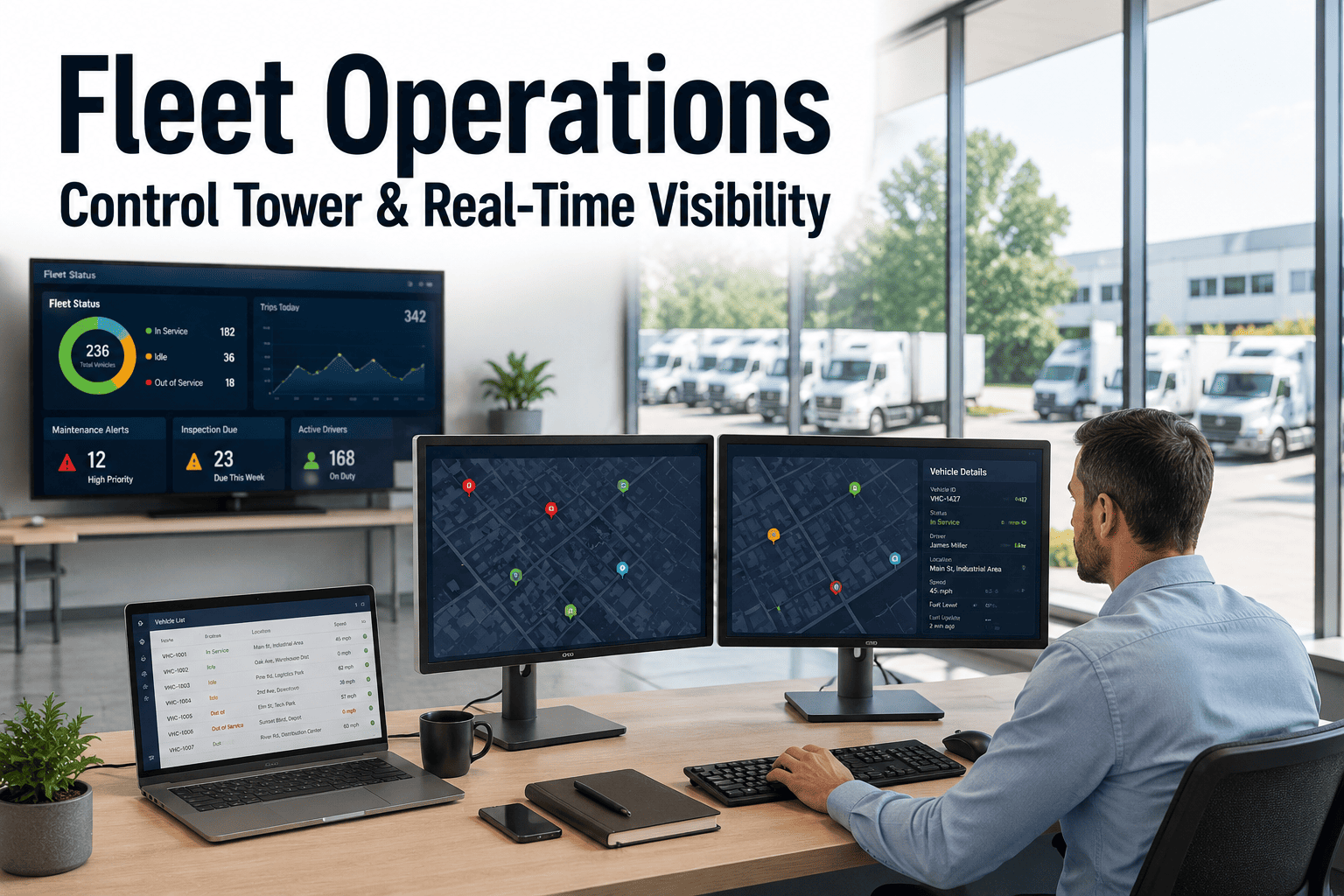
Most fleet businesses do not fail because they stop finding customers — they fail because the informal systems that worked at ten vehicles quietly collapse at fifty. A spreadsheet a dispatcher updates from memory, a maintenance schedule tracked in someone's notebook, a driver hired on a handshake — none of it breaks immediately. It breaks in slow motion, first as a missed service interval, then as an unplanned breakdown on a delivery route, then as a monthly cost report nobody can fully explain. Fleet leaders who scale successfully are rarely the ones who grow fastest; they are the ones who rebuild operational discipline before growth forces the issue on them. Sign up to see where your fleet's control gaps are likely to show up next.
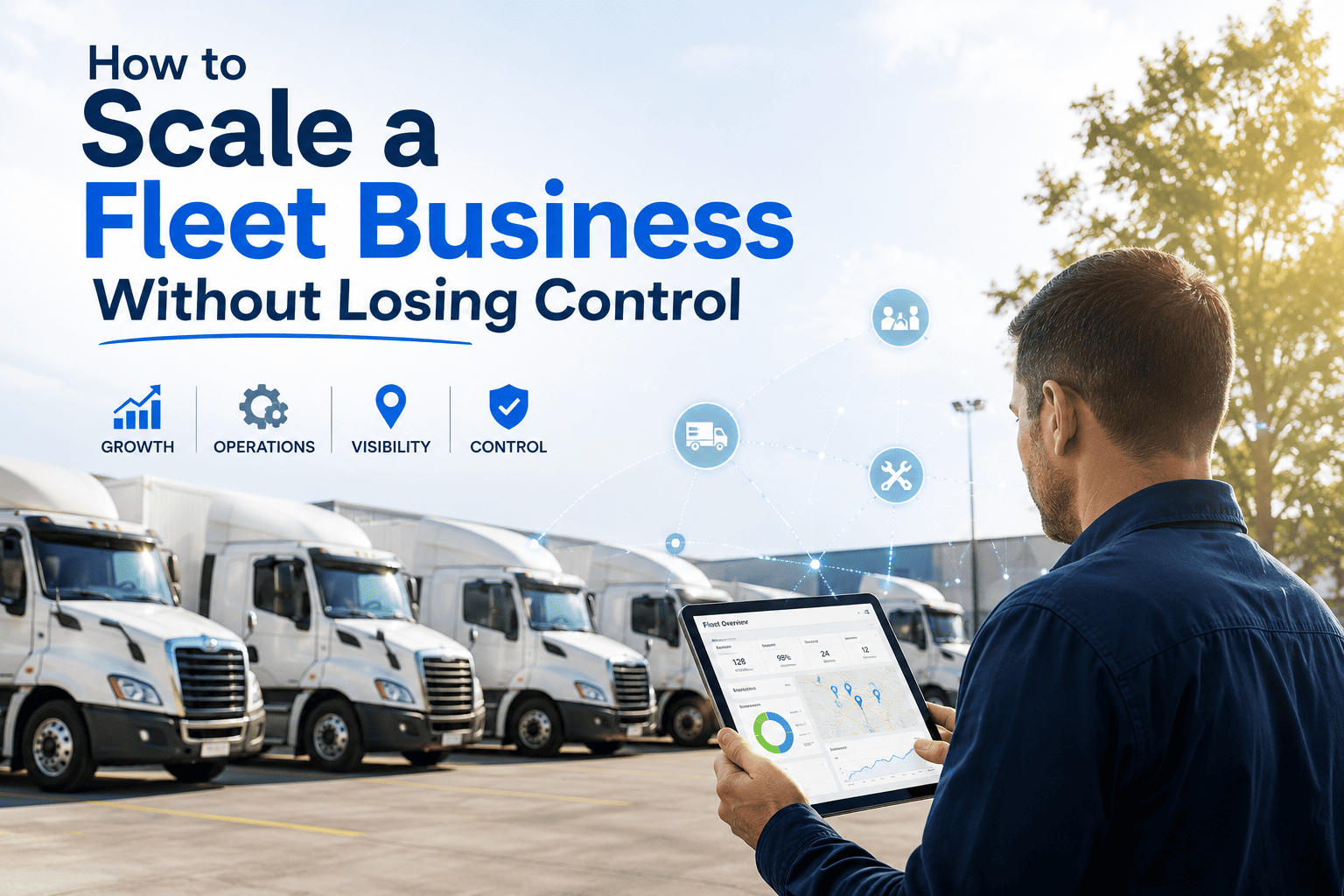
How to Scale a Fleet Business Without Losing Control
OxMaint helps growing fleets standardize operations, track per-vehicle economics, and stay visible across every location — so adding vehicles builds value instead of chaos.
Every Fleet Hits the Same Three Breaking Points
The challenges of running a fleet do not change much between a business with ten vehicles and one with a thousand — they just compound at every stage. What changes is whether the systems underneath are built to absorb that growth or collapse under it.
What Actually Changes When a Fleet Standardizes
| Dimension | Informal Operation | Systemized Operation |
|---|---|---|
| Scheduling | Spreadsheets, memory, and phone calls between dispatchers | A shared schedule visible to every location in real time |
| Maintenance Records | Paper logs kept per driver or per shop, rarely compared | One maintenance history per vehicle, searchable across the fleet |
| Driver Accountability | Verbal warnings based on whoever remembers the incident | Objective data tied to each driver, vehicle, and route |
| Cost Visibility | A single blended number reviewed once a quarter | Per-vehicle unit economics reviewed weekly |
| Institutional Knowledge | Lost whenever a dispatcher or senior driver leaves | Captured permanently in a shared operating platform |
Every Vehicle You Add Makes the Old Process Slower, Not Faster
A process that worked cleanly at ten vehicles does not simply scale at fifty — it starts working against you. OxMaint gives fleet leaders one connected system for scheduling, maintenance, and cost tracking before growth outruns the tools holding it together.
Four Pillars of Scaling With Control
The Measurable Difference Between Scaling and Sprawling
Scaling a Fleet Business — Common Questions
Most fleets feel the first real strain somewhere between fifteen and thirty vehicles, when one person can no longer hold every schedule and service record in their head. Sign up to map where your own fleet sits.
Standardization works best rolled out one workflow at a time — maintenance scheduling first, then dispatch, then reporting — rather than replacing everything at once. Book a demo to see a phased rollout plan.
It means tracking cost, uptime, and revenue for each vehicle individually rather than as a fleet average, which is the only way to catch an underperforming asset early. Start a free trial to see it applied to your fleet.
Yes, as long as every location reports into one shared platform instead of separate local spreadsheets, so leadership sees one version of the truth. Book a demo to see multi-site visibility in action.
Most fleets see meaningful improvement within a single quarter of standardizing core workflows, with full control typically restored within six to twelve months. Sign up to start the rebuild now.
Growth Should Compound Your Fleet's Value, Not Its Chaos.
OxMaint gives fleet leaders standardized operations, per-vehicle economics, and multi-location visibility — the operational discipline that lets a fleet scale from small business to enterprise without losing control.