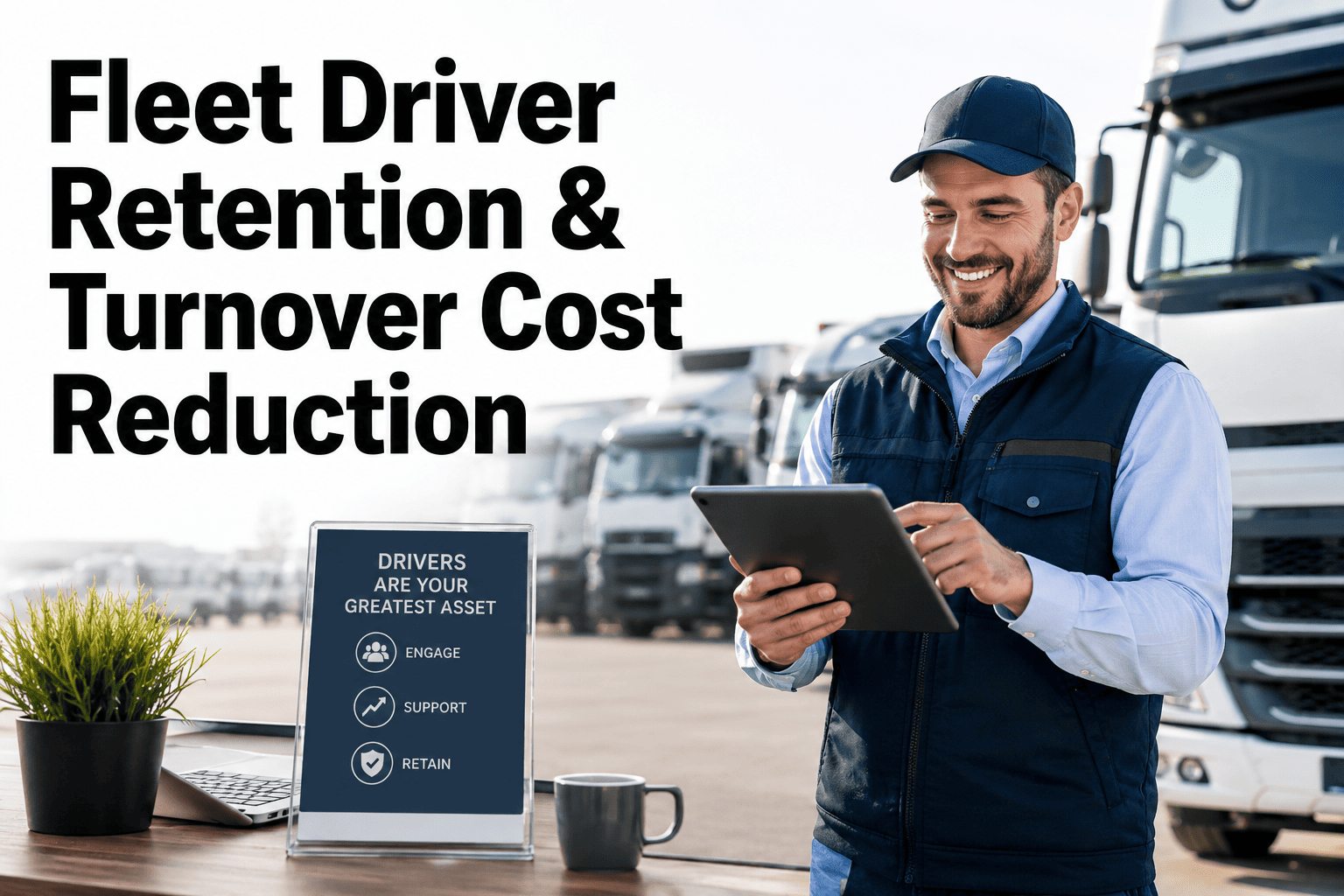
Growth in a fleet business is capped by one thing more often than any other: drivers. You can win the freight, add the routes, and buy the trucks, but none of it moves without enough qualified drivers behind the wheel — and in a labor market where a driver can leave for another carrier over a scheduling headache, keeping the seats you already filled is just as hard as filling new ones. Recruitment gets the budget and the attention, but retention is what actually determines whether scaling a fleet compounds growth or just compounds turnover costs. The operations behind the scenes — how quickly a driver gets paid accurately, how fast a maintenance issue gets resolved, how transparent a dispatch decision feels — end up deciding who stays, which is exactly where booking a demo can show you what's fixable.
Fleet Workforce Operations
Fleet Driver Recruitment & Retention While Scaling
Scaling a fleet without losing your best drivers means fixing the operational friction that pushes them out the door long before pay or bonuses ever come into the conversation.
33%
Average annual driver turnover at large carriers
5-7x
Cost of replacing a driver versus retaining one
#1
Driver capacity as the top blocker to fleet growth
FasterVehicle turnaround keeps drivers earning
TransparentMaintenance status visible to dispatch
FewerBreakdown-related lost driving days
ConsistentEquipment reliability across the fleet
The Real Cost Of Losing A Driver While You're Scaling
Every open seat during a growth phase is a route that can't be run, a customer commitment at risk, and a recruiting cycle that competes for the same shrinking pool of qualified drivers as every other carrier expanding at the same time. Replacing a driver isn't just a recruiting cost — it's lost revenue on the truck sitting idle, overtime paid to cover the gap, and the operational drag of onboarding someone new while still trying to grow.
Replacing A Driver
Weeks of an idle truck during recruiting and onboarding
Recruiting spend, background checks, and orientation time
Lost route familiarity and customer relationship continuity
Ripple effect on remaining drivers picking up the slack
Retaining A Driver
Truck stays productive without a recruiting gap
Institutional route and customer knowledge stays intact
Lower strain on dispatch and remaining driver workload
Word-of-mouth reputation that helps future recruiting
See Where Turnover Is Actually Coming From
OxMaint connects maintenance and dispatch data so you can see exactly which operational gaps are pushing drivers toward the door.
What Drivers Actually Want From A Growing Fleet
Pay matters, but it's rarely the whole story behind a driver quitting. Survey after survey in the trucking industry points to operational frustration — unreliable equipment, unclear communication, and feeling like a number instead of part of the team — as the quieter reasons drivers leave. Scaling fast without addressing these makes the problem worse, not better.
Reliable Equipment
A truck that breaks down repeatedly costs a driver money and time, and it's one of the fastest ways to lose trust in the company running it.
Fast Repairs
Drivers judge a fleet by how quickly a reported issue turns into a scheduled fix, not by how good the policy manual sounds.
Clear Communication
Knowing the status of a repair or a schedule change in real time removes the guesswork that breeds frustration on the road.
Consistent Scheduling
Predictable routes and maintenance windows let drivers plan their lives around the job instead of around constant surprises.
Recognition
Drivers who feel like their safety record and tenure are noticed are measurably more likely to stay through a growth phase.
The Driver Journey: Where Fleets Win Or Lose Retention
Retention isn't decided in one exit interview — it builds up across every touchpoint a driver has with the operation, starting the day they're hired and continuing through every shift after. Mapping that journey shows exactly where a scaling fleet needs to invest operational attention.
1
Recruit
First impressions form fast — a slow, disorganized hiring process signals what daily operations might feel like.
2
Onboard
A driver's first assigned truck should be reliable, not a vehicle already flagged for overdue maintenance.
3
Support
Every reported issue on the road needs a fast, visible response — silence is what erodes trust the quickest.
4
Recognize
Tenure, safety records, and reliability deserve visible acknowledgment, not just a line in a payroll system.
5
Retain
Consistency over months, not a single good week, is what convinces a driver to stay through your next growth phase.
Manual Driver Operations Versus A Connected Fleet CMMS
A lot of the friction that drives turnover isn't a culture problem — it's an operations problem hiding behind spreadsheets, radio calls, and paper repair tags. The table below shows how that friction shows up differently depending on whether maintenance and dispatch are connected or running separately.
| Driver Experience Factor |
Manual, Disconnected Operations |
OxMaint Connected Operations |
| Reporting a truck issue |
Phone call or paper tag, easy to lose track of |
Logged instantly and visible to dispatch and maintenance |
| Repair turnaround |
Depends on who happens to notice the request |
Prioritized and tracked until the work order closes |
| Truck assignment |
Based on availability, not maintenance status |
Assigned with full visibility into vehicle health |
| Communication with drivers |
Inconsistent, often reactive |
Status updates flow automatically through the system |
| Onboarding new drivers |
Relies on tribal knowledge and informal handoffs |
Standardized checklists and equipment readiness checks |
Give Drivers A Reason To Stay Through Growth
A connected maintenance workflow means fewer breakdowns, faster repairs, and drivers who trust the equipment you put them in.
Scaling Without Losing Your Best Drivers: A Practical Roadmap
Fleets that scale successfully without a retention crisis tend to follow a similar operational sequence, prioritizing the fixes that touch drivers directly before adding more trucks and routes on top of a system that's already straining.
01
Audit Current Turnover Drivers
Review exit interviews and maintenance logs together to find the operational patterns behind recent departures, not just the stated reasons.
02
Fix The Fastest-Impact Gaps
Tackle the equipment reliability and communication issues drivers mention most before investing in anything else.
03
Connect Maintenance To Dispatch
Give dispatch real-time visibility into vehicle status so trucks aren't assigned to drivers without a full health check first.
04
Standardize Onboarding
Build a repeatable onboarding checklist so new drivers get the same reliable experience regardless of who trains them.
05
Scale With Data, Not Guesswork
Use maintenance and retention data together to decide how fast new routes and trucks can be added without straining the team you already have.
What Fleet Owners Say About Retaining Drivers While Growing
We were adding trucks faster than we could keep drivers, and every exit interview came back to the same complaint — equipment breaking down and nobody following up fast enough. Once we connected maintenance requests directly to dispatch through OxMaint, drivers could see their issue had actually been logged and prioritized instead of wondering if anyone read the message. Turnover on our newer routes dropped within a couple of quarters, and just as importantly, our recruiting got easier because current drivers started referring people instead of warning them away.
— Operations Director, Regional Trucking Fleet
Lower
Turnover on newly scaled routes
Faster
Repair request acknowledgment
More
Driver referrals during hiring pushes
Standardized
Onboarding across every new hire
Three Pillars Supporting Recruitment And Retention
Recruitment fills seats and retention keeps them filled, but both rest on the same operational foundation. Strengthening the maintenance and dispatch backbone of a fleet pays off in both directions at once.
Recruitment Support
A reliable fleet reputation that makes recruiting easier
Faster onboarding that gets new hires earning sooner
Referral-friendly culture built on operational trust
Word travels fast in driver communities — reliability recruits for you.
Retention Support
Transparent repair status that builds day-to-day trust
Fewer breakdowns that cost drivers time and income
Recognition data tied to tenure and safety records
Retention is built in small operational moments, not annual reviews.
Scaling Support
Fleet health visibility before adding new routes
Standardized processes that scale without breaking
Data-driven decisions on when growth is sustainable
Growth that doesn't burn out the team already running the fleet.
Frequently Asked Questions
Why does driver retention get harder specifically while scaling a fleet?
Scaling adds strain to maintenance, dispatch, and onboarding all at once, and any cracks in those systems become more visible as volume grows, which is often when turnover quietly starts climbing.
How does a CMMS actually affect driver retention?
A connected CMMS shortens the time between a driver reporting an issue and it being fixed, which removes one of the most common frustrations drivers cite when deciding to leave a fleet.
Can OxMaint help with recruiting directly?
OxMaint focuses on the operational reliability that indirectly supports recruiting — fewer breakdowns and faster repairs build the reputation that makes current drivers refer others.
What's the fastest operational fix for reducing driver turnover?
Start with repair turnaround time — connecting maintenance requests directly to dispatch visibility is usually the single fastest change, and a
quick demo can show what that looks like on your fleet.
How long does it take to see a retention impact after implementation?
Most fleets notice a shift in driver feedback within the first couple of maintenance cycles, since faster repair turnaround is felt immediately —
start a free trial to see it firsthand.
Build A Fleet Drivers Don't Want To Leave
Scaling shouldn't mean choosing between growth and retention. OxMaint gives your maintenance and dispatch teams the connected workflow that keeps drivers confident in the equipment and the company behind it.