Fleet Fuel Reconciliation: Purchased vs Consumed Guide
By Corin Hale on July 31, 2026
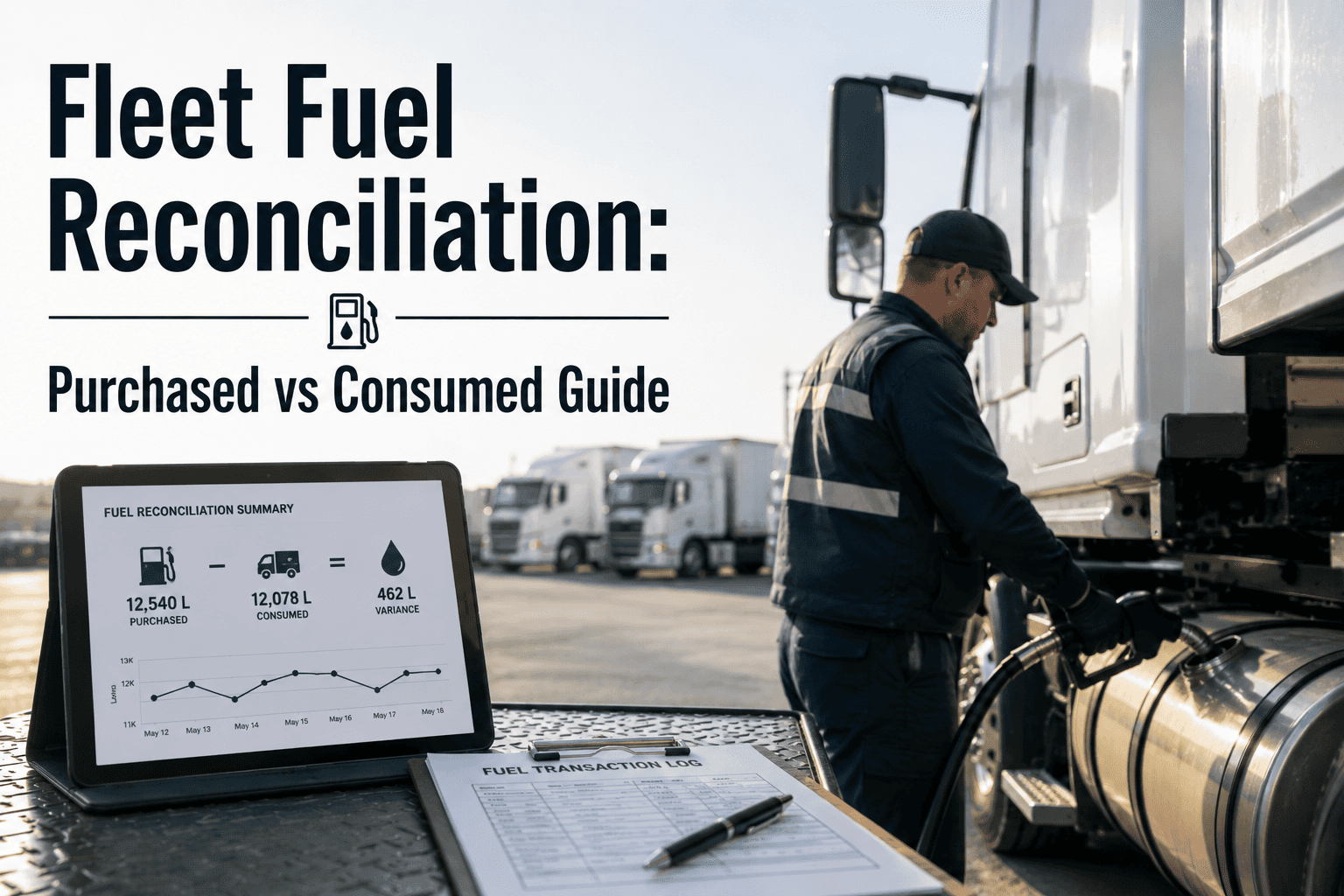
Fleet fuel reconciliation is the disciplined process of comparing every gallon of fuel purchased against every gallon consumed by each vehicle in your fleet — and when those two numbers don't match, money is actively leaking from your operation. Industry studies estimate that fuel theft, shrinkage, and untracked variance account for 2–5% of total fleet fuel spend, which for a 200-truck operation burning 1.2 million gallons annually can mean $40,000–$100,000 vanishing each year. OxMaint's AI-powered CMMS gives fleet and maintenance managers a systematic way to close that gap with per-vehicle fuel variance tracking, root-cause workflows, and audit-ready reconciliation records. Ready to stop the bleeding? Start Free Trial and see your fuel data unified in one dashboard within minutes.
Fleet Fuel Reconciliation
When fuel purchased doesn't match fuel burned, where is the money going?
Unreconciled fleet fuel variance hides theft, meter drift, leakage, and reporting errors — silently draining 2–5% of annual fuel spend. OxMaint turns purchased-vs-consumed reconciliation into a monthly loss-prevention discipline.
5%
Average unreconciled fuel variance across mid-size fleets
What Is Fleet Fuel Variance and Why It Keeps Growing
Fleet fuel variance is the numerical gap between the volume of fuel purchased (from fuel cards, bulk tanks, and mobile fueling) and the volume consumed (recorded by vehicle telematics, ECM data, or manual dip-stick readings). When that gap is left unreconciled, it compounds — small daily discrepancies of 3–7 gallons per vehicle quietly accumulate into six-figure annual losses. The variance grows because most fleets track purchases in one system, consumption in another, and never force the two to reconcile at the vehicle level.
A positive variance means fuel is missing (theft, leakage, meter error). A negative variance means consumption is over-reported (bad sensor, data gap). Both signal a problem worth investigating.
3–5%
Theft & Shrinkage
Siphoning, false fuel-card transactions, and buddy-pumping at unmonitored tanks.
1–3%
Meter & Calibration Drift
Fuel dispenser meters and vehicle ECM sensors drift out of calibration over time.
1–2%
Data & Reporting Gaps
Missed entries, time-zone mismatches, and manual-keying errors in fuel logs.
0.5–1%
Line & Tank Leakage
Undetected underground line leaks and tank condensation losses.
Step-by-Step Process
How to Reconcile Fuel Purchased vs Consumed — A Monthly Workflow
A disciplined fleet fuel audit follows a five-step monthly cycle. Each step narrows the variance from a fleet-wide mystery to a vehicle-specific root cause — turning reconciliation from a spreadsheet exercise into a managed loss-prevention discipline.
1
Collect All Fuel Purchase Records
Pull transactions from every source — fuel cards, bulk tank deliveries, mobile fueling vendors — into one timestamped ledger. Match each transaction to a specific vehicle or asset ID.
2
Gather Consumption Data per Vehicle
Extract gallons burned from ECM/telematics reports or driver fuel logs for the same period. Normalize units (gallons vs litres) and reconcile timestamps to the purchase window.
3
Calculate Per-Vehicle Variance
Apply the formula: Purchased − Consumed − Remaining. Flag any vehicle exceeding a 2% variance threshold for root-cause investigation.
4
Investigate Root Causes
Check for fuel-card fraud, dispenser calibration, tank leaks, or sensor errors. Open a work order for each flagged vehicle and assign an owner with a resolution deadline.
5
Document & Close the Loop
Record findings, corrective actions, and adjusted readings. Archive the reconciliation report for FMCSA, IFTA, and internal audit compliance.
Worked Example
Real-World Fleet Fuel Reconciliation Analysis
Consider a 180-vehicle regional delivery fleet spending $1.8M annually on diesel. The fuel manager reconciles purchases against consumption at the end of each month. Here's what a typical reconciliation reveals before and after systematic variance tracking is implemented:
Reconciliation Metric
Before OxMaint (Manual)
After OxMaint (Systematic)
Monthly fuel purchased
22,400 gal
22,400 gal
Monthly fuel consumed (reported)
21,100 gal
22,180 gal
Unreconciled variance
1,300 gal ($5,005/mo)
220 gal ($847/mo)
Variance percentage
5.8%
1.0%
Flagged vehicles investigated
0 of 180
14 of 180
Root causes identified & resolved
None tracked
3 theft, 6 meter drift, 4 sensor error, 1 line leak
Annual savings recovered
$0
$49,740
By moving from a manual spreadsheet reconciliation to OxMaint's per-vehicle variance tracking, this fleet cut its unreconciled fuel gap from 5.8% to under 1% within three months — recovering nearly $50,000 annually and flagging a bulk-tank line leak that had gone undetected for over a year.
Solution Mapping
How OxMaint Solves Fleet Fuel Tracking Reconciliation
OxMaint brings fuel reconciliation into the same CMMS platform that already manages your work orders, assets, and preventive maintenance — so fuel variance becomes a maintenance-triggered discipline, not a separate accounting afterthought. Four capabilities map directly to the reconciliation problem:
Per-Vehicle Variance Dashboard
OxMaint automatically compares purchased vs consumed fuel for each asset and flags any vehicle exceeding your variance threshold — cutting manual reconciliation time by up to 80%.
Automated Work Order Triggers
When a variance flag fires, OxMaint auto-generates a work order with a root-cause investigation checklist — assigning an owner and deadline so no discrepancy goes unresolved.
Fuel Tank & Asset Integration
Bulk tank levels, dispenser meter readings, and vehicle ECM data feed into the same asset registry — giving you a single source of truth for every gallon that enters or leaves your fleet.
Audit-Ready Reporting
Every reconciliation cycle is archived with timestamps, signatures, and corrective-action records — making IFTA, FMCSA, and internal audits a one-click export instead of a multi-day scramble.
Reconciliation Checklist
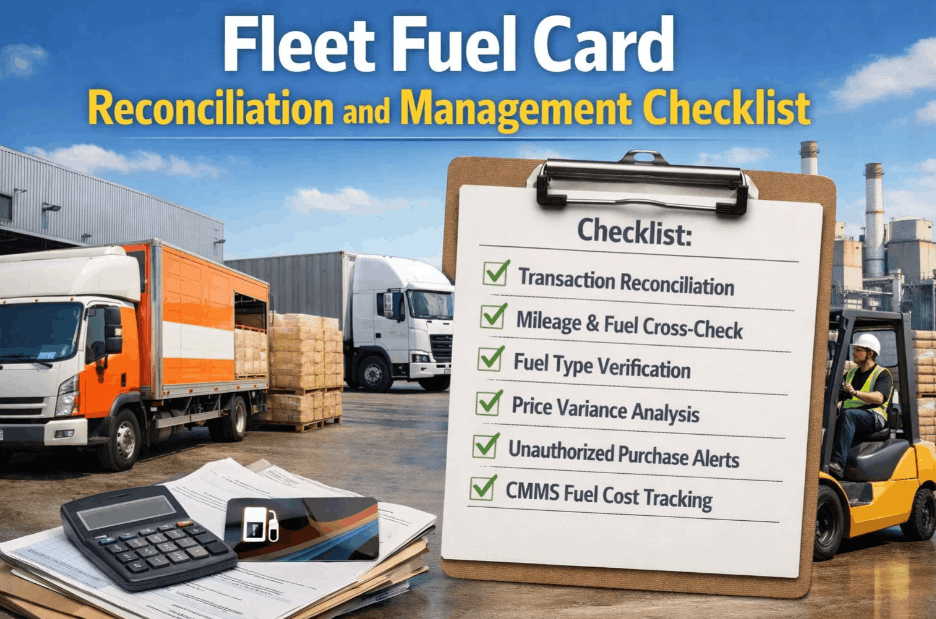
Fleet Fuel Audit Checklist: What to Check Every Month
Use this 12-point checklist as your monthly reconciliation baseline. Each item maps to a specific failure mode that contributes to fuel variance — miss one, and the gap stays open.
Data Collection
✓ All fuel-card transactions downloaded and matched to vehicle IDs
✓ Bulk tank delivery invoices reconciled against dip-stick readings
✓ ECM/telematics fuel-consumption reports exported for the period
✓ Mobile fueling vendor reports integrated into the master ledger
Variance Analysis
✓ Per-vehicle variance calculated using the standard formula
✓ Vehicles exceeding 2% threshold flagged for investigation
✓ Bulk tank variance checked separately from vehicle-level variance
✓ Period-over-period trends reviewed for gradual drift patterns
Resolution & Compliance
✓ Work orders opened for each flagged vehicle with assigned owner
✓ Dispenser meters calibrated if meter drift is suspected
✓ Fuel card fraud check run on outlier transactions
✓ Final reconciliation report archived for IFTA & audit compliance
See OxMaint close your fuel variance gap — live on your data
Book a 30-minute demo and we'll walk you through a purchased-vs-consumed reconciliation on your own fleet numbers. You'll see exactly where the gaps are and how work orders auto-trigger to close them.
Fleet fuel reconciliation is the process of comparing the total volume of fuel purchased (via fuel cards, bulk tanks, and mobile fueling) against the volume consumed by each vehicle, then investigating any variance. It is the primary method for detecting fuel theft, meter drift, leakage, and reporting errors before they compound into significant financial loss.
What is an acceptable fuel variance percentage for a fleet?
Most well-managed fleets target a variance of 1% or below. A variance between 1–3% warrants investigation, while anything above 3% indicates a serious problem — theft, a leak, or a major data gap. OxMaint lets you set custom thresholds per vehicle class so flags fire at the right sensitivity. Book a Demo to see threshold-based alerting configured for your fleet.
How often should fleet fuel reconciliation be performed?
Monthly reconciliation is the industry standard for most fleets, aligning with fuel-card billing cycles and IFTA reporting. High-volume fleets (those fueling daily in large quantities) benefit from weekly or even daily reconciliation on high-risk assets. OxMaint supports configurable reconciliation cycles so you can match the cadence to your operational risk profile.
What causes fuel purchased to not match fuel consumed?
The most common causes are fuel theft and shrinkage (30–50% of unresolved variance), dispenser or ECM meter drift (20–30%), manual data-entry and reporting errors (15–20%), and physical leaks in bulk tanks or fuel lines (5–10%). A systematic reconciliation isolates the variance to a specific vehicle or tank so you can identify which cause applies.
Can a CMMS automate fleet fuel reconciliation?
Yes — a CMMS like OxMaint automates reconciliation by ingesting purchase and consumption data, calculating per-vehicle variance, flagging outliers, and auto-generating work orders for investigation. This replaces manual spreadsheet reconciliation, cuts reconciliation time by up to 80%, and ensures every flagged discrepancy has an assigned owner and resolution deadline. Start Free Trial to test it on your fleet.
Stop letting fuel variance drain your fleet budget
OxMaint turns fuel reconciliation from a monthly spreadsheet headache into a systematic loss-prevention discipline — per-vehicle variance tracking, automated work orders, and audit-ready reports that recover the 2–5% of fuel spend you're losing today.