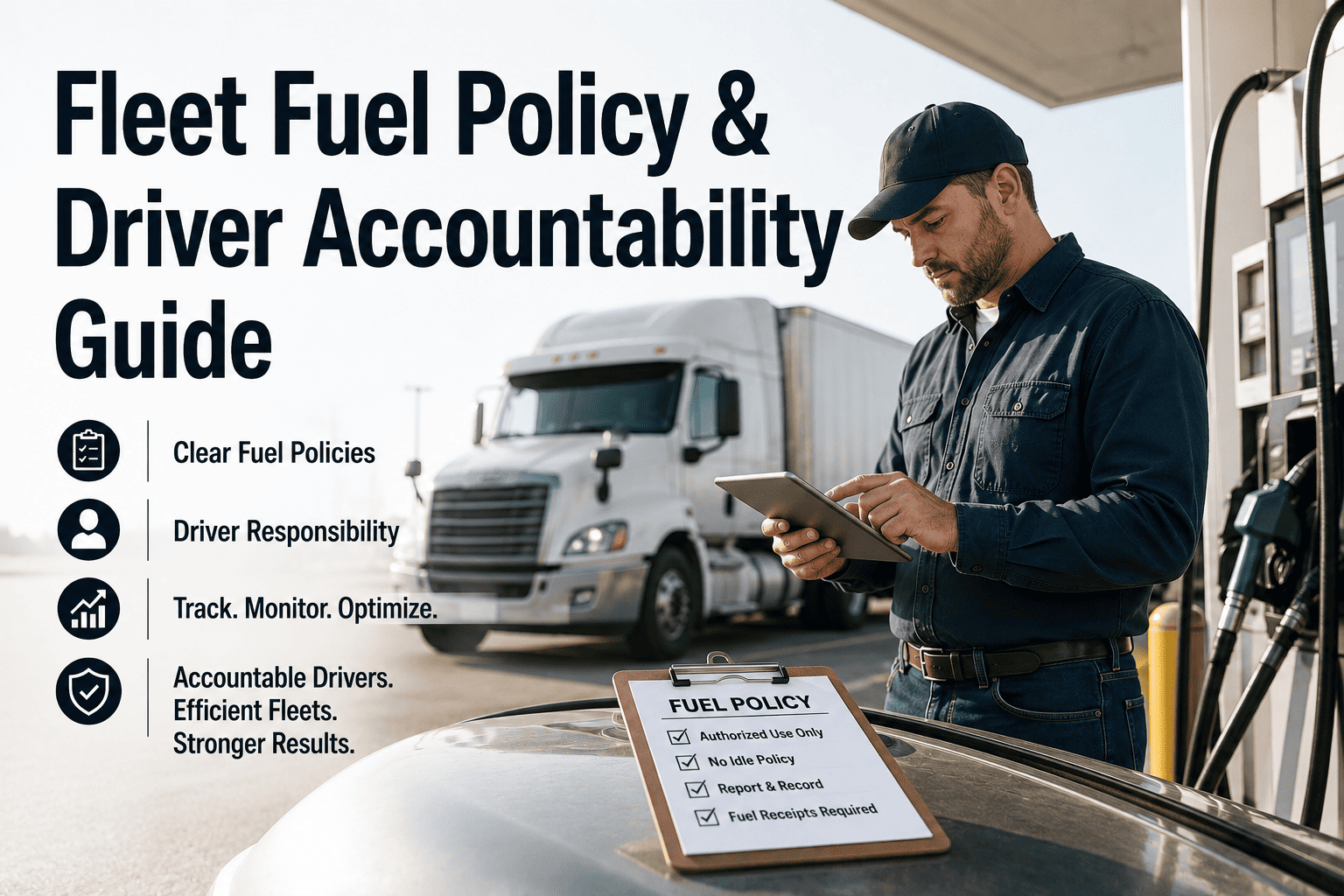
A fleet fuel policy without enforcement is just paperwork — and enforcement without visibility is impossible. Fleet managers lose an estimated 3–5% of annual fuel spend to theft, idling, inefficient routing, and unchecked driver behavior, making fleet fuel accountability one of the highest-leverage cost controls available. By implementing a structured fuel management fleet policy paired with driver accountability tracking, operations teams make fuel usage visible, owned, and optimized. OxMaint provides the CMMS and asset management infrastructure to turn your fleet fuel governance rules into measurable operational discipline, so you can stop bleeding margin and Start Free Trial to see exactly where your fuel dollars are going.
Who is actually accountable for every gallon of fuel your fleet burns?
A fuel policy nobody enforces invites silent loss. Without per-driver visibility and automated compliance reporting, you cannot hold anyone accountable. OxMaint turns your fleet fuel driver policy into tracked, enforceable operational discipline.
What is a fleet fuel policy and why does it fail without enforcement?
A fleet fuel policy is a formal set of rules governing how vehicles are fueled, who pays for it, how consumption is recorded, and how drivers are held responsible for fuel efficiency. It is the backbone of fleet fuel governance.
Fuel Procurement & Card Controls
Define authorized fuel stations, grade restrictions, daily gallon limits, and time-of-day purchase windows. Without hard controls, drivers can fuel personal vehicles or siphon diesel.
Driver Accountability & Tracking
Assign every transaction to a specific driver and vehicle. Fleet driver fuel accountability means comparing odometer readings to gallons purchased to flag discrepancies instantly.
Compliance Reporting & Analytics
Automated policy compliance reporting flags outliers — sudden MPG drops, off-hours fueling, or repeated overfills — so managers intervene before losses compound.
"Fleet operators who digitize fuel tracking and tie it to driver accountability typically recover 8–12% of total annual fuel spend within the first 90 days of enforcement."
How to build enforceable fleet fuel rules in 4 steps
Moving from a paper fuel policy fleet document to operational discipline requires a phased rollout. Here is the timeline for implementing fleet fuel control policy that drivers actually follow.
Audit & Baseline Fuel Usage
Pull 12 months of fuel card data and maintenance records. Calculate actual MPG per vehicle. Identify the bottom 20% of performers — these are your immediate policy targets. Document total fuel spend as the baseline for ROI tracking.
Define the Fleet Fuel Usage Policy
Draft explicit rules: authorized fuel grades, transaction limits, mandatory odometer entry at the pump, anti-idling standards, and personal-use prohibitions. Tie each rule to a measurable metric inside your CMMS.
Deploy Accountability Tracking
Link fuel cards to driver IDs and vehicle assets inside OxMaint. Enable automated flagging for transactions that violate policy — duplicate fueling, mismatched odometers, or out-of-network stations.
Enforce, Review, Optimize
Run weekly policy compliance reports. Coach drivers in the bottom quartile. Connect fuel data to preventive maintenance — if MPG drops, OxMaint auto-triggers an inspection for tire pressure, air filters, or engine diagnostics.
Fuel accountability fleet math: what unenforced policy costs you
When fuel management accountability fleet programs rely on manual spreadsheets, losses hide in the gaps. Here is the hard math for a 50-vehicle commercial fleet driving 1.2M miles per year.
Fuel card fraud, personal vehicle fill-ups, and unrecorded transactions drain margins silently.
Unmonitored idling burns up to 0.8 gal/hr. A 50-truck fleet idling 2 hrs/day wastes 14,600 gal/yr.
Underinflated tires and clogged filters cut MPG by 10–15%. Unlinked to CMMS, they go unfixed.
| Fuel Loss Category | Without Enforcement | With OxMaint Enforcement | Annual Recovery (50 veh) |
|---|---|---|---|
| Fuel Card Fraud & Theft | 2–3% of total spend | 0.3% (automated flags) | $21,400 |
| Excess Idling | 1.5+ hrs/day untracked | 0.5 hrs/day (coached) | $18,600 |
| Maintenance-Driven MPG Loss | 10–15% MPG degradation | 3% (PM-linked alerts) | $12,900 |
| Off-Route / Inefficient Routing | 5% excess miles | 1.5% (analytics review) | $8,200 |
| Total Recoverable Annual Fuel Spend | — | — | $61,100 |
Stop guessing where your fuel budget goes.
See how OxMaint makes every gallon visible, accountable, and optimized. Book a 30-minute demo and we will map your fleet's fuel recovery potential.
Fleet fuel control policy powered by OxMaint CMMS
OxMaint connects your fuel policy to the maintenance and asset data that actually drives fuel efficiency. You do not just track fuel — you link it to vehicle health, driver behavior, and preventive action.
Per-Driver Fuel Usage Visibility
Every fuel transaction is tied to a driver ID and vehicle asset. Dashboards show MPG, cost-per-mile, and outlier flags per driver in real time — eliminating spreadsheet blind spots.
Policy Compliance Reporting
Automated daily and weekly reports flag policy violations: off-hours fueling, mismatched odometers, over-limit transactions. Send alerts directly to fleet managers for immediate intervention.
Maintenance-Linked MPG Recovery
When fuel data shows a 10% MPG drop, OxMaint auto-generates a work order for tire inflation, filter replacement, or diagnostics. Fuel efficiency becomes a maintenance trigger, not a manual report.
Fleet Fuel Governance Dashboard
A single live dashboard unifies fuel spend, driver scores, vehicle health, and policy exceptions. Built for FMCSA compliance readiness and internal audits — exportable in one click.
A 180-vehicle logistics fleet recovered $114K in fuel spend
The problem: A regional logistics operator running 180 mixed vehicles spent $1.04M annually on fuel. Their fuel policy existed as a 6-page PDF in a driver onboarding folder. No per-driver tracking. No odometer-to-gallon reconciliation. Maintenance was reactive — tires ran underinflated, air filters were 15k miles overdue.
The OxMaint rollout: In Month 1, the fleet deployed OxMaint to link every fuel card transaction to a driver and vehicle asset. The system immediately flagged 14 drivers with MPG 20% below fleet average. In Month 2, automated compliance reporting caught 3 cases of after-hours fueling and 1 repeated odometer mismatch — all policy violations that had been invisible for years.
The result: By Month 4, predictive maintenance triggers recovered 7% MPG across the fleet by catching underinflated tires and clogged filters early. Driver coaching on flagged idling patterns cut idle time by 38%. Total annualized fuel recovery: $114,200 — an 11% reduction in total fuel spend.
Frequently asked questions about fleet fuel policy and driver accountability
What should a fleet fuel policy include?
A comprehensive fleet fuel policy should include authorized fueling stations and grades, daily and per-transaction gallon limits, mandatory odometer entry at the pump, anti-idling standards, personal-use prohibitions, and clear consequences for violations. It must also define how fuel data is tracked, who reviews compliance reports, and how often audits occur. A policy without tracking mechanisms is unenforceable.
How do you track fleet driver fuel accountability?
Driver fuel accountability is tracked by assigning every fuel card transaction to a specific driver ID and vehicle asset, then comparing gallons purchased to odometer advances to calculate real-world MPG. Outliers — sudden MPG drops, off-hours fueling, or duplicate transactions — are flagged automatically. OxMaint centralizes this data so managers see per-driver fuel scores without manual spreadsheet reconciliation. You can Book a Demo to see live accountability dashboards.
How much fuel does a fleet lose to theft and poor tracking?
Unmonitored fleets typically lose 3–5% of total annual fuel spend to a combination of card fraud, fuel siphoning, excess idling, and unrecorded personal use. For a 50-vehicle fleet spending $750K per year on fuel, that is $22,500–$37,500 in preventable losses. Fleets that implement automated fuel tracking and enforcement typically recover 8–12% of total fuel spend within the first 90 days.
How does CMMS software improve fleet fuel management?
A CMMS like OxMaint links fuel consumption data to vehicle maintenance history. When fuel efficiency drops, the system automatically generates a work order for inspection — checking tire pressure, air filters, oil quality, and engine diagnostics. This turns fuel data from a lagging accounting metric into a predictive maintenance trigger, recovering 8–12% of lost MPG that reactive maintenance programs miss.
How long does it take to implement a fuel accountability program?
A structured rollout takes about 4 months: Month 1 audits and baselines current fuel spend, Month 2 defines and documents the fuel usage policy, Month 3 deploys tracking and accountability tools, and Month 4 begins active enforcement and driver coaching. Most fleets see measurable fuel recovery within 60–90 days of going live. Start with a Start Free Trial to baseline your fleet today.
Make fuel usage visible, owned, and optimized.
OxMaint turns your fleet fuel policy from a PDF into enforced operational discipline. See per-driver accountability, automated compliance flags, and maintenance-linked MPG recovery in action.
Free 14-day trial · No credit card




.png)