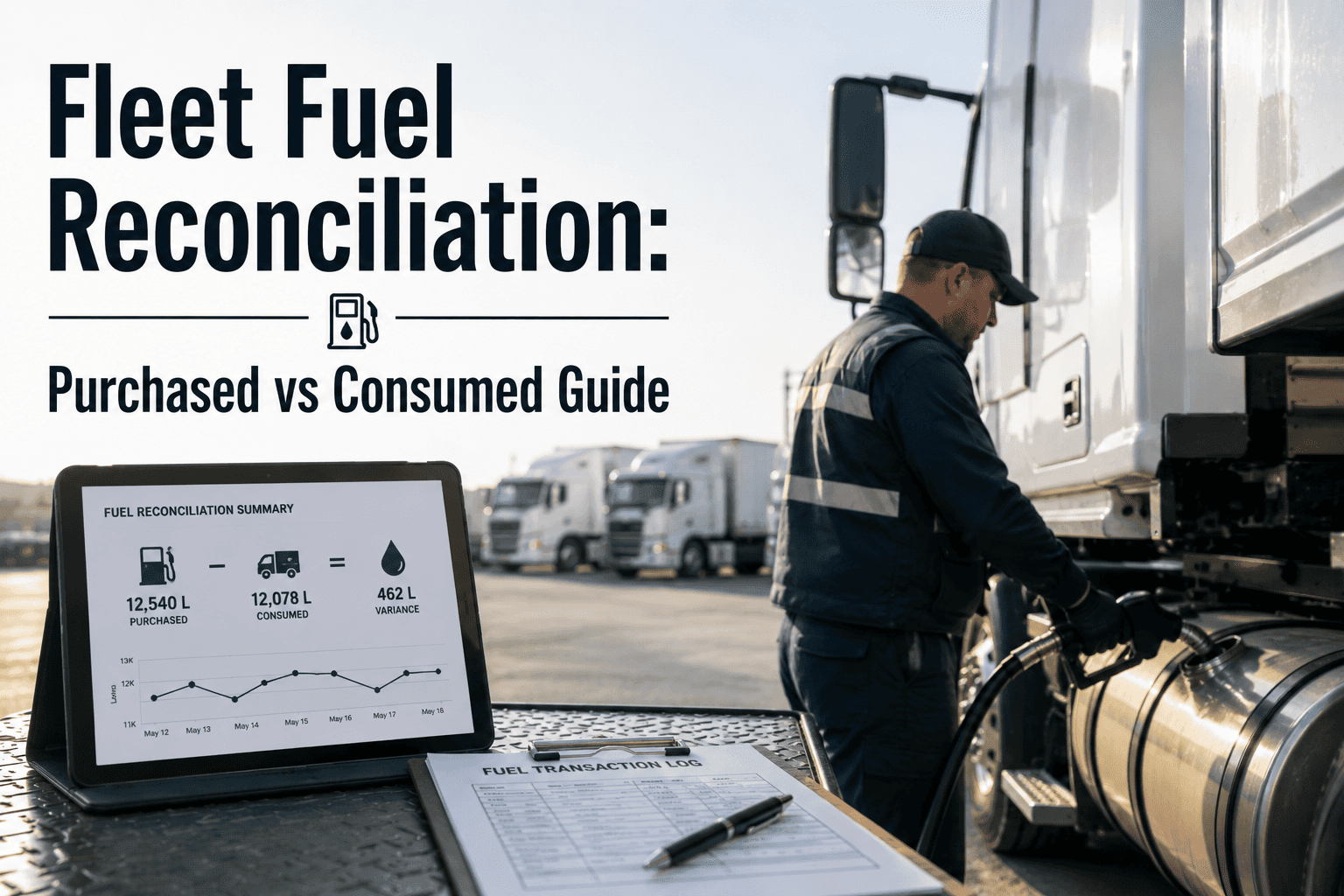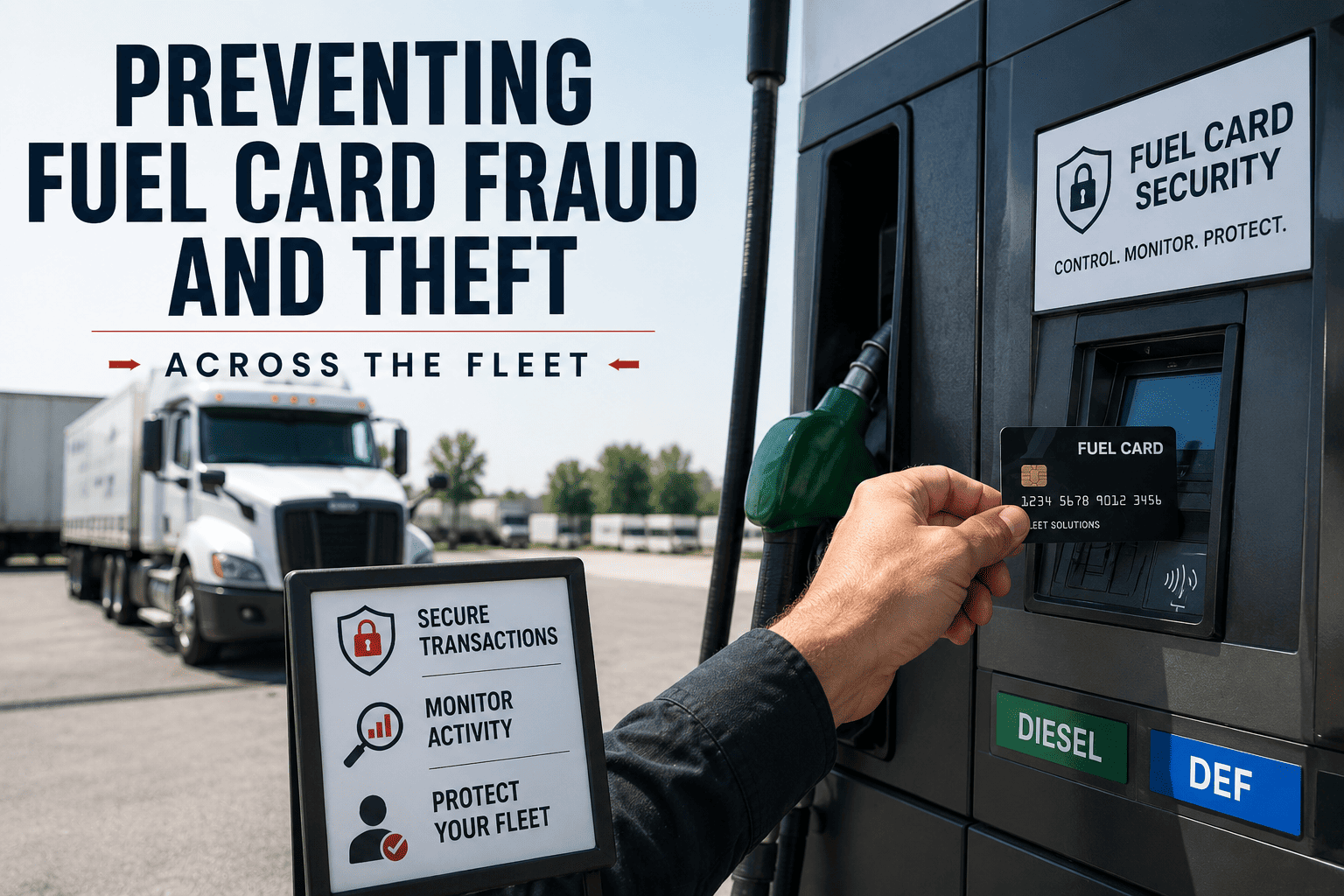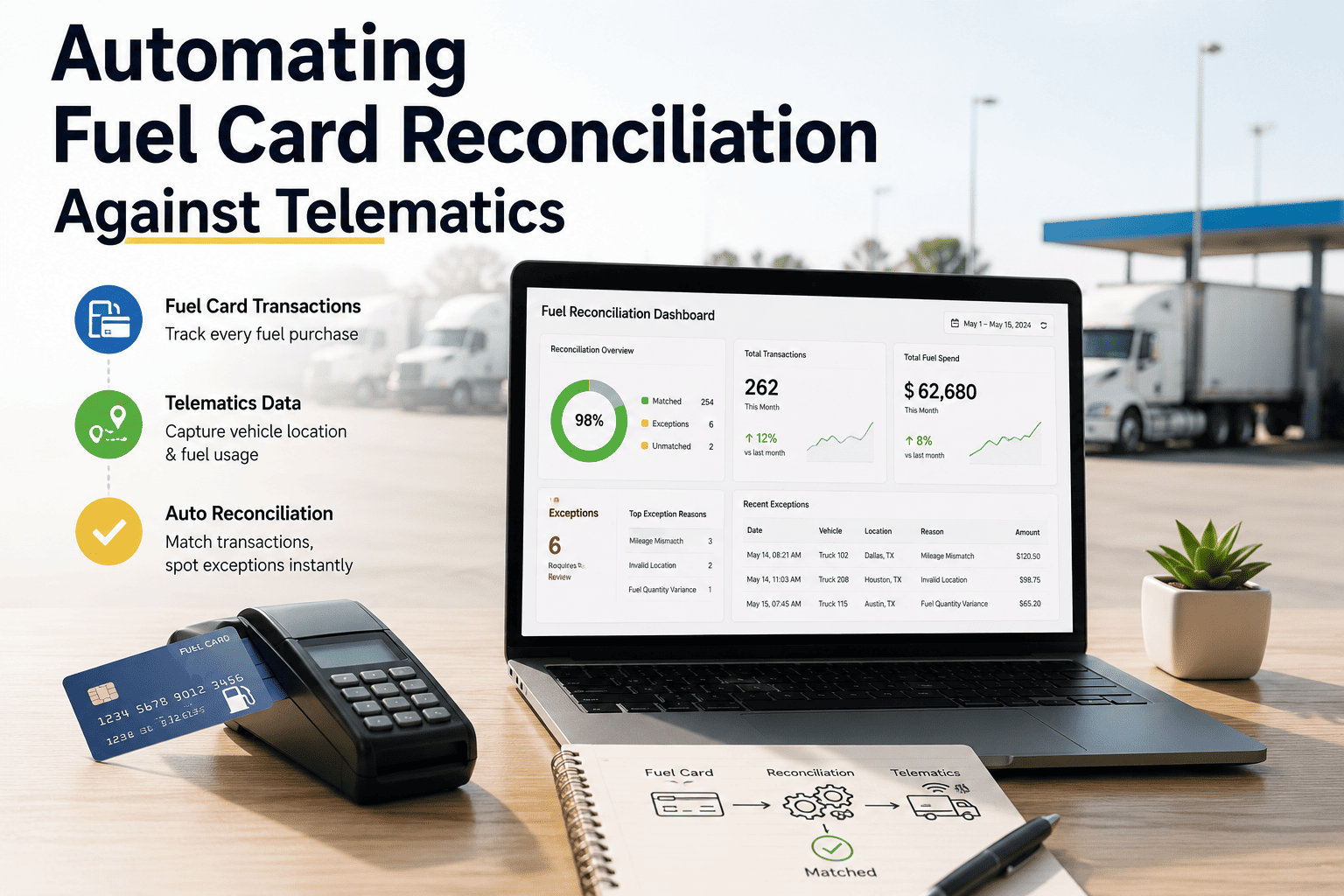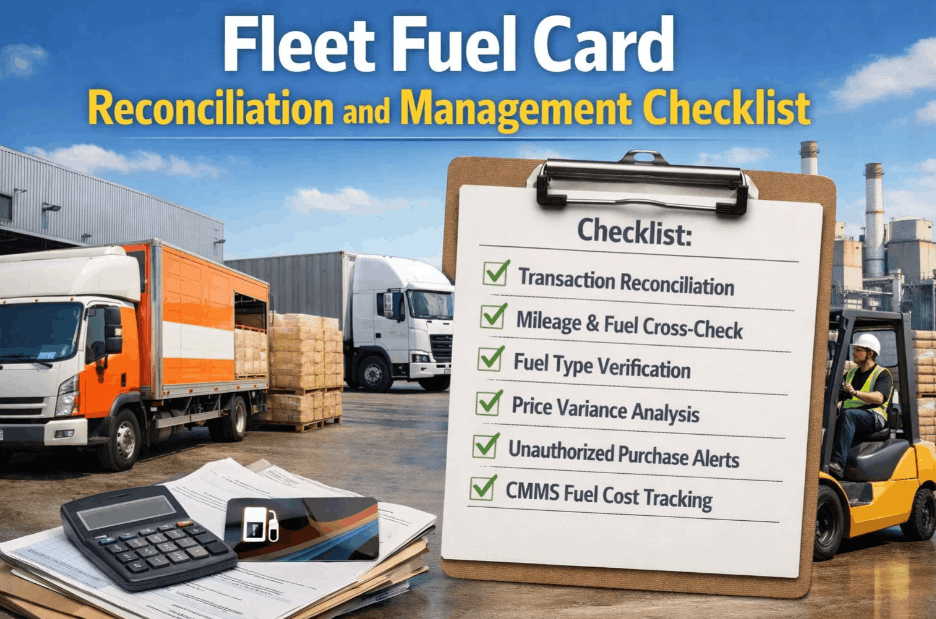
Fleet fuel cards generate thousands of transactions per quarter — and without structured reconciliation, a 3% fraud rate or systematic mileage mis-entry goes undetected for months before it surfaces as a P&L variance with no clear root cause. Fuel spend is typically the second largest fleet operating cost after driver wages, yet it is the least scrutinised. A structured fuel card management programme routinely uncovers 4–8% of fuel spend as recoverable waste or fraud. Oxmaint links every transaction to the correct vehicle, cross-references telematics mileage, and flags variances for immediate accounting review.
Fuel Card Health — Transaction Reconciliation Scorecard
The scorecard below shows the six key metrics that determine whether a fleet's fuel card programme is healthy or leaking money. Each metric has a clear threshold — Green means controlled, Amber means review needed, Red means investigate immediately. Use this to assess your fleet before the next reconciliation cycle.
Technology That Closes Fuel Spend Gaps
Manual fuel card reconciliation — downloading statements, sorting by vehicle, cross-referencing mileage logs — takes 2–3 days per month for a 50-vehicle fleet and still misses the patterns that indicate fraud or misuse. Four technologies make fuel card reconciliation automatic, exception-based, and near real-time. Oxmaint integrates all four into one fuel cost management workflow.
1. Transaction Reconciliation and Mileage Cross-Reference Checklist
Every fuel card transaction must be matched to a vehicle, a date, a mileage reading, and a fuel quantity that is plausible given the vehicle's tank capacity and consumption rate. Oxmaint performs this cross-reference automatically from telematics data.
All transactions matched to a vehicle unit number
Every transaction must be attributed to a specific vehicle — unattributed transactions cannot be reconciled to mileage or consumption and are immediate fraud risk. Flag — unattributed transaction
Odometer reading at each transaction cross-referenced to telematics
Driver-entered odometer readings must be within 2% of GPS odometer — a persistent larger variance indicates odometer tampering or driver mis-entry designed to conceal fuel diversion. Flag — variance >2%
Gallons per fill-up verified against tank capacity
Any transaction exceeding the vehicle's stated tank capacity is either a data error or fuel dispensed into a container — both require investigation before the transaction is approved. Flag — exceeds tank capacity
MPG calculated per vehicle per period — compared to baseline
Calculate MPG from mileage and fuel for every vehicle every reconciliation period. Any vehicle showing >15% deviation from its established baseline requires an engine efficiency or fuel loss investigation. Flag — >15% MPG deviation
Time-gap between consecutive fill-ups verified
Two fill-ups within 2 hours on the same card with a combined volume near or exceeding tank capacity indicates a potential double-swipe fraud — a known fuel card exploit where the card is swiped twice for one physical fill. Flag — duplicate swipe pattern
GPS Telematics tip: Oxmaint matches the GPS location of every fuel card transaction against the vehicle's telematics position at the transaction timestamp — any location mismatch is flagged automatically, catching card-not-present fraud and misattributed transactions before they are approved for payment. See Oxmaint's location-matched fuel transaction verification.
2. Price Variance, Fuel Type and Fraud Detection Checklist
Price variance, incorrect fuel type, and outright fraud are three distinct problems that require different detection methods. A driver who consistently fuels at a station charging 12% above the regional average may simply not know about cheaper alternatives — or may have an arrangement with the station owner. Both need to be investigated, but the response is different. Oxmaint flags price variance and fuel type mismatches in real time on every transaction.
Price per gallon vs. regional average — variance report
Generate a price variance report comparing each transaction's price per litre/gallon to the regional average for that fuel type and date. Transactions above 8% of the regional average require investigation. Flag — >8% above regional average
Fuel type verified — diesel vs. petrol/gasoline vs. DEF
Verify the fuel type purchased matches the vehicle's required fuel. Petrol purchased on a diesel vehicle card indicates either a wrong vehicle fuelled or a fraudulent transaction — both require immediate follow-up. Flag — wrong fuel type
Weekend and after-hours transactions — pattern review
Review all fuel card transactions occurring when the vehicle is not scheduled for operation. A transaction at 2 AM on a Saturday on a Monday–Friday vehicle is a high-probability fraud indicator. Flag — off-schedule transaction
Out-of-territory transactions — geographic boundary check
Flag all transactions at fuel stations outside the vehicle's assigned operating territory. A regional delivery vehicle with a transaction 300 miles outside its normal route requires both mileage and dispatch record verification. Flag — outside operating territory
Non-fuel purchases on fuel cards — product category review
Review all transactions for non-fuel product categories — car washes, convenience store items, and restaurant charges on a fuel-only card are policy violations requiring driver counselling and card restriction. Flag — non-fuel category charge
3. Card Controls, Policy Compliance and Record Retention Checklist
Fuel card controls — purchase limits, product restrictions, geographic boundaries, and time-of-day rules — are the preventive layer that reduces the reconciliation burden. A fleet whose cards have no purchase limits, no product restrictions, and no geographic boundaries is not managing fuel spend — it is financing it and hoping for the best. Link fuel card controls and policy violations to driver records in Oxmaint.
Per-transaction and daily spend limits set on all cards
Every fuel card must have a per-transaction limit set to slightly above the vehicle's maximum single fill-up volume at the highest local price. Cards without limits expose the fleet to unlimited single-event fraud. Flag — no limit configured
Product restriction codes configured — fuel only
Set card product restriction codes to allow only the vehicle's required fuel type and DEF. Cards permitting "any product" at a fuel station allow car washes, motor oil, and store purchases to be charged — all invisible until reconciliation. Flag — unrestricted product codes
Lost or stolen cards cancelled within 24 hours of report
Document every card cancellation with the date and time of driver report and date/time of card deactivation. Any transactions between the loss event and deactivation must be individually investigated. Flag — delayed cancellation
Fuel cost records retained — 3 years minimum for IFTA support
All fuel card statements, transaction records, and reconciliation reports must be retained for 3 years to support IFTA audit requests. Records purged early create gaps in the IFTA audit trail. Flag — premature purge
SAP Integration tip: Oxmaint's SAP connector posts each reconciled fuel transaction to the correct vehicle cost centre, fleet fuel expense account, and IFTA jurisdiction record automatically — eliminating the manual journal entries that accounting teams perform at month-end and producing a continuous fuel cost ledger per vehicle. Book a demo to see fuel-to-SAP GL automation.
We were spending 3 days every month manually reconciling 4,200 fuel card transactions across 65 vehicles. Connecting Oxmaint to our fuel card provider API reduced that to a 2-hour exception review. In the first month we identified $14,000 in transactions that failed the location or volume checks — more than the platform cost in a year.
Frequently Asked Questions
The most common questions from fleet accounting and operations teams about fuel card reconciliation, fraud detection, and controls.
Weekly for fleets over 20 vehicles or $50K monthly fuel spend. Monthly is the minimum acceptable frequency. Quarterly reconciliation allows fraud to accumulate for months before detection — the recoverable amount drops significantly the longer a pattern goes undetected.
The most common pattern is a driver fuelling a personal vehicle using a company card assigned to their CMV. It is detectable by comparing GPS vehicle location against the fuel station location at the transaction timestamp — a mismatch is the primary indicator.
Legitimately, no. A transaction volume exceeding the vehicle's rated tank capacity indicates either fuel dispensed into a portable container, a data entry error on tank size, or a fraudulent transaction. All three require investigation — the control should trigger an alert, not auto-approve.
Set cards to allow only the vehicle's required fuel type (diesel, petrol/gasoline, or CNG) plus DEF if applicable. Restrict all other product categories — car wash, convenience store, and lubricant purchases should require a separate fleet maintenance card with proper approval workflows.
Oxmaint compares each transaction against six parameters: vehicle GPS location, tank capacity, scheduled operating hours, regional price benchmarks, fuel type configuration, and MPG baseline. Any transaction failing two or more parameters is flagged for accounting review before payment approval.
Three years minimum — to support IFTA audit requests, internal cost audits, and fraud investigation timelines. Retain transaction-level data, not just monthly summaries — auditors request individual receipts, not statements.