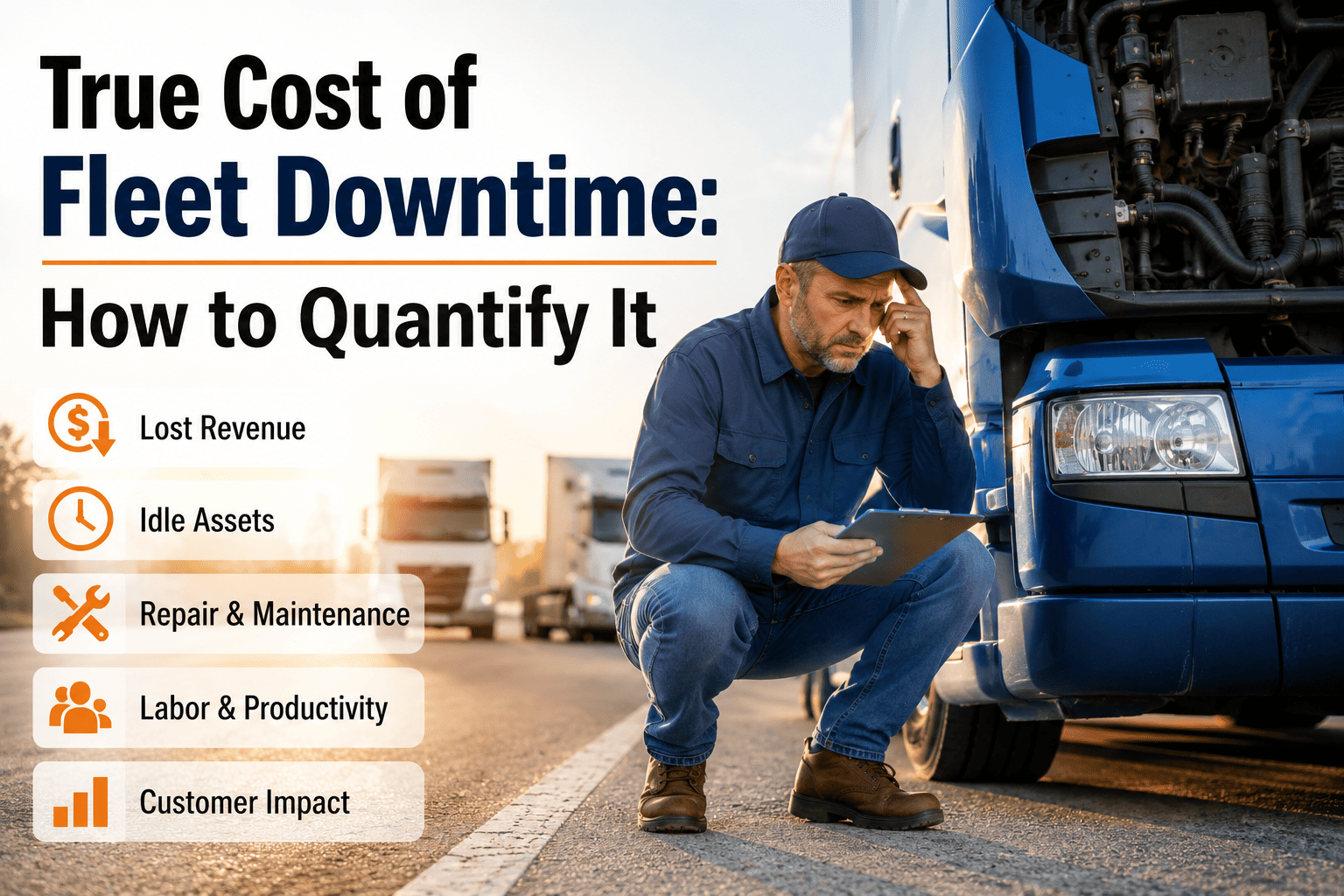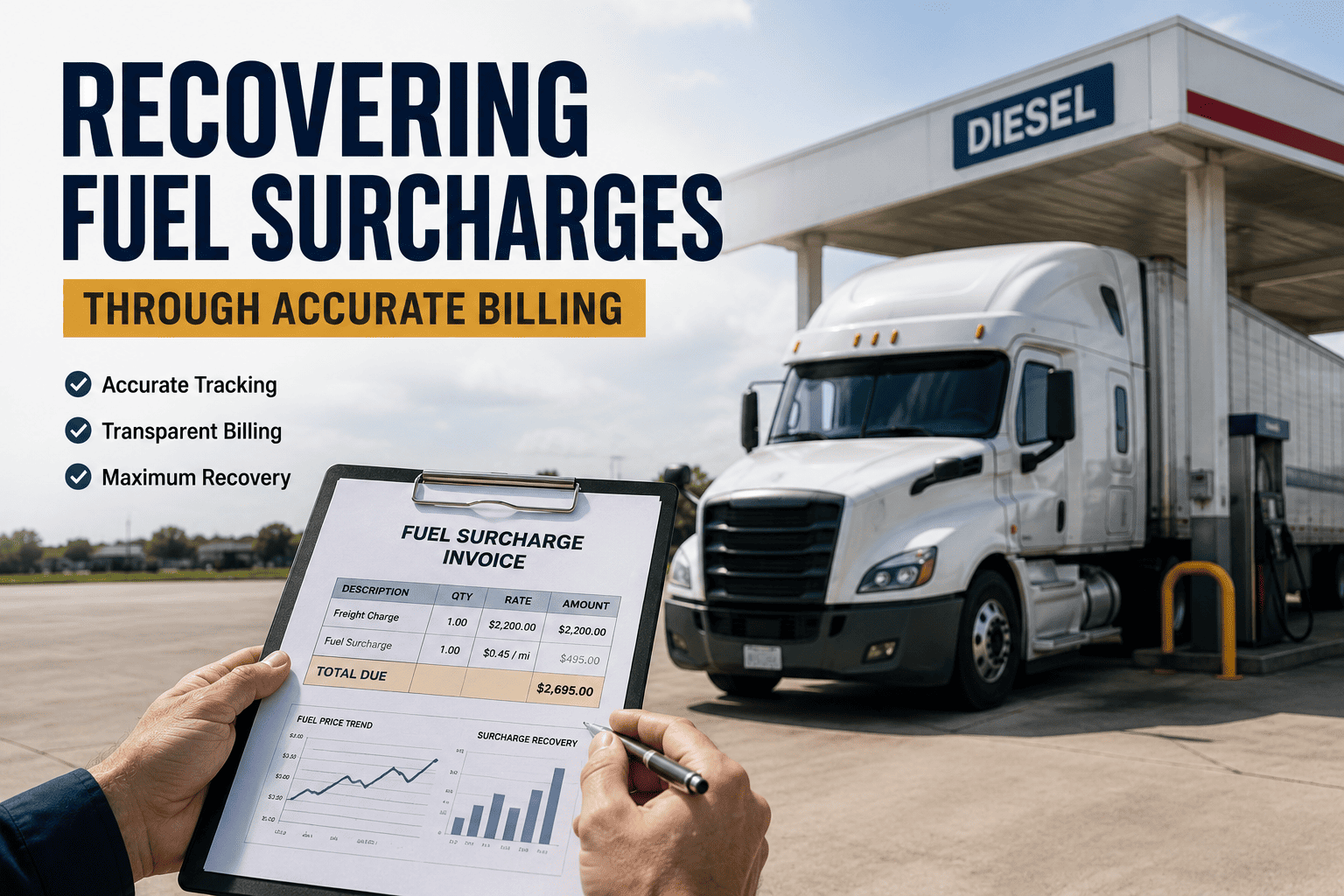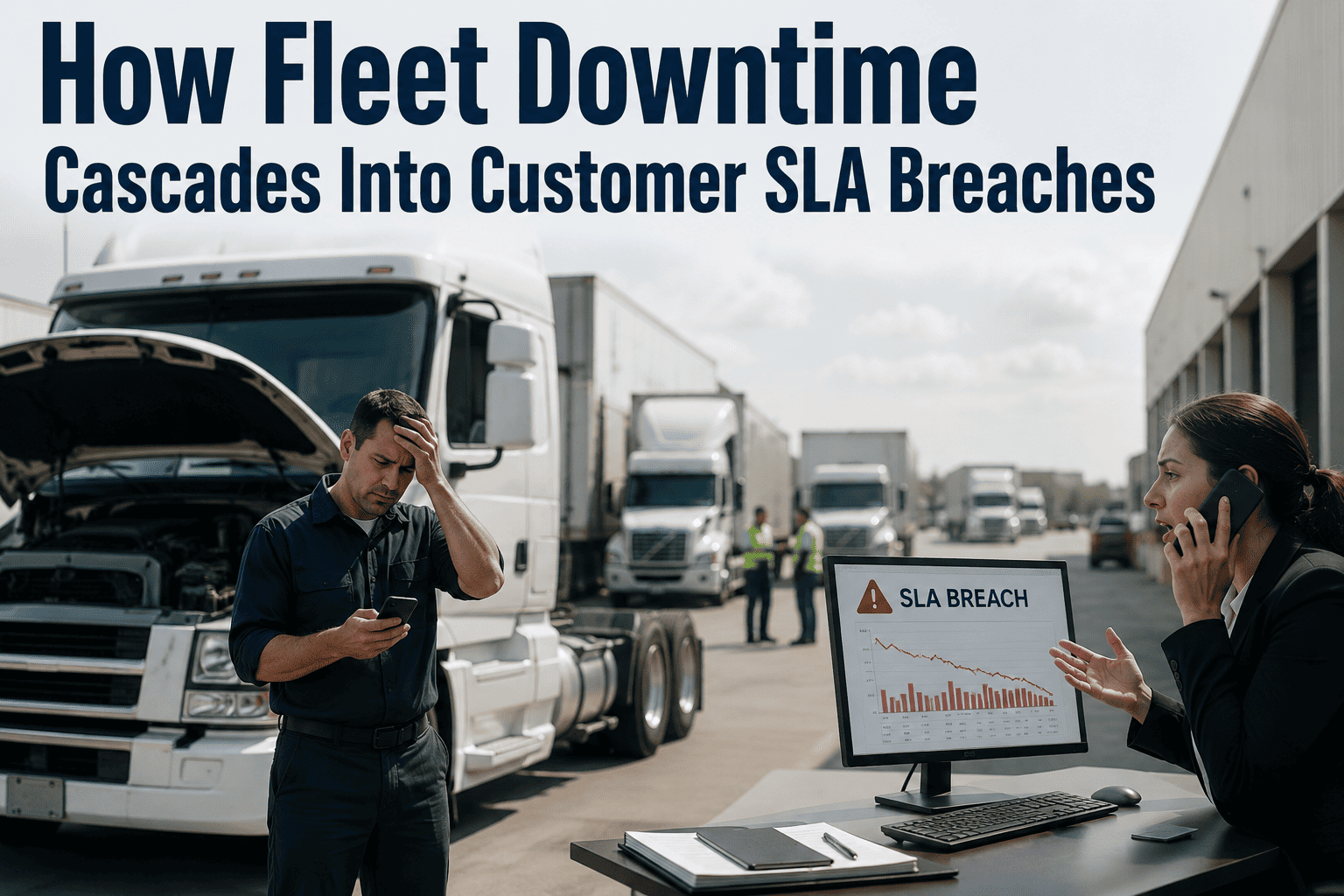
When a single vehicle goes off-route for repairs, the fleet downtime customer impact rarely stops at the towing bill — it cascades into missed delivery windows, penalty fees, and SLA breaches that erode margins and client trust. For maintenance and reliability teams operating under tight service agreements, an SLA breach caused by fleet downtime is one of the fastest ways to lose high-value contracts, as shippers increasingly enforce 98%+ on-time delivery guarantees. The good news is that AI-powered CMMS platforms like OxMaint can help you predict and prevent equipment failures before they cascade, cutting unplanned downtime by up to 50%. If you want to see exactly how this works on your assets, you can Start Free Trial or book a tailored walkthrough with our team.
How much does one downed vehicle really cost your operation?
A single truck failure triggers a domino effect — delayed routes, missed appointments, and breached Service Level Agreements (SLAs). When customers penalize late deliveries, the repair cost is just the tip of the iceberg.
Why fleet downtime cascades into SLA breaches
Fleet downtime customer impact is rarely linear. An asset sitting in the bay costs you parts and labor, but an asset sitting in the bay during peak delivery hours costs you contractual penalties, brand reputation, and future contract renewals.
Immediate Route Disruption
A vehicle breakdown forces dispatchers to reroute loads or call in expensive third-party spot carriers. Emergency freight rates often run 25–40% higher than contracted rates, immediately squeezing the margin on that delivery.
Missed Delivery Windows
Rerouting takes time. If the replacement truck misses a tightly scheduled delivery window (such as a retailer's strict 30-minute dock slot), the shipment may be refused entirely, triggering a full-load rejection.
SLA Penalty Activation
When delivery KPIs drop below the 98% threshold common in modern shipper contracts, automated penalty clauses activate. A single missed window can wipe out the profit margin of the next 10 successful deliveries.
Contract Non-Renewal
Repeat SLA breaches lead to lost contracts. Shippers actively share carrier performance data, meaning downtime-induced breaches in one account can blackball your fleet from bidding on new lanes.
How to calculate the cost of an SLA breach fleet
Maintenance teams often lack a formula to quantify downtime customer impact, making it hard to justify preventive maintenance software investments to leadership. Use this framework to calculate your true downtime exposure.
Parts, labor, and towing (The visible cost)
25-40% higher costs for spot market carriers
Contractual deductions for late or missed windows
Refused loads, idle driver hours, and lost future bids
The $18,500 Alternator Failure
Consider a 150-truck regional fleet holding a 98.5% on-time SLA with a major retail distributor. A preventable alternator failure sidelines a loaded tractor 40 miles from the distribution center. The immediate repair is $1,500. But the 4-hour delay causes the truck to miss its dock slot, resulting in a refused load ($4,200 lost margin), a $7,500 SLA penalty deduction on the monthly invoice, and a $5,300 spot carrier fee to recover the schedule. Total impact: $18,500 — over 12x the visible repair cost.
Fleet downtime SLA guide: Preventive actions for 2026
To protect customer SLAs in 2026, fleets must shift from reactive firefighting to predictive maintenance. Here is how leading teams are structuring their defenses against the downtime cascade.
| Maintenance Strategy | Approach to Asset Health | Impact on SLA Breaches |
|---|---|---|
| Reactive (Run-to-Failure) | Fix assets only after they break down on the road. | High cascade risk; frequent SLA breaches and high emergency costs. |
| Preventive (Time-Based) | Schedule maintenance strictly by mileage or calendar intervals. | Moderate risk; prevents some failures but misses unpredictable wear. |
| Predictive (Condition-Based) | Use IoT sensors and AI to monitor engine health and predict failure. | Low risk; maximizes asset uptime and protects strict delivery SLAs. |
Stop SLA breaches with AI-powered fleet maintenance
OxMaint transforms how maintenance teams manage assets, replacing reactive logs with an AI-powered CMMS and EAM platform that predicts failures and keeps your fleet on schedule.
Predictive Maintenance AI
OxMaint analyzes historical work order data and sensor inputs to flag potential engine, brake, or transmission failures before they sideline a vehicle, cutting unplanned downtime by 30–50%.
Automated Preventive Scheduling
Automate PM workflows based on engine hours, mileage, or calendar days. Ensure no asset misses a critical inspection, keeping your fleet DOT-compliant and SLA-ready.
Spare Parts Inventory Tracking
Eliminate bay delays caused by missing parts. OxMaint tracks stock levels in real-time and auto-generates purchase orders when minimum thresholds are hit, slashing repair turnaround times.
Mobile Work Orders
Give technicians mobile access to repair histories, manuals, and digital checklists. Complete work orders faster and accurately track labor hours to continuously optimize bay efficiency.
Stop losing contracts to preventable breakdowns
See how OxMaint predicts fleet failures and automates maintenance workflows to protect your delivery SLAs. Book a 30-minute demo to see the platform running on your asset data.
Fleet downtime and customer SLA impact FAQs
What is a fleet SLA breach?
A fleet SLA breach occurs when a transportation provider fails to meet the agreed-upon delivery windows or uptime guarantees outlined in a customer contract. In 2026, most shipper contracts enforce a 98% on-time delivery rate, and falling below this threshold triggers financial penalties, load rejections, or contract cancellations.
How does vehicle downtime impact customer SLAs?
Vehicle downtime removes capacity from your active routing pool. This forces dispatchers to find expensive spot-market replacements or delay the delivery entirely. When the shipment misses its scheduled dock appointment, the fleet customer impact escalates from a simple late fee to a breached SLA penalty that can wipe out days of profit margin.
How much does fleet downtime cost per hour?
For a standard Class 8 truck, direct downtime costs range from $150 to $300 per hour in lost revenue and driver idle time. However, when factoring in emergency rerouting, SLA penalties, and lost future business, the cascading cost of an on-route breakdown can easily exceed $1,000 per hour depending on the cargo and customer contract.
Can CMMS software prevent SLA breaches?
Yes. An AI-powered CMMS like OxMaint tracks engine hours and mileage to automate preventive maintenance, preventing assets from failing on route. By predicting failures and ensuring spare parts are always in stock, maintenance teams can resolve issues during planned downtime rather than during active delivery windows. You can explore the platform when you Start Free Trial today.
How do you calculate SLA penalty costs for a fleet?
To calculate SLA penalty costs, multiply the number of affected loads by the contractual penalty rate per late delivery, then add the lost revenue from any refused shipments. For a precise calculation of how much downtime is costing your specific operation and how to stop it, we recommend booking a demo with our team at Calendly for a custom ROI assessment.
Keep your fleet moving and your SLAs intact
Join the maintenance teams using OxMaint to predict equipment failures, automate work orders, and eliminate the downtime cascade that breaches customer SLAs.
Free 14-day trial · No credit card required