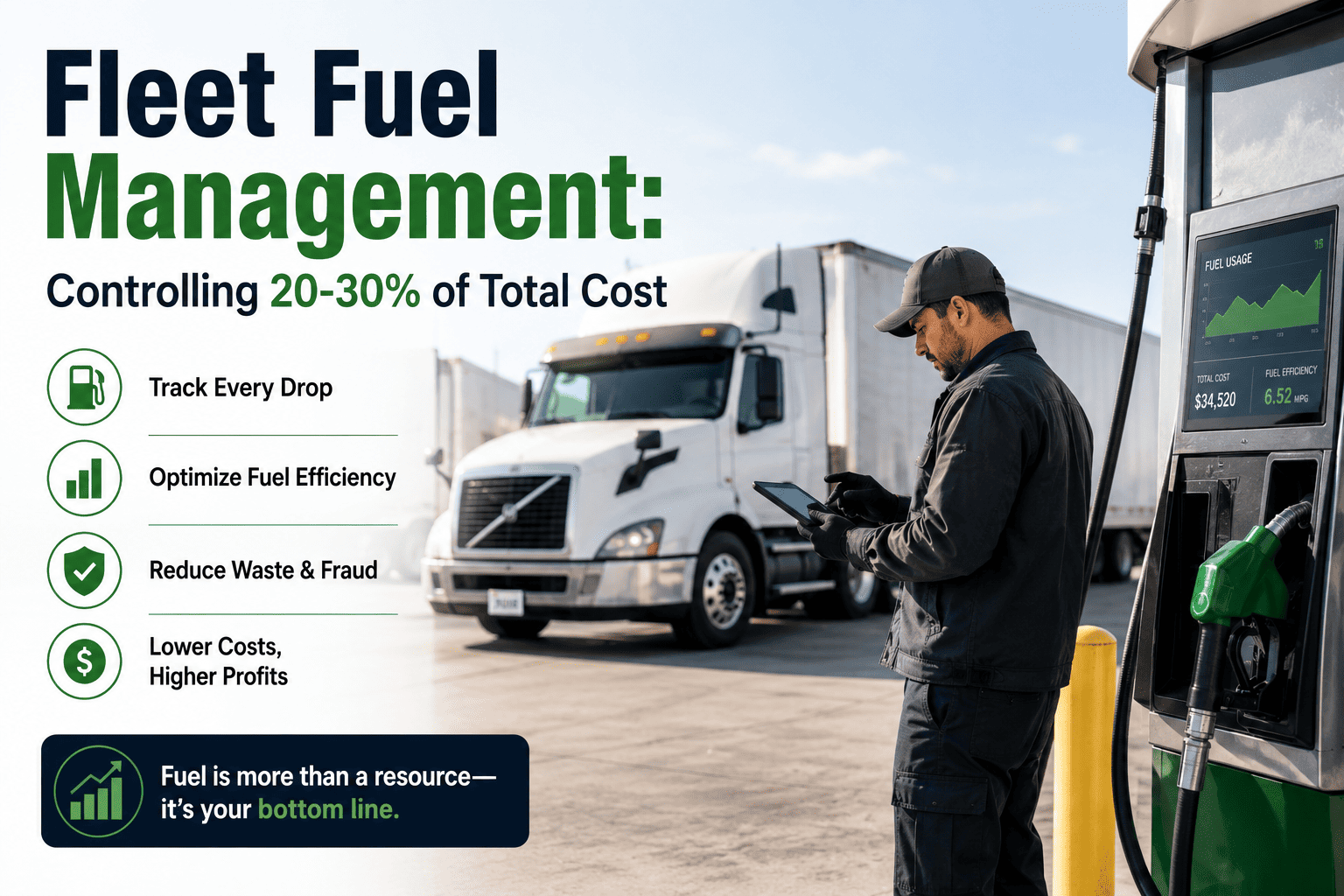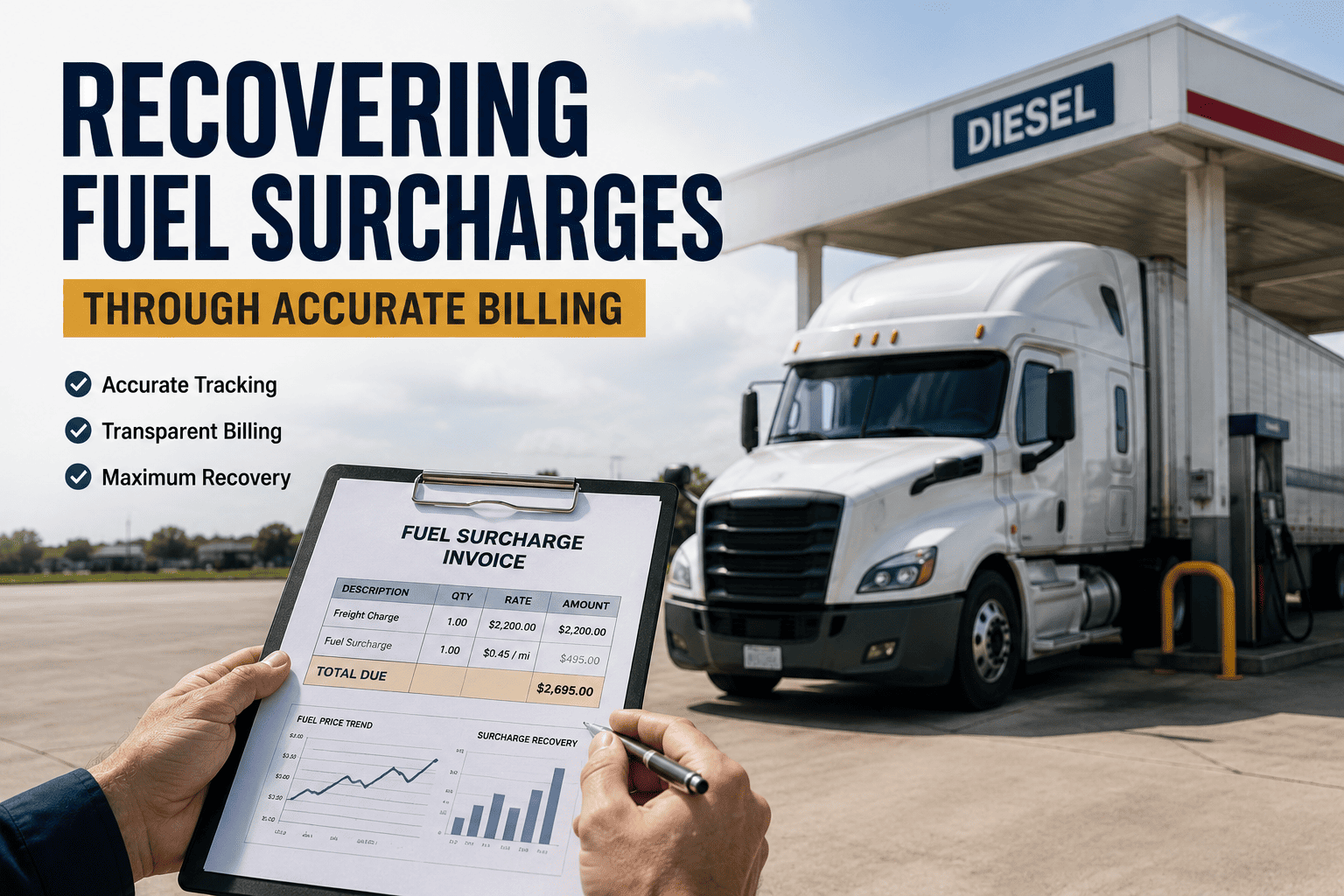
Fuel prices rarely sit still, but most customer invoices do — and that mismatch is where fleet margins quietly disappear. Carriers who set a fuel surcharge once and forget it are often billing against a fuel price that no longer exists by the time the load actually moves. Industry data from 2026 shows a growing share of operators choosing to absorb rising fuel costs rather than update their billing, a decision that erodes profitability load after load. The fix isn't a bigger surcharge — it's a surcharge that's actually tied to what your trucks are consuming, calculated automatically from telematics and fuel card data.
Recovering Fuel Surcharges Through Accurate Billing
Stop billing customers on stale fuel assumptions. Tie every surcharge line item to real consumption data and recover what your fleet actually spends.
Four Gaps That Quietly Cost You Surcharge Revenue
A surcharge formula only works if every input behind it stays current. These are the four places fleets most often fall behind, and each one leaves real dollars uncollected on the table.
A baseline fuel price set a year ago stops reflecting reality the moment the market moves. Fleets that don't revisit their baseline every quarter end up either overcharging loyal customers or quietly eating cost increases themselves.
Using a flat 6–7 MPG across an entire fleet ignores load weight, route terrain, and vehicle age. A truck running consistently lower MPG than assumed means every mile is under-billed without anyone noticing.
Diesel index prices are typically published weekly, but many billing teams only touch surcharge rates once a month. That lag means every invoice cut mid-cycle is priced against fuel costs that are already out of date.
Surcharges built purely on a published index ignore what your trucks actually paid at the pump. Regional price spreads and fuel card discounts both get lost, leaving a gap between billed surcharge and real fuel spend.
Turn fuel card and telematics data into an accurate surcharge automatically
OxMaint connects live fuel spend to every invoice, so your surcharge line item always matches reality — not a formula from last quarter.
How Accurate Fuel Surcharge Recovery Actually Works
Recovering fuel cost fairly comes down to four moving parts working together instead of living in separate spreadsheets. Here's the sequence that turns raw fuel data into a defensible invoice line.
Set a Real Baseline
Establish the fuel price at which no surcharge applies, using your actual historical average rather than a number chosen once and left untouched.
Pull Current Fuel Price
Compare today's actual fuel cost, sourced from live fuel card transactions, against the baseline to find the true per-gallon difference.
Apply Real Vehicle MPG
Divide the price difference by each vehicle's actual telematics-reported MPG instead of a fleet-wide guess, giving a per-mile surcharge rate specific to that truck.
Multiply and Bill
Multiply the per-mile rate by trip miles pulled straight from GPS data, then push the figure directly onto the customer invoice with a clear audit trail behind it.
Index-Based Pricing vs. Consumption-Based Recovery
Most carriers default to a published fuel index because it's simple to reference. The tradeoff is accuracy — here's how the two approaches actually compare in practice.
Estimated Surcharge Recovery Gap by Fleet Size
The gap between a stale surcharge and an accurate one scales with fleet size. Use this table to estimate how much billing accuracy could be worth to your operation each year.
| Fleet Size | Monthly Fuel Spend | Typical Under-Billing | Estimated Annual Gap | Billing Update Cycle |
|---|---|---|---|---|
| 5–10 vehicles | $8,000–$15,000 | 2–4% | $1,900–$7,200 | Monthly |
| 10–25 vehicles | $15,000–$40,000 | 3–5% | $5,400–$24,000 | Bi-weekly |
| 25–50 vehicles | $40,000–$80,000 | 3–6% | $14,400–$57,600 | Weekly |
| 50–100 vehicles | $80,000–$160,000 | 4–7% | $38,400–$134,400 | Weekly |
| 100+ vehicles | $160,000+ | 4–8% | $76,800–$204,800+ | Continuous |
Ranges are directional estimates based on typical billing lag and MPG variance across similar fleet sizes. Actual recovery gaps depend on route mix, contract terms, and current billing cadence.
See your real surcharge recovery number in one dashboard
Connect your fuel cards and telematics once, and OxMaint keeps every customer invoice priced against current, real fuel cost automatically.
Frequently Asked Questions
What's the standard formula for calculating a fuel surcharge?
How often should a fuel surcharge baseline be reviewed?
Is it legal to charge a fuel surcharge separately from base rates?
Why does using actual MPG matter more than an industry average?
How can I see how much surcharge recovery my fleet is missing?
Give every invoice a fuel surcharge you can defend
OxMaint links your fuel cards, telematics, and customer billing so surcharge recovery happens automatically, on every load, every week.