Fleet downtime is not just a maintenance problem — it is a revenue problem. Every vehicle sitting idle costs between $450 and $1,200 per day in lost utilization, depending on vehicle class and operation type. For a 100-vehicle fleet averaging 12% downtime, that translates to roughly $1.97 million in annual lost productivity. The 10 strategies outlined in this guide are not theoretical best practices — they are the specific operational changes that high-performing fleets have implemented in 2025-2026 to push fleet availability above 94% consistently. From AI-powered predictive maintenance to parts availability optimization and CMMS-driven PM scheduling, each strategy is backed by measurable fleet data. Platforms like Oxmaint are the operational backbone making these strategies executable at scale. Ready to maximize your fleet uptime? Start a free trial for 30 days and book a demo with our fleet specialists.
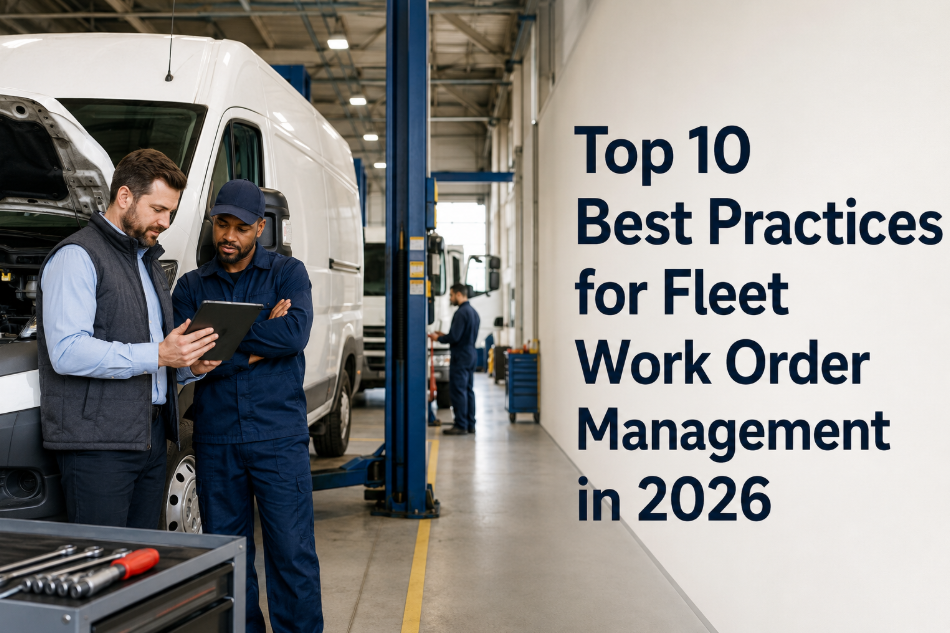
Top 10 Fleet Uptime Strategies That Deliver Results in 2026
From AI-powered predictive maintenance to parts availability optimization and CMMS-driven PM compliance — 10 strategies backed by real fleet data for measurable uptime improvement.
The 10 Uptime Strategies That Deliver Measurable Results
The single highest-impact uptime strategy is automated preventive maintenance scheduling. Fleets that trigger PMs by mileage, engine hours, and calendar intervals — not just one method — achieve 94% PM compliance and reduce unplanned breakdowns by 35%. Oxmaint supports all trigger types with automatic work order generation and technician assignment.
Connecting telematics data (DTC codes, oil pressure, coolant temperature, battery voltage) to CMMS enables condition-based work orders before failures occur. Fleets using predictive triggers report 41% fewer roadside breakdowns and 2-6 weeks advance warning on critical component failures.
38% of fleet repair delays are caused by parts unavailability. Tracking consumption patterns, setting minimum stock levels, and automating reorder alerts ensures the right parts are available when a work order is created. Oxmaint's parts module shows real-time stock when scheduling repairs and fires alerts before stockouts occur.
Paper work orders add 2-4 hours to every repair cycle through manual processing, lost documentation, and repeated diagnostic work. Digital work orders with attached asset history, previous repair notes, and parts lists reduce MTTR from an average of 14 hours to 6-8 hours. Every hour saved is an hour the vehicle returns to service sooner.
Catching defects during pre-trip inspections prevents in-service breakdowns. Digital inspections with mandatory photo evidence and automatic defect-to-work-order escalation ensure issues are identified and repaired before they cause roadside failures. Fleets using digital inspections see 52% fewer inspection-related violations and catch defects 6-12 hours earlier than paper processes.
The average fleet technician spends only 32% of their day on productive repair work. CMMS labor tracking identifies where time is lost — parts retrieval, approval waits, searching for vehicle history, paperwork. Optimizing these processes increases wrench time to 55-65%, meaning more repairs completed per shift and faster vehicle return-to-service.
Tracking maintenance at the component level (brake pads, alternators, turbochargers) — not just the vehicle level — reveals which components fail most frequently and at what intervals. This enables targeted PM adjustments that prevent the most common failure modes. Oxmaint's asset hierarchy tracks maintenance at Portfolio > Fleet > Vehicle > Component level.
Fleets that outsource 40-60% of repairs to third-party shops often have no visibility into vendor turnaround time. Tracking vendor SLAs through CMMS — average repair time, first-time fix rate, cost per repair type — identifies underperforming vendors and redirects work to shops that return vehicles faster.
Vehicles past their optimal replacement point cause disproportionate downtime — a Class 6 truck at year 8 experiences 3x more downtime events than at year 5. CMMS lifecycle cost tracking identifies when a vehicle crosses the threshold where maintenance cost and downtime frequency make replacement more economical than continued repair.
Top-performing fleets review uptime KPIs monthly — PM compliance rate, MTTR, parts availability rate, planned vs reactive ratio, and cost per mile. CMMS dashboards make this data available in real time rather than assembled manually at month-end. Monthly review of these metrics drives continuous optimization that compounds uptime improvements over time.
Uptime Impact by Strategy: Where to Start
| Strategy | Uptime Impact | Implementation Speed | Oxmaint Feature |
|---|---|---|---|
| Automated PM Scheduling | High — 35% fewer breakdowns | Week 1 | Multi-trigger PM engine |
| Predictive Maintenance | High — 41% fewer breakdowns | Month 2-3 | Telematics integration |
| Parts Availability Optimization | Medium-High — 38% fewer delays | Week 2-3 | Inventory with auto-reorder |
| Digital Work Orders (MTTR) | High — 50% MTTR reduction | Week 1 | Mobile work order app |
| Digital Inspections | Medium — early defect catch | Week 1-2 | Configurable inspection module |
| Data-Driven Replacement | Medium — long-term fleet health | Month 3-6 | CapEx forecasting |
The strategies with the highest impact and fastest implementation — automated PM scheduling and digital work orders — can be running on Oxmaint within your first week. Start there and layer on predictive maintenance and parts optimization in the following months. See how it works — start a free trial or book a demo today.
Frequently Asked Questions
What is a good fleet uptime benchmark for 2026?
Which single strategy has the biggest impact on fleet uptime?
How do I calculate the cost of fleet downtime for my operation?
Can small fleets under 50 vehicles benefit from these strategies?
Every Hour of Downtime Costs Money. Start Recovering It Today.
Oxmaint gives you the complete toolkit to execute all 10 uptime strategies — automated PM scheduling, mobile work orders, parts inventory, digital inspections, predictive triggers, and lifecycle cost tracking. Most fleets are generating automated PM work orders within their first week. See how much uptime you can recover with a free trial or a 30-minute personalized demo.