Most fleets find out their compliance posture is weak on the day an auditor asks for it — not the week before, when there might still be time to fix a gap. By then a missing DVIR signature, a lapsed driver qualification file, or an HOS record that doesn't match the maintenance log is no longer a fixable problem. It is a finding. A real-time compliance dashboard exists to move that discovery earlier, from audit day to the moment the gap first appears, across every document category a reviewer actually checks. The alternative — a review that only happens on a fixed schedule — leaves every gap that opens between reviews invisible for weeks or months at a time, which is exactly the window where most findings originate. Here is what belongs on that dashboard and how it should be built to catch problems while they're still cheap to fix.
FLEET COMPLIANCE · REAL-TIME MONITORING · 2026
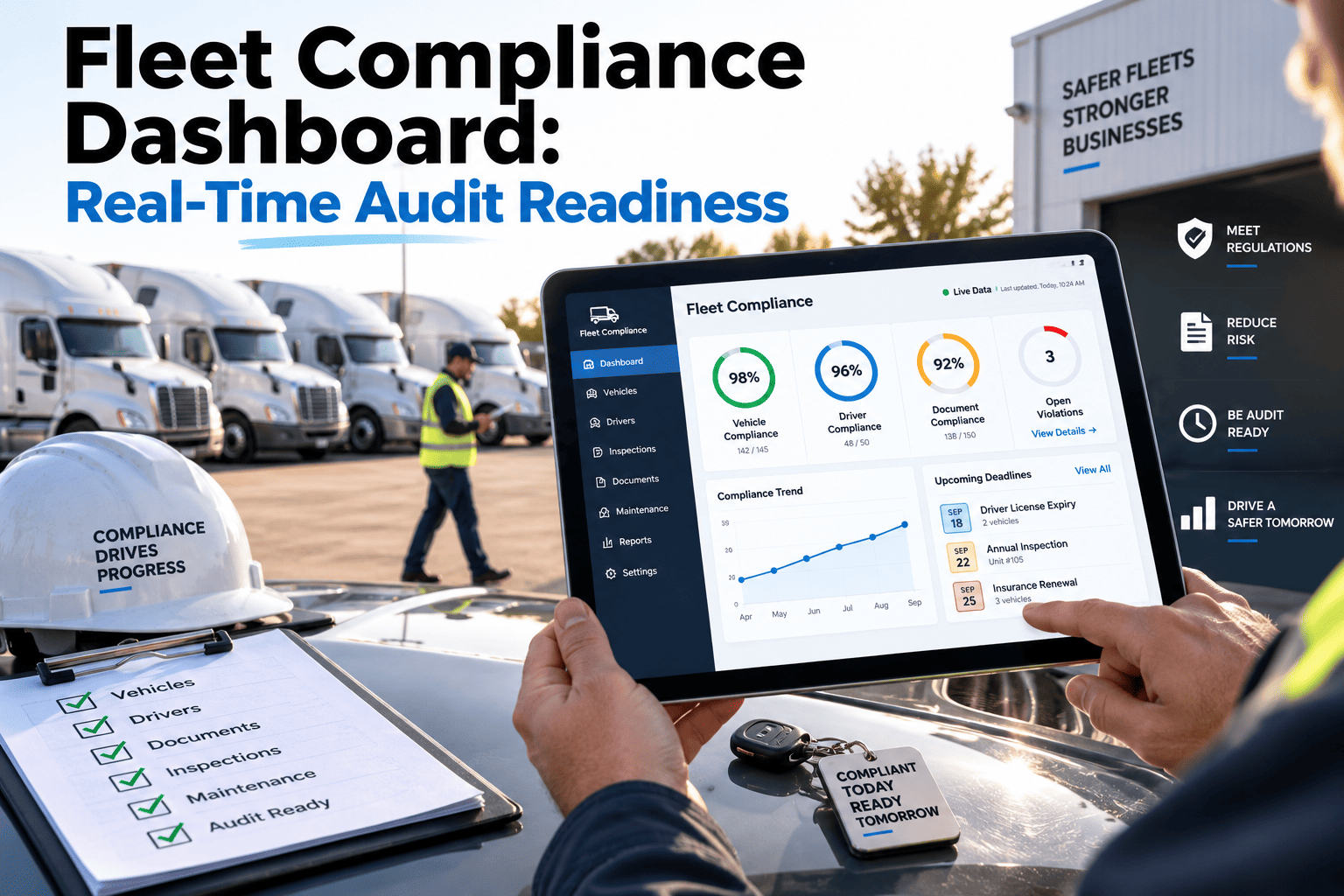
Fleet Compliance Dashboard: Real-Time Audit Readiness
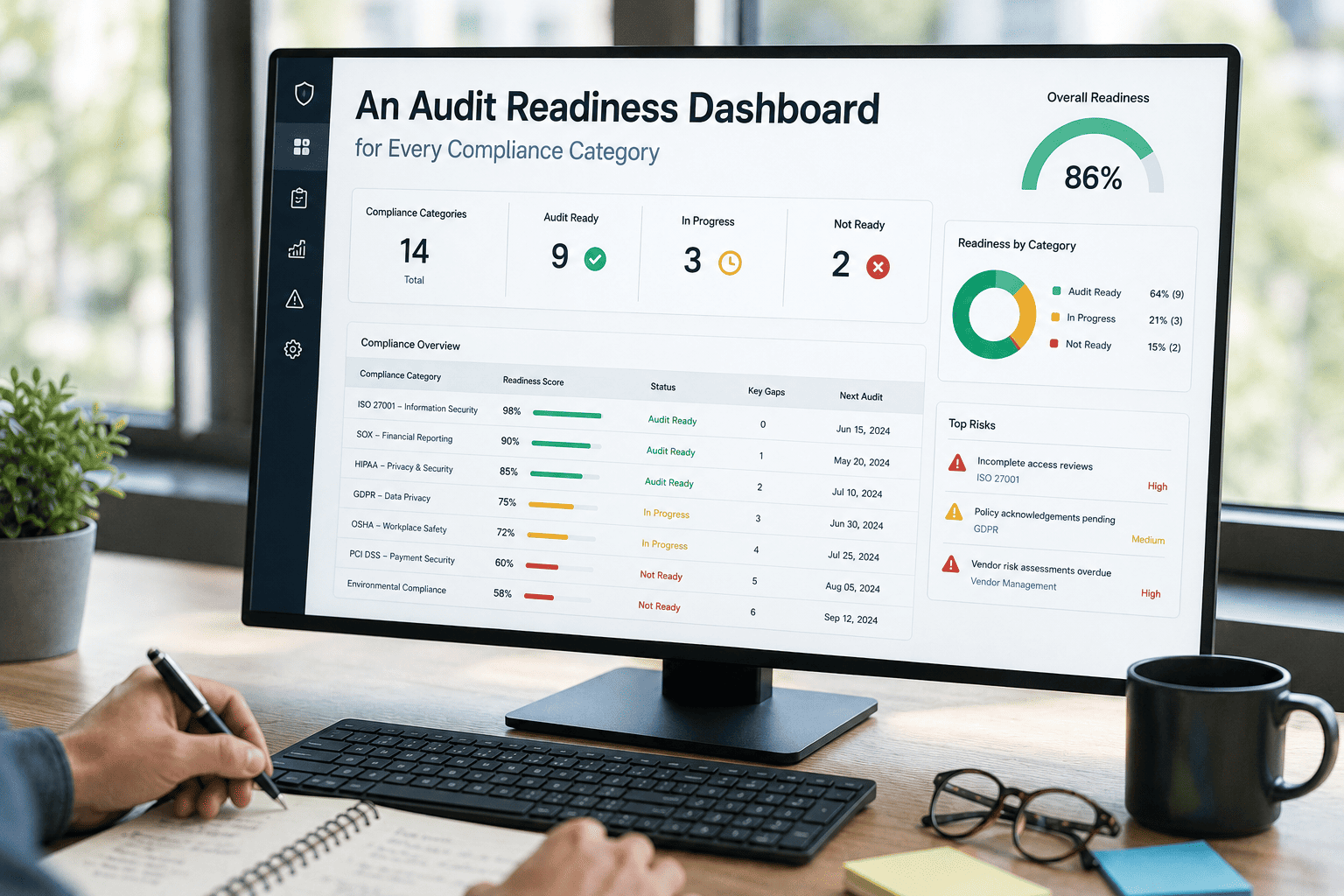
Audit readiness is not a status you check once a quarter. It's a score that moves every time a DVIR is filed, a repair is certified, an HOS log closes, or a driver qualification file ages toward expiration — and it should be visible before an auditor ever asks.
48 hrs
typical offsite audit notice window
Too short to assemble records manually
4
document domains reviewers check together
DVIR, repair, HOS, and driver qualification files
93%
of findings trace to a documentation gap
Not a maintenance failure — a missing record
1
score, updated continuously
Instead of a manual review done once a quarter
Point-in-Time Reviews Miss the Gaps That Matter
A quarterly compliance review answers one question: was the fleet in good standing on the day someone checked. It says nothing about the six weeks before that review, when a DVIR chain broke, a medical certificate lapsed, or a repair certification sat open past its due date.
An audit doesn't wait for your review cycle to line up with it.
A real-time dashboard replaces that snapshot with a running score, so the gap is visible on the day it opens rather than the day someone happens to go looking for it.
Four Document Domains, One Score
Auditors rarely check one record type in isolation. A DVIR gap gets cross-referenced against HOS logs to see if the vehicle ran anyway, and a driver qualification lapse gets checked against dispatch records to see if that driver was on the road past the expiration date. A dashboard has to reflect those same cross-checks, not just track four numbers separately. Each domain below maps to a distinct set of FMCSA sections, and each has its own failure pattern that shows up repeatedly in compliance reviews — which is exactly what a dashboard needs to be tuned to catch rather than a generic checklist.
49 CFR 396.11 / 396.13
DVIR & Repair Certification
Tracks the three-signature chain on every inspection report and flags any vehicle with an open defect or an unclosed repair certification.
49 CFR 395.8
Hours of Service Logs
Surfaces missing entries, edited logs without an annotation, and any HOS record that doesn't reconcile with a vehicle's maintenance downtime.
49 CFR Part 391
Driver Qualification Files
Monitors medical certificate expiration dates, MVR pull schedules, and annual review dates so a lapse is caught before dispatch, not during a review.
49 CFR 396.3 / 396.17
Maintenance & Annual Inspection
Watches every vehicle's annual inspection due date and confirms systematic maintenance records are complete and tied to the correct unit.
What "Real-Time" Actually Means for a Compliance Score
The word "real-time" gets used loosely in fleet software marketing, so it's worth being precise about what it should mean for a compliance score specifically: the score reflects the most recent recorded event, not the most recent scheduled review. The sequence below is what separates a genuinely live score from a dashboard that just looks live.
1
Event Occurs
A driver files a DVIR, a technician certifies a repair, an HOS log closes, or a medical certificate date passes.
2
Score Recalculates
The affected domain score updates immediately — no batch job, no end-of-day sync, no waiting for a manual review cycle.
3
Threshold Breach Alerts
A vehicle, driver, or record that drops below the defined readiness threshold surfaces to the responsible manager the same day.
4
Gap Closes Before It's Found
The missing signature, the overdue inspection, or the expiring certificate gets resolved on a normal workday, not during a 48-hour audit scramble.
Quarterly Review vs. Continuous Dashboard
The two models below aren't just different in frequency. They change who finds the gap first — a fleet's own manager on a routine day, or an outside reviewer during a formal audit — and that difference is what determines whether a finding is a quiet fix or a citation on the record.
Compliance status known once every 90 days
Gaps discovered weeks or months after they opened
Four document types checked in four separate exercises
Findings addressed reactively, often under audit pressure
No visibility into which vehicles or drivers are at risk today
Compliance status current as of the last recorded event
Gaps surfaced the day they open, not the day they're found
DVIR, HOS, driver, and maintenance scores cross-referenced together
Findings closed on a routine schedule, well ahead of any review
At-risk vehicles and drivers ranked and visible at all times
See Your Fleet's Readiness Score Right Now
Not last quarter's score. The one that reflects this morning's DVIRs and this week's certifications.
Rolling Out a Dashboard Without Disrupting Daily Operations
The biggest risk in adding a compliance layer on top of existing workflows isn't the technology — it's asking drivers, technicians, and dispatchers to do extra work to feed it. A dashboard that requires a second data entry step alongside the DVIR or the work order will get skipped the first busy week, and a skipped step produces a worse gap than the one it was meant to catch. The rollout sequence below is built around that constraint: every phase pulls from work that's already happening rather than adding a parallel process.
Phase 1
Connect Existing Records
Pull DVIR, work order, HOS, and driver qualification data from the systems already in use rather than asking anyone to re-enter it. The dashboard should be a view, not a new form.
Phase 2
Set Thresholds by Domain
Define what counts as at-risk for each document category — a certificate within 30 days of expiring, a DVIR open more than 24 hours — with input from whoever owns that compliance area today.
Phase 3
Route Alerts to the Right Owner
A DVIR gap should reach the shop supervisor, not the safety manager. Misrouted alerts get ignored, and ignored alerts are functionally the same as no alert at all.
Phase 4
Review the Score, Not Just the Alerts
Alerts catch individual gaps. The aggregate score catches trends — a depot whose DVIR completion is slipping, a driver pool aging toward a wave of certificate renewals.
Fleets that skip straight to Phase 2 without Phase 1 tend to end up with a dashboard that looks complete on a demo screen but drifts out of sync with reality within weeks, because someone has to manually update it and eventually stops. Book a demo to see how the connection to existing DVIR and work order data works in practice.
How the Composite Score Should Be Weighted
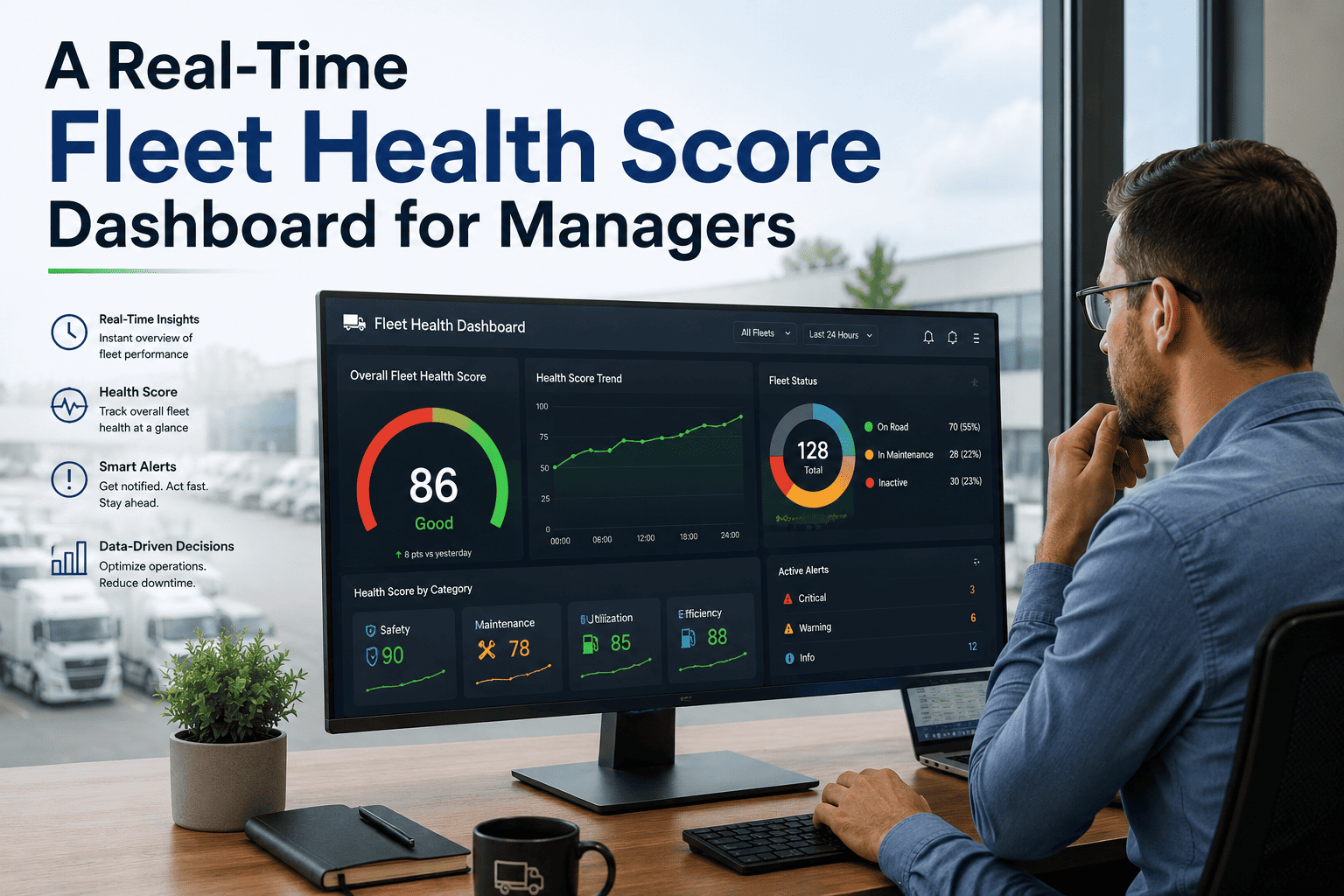
A single fleet-wide percentage is easy to put on a leadership slide, but the number only means something if the math behind it reflects real audit risk rather than treating every record type as equally important.
Not every gap carries the same compliance risk, so a dashboard that treats all four domains equally will either bury urgent items under routine ones or overreact to minor discrepancies. DVIR and repair certification gaps typically carry the heaviest weight, because they appear in the largest share of compliance reviews and connect directly to vehicle safety.
A missing signature on one DVIR should move the score more than a single late HOS annotation — the review history says so.
Driver qualification and HOS domains matter just as much operationally, but their risk tends to concentrate around specific dates — a certificate expiration, a log edit — rather than accumulating continuously the way an open DVIR defect does. Weighting the score to reflect that difference keeps the dashboard useful as a prioritization tool instead of a flat list every manager has to sort through manually.
Building the Dashboard: What to Track Per Vehicle and Per Driver
A fleet-wide percentage is useful for a leadership summary, but it's the vehicle- and driver-level detail underneath it that actually prevents a citation. The dashboard needs both layers, connected to each other.
| Tracked Item |
Trigger for Alert |
Owner Notified |
| Open DVIR defect |
Defect logged, no repair certification within 24 hours |
Shop supervisor |
| Incomplete signature chain |
Next-driver acknowledgment missing before redispatch |
Dispatch manager |
| Medical certificate expiration |
Within 30 days of expiration date |
Safety manager |
| Annual inspection due |
Within 30 days of the 14-month deadline |
Maintenance manager |
| HOS log discrepancy |
Edited entry without an annotation on file |
Safety manager |
Why Cross-Referenced Alerts Beat Standalone Ones
A domain score in isolation tells a manager something is wrong. A cross-referenced alert tells them exactly what to do about it today, which is the difference between a dashboard that gets checked once a week and one that actually changes a dispatch decision.
Standalone alert
"Driver medical certificate expires in 10 days"
Useful, but it doesn't tell dispatch whether that driver is already scheduled on a route past the expiration date.
Cross-referenced alert
"Driver medical certificate expires in 10 days — three dispatches scheduled after that date"
Actionable immediately: dispatch can reassign those three routes or move the recertification appointment up before it becomes a roadside out-of-service order.
The difference between those two alerts is the difference between a dashboard that reports status and one that actually prevents a violation. Cross-referencing driver qualification data against dispatch schedules, and maintenance data against HOS logs, turns a passive score into an operational tool.
Dashboard Impact Metrics
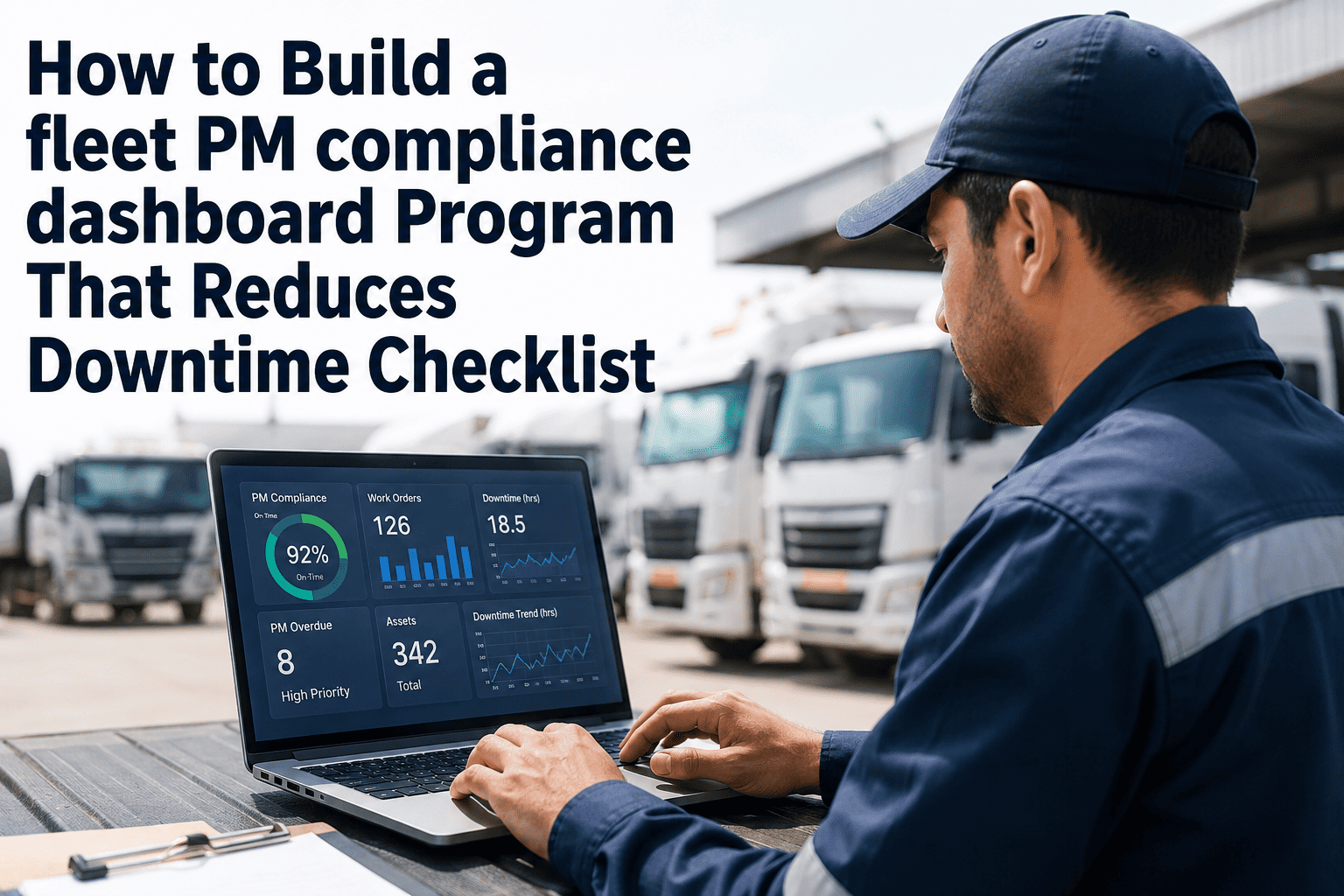
The value of moving from periodic review to continuous monitoring shows up less in any single caught gap and more in the pattern over a full year — fewer findings per review, faster response when one does surface, and a much shorter gap between when a problem starts and when someone notices it.
Same-day
gap detection instead of quarterly discovery
Alerts fire the moment a threshold is breached
4-in-1
domains scored together, not separately
DVIR, HOS, driver qualification, and maintenance
Minutes
to export a full readiness report
Filtered by vehicle, driver, or document type
Ranked
list of at-risk vehicles and drivers
Prioritized by how close each is to a threshold breach
Frequently Asked Questions
What document categories should a compliance dashboard track?
At minimum, DVIR and repair certification records, HOS logs, driver qualification files, and maintenance and annual inspection records — the same four categories a compliance review typically cross-checks against each other rather than reviewing in isolation.
How is a real-time dashboard different from a monthly compliance report?
A monthly report reflects a single snapshot in time, taken once and then aging until the next review. A real-time dashboard recalculates each domain score as events happen — a DVIR filed, a certificate expiring — so a gap is visible the day it opens, not the day the next report is due.
Start a free trial to see it update live.
Can the dashboard alert before a driver's medical certificate expires?
Yes. Expiration-based alerts typically fire on a defined window, such as 30 days out, and can cross-reference upcoming dispatch schedules so at-risk assignments are flagged for reassignment before the certificate actually lapses and forces an out-of-service order.
Does a compliance score replace the need for a compliance review?
No. It changes what a review finds. Instead of discovering gaps for the first time during the review, the review confirms that gaps were already caught and closed weeks earlier — turning the review into a formality rather than a scramble.
How fast can a fleet produce records if an offsite audit notice arrives?
With a continuous dashboard and a structured digital record behind it, a filtered export by vehicle and date range typically takes minutes rather than days, well inside a typical 48-hour notice window.
Book a demo to see the export process.
Know Your Audit Readiness Before the Audit Does
A live compliance score across DVIR, repair, HOS, and driver qualification records — updated the moment each event happens.