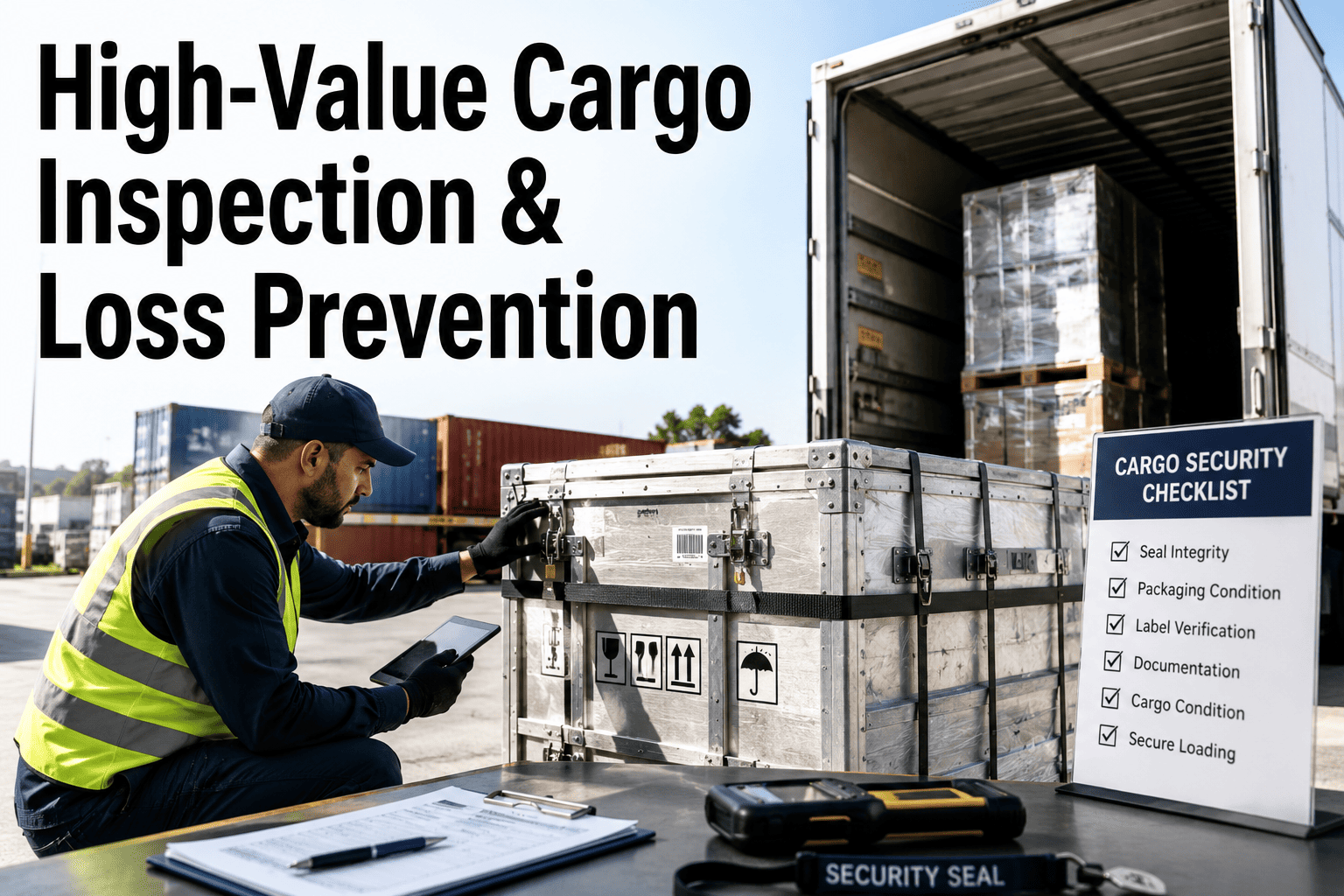
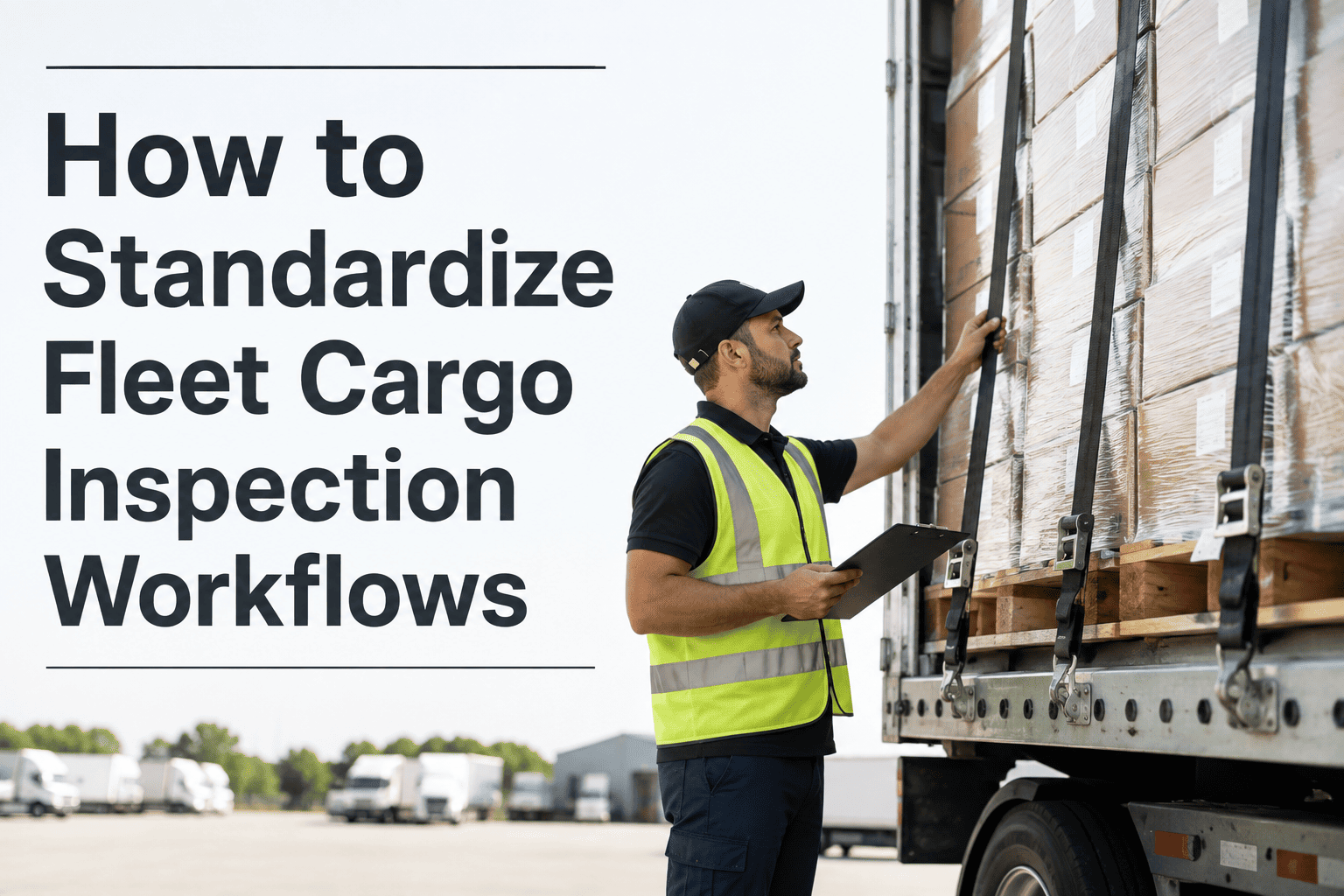
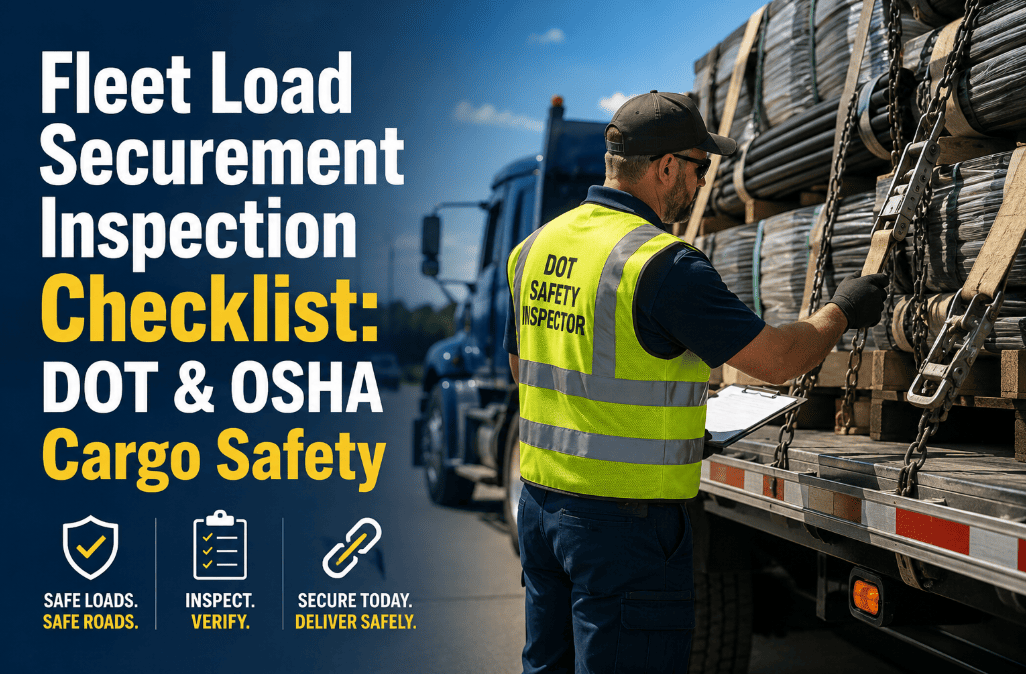
Cargo securement verification is the single most overlooked step in freight operations, and it is quietly responsible for a large share of the damage claims, roadside violations, and delivery delays that fleets spend the rest of the year trying to fix. Most carriers treat load securement as a one-time check at the dock, when in practice a load can loosen, shift, or fail edge protection anywhere in the first fifty miles, at every change of duty status, or the moment road conditions change. A single missed strap or an unrated device can trigger a citation even when the cargo never actually moves, because inspectors are required to treat any securement gap as an immediate safety hazard. The financial exposure compounds quickly — an out-of-service order, a damaged shipment, an insurance conversation, and a customer relationship, all traced back to one detail nobody verified twice. Building a repeatable verification workflow, backed by documentation your safety team can actually produce on demand, is what separates fleets that pass inspections and protect freight from fleets that find out about the problem after the truck is already parked on the shoulder.
Fleet Compliance · Cargo Integrity · 2026
Cargo Securement Verification and Damage Prevention
Most freight damage does not start on the road. It starts at the dock, with a strap that was never rechecked and a working load limit nobody calculated. Here is how to make securement verification a documented, repeatable part of every dispatch.
80%
Of cargo securement violations result in an immediate out-of-service order
50%
Minimum aggregate working load limit required against total cargo weight
34%
Of commercial vehicle accidents linked to improper cargo securement
$8K+
Typical combined state and federal exposure for a single securement citation
Why "It Looked Secure" Is Not a Verification Process
A load can leave the dock looking perfectly fine and still fail every requirement that matters. Working load limit is a stamped rating on the device itself, not a visual tightness check, and load locks used for blocking and bracing contribute almost nothing toward the required aggregate rating. Edge protection is mandatory the moment a tiedown touches a cargo edge with a radius under half an inch, a detail that is easy to miss under time pressure at the dock. None of this shows up in a walk-around glance, which is exactly why so many violations get written on loads that never actually shifted. The gap is not driver carelessness — it is the absence of a structured verification step that checks the numbers, not just the appearance.
Where Securement Checks Usually Stop vs. Where Damage Actually Starts
What Gets Checked
Straps are present and visually tight
Trailer doors and seals are closed
Paperwork matches the manifest
A single check before leaving the yard
What Actually Prevents Damage
Aggregate WLL calculated against cargo weight
Edge protection on every sub half-inch contact point
Re-check within 50 miles and at every duty status change
Photo and timestamp evidence tied to the driver record
The checks on the left are what most pre-trip routines cover. The checks on the right are what inspectors actually cite — and what stops cargo from shifting in the first place.
The Six-Point Cargo Securement Verification Workflow
Fleets that consistently pass inspections and avoid transit damage are not doing anything exotic — they are running the same sequence of checks every time, in the same order, with the same evidence captured. The sequence below turns a subjective "looks fine" judgment into a documented, repeatable process that holds up whether it is reviewed by an inspector, an insurer, or your own safety team.
1
Calculate Aggregate Working Load Limit
Confirm the combined WLL of every rated tiedown equals at least 50% of total cargo weight — a 40,000 lb load needs at least 20,000 lb of rated capacity across the system, with damaged or unrated devices excluded from the total.
2
Confirm Edge Protection Placement
Check every point where a tiedown contacts a cargo edge sharper than a half-inch radius. Missing edge protection is one of the most commonly cited — and most commonly overlooked — securement gaps.
3
Verify Device Condition Before Dispatch
Inspect straps, chains, and binders for wear, fraying, or missing rating tags. A device without a legible WLL tag contributes zero toward the aggregate calculation, regardless of how new it looks.
4
Re-check Within the First 50 Miles
Securement settles and shifts once a load is in motion. The first-50-mile recheck is a federal requirement, not a suggestion, and it is one of the most frequently missed steps in the entire process.
5
Recheck at Every Change of Duty Status
Each stop, fuel break, or duty status change is a required recheck point. Skipping this rhythm generates a citation risk regardless of whether the load condition actually changed.
6
Log Evidence Against the Driver and Vehicle Record
Photo timestamps, WLL calculations, and recheck confirmations need to sit in a record that can be pulled in minutes during a compliance review — not reconstructed from memory after an incident.
Turn Every Load Into a Documented, Defensible Record
OxMaint gives your team a structured securement checklist, WLL tracking, and photo-backed verification history tied to every vehicle and driver — ready to export the moment a compliance review or insurance renewal asks for it.
What Skipping Verification Actually Costs
The cost of a securement gap rarely shows up as a single line item. It shows up as a citation, then a delay, then a damaged shipment, then a higher premium at the next renewal — each one compounding the last. The table below breaks down where that cost actually lands across a typical incident.
Cost Breakdown — A Single Securement Failure vs. Verified Process
Figures reflect commonly reported ranges for FMCSA cargo securement citations, out-of-service downtime, and related insurance impacts under 49 CFR Part 393 Subpart I.
Building a Defensible Securement Record Without Extra Paperwork
The reason most fleets do not run a full verification workflow is not a lack of will — it is that doing it on paper is slow, easy to skip under time pressure, and nearly impossible to search when a compliance review or a claim adjuster asks for last quarter's records. A CMMS turns this from a documentation burden into a structured, repeatable task that drivers complete in minutes and safety teams can pull in seconds.
Structured Digital Checklist
WLL calculation, edge protection, and device condition captured as required fields — not optional notes a driver can skip under time pressure.
Automatic Recheck Reminders
Alerts triggered at the 50-mile mark and every duty status change, so the recheck rhythm does not depend on a driver remembering it.
Photo-Backed Evidence Trail
Timestamped photos tied directly to the vehicle and driver record, ready to export the moment a review or claim requires proof.
CSA-Ready Compliance History
A searchable record across every load, every driver, and every vehicle — the documentation that turns a disputed claim into a closed one.
Frequently Asked Questions
What is the 50% aggregate working load limit rule?
Can a fleet get cited even if cargo never actually shifted?
Yes. Inspectors cite based on securement risk, not just visible movement. A missing recheck, an unrated device, or absent edge protection can generate a citation regardless of whether anything physically moved in transit.
How often does cargo securement need to be rechecked?
Within the first 50 miles of a trip and again at every change of duty status. Missing this rhythm is one of the most common causes of a preventable citation, even on a load that was secured correctly at dispatch.
Who is responsible if a shipper loads the cargo?
The driver and carrier remain responsible for verifying securement before departure, even when someone else loaded the trailer. Accepting a load means accepting responsibility for confirming it meets requirements.
How does a CMMS help with cargo securement compliance?
A CMMS turns securement verification into a structured, timestamped workflow tied to each vehicle and driver, replacing paper checklists that are easy to skip and hard to search later.
Book a demo to see the workflow in action.
Stop Finding Out About Securement Gaps at the Roadside
OxMaint gives fleet safety teams a structured cargo securement checklist, automatic recheck reminders, and a photo-backed compliance record that is ready the moment a review, claim, or renewal asks for it. Free to start. No hardware required.