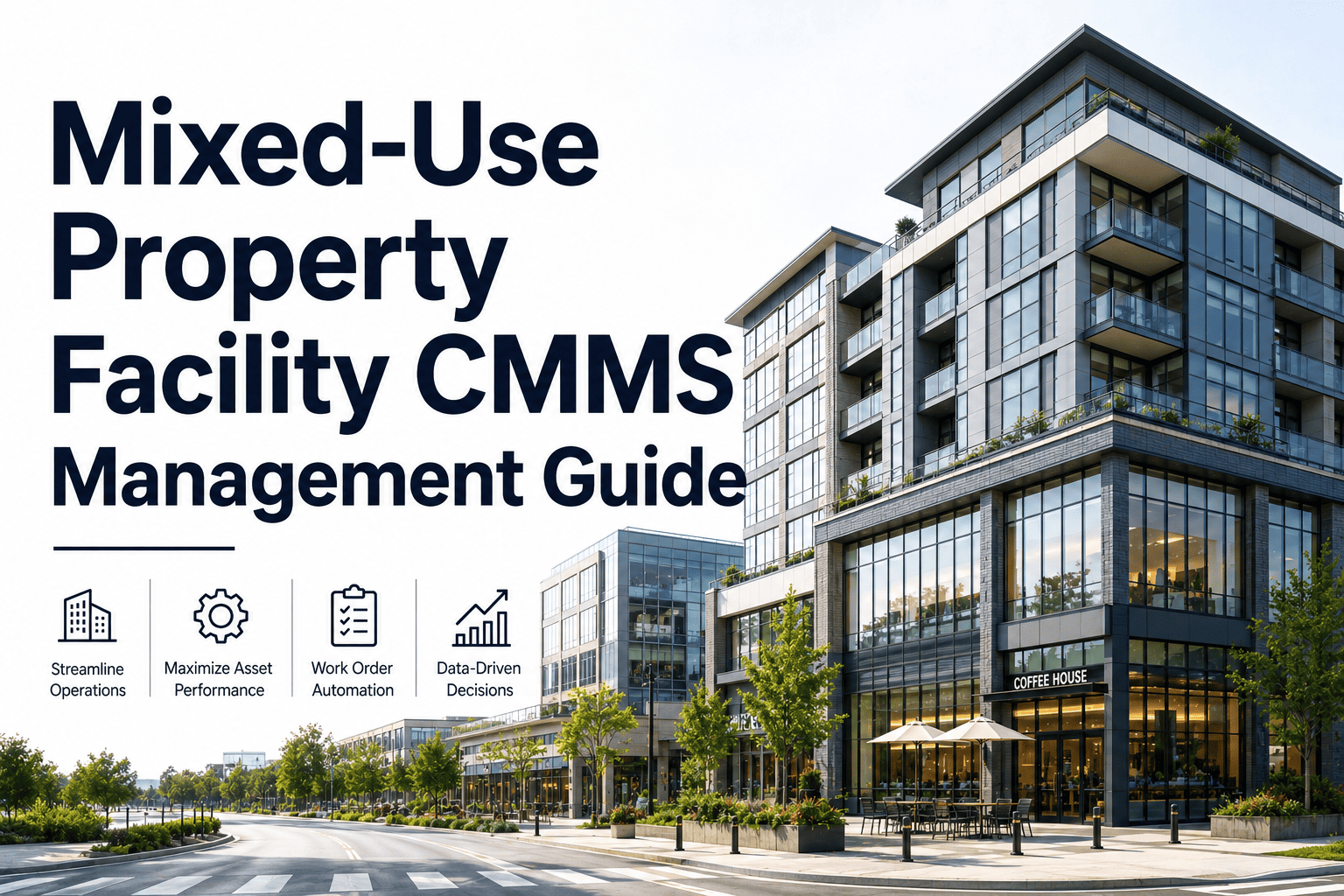
Mixed-use properties—buildings that combine residential, retail, and office spaces under one roof—demand a fundamentally different maintenance strategy than single-use facilities. A mixed use facility CMMS consolidates tenant request handling, preventive maintenance scheduling, and asset tracking across all zones into a single platform, eliminating the chaos of siloed spreadsheets and disconnected work orders. Property managers overseeing these hybrid portfolios typically see a 25–40% reduction in reactive maintenance costs within the first year of implementing a centralized system. If you are managing HVAC for a restaurant, elevators for office tenants, and plumbing for residential units simultaneously, OxMaint gives you the unified control you need—Start Free Trial to see how it works on your portfolio today.
Managing Three Occupancy Types in One Building—Without the Chaos?
Residential tenants expect 4-hour response times. Retail tenants demand zero disruption during peak hours. Office managers need predictable service windows. A mixed use property guide to maintenance consolidation starts with a single CMMS that routes, prioritizes, and tracks every request by zone, tenant class, and asset criticality.
Why Mixed-Use Property Maintenance Breaks Under Legacy Systems
A 250,000-sq-ft mixed-use building typically houses 800+ maintainable assets across three distinct occupancy zones—each with different SLAs, operating hours, and compliance requirements.
A property group managing a 12-building mixed-use portfolio (1.4M sq ft) was spending $87K/year on reactive maintenance callouts and losing retail tenants due to HVAC failures during business hours. After consolidating to a CMMS mixed use facility platform, they cut unplanned downtime by 31%, recovered $26K in annual maintenance spend, and reduced tenant complaint escalations by 58% within nine months.
How to Set Up a Mixed-Use Maintenance CMMS in 6 Phases
A structured rollout prevents the most common failure point: trying to migrate everything at once. Follow this phased timeline used by portfolios managing 500K+ sq ft.
Asset Hierarchy Mapping
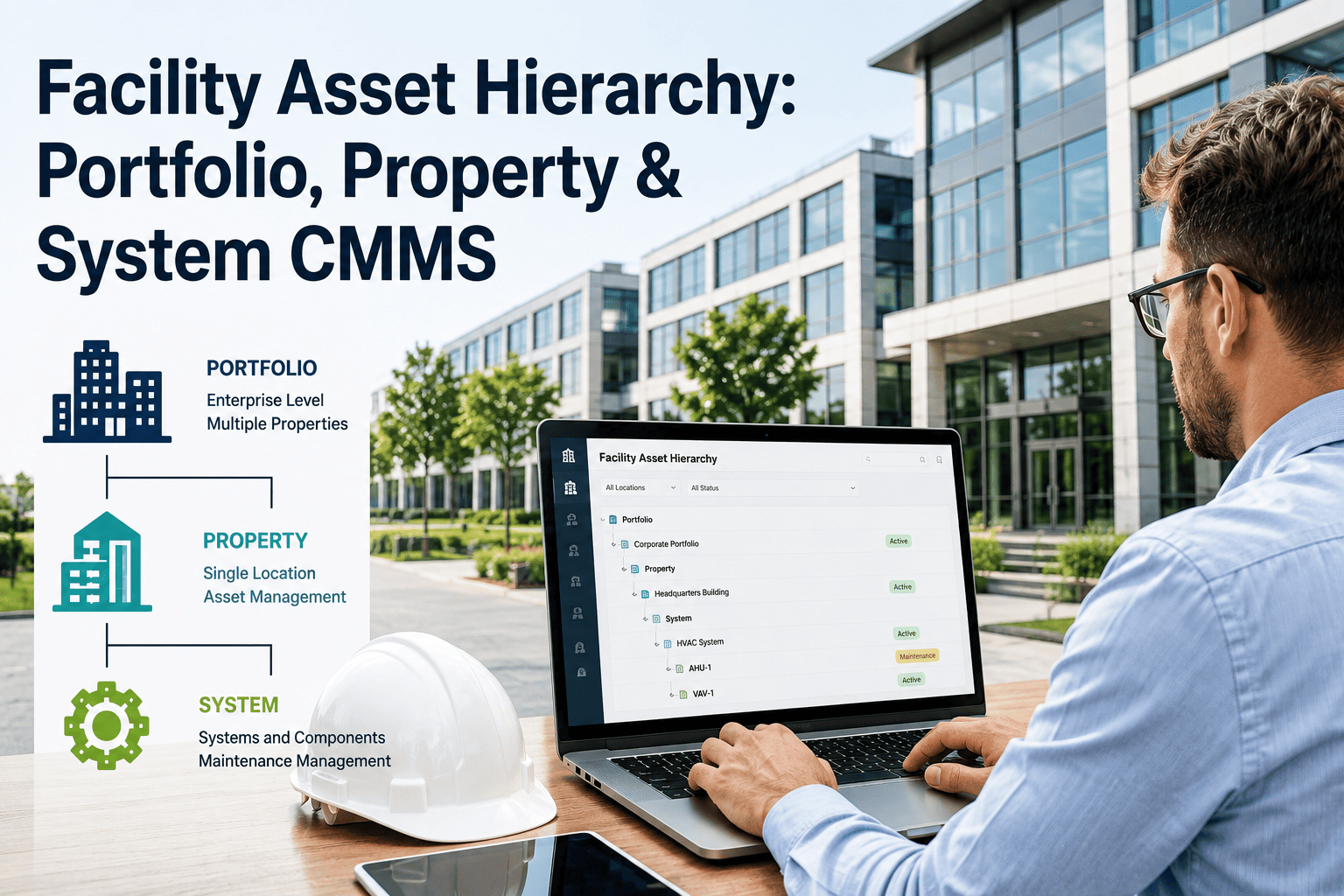
Catalog every asset by zone (residential, retail, office), floor, and system type. Tag criticality (life-safety, comfort, operational) and assign parent-child relationships for cascading PM schedules.
Tenant SLA Configuration
Define response-time targets by tenant class: 2 hours for life-safety, 4 hours for residential comfort, 8 hours for office/non-urgent. Build auto-escalation rules into the CMMS workflow engine.
Preventive Maintenance Scheduling
Import OEM-recommended PM cycles for HVAC, elevators, generators, fire suppression, and plumbing. Stagger schedules to avoid retail-hour disruptions—route heavy work to 2–6 AM windows.
Tenant Portal Launch
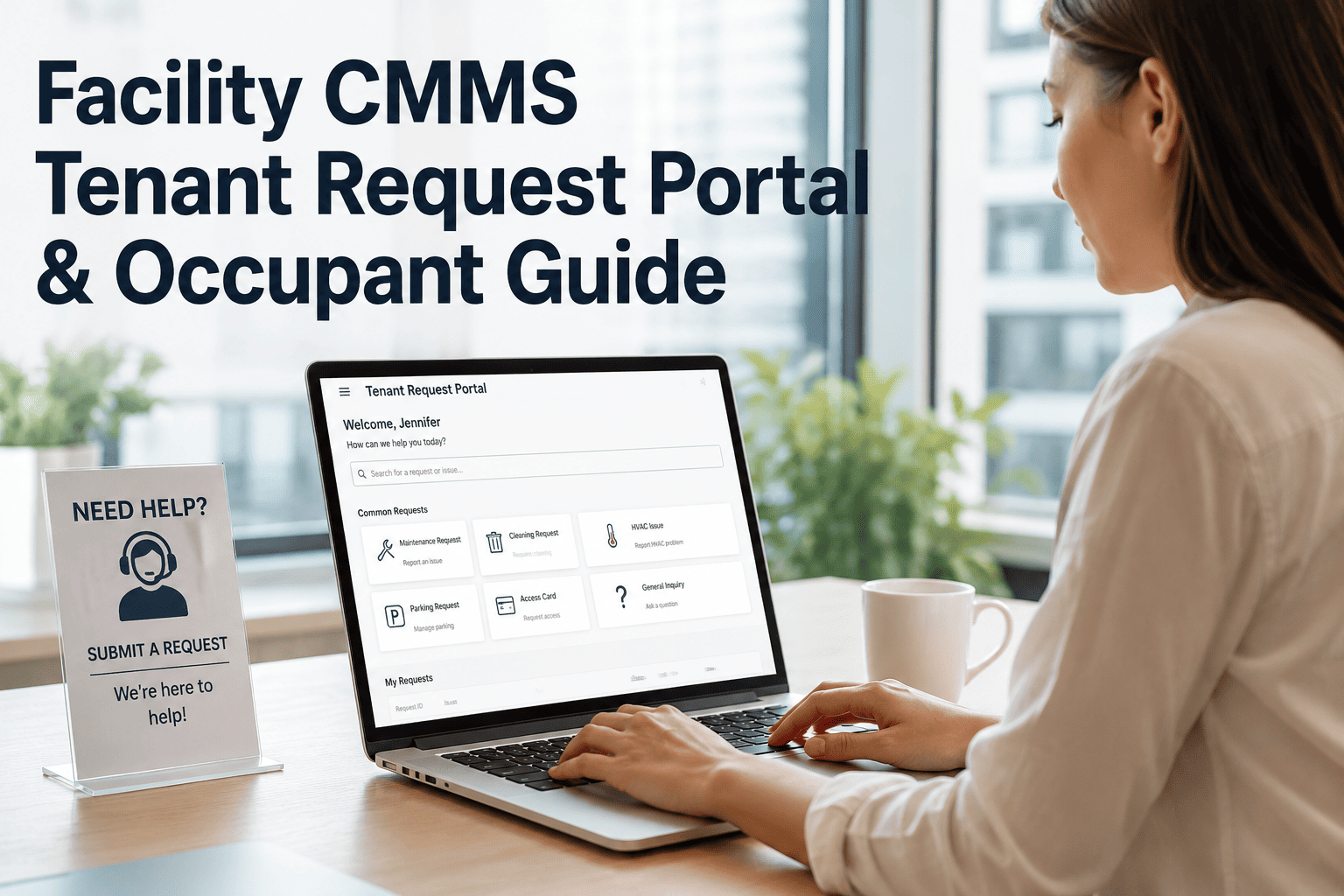
Deploy a self-service request portal with zone-based routing. Tenants submit photos and category tags; the CMMS auto-assigns to the correct technician based on skill, proximity, and SLA priority.
Spare Parts & Vendor Integration
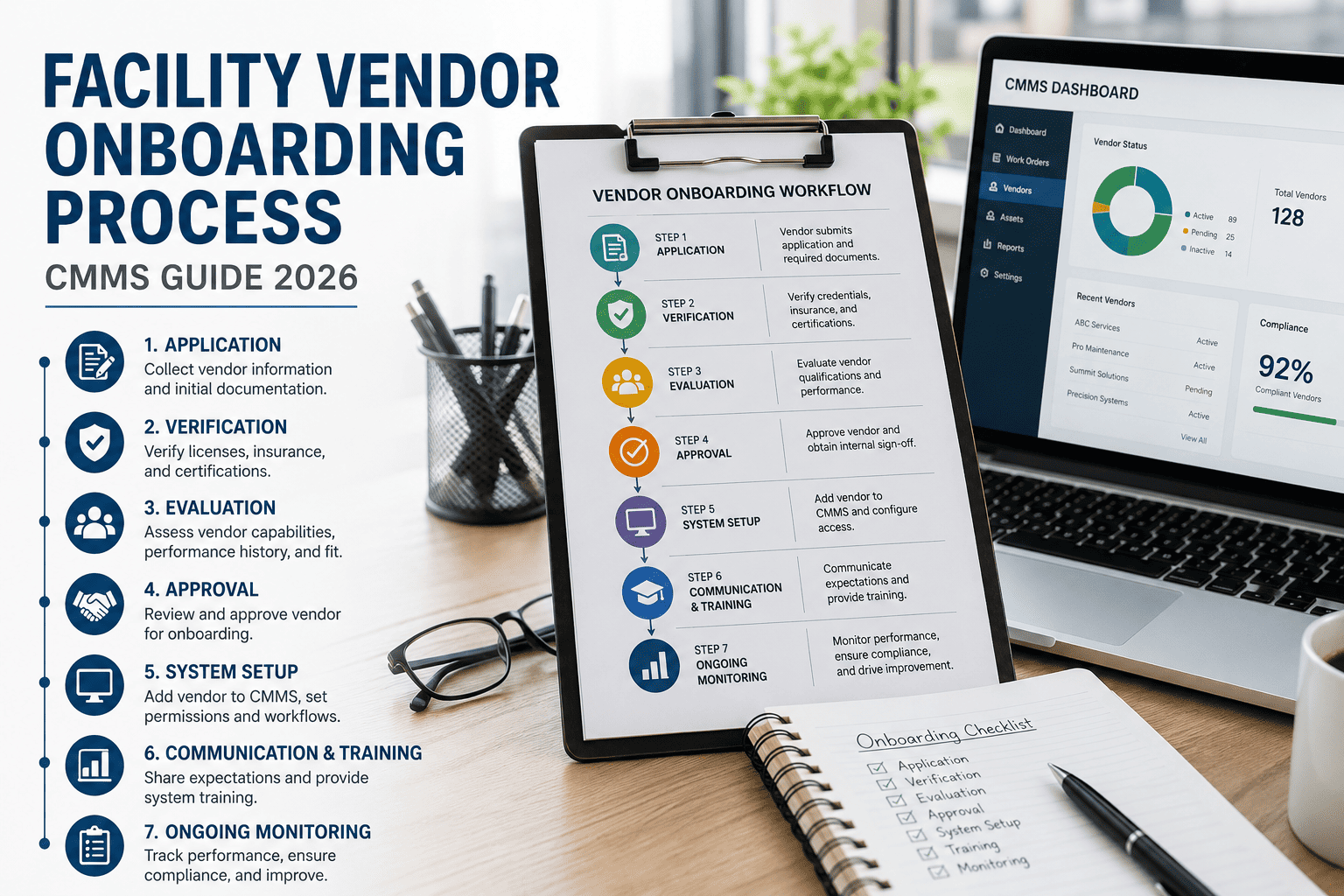
Link critical spares (filters, belts, pumps) to asset records with min/max reorder triggers. Onboard approved vendors with scoped work-order templates for fire alarm inspections, elevator certs, and generator load tests.
Analytics & Predictive Activation
Enable OEE, MTBF, and MTTR dashboards. Activate AI-driven failure predictions on top-quartile criticality assets—typically chillers, elevators, and AHUs—to shift from time-based to condition-based maintenance.
Mixed-Use Maintenance Requirements by Occupancy Type
Each zone carries distinct regulatory, operational, and tenant-experience demands. A CMMS facility mixed use strategy must segment these cleanly while maintaining a single source of truth.
24/7 Comfort & Life-Safety
- Plumbing leaks: 2-hr response SLA
- HVAC outages: 4-hr response, 8-hr resolution
- Fire/smoke detector quarterly testing
- Emergency lighting monthly inspections
- Tenant request portal with photo upload
Zero-Downtime Business Hours
- HVAC: PM scheduled 2–6 AM only
- Loading dock door quarterly service
- Grease trap monthly pumping (food tenants)
- Storefront lighting weekly walk-through
- Refrigeration temp monitoring (24/7 alerts)
Predictable Service Windows
- Elevator monthly inspection & cert tracking
- Restroom daily stocking + weekly deep clean
- Conference room AV quarterly checks
- Generator monthly load test (NFPA 110)
- After-hours janitorial coordination
What Changes When You Switch to a Mixed-Use Maintenance CMMS
The gap between spreadsheet-based management and a purpose-built CMMS is measurable—across cost, compliance, and tenant satisfaction.
| Capability | Spreadsheets / Email | OxMaint CMMS |
|---|---|---|
| Work order routing | Manual dispatch, email chains, 45% misroute rate | Auto-routing by zone, skill, SLA — sub-30-sec assignment |
| Preventive maintenance | Calendar reminders, 60% PM completion rate | Automated triggers, 95%+ on-time PM completion |
| Tenant request tracking | Phone log, no status visibility for tenants | Self-service portal with real-time status + photo proof |
| Compliance documentation | Paper binders, 3–5 days audit prep | Digital audit trail, exportable in under 5 minutes |
| Spare parts inventory | Manual counts, 22% stockout rate on critical parts | Auto-reorder at min thresholds, 3% stockout rate |
| Predictive maintenance | Not feasible — reactive only | AI failure prediction on critical assets, 30–50% fewer breakdowns |
What a Mixed-Use CMMS Costs—and What It Saves
A 180-asset mixed-use property spending $42K/yr on maintenance operations typically sees full CMMS payback in 3.4 months. Here is the math.
| Portfolio Size | Annual CMMS Cost | Year-1 Savings | Payback Period |
|---|---|---|---|
| 1 building (180 assets) | $8,400 | $31,500 | 3.4 months |
| 5 buildings (900 assets) | $28,000 | $142,000 | 2.8 months |
| 12 buildings (2,200 assets) | $54,000 | $340,000 | 2.3 months |
OxMaint: The CMMS Built for Mixed-Use Complexity
OxMaint consolidates residential, retail, and office maintenance into one AI-powered platform—with zone-based routing, tenant self-service, and predictive analytics out of the box.
Zone-Based Work Order Routing
Auto-assigns every work order to the right technician based on building zone (residential, retail, office), skill certification, SLA priority, and real-time proximity—cutting dispatch time by 85%.
Tenant Self-Service Portal
Tenants submit requests with photos, category tags, and urgency levels. They see real-time status updates and resolution proof—eliminating phone-tag and duplicate submissions.
AI-Driven Predictive Maintenance
OxMaint analyzes vibration, temperature, and runtime data on critical assets (chillers, elevators, AHUs) to predict failures 7–21 days before they occur—shifting you from reactive to condition-based maintenance.
Compliance & Audit Readiness
Every work order, inspection, and certification is logged with timestamped, tamper-proof records. Generate NFPA, OSHA, and local fire-code compliance reports in under 5 minutes—no more paper binders.
"We manage 14 mixed-use buildings across two states. Before OxMaint, we had three different maintenance processes—one for residential, one for retail, one for office. Now it is one platform, one dashboard, one source of truth. Tenant complaints dropped 52% in the first quarter."
See OxMaint Manage Your Mixed-Use Portfolio—Live
Book a 30-minute demo and we will map your residential, retail, and office assets into the platform, show you zone-based routing in action, and project your first-year savings.
Mixed-Use CMMS: What Facility Managers Ask Most
What is a mixed-use facility CMMS and how does it differ from standard maintenance software?
A mixed-use facility CMMS is a maintenance management platform specifically designed to handle multiple occupancy types—residential, retail, and office—within a single building or portfolio. Unlike standard CMMS software, it supports zone-based work order routing, tenant-class-specific SLAs, and operating-hour-aware scheduling so that heavy maintenance does not disrupt retail business hours or office meetings. You can Start Free Trial to test these features on your portfolio.
How much does a CMMS cost for a mixed-use property?
For a typical 180-asset mixed-use building, a CMMS like OxMaint costs approximately $700/month ($8,400/year). With average year-one savings of $31,500 from reduced reactive callouts, recovered labor hours, and extended asset life, the payback period is 3.4 months. Larger portfolios (12+ buildings) see payback in under 3 months due to economies of scale.
Can a mixed-use maintenance CMMS handle different SLAs for residential, retail, and office tenants?
Yes. OxMaint lets you configure distinct response and resolution time targets by tenant class and request category. Residential life-safety issues trigger a 2-hour response SLA, retail HVAC failures during business hours get highest-priority routing, and office requests follow standard business-hour windows. Auto-escalation rules ensure no SLA breach goes unnoticed.
How long does it take to implement a CMMS for a mixed-use property?
A structured CMMS rollout for a mixed-use property takes 6–8 weeks: asset hierarchy mapping (weeks 1–2), SLA configuration (weeks 2–3), PM scheduling (weeks 3–4), tenant portal launch (weeks 4–5), spare parts integration (weeks 5–6), and analytics activation (weeks 6–8). OxMaint provides onboarding support and data migration assistance to accelerate this timeline—Book a Demo to see a live implementation plan.
Does a mixed-use CMMS help with compliance and audit readiness?
Absolutely. OxMaint logs every work order, inspection, and certification with timestamped, tamper-proof records. You can generate compliance reports for NFPA 110 (generator testing), local fire codes, elevator certifications, and OSHA requirements in under 5 minutes. Most mixed-use properties cut audit preparation time from 3–5 days to under 1 hour after switching from paper binders.
Stop Juggling Three Maintenance Systems in One Building
Consolidate residential, retail, and office maintenance into one AI-powered CMMS. Cut reactive costs 25–40%, keep tenants happy, and make every audit effortless.
Free 14-day trial · No credit card required