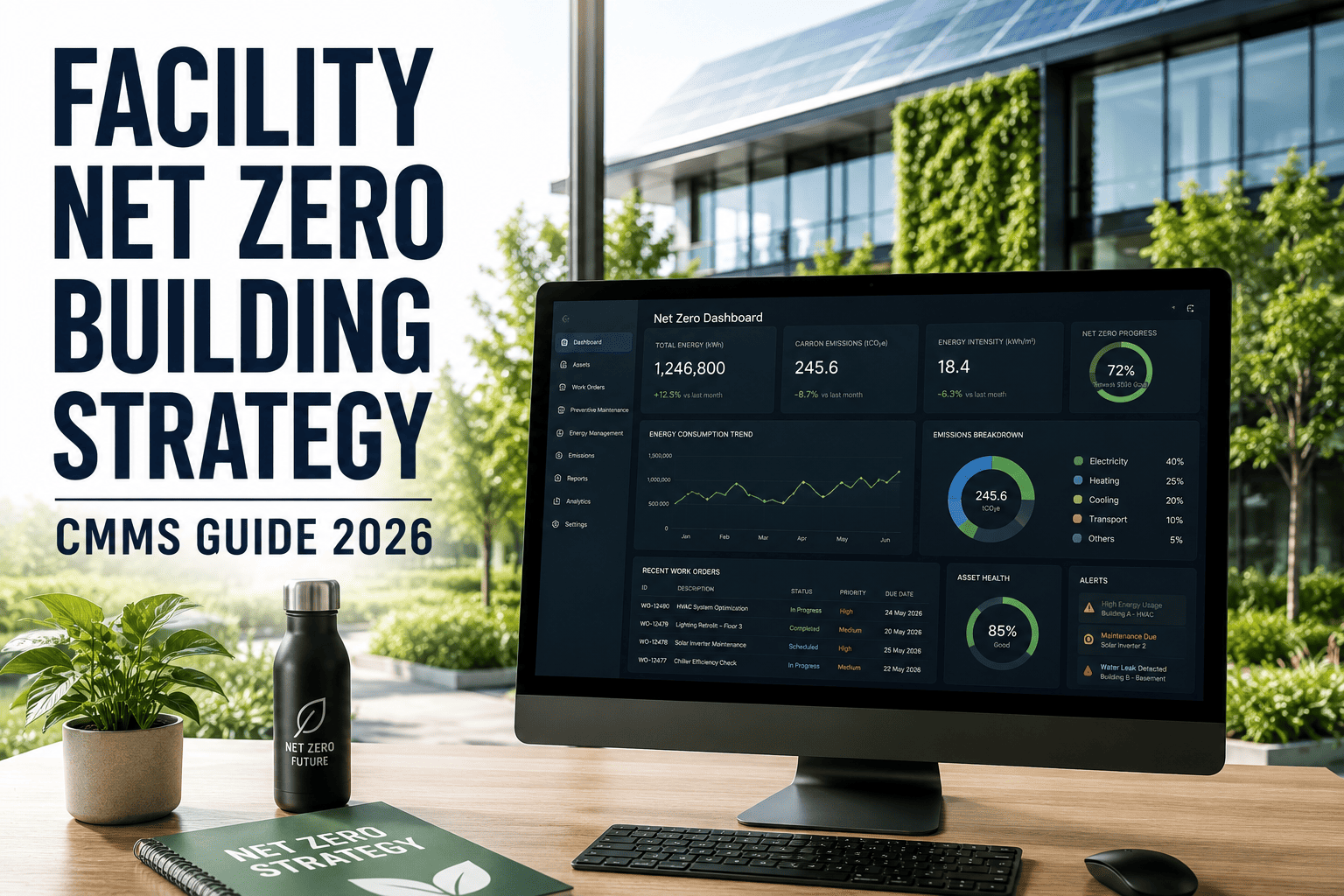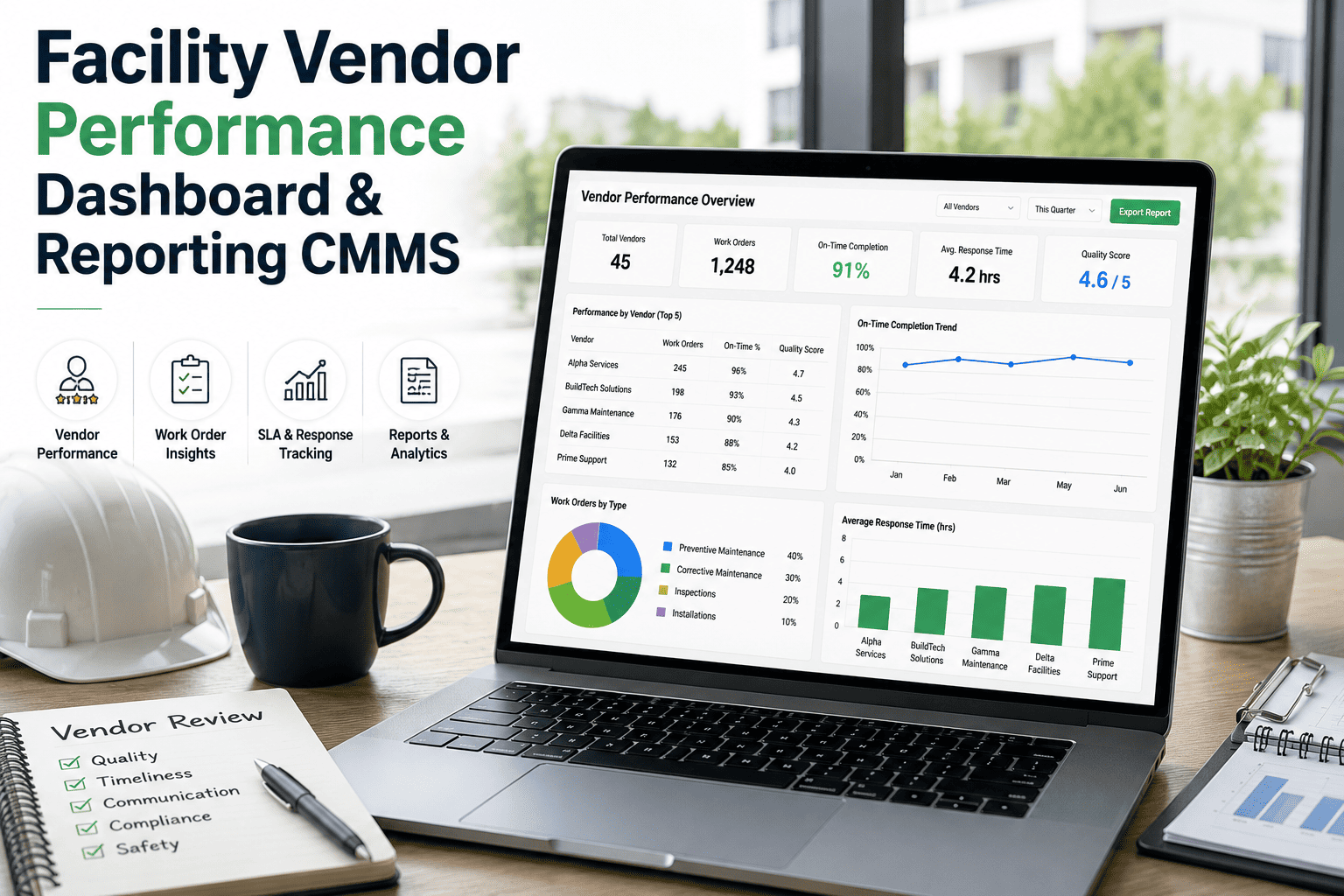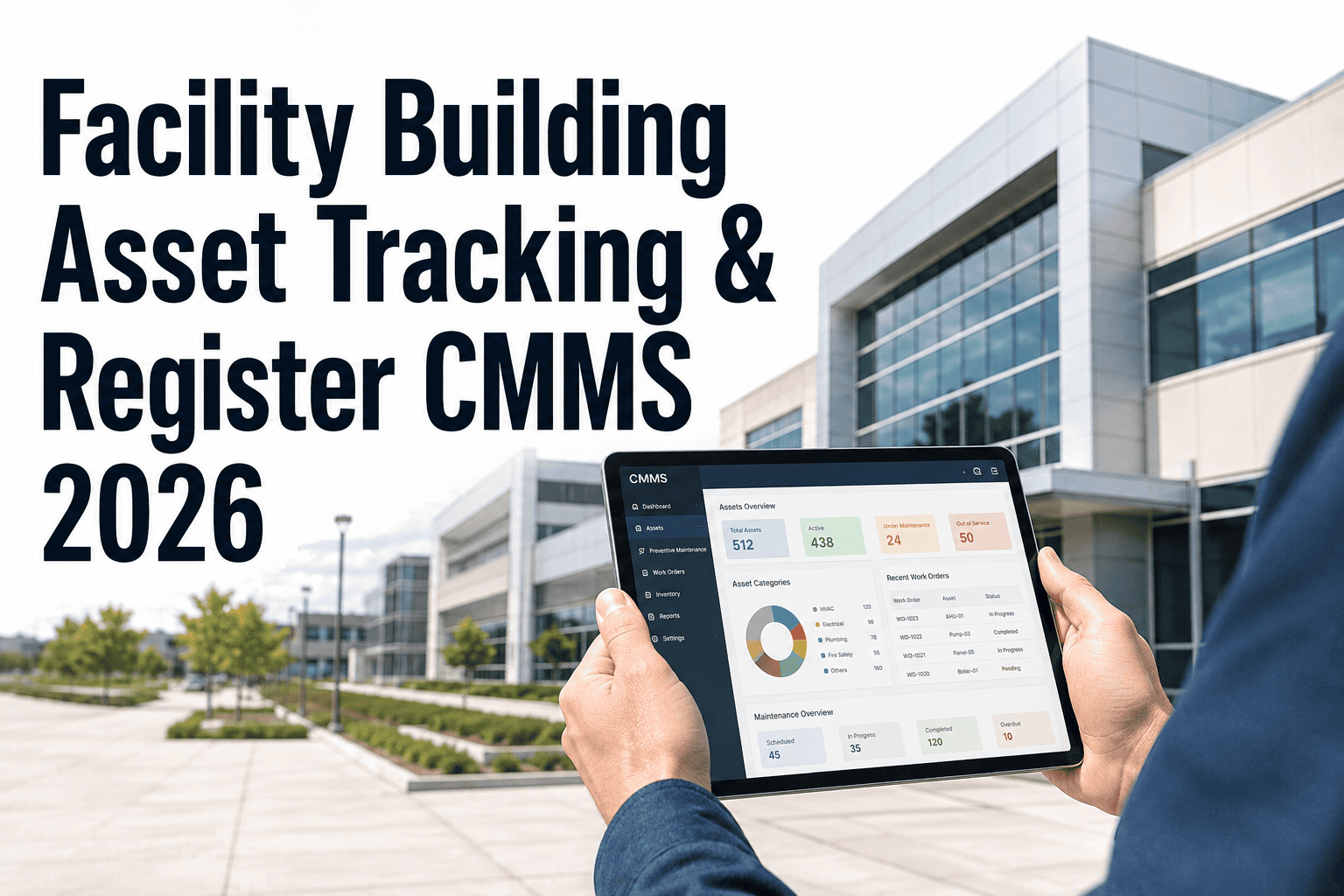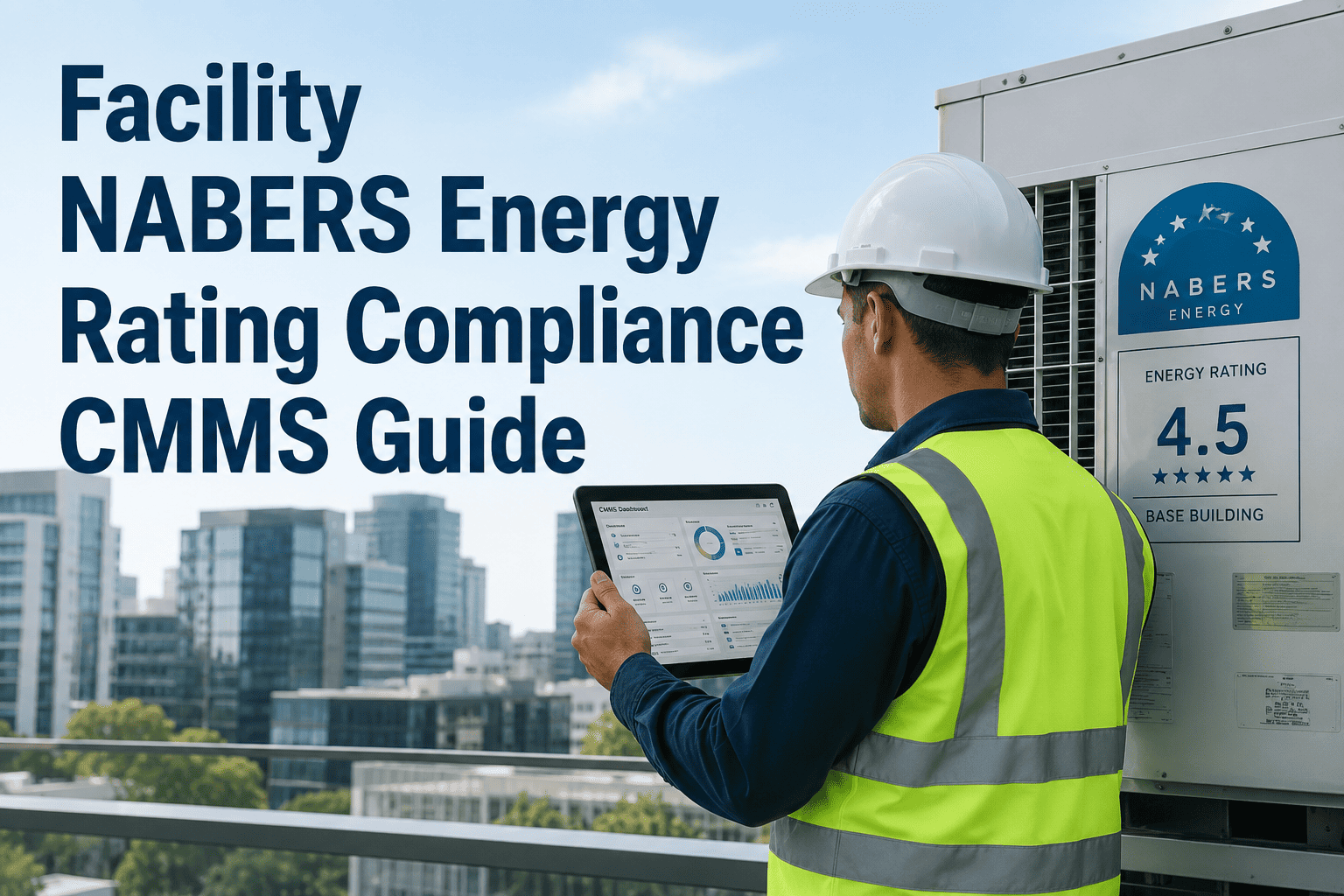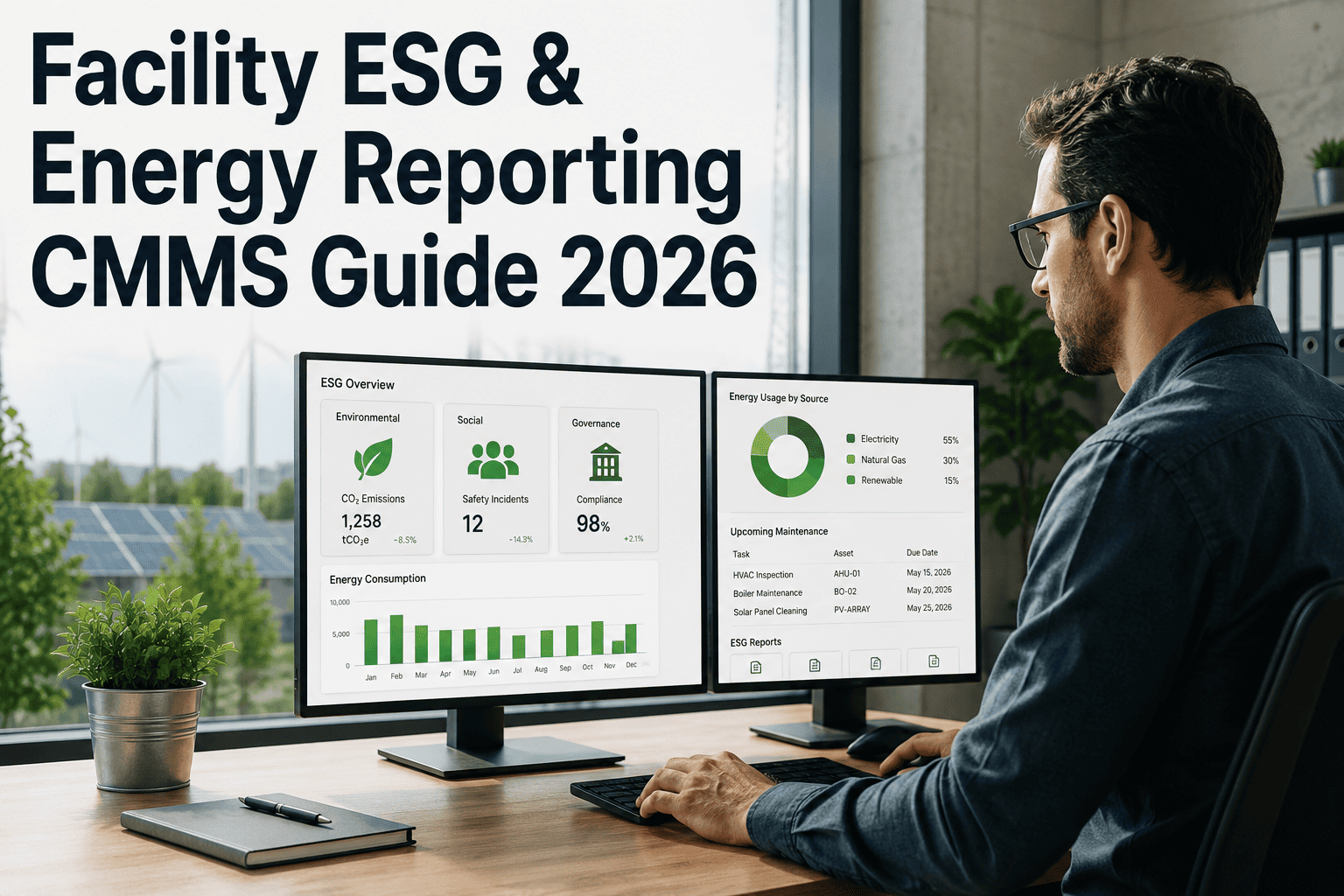
Facility ESG reporting is no longer a voluntary exercise — by 2026, over 60% of institutional investors require standardized sustainability disclosures from the companies they fund, and facility operations account for the largest share of measurable Scope 1 and Scope 2 carbon emissions. This facility ESG guide for 2026 explains how maintenance and reliability teams can use a CMMS to automate energy reporting, document carbon footprint reductions, and produce audit-ready ESG metrics without manual spreadsheet work. The right sustainability CMMS turns every work order, meter reading and asset runtime log into defensible data for stakeholders. Ready to replace guesswork with verified reporting? Start Free Trial and see how OxMaint simplifies facility ESG metric tracking from day one.
Facility ESG & Energy Reporting CMMS Guide 2026
Can your CMMS produce a defensible ESG report — or are you still building it in spreadsheets?
Facility ESG reporting in 2026 demands verifiable energy data, carbon footprint documentation, and sustainability metric tracking — not estimates stitched together after quarter-end. OxMaint captures asset-level energy consumption and maintenance emissions automatically, so your next stakeholder report is already audit-ready.
Average emissions reduction with CMMS-driven maintenance optimization
Energy waste eliminated through optimized PM schedules, predictive failure prevention, and reduced reactive repair runs — measured across industrial facilities within the first 12 months.
The Stakes For 2026
Why facility ESG reporting is becoming a maintenance responsibility
Maintenance teams control the asset behavior that drives 70–90% of a facility's energy consumption and refrigerant emissions — yet most ESG reports are still assembled by finance or sustainability consultants who have no visibility into asset-level data.
Annual global spend on ESG reporting and compliance by 2026 — facility data is the hardest piece to verify.
Of Scope 1 and 2 emissions originate from HVAC, compressed air, and process equipment under maintenance team control.
Hours per quarter spent manually compiling facility sustainability reports from spreadsheets and meter logs.
EU Corporate Sustainability Reporting Directive now requires granular, auditable facility-level energy and emissions data.
The cost of inaction: a 180-asset manufacturing plant spending $42K annually on energy recently failed a CSRD audit because maintenance records couldn't verify refrigerant leak repairs or HVAC filter-change intervals. The penalty: €120K in consulting fees to reconstruct 24 months of missing evidence — plus a downgraded ESG rating that cost them a key customer contract. Facility ESG reporting without a CMMS is a liability hiding in plain sight.
Core Metrics To Track
What ESG metrics should a facility CMMS track for sustainability reporting?
A facility sustainability guide focused on ESG compliance must cover four data domains. Each maps to recognized reporting frameworks — GRI 302 (Energy), GRI 305 (Emissions), SASB, and TCFD — and each is captured natively inside OxMaint through work orders, asset logs, and inventory records.
Energy consumption by asset
Kilowatt-hours, BTUs, or fuel volume tied to individual equipment — compressors, chillers, boilers, HVAC units. OxMaint stores meter readings on the asset record and timestamps every reading, so you can prove energy-reduction claims down to the serial number. This is the foundation of facility energy ESG reporting.
GRI 302 · SASBRefrigerant & fugitive emissions
Every refrigerant top-up logged in a work order is a Scope 1 emission event. OxMaint tracks refrigerant type, quantity added, and the asset serviced — producing a refrigerant emissions ledger that satisfies EPA Section 608 and CSRD requirements without a separate spreadsheet.
Scope 1 · EPA 608Waste & spare-parts lifecycle
Parts replaced, refurbished, or recycled through work orders generate material-flow data for circular-economy disclosures. OxMaint's spare-parts inventory module tracks each part's disposition — repair, reuse, recycle, or disposal — giving you a defensible waste-diversion rate for ESG stakeholder reporting.
GRI 306 · Circular EconomyWater consumption & discharge
Cooling tower make-up, boiler blowdown, and process water tracked against asset meters. OxMaint flags abnormal consumption patterns — a hidden leak can waste 2.5M gallons annually and silently inflate your facility's water-stress reporting under GRI 303.
GRI 303 · WaterStep-By-Step Implementation
How to build a facility ESG reporting system with CMMS in 90 days
Transitioning from manual spreadsheets to a CMMS-based ESG report doesn't require a multi-year project. The following timeline reflects a typical 150–300 asset facility implementing OxMaint for sustainability metric tracking.
Asset & meter baseline
Import all energy-consuming assets into OxMaint. Attach meter points, nameplate data, and historical energy bills. Assign asset criticality and sustainability tags (high/medium/low emitter). A 200-asset facility typically completes this in 3 weeks with OxMaint's bulk-import tools and AI-assisted asset classification.
PM schedule optimization for energy
Map every preventive maintenance task to an energy outcome — filter changes restore HVAC efficiency by 5–15%, bearing lubrication reduces motor amperage by 3–8%, and condenser cleaning cuts chiller kW/ton by 10–20%. OxMaint's PM scheduler ensures these tasks happen on energy-optimal intervals, not just calendar defaults.
Automated ESG data capture & reporting
Configure OxMaint dashboards to aggregate energy consumption, refrigerant additions, and waste diversion by month, building, or asset class. Export a formatted ESG report aligned to GRI or SASB standards in one click — eliminating the 120+ hours of manual compilation per quarter.
The Math
CMMS ESG facility ROI: what does sustainability reporting actually cost and save?
The business case for a sustainability CMMS facility solution comes from three savings streams: eliminated manual reporting labor, reduced energy waste through optimized maintenance, and avoided compliance penalties. Here's the formula and a worked example.
Annual ESG Reporting Savings Formula
Net Annual Savings = (Manual Reporting Hours × Loaded Labor Rate) + (Energy Waste Eliminated × $/kWh) + (Compliance Penalty Risk × Probability) − CMMS Annual Cost
| Savings Category | Without CMMS (Annual) | With OxMaint CMMS | Annual Savings |
|---|---|---|---|
| Manual ESG report compilation (480 hrs × $75/hr) | $36,000 | $3,000 | $33,000 |
| Energy waste from deferred PM (8% of $120K energy spend) | $9,600 | $1,200 | $8,400 |
| Refrigerant leak detection lag (avg. 14-day delay) | $7,500 | $900 | $6,600 |
| Compliance audit preparation & evidence reconstruction | $15,000 | $1,500 | $13,500 |
| OxMaint CMMS annual subscription | — | −$8,400 | −$8,400 |
| Net Annual ESG Reporting Savings | $53,100 | ||
Worked example: A 180-asset food processing plant spending $120K/year on electricity implemented OxMaint for facility ESG reporting. Within 12 months, they cut energy waste by 22% through PM optimization, reduced refrigerant losses by $6,600 through early-leak work orders, and eliminated 480 hours of quarterly spreadsheet reporting. Payback period: 2.1 months. That's the tangible ROI of CMMS facility sustainability done right.
How OxMaint Helps
How OxMaint powers facility ESG and energy reporting
OxMaint is an AI-powered CMMS and EAM platform built for maintenance and reliability teams. Every capability below maps directly to a facility ESG reporting pain point — turning daily maintenance execution into auditable sustainability data.
Automated energy meter data capture
OxMaint stores meter readings on every asset record — manually entered or imported via API from BMS/SCADA systems. Each reading is timestamped and linked to the work order that triggered the change, giving you a full energy-consumption audit trail. Outcome: eliminate 90% of manual data-collection time for facility energy ESG reports.
Carbon footprint documentation by work order
Every refrigerant top-up, fuel delivery, and waste disposal is logged as a line item in a closed work order with technician, date, and quantity. OxMaint converts these into CO₂-equivalent emissions automatically using EPA and IPCC emission factors. Outcome: produce a Scope 1 emissions ledger ready for CSRD, GRI 305, or CDP submission in one export.
Predictive maintenance for energy efficiency
OxMaint's AI analyzes vibration, temperature, and amperage data to detect degrading asset performance before failure — catching the bearing wear that increases motor energy draw by 12%, or the fouled heat exchanger that spikes chiller consumption by 25%. Outcome: prevent 30–50% of energy-wasting failures before they inflate your facility's carbon footprint.
One-click stakeholder ESG reports
Pre-built dashboards aggregate energy, emissions, water, and waste metrics by facility, asset class, or time period. Export formatted reports aligned to GRI, SASB, or TCFD frameworks — or share a live read-only dashboard with auditors and investors. Outcome: cut ESG report preparation from 120 hours to under 4 hours per quarter.
"We went from spending three weeks every quarter assembling our facility sustainability report from spreadsheets to generating it in an afternoon. OxMaint gave us asset-level energy data that our auditors accepted without a single follow-up question."
See OxMaint turn your maintenance data into an audit-ready ESG report
Book a 30-minute demo and we'll show you exactly how your assets, work orders, and meter readings become a defensible facility ESG report — aligned to the frameworks your stakeholders demand.
Frequently Asked Questions
Facility ESG reporting CMMS questions, answered
Can a CMMS really replace our spreadsheet-based ESG report?
Yes — a CMMS like OxMaint captures energy consumption, refrigerant additions, and waste data at the source (the work order and asset record) rather than requiring you to reconstruct it from spreadsheets after the fact. Facilities typically eliminate 80–90% of manual reporting hours while producing more granular, audit-defensible data than spreadsheet estimates ever could. You can Start Free Trial to import your assets and see the reporting dashboards immediately.
Which ESG reporting frameworks does OxMaint support?
OxMaint's data model maps to GRI 302 (Energy), GRI 305 (Emissions), GRI 303 (Water), GRI 306 (Waste), SASB industry standards, TCFD, and CSRD reporting requirements. The platform doesn't lock you into one framework — you configure which metrics to track and which export format to generate, so you can serve multiple stakeholders from a single data source.
How does a CMMS track facility carbon footprint accurately?
OxMaint tracks carbon footprint by linking every emission-generating event — refrigerant top-ups, fuel deliveries, waste disposal, and energy consumption — to a specific asset and work order with a timestamp. It then applies EPA Section 608, IPCC, and GHG Protocol emission factors to convert raw quantities into CO₂-equivalent figures, producing a Scope 1 and Scope 2 emissions ledger that's traceable to individual maintenance actions.
How long does it take to implement CMMS for facility ESG reporting?
A typical 150–300 asset facility can complete a full implementation in 60–90 days: Month 1 for asset and meter baseline import, Month 2 for PM schedule optimization aligned to energy outcomes, and Month 3 for dashboard configuration and report template setup. OxMaint's AI-assisted asset classification and bulk-import tools accelerate onboarding significantly compared to traditional CMMS deployments.
What's the ROI of switching to a sustainability CMMS for facility management?
Most facilities see $40K–$60K in net annual savings from three sources: eliminated manual reporting labor (120+ hours per quarter), reduced energy waste through PM optimization (5–25% of energy spend), and avoided compliance penalties from audit-ready documentation. The typical payback period is under 3 months. To get a precise ROI estimate for your facility, Book a Demo and we'll run the numbers on your asset count and energy spend.
Make your next ESG report the easiest one you've ever filed
Join the maintenance teams using OxMaint to turn daily work orders into defensible sustainability data — no spreadsheets, no estimates, no audit panic.
Free 14-day trial · No credit card