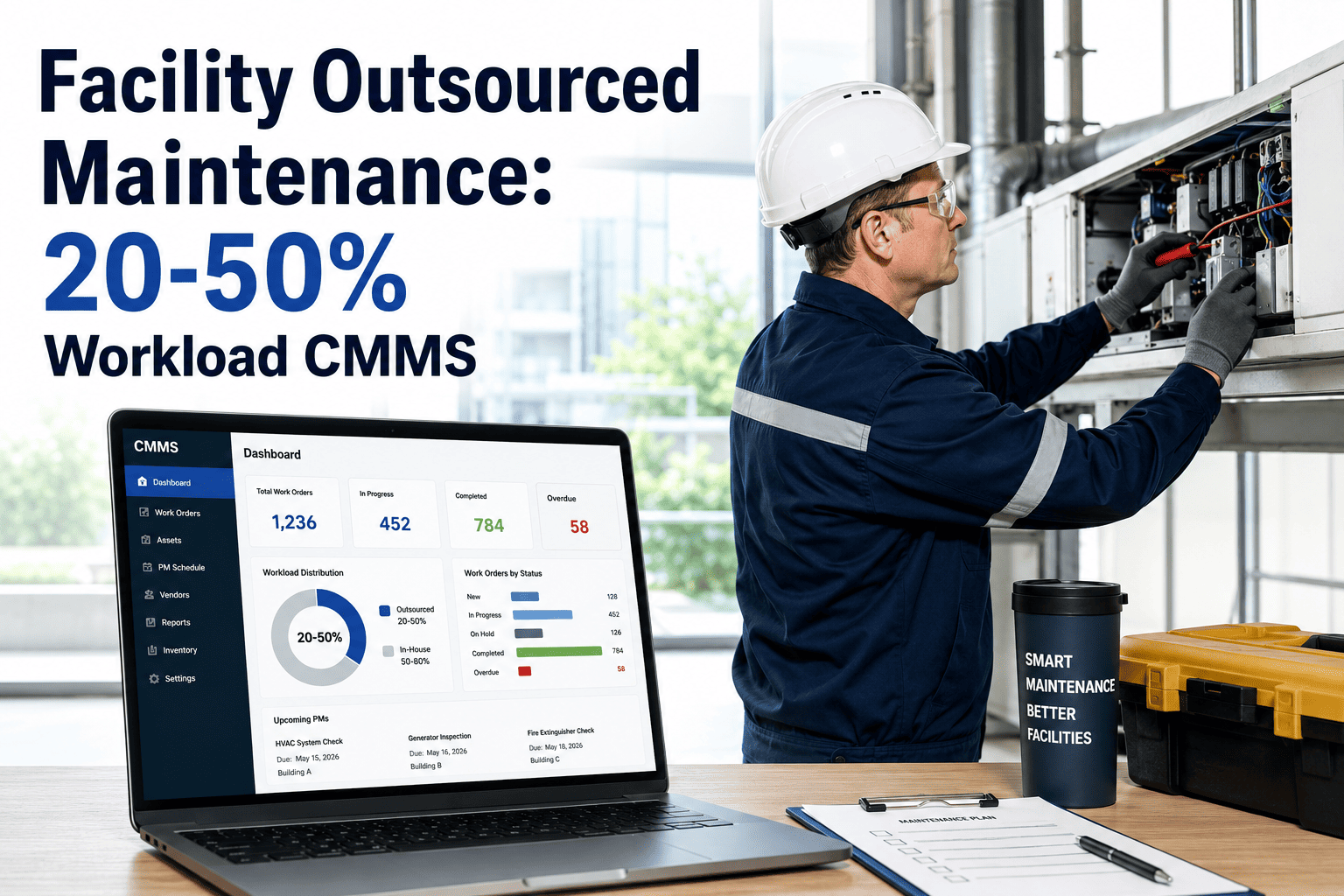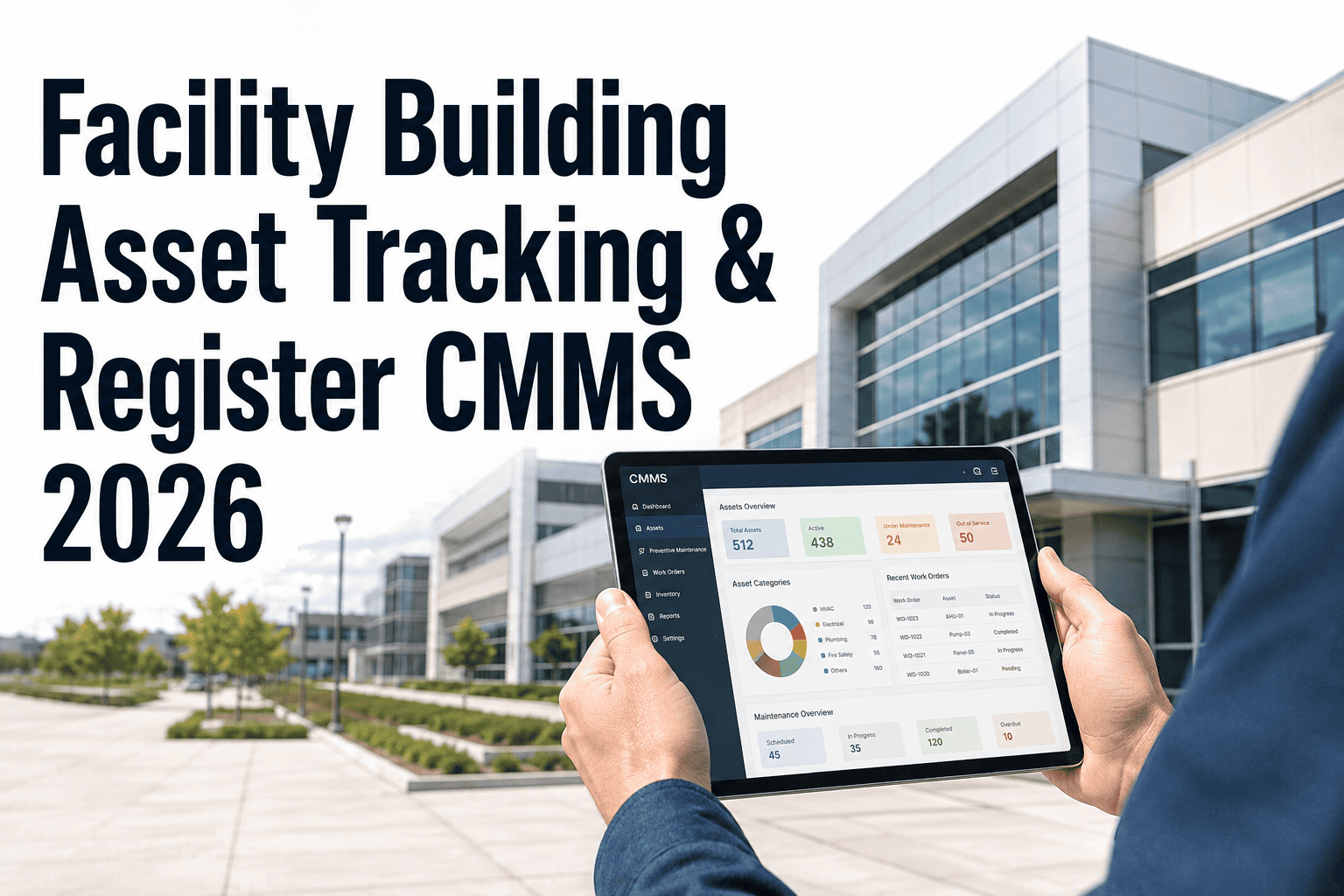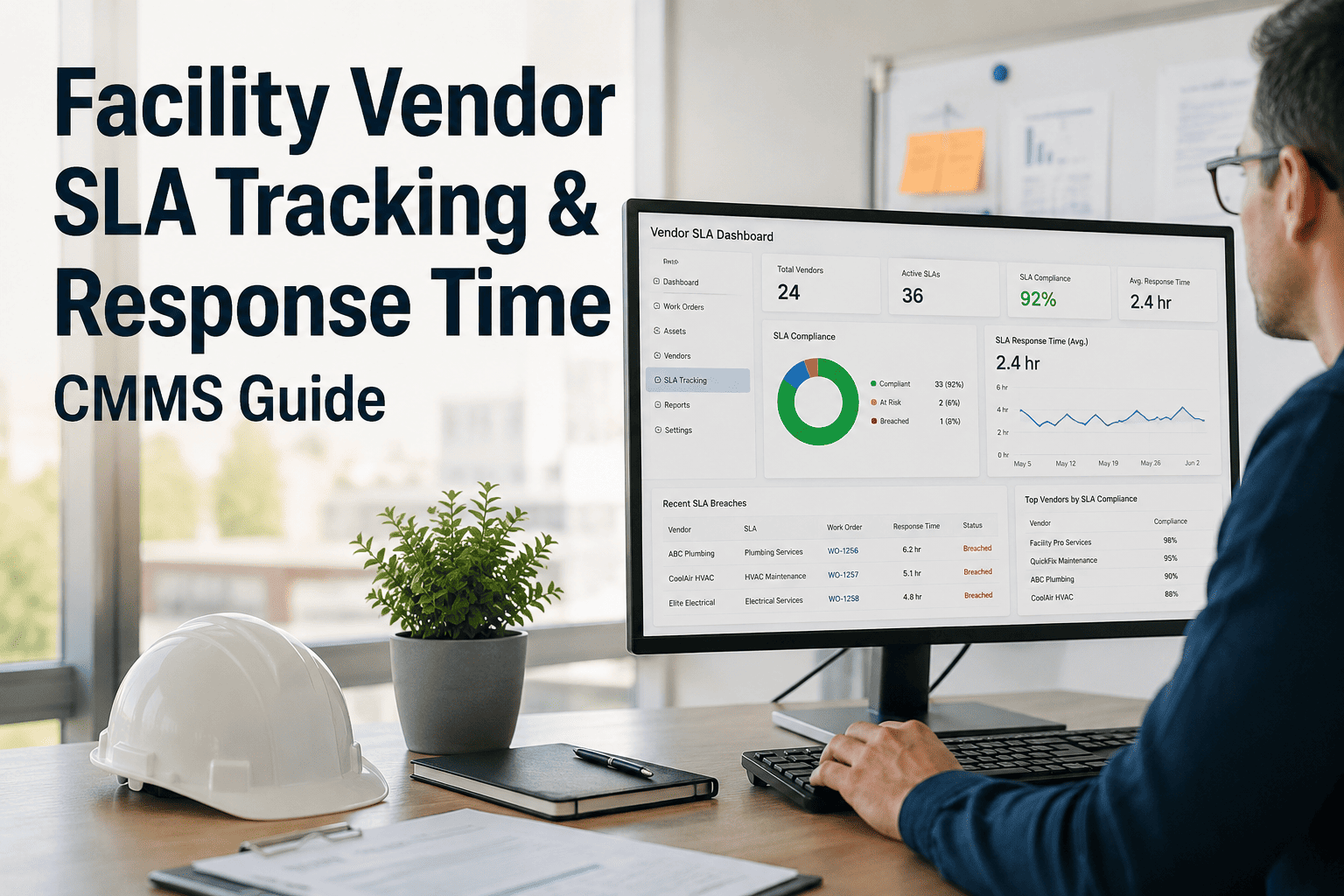
When a facility outsources preventive maintenance to specialized contractors, the assignment often ends where accountability should begin. Work gets scheduled through phone calls and spreadsheets, completion proof arrives as a photo in a text message, and insurance certificates expire quietly until a claim forces the question. Facilities now outsource roughly 23% of all maintenance tasks to contractors for HVAC, fire safety, elevators, and other specialized systems, yet fewer than six in ten facilities run that work through a centralized system. This guide lays out how to structure contractor task assignment, completion tracking, and insurance verification inside a CMMS so outsourced work is as visible as work your own technicians perform. See how OxMaint keeps every contractor visit accountable from assignment to sign-off.
Outsourced Contractor Work Deserves the Same Visibility as In-House PM
A structured scheduling framework for facility teams that hire outside specialists for HVAC, fire safety, elevators, generators, and other regulated systems.
Why Outsourced PM Scheduling Quietly Falls Apart
Outsourcing specialized maintenance solves a skills and staffing problem, but it introduces a visibility problem. These are the four points where contractor accountability most commonly disappears.
Work gets handed to a contractor and the CMMS stops tracking it. Asset history, SLA timers, and completion status live only in the vendor's own paperwork.
A photo texted to a facilities inbox is not a record. Without structured checklists tied to the work order, there is no way to confirm every task on the PM was actually performed.
Certificates of insurance and trade licenses are filed once at onboarding and rarely rechecked. A lapsed policy is often discovered only after an incident.
A contractor approved for split-system HVAC is not automatically qualified for a chiller plant. Without asset-class mapping, work gets routed to the wrong specialist.
Assign, track, and verify every contractor task from one queue
OxMaint routes outsourced PM work alongside in-house work orders, so SLA timers, completion records, and asset history stay in one place regardless of who does the job.
The 4-Step Contractor Task Assignment Workflow
Structured assignment prevents the two most common contractor scheduling failures: wrong specialist, wrong asset. Here is the sequence a CMMS should enforce before a work order ever reaches a vendor.
The system checks the asset type against the contractor's approved scope before the task is offered, preventing an unqualified vendor from being assigned by mistake.
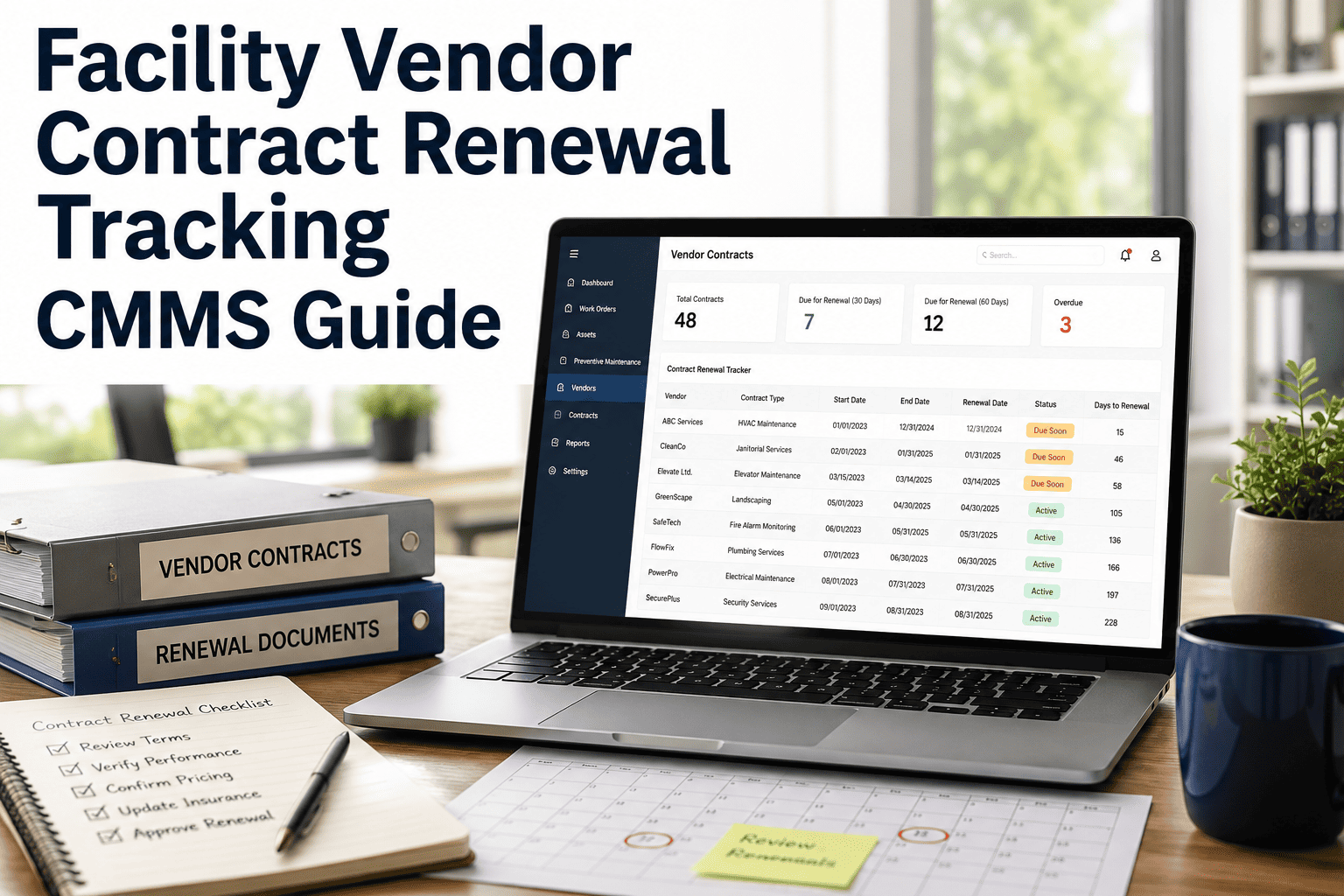
Assignment is blocked automatically if a contractor's certificate of insurance, trade license, or safety certification has expired or is nearing expiry.
The contractor receives task-specific steps, required readings, and photo requirements — not a generic PM description that leaves room for interpretation.
Sign-off, readings, parts used, and photos attach to the asset's permanent history — visible to facility staff without contacting the vendor directly.
What Every Contractor Visit Should Capture
Completion tracking is only useful if it produces evidence, not just a closed ticket. These are the fields that turn a contractor visit into an auditable record.
Technician name, timestamp, and signature captured at the point of completion, tied directly to the work order.
Each PM step marked complete individually, so a partially finished visit cannot close as fully done.
Before-and-after photos attached to the specific asset, stored with the work order rather than a separate email thread.
Meter readings, refrigerant levels, or replaced parts logged against the asset for lifecycle and warranty tracking.
Insurance and Credential Verification Checklist
Every outsourced maintenance relationship carries liability exposure. These four records should be checked before assignment, not after an incident.
Confirms active coverage and policy limits before any work order is released to the contractor.
Track expiry dateRequired for any contractor sending technicians on-site, regardless of job duration.
Track expiry dateElectrical, HVAC, or fire safety credentials matched to the specific asset class being serviced.
Renew before assignmentDefines SLA response times, escalation paths, and rates before the first work order is issued.
Confirm on fileNever assign work to an unverified contractor again
OxMaint blocks assignment when insurance, licenses, or agreements lapse — and alerts your team before a certificate expires, not after.
Spreadsheet Tracking vs. CMMS-Managed Contractor PM
Most facilities do not lack a process for outsourced PM — they lack a system that enforces it. Here is what changes when contractor scheduling moves into a CMMS.
| Capability | Spreadsheet or Email Tracking | CMMS-Managed Scheduling |
|---|---|---|
| Task assignment | Manual, based on memory of who did last job | Routed by verified asset-class competency |
| Insurance status | Checked once at onboarding | Monitored continuously with expiry alerts |
| Completion proof | Photo in a text message or email | Structured checklist attached to asset history |
| SLA tracking | Not tracked or tracked manually after the fact | Timed automatically from assignment to close |
| Audit readiness | Records scattered across inboxes and folders | Single exportable history per asset and vendor |
What Structured Contractor Scheduling Delivers
Facilities that move outsourced PM into a CMMS report measurable improvements in accountability and audit readiness within a few scheduling cycles.
Frequently Asked Questions
A CMMS can store certificate expiry dates against each vendor profile and alert your team before a policy lapses. OxMaint also blocks new work order assignment automatically once coverage expires.
Map each contractor's approved scope to specific asset classes so the system only offers work orders they are qualified and certified to perform, preventing mismatched assignments.
Require a task-level digital checklist with photo evidence attached to the work order rather than accepting a single sign-off for the entire visit. Book a demo to see this configured.
Yes. Work orders can be assigned to either internal technicians or external vendors from a single queue, with identical SLA timers and asset history for both.
Insurance certificates, trade licenses, signed service agreements, and completion history per asset should all be exportable from one place. Start a free trial to see a sample report.
Bring outsourced PM scheduling into one accountable system
Connect your contractor roster to OxMaint and get task assignment, completion tracking, and insurance verification working together automatically.