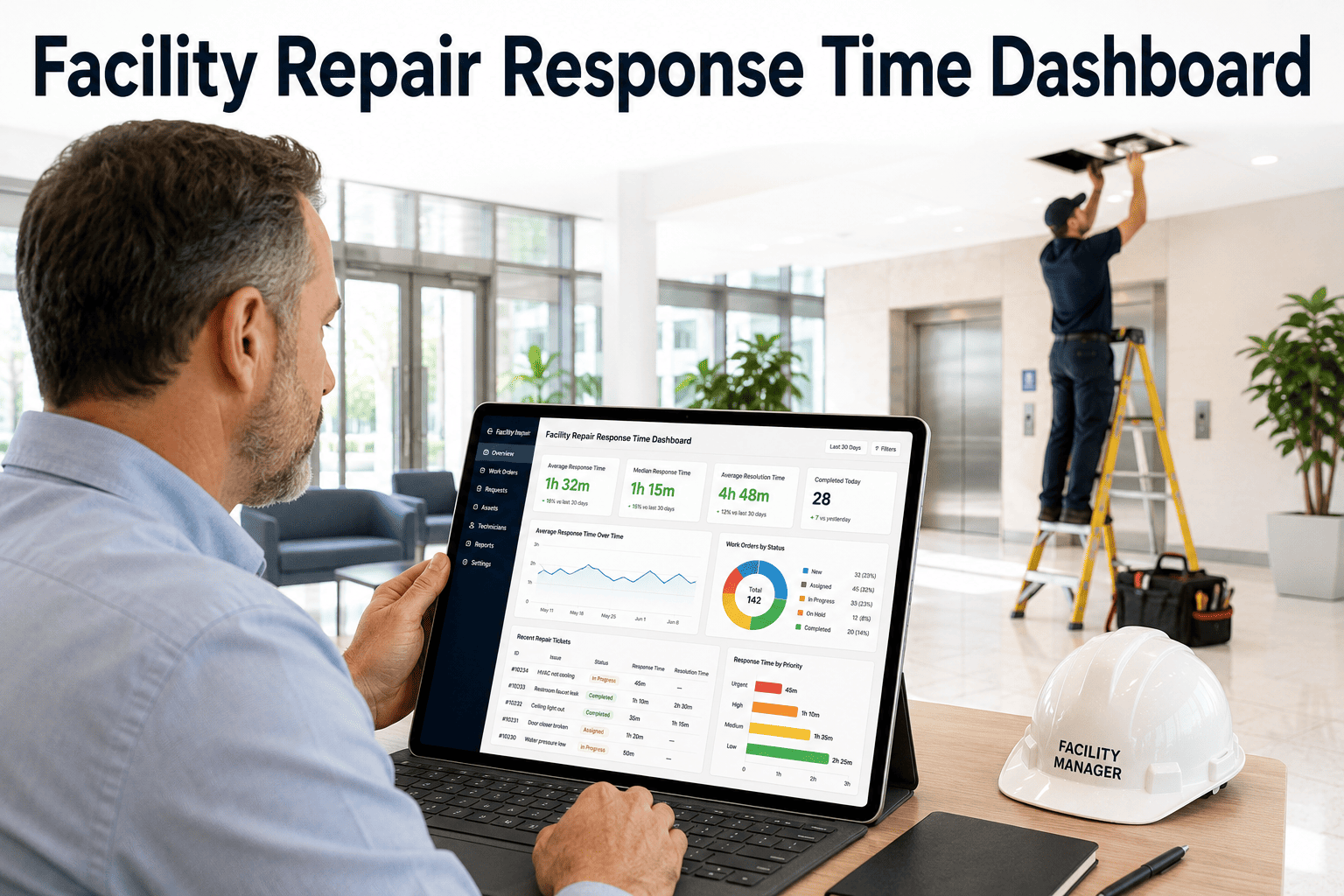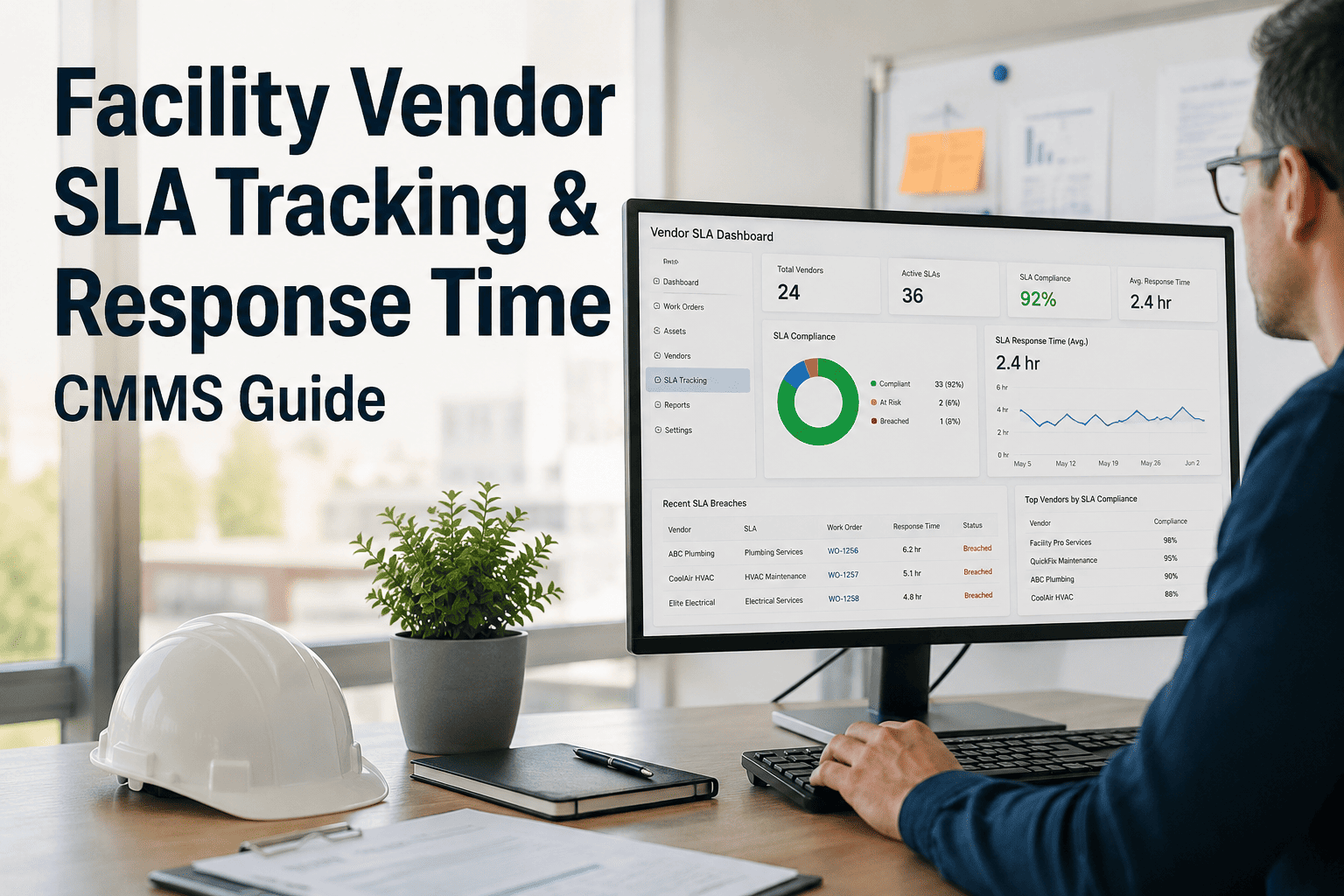
Most facility teams find out an SLA was breached at the same moment the vendor invoice lands — weeks after the response window closed and the resolution clock ran out. Across the industry, roughly two-thirds of facility operations route the majority of their maintenance work through contracted vendors, yet fewer than a third of those operations track response and resolution time against a documented target in real time. The rest rely on the vendor's own summary, submitted after the fact, with no timestamp trail to confirm or dispute it. That gap is not a paperwork problem — it is the reason service credit clauses sit unused in contracts year after year, and the reason the same underperforming vendor gets renewed on reputation instead of data. Book a demo to see how OxMaint clocks every response and resolution event automatically.
Stop Finding Out About SLA Breaches When the Invoice Arrives
Response time commitments, resolution targets, and breach flags — tracked automatically against every vendor work order, so the numbers are already proven before a contractor ever submits a claim for payment.
Why "The Vendor Said They Were On Time" Is Not a Tracking System
Every FM vendor contract makes a promise: a technician on site within a set number of hours, a fix completed within a set number of days. The promise is only worth what it can prove. Without a system clocking the moment a work order is created, the moment a vendor acknowledges it, and the moment it closes, every SLA becomes a matter of whose word gets believed — and that is almost always the vendor's, because they hold the only record.
- Response time comes from the vendor's own field notes, submitted after the job
- Breaches surface during invoice review — too late to flag or dispute
- Every vendor is scored on memory and reputation, not on a consistent number
- Service credit clauses in the contract are never actually invoked
- Response and resolution timestamps captured automatically at each work order stage
- Breach flag appears the moment a threshold is crossed — not weeks later
- Every vendor is measured against the same clock, on the same dashboard
- Breach evidence attaches to the invoice before approval, not after payment
The Four-Tier Priority Framework Behind Every Enforceable SLA
An SLA that treats a flickering hallway light the same as a failed chiller is not a real SLA — it is a single number that hides where the actual risk sits. A tiered structure, matched to a live clock per priority level, is what most FM contracts are missing.
Every Work Order Gets a Clock the Moment It's Created
OxMaint timestamps acknowledgement, on-site arrival, and closure against the priority tier assigned at creation — then flags a breach automatically, before the vendor ever submits an invoice.
How a Breach Gets Caught Before the Invoice Does
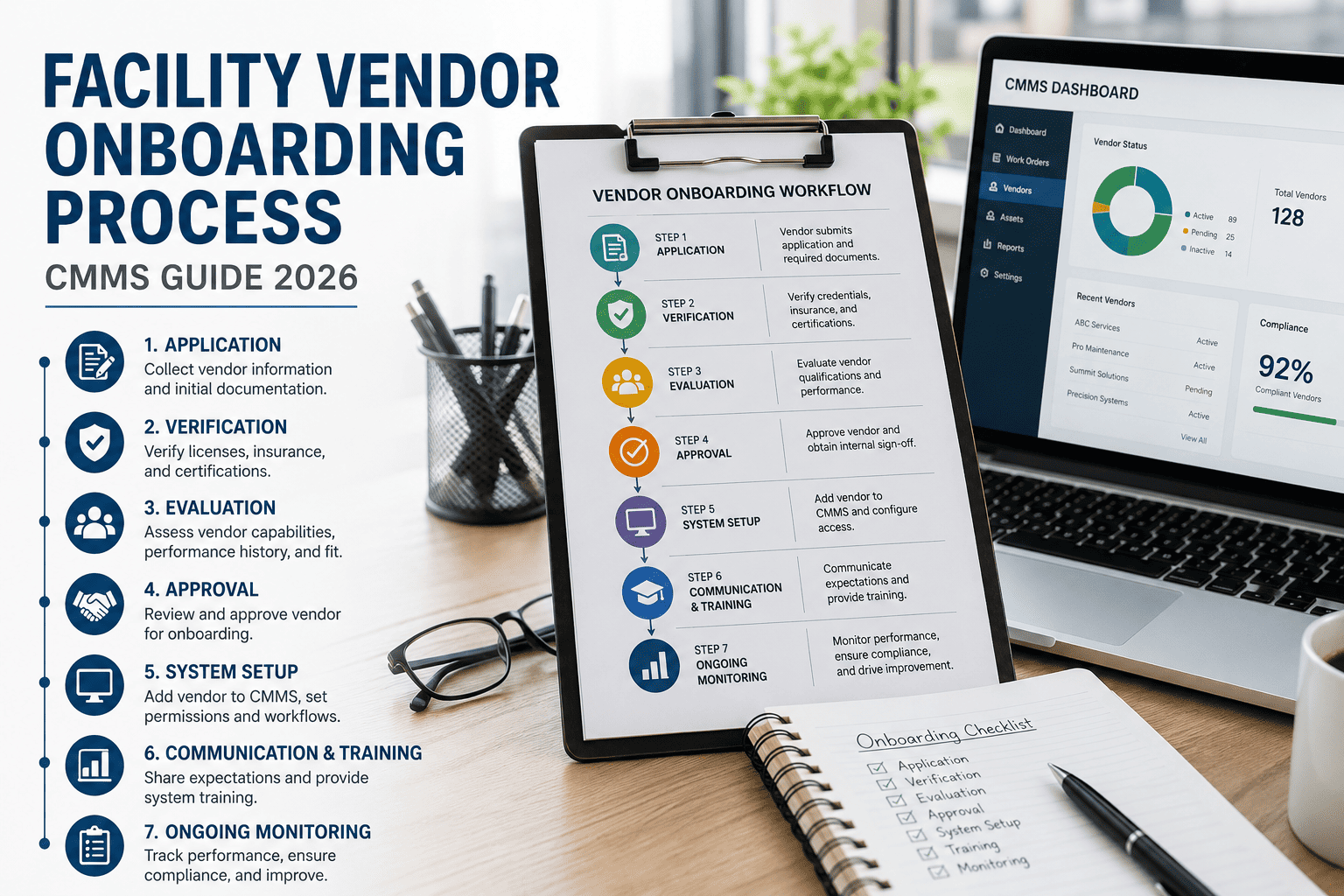
A breach flag is only useful if it appears while there is still time to act on it — not during month-end reconciliation. The sequence below is what happens automatically between work order creation and invoice approval.
Response Time vs. Resolution Time — Why Tracking Both Matters
A vendor can hit the response target and still miss the resolution target, and the two failures point to completely different problems. The table below separates them by priority tier so the breach data actually tells you what to fix.
| Priority Tier | Response Target | Resolution Target | Missed Response Usually Means | Missed Resolution Usually Means |
|---|---|---|---|---|
| P1 Critical | 30–60 minutes | Same day | Understaffed on-call coverage or dispatch delay | Parts availability or escalation to specialist trade needed |
| P2 Urgent | 2–4 hours | Same business day | Vendor overcommitted across multiple sites that day | Diagnosis took longer than the fix itself |
| P3 Routine | Same-day acknowledgement | 3–5 business days | Low-priority tickets deprioritised behind urgent work | Scheduling conflict or awaiting parts order |
| P4 Planned PM | Within scheduling window | ±10% of interval | PM calendar not synced with vendor's own schedule | Access to the asset or shutdown coordination delay |
The Vendor Scorecard: Turning Timestamps Into Renewal Decisions
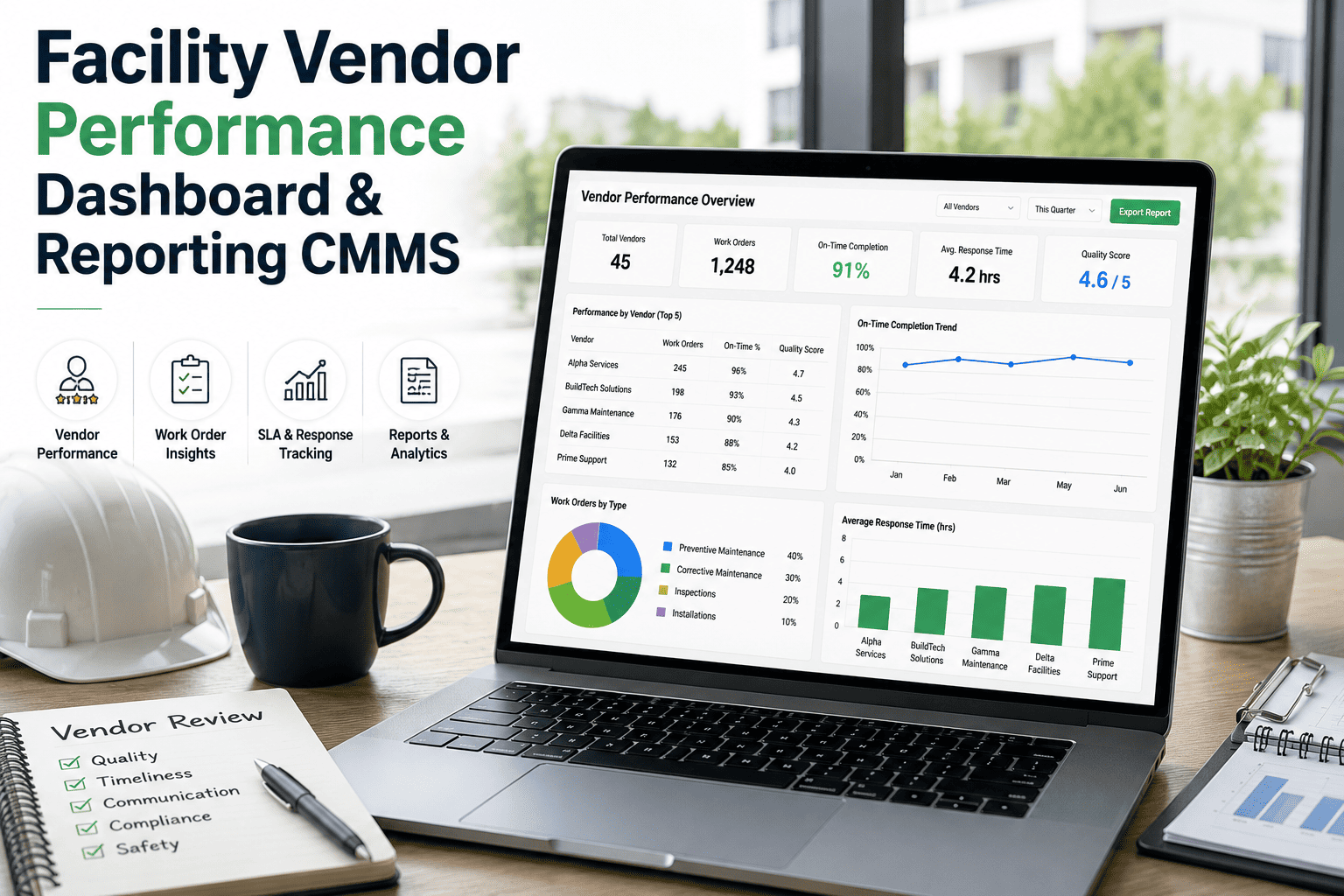
A single compliance percentage hides more than it reveals. A scorecard built from four separate metrics shows whether a vendor is fast, thorough, or simply lucky.
A facility management SLA without a live clock behind it functions as a statement of intent rather than an enforceable commitment. In portfolios I have reviewed, service credit clauses sit dormant for years — not because vendors are meeting every target, but because no one can produce a timestamp to prove otherwise when a dispute comes up. The moment response and resolution events are captured automatically at the work order level, that dynamic reverses: breach evidence attaches itself to the invoice, and vendor renewal conversations move from opinion to data within a single billing cycle.
Frequently Asked Questions
Give Every Vendor Work Order a Clock That Can't Be Argued With
OxMaint timestamps response and resolution against tiered SLA targets automatically, escalates before a breach happens, and attaches the evidence to every invoice — so service credit clauses finally get used, and renewal decisions finally have data behind them.