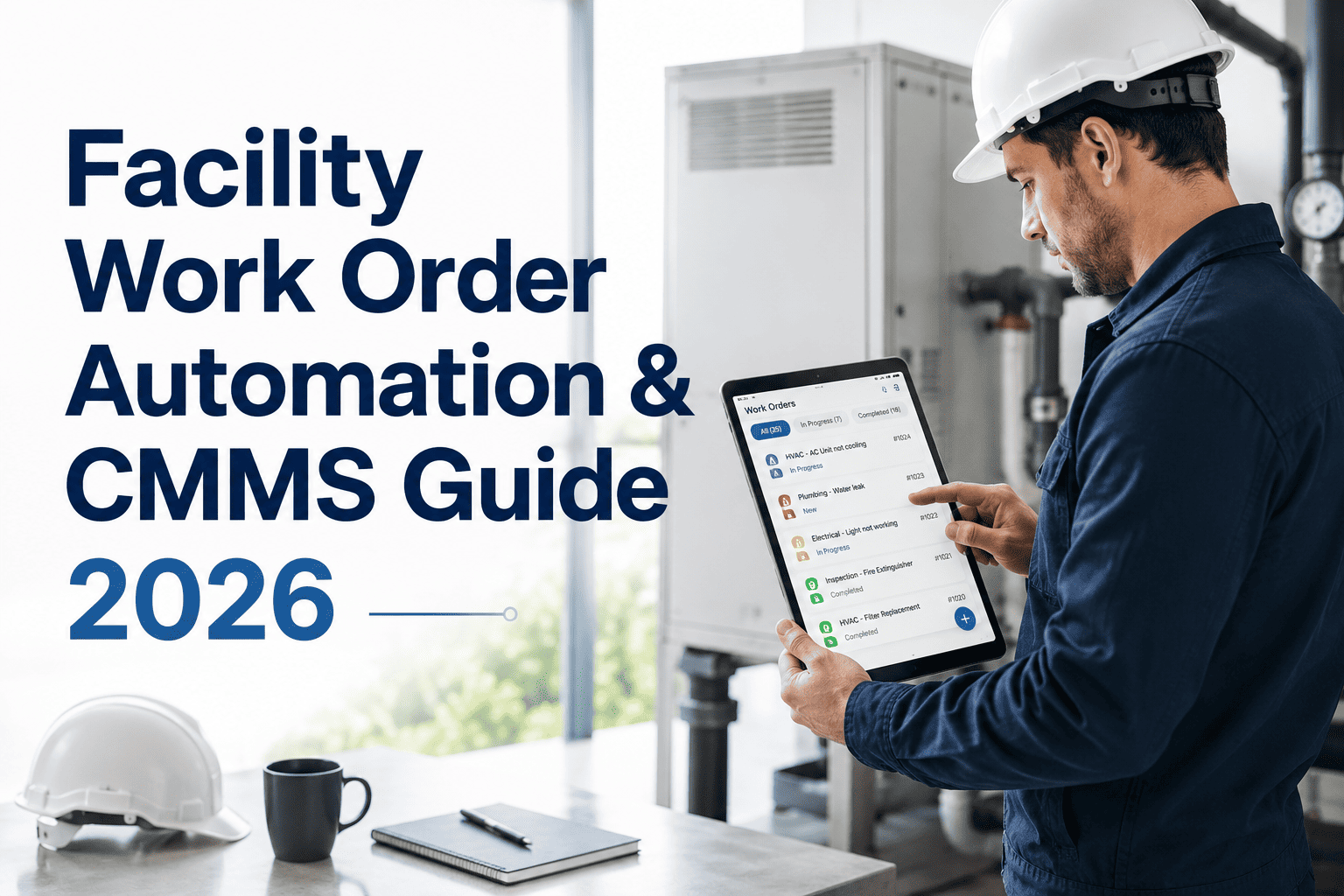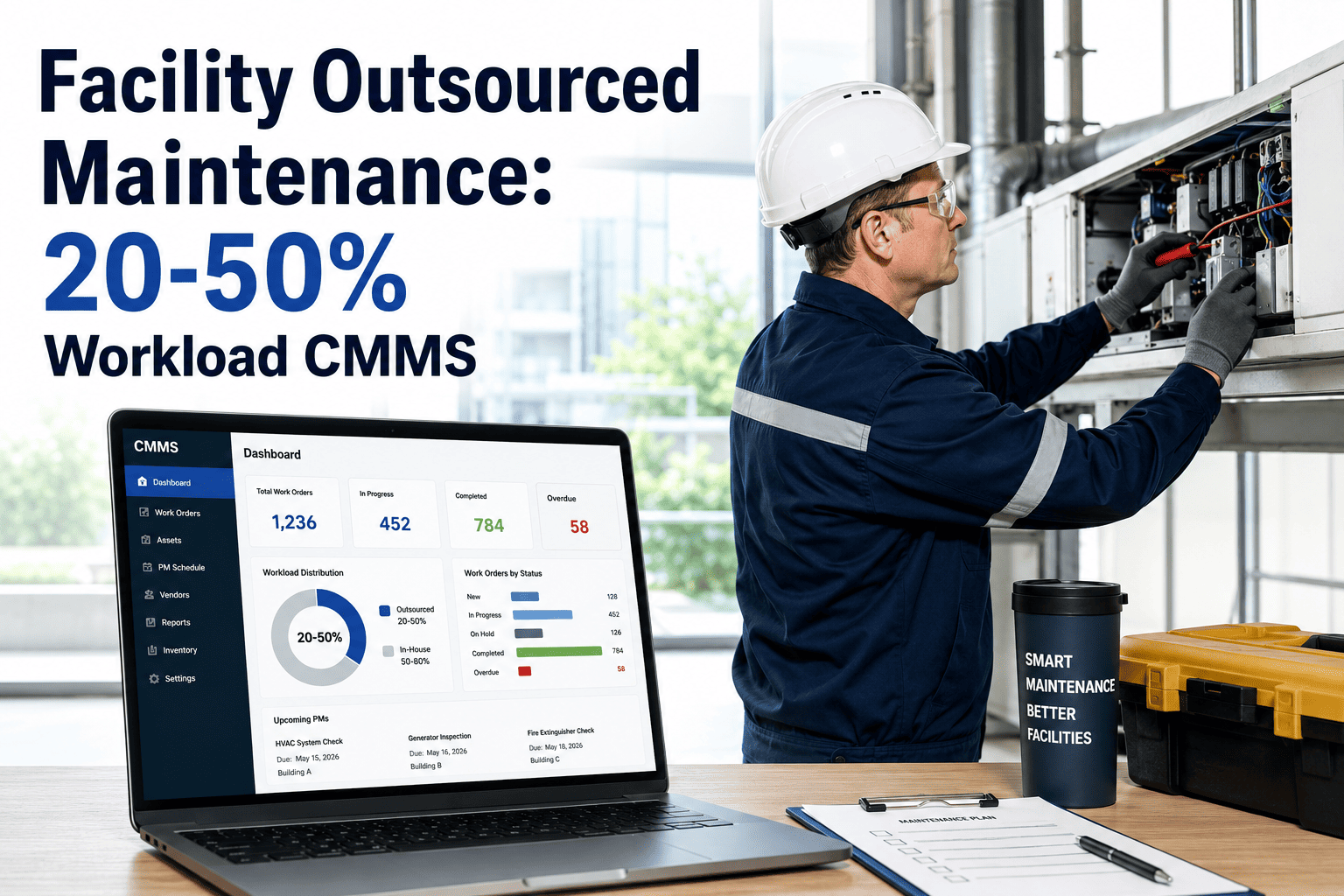
For most facility teams, 20–50% of total maintenance workload now runs through outside contractors — yet the majority of that work lives in vendor inboxes, spreadsheets, and PDF reports instead of the CMMS. That blind spot costs the average mid-size operation 12–18% in redundant labor, missed SLA penalties, and untracked asset downtime every year. Bringing outsourced maintenance into a single CMMS-recorded workflow closes the visibility gap, enforces SLA compliance, and turns contractor spend into auditable, benchmarkable data. If you're ready to see every work order — internal or outsourced — in one dashboard, Start Free Trial and connect your first contractor in under ten minutes.
Can you see 100% of your facility maintenance workload — or is half of it invisible?
When 20–50% of your maintenance is outsourced, the work that isn't logged in your CMMS becomes a black box: no SLA tracking, no cost benchmarking, no asset-history continuity. Oxmaint brings every contractor work order under one recorded, auditable system.
Why 20–50% of your workload is a blind spot
Most facility teams cross the 20% outsourcing threshold without changing how work gets recorded — and the gap widens fast as contractor reliance grows toward 50%.
Mid-market facilities now outsource just over a quarter of all maintenance labor — HVAC, elevator, fire-suppression, roofing, and specialized trades — yet fewer than half log those work orders in a CMMS.
U.S. facility outsourcing exceeds $50B per year. Without CMMS tracking, 8–14% of that spend is unverifiable — duplicate invoices, scope creep, and charges for work already completed internally.
In a 2025 facility-management survey, 61% of managers could not produce SLA compliance data for outsourced work on demand — exposing them to audit findings and renewed contracts at inflated rates.
What untracked outsourced work actually costs you
A 180-asset facility spending $42,000/yr on outsourced maintenance typically loses $6,800–$9,400 in avoidable costs. Here's where the leakage concentrates.
| Cost Leakage Source | Typical % of Outsourced Budget | Annual Impact ($42K Budget) | CMMS Mitigation |
|---|---|---|---|
| Duplicate work orders (internal + vendor) | 8–13% | $3,360–$5,460 | Asset-linked deduplication on work-order creation |
| SLA breach penalties (untracked response times) | 3–5% | $1,260–$2,100 | Auto-timestamped contractor response logging |
| Scope creep beyond contracted SOW | 4–7% | $1,680–$2,940 | SOW-attached approval gates before dispatch |
| Lost asset-history continuity | 2–4% downtime cost | $840–$1,680 | Contractor work orders feed asset lifecycle record |
| Manual invoice reconciliation labor | 1.5–3% admin overhead | $630–$1,260 | PO-matched, CMMS-exported invoicing |
A 4-month path to full outsourced-workload visibility
You don't need a system overhaul. Facilities running 25–45% outsourced work reach full CMMS-recorded contractor coverage in 90–120 days using this phased rollout.
Vendor Inventory & CMMS Onboarding
Catalog every active contractor, contract value, SLA terms, and asset scope. Create vendor records in the CMMS and map each to serviced asset classes. Target: 100% of top-tier vendors (representing 80% of spend) onboarded by day 30.
Work-Order Channel Migration
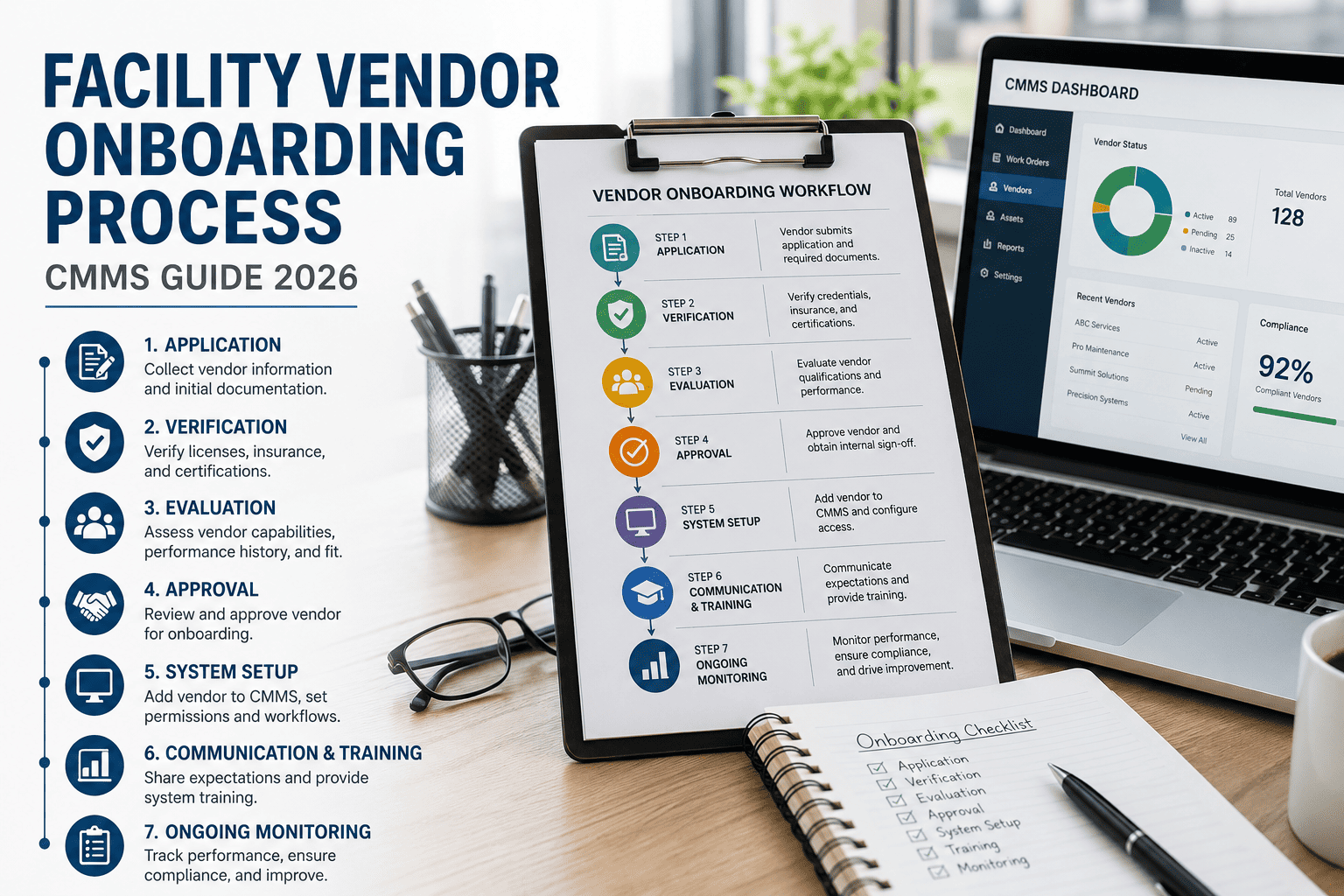
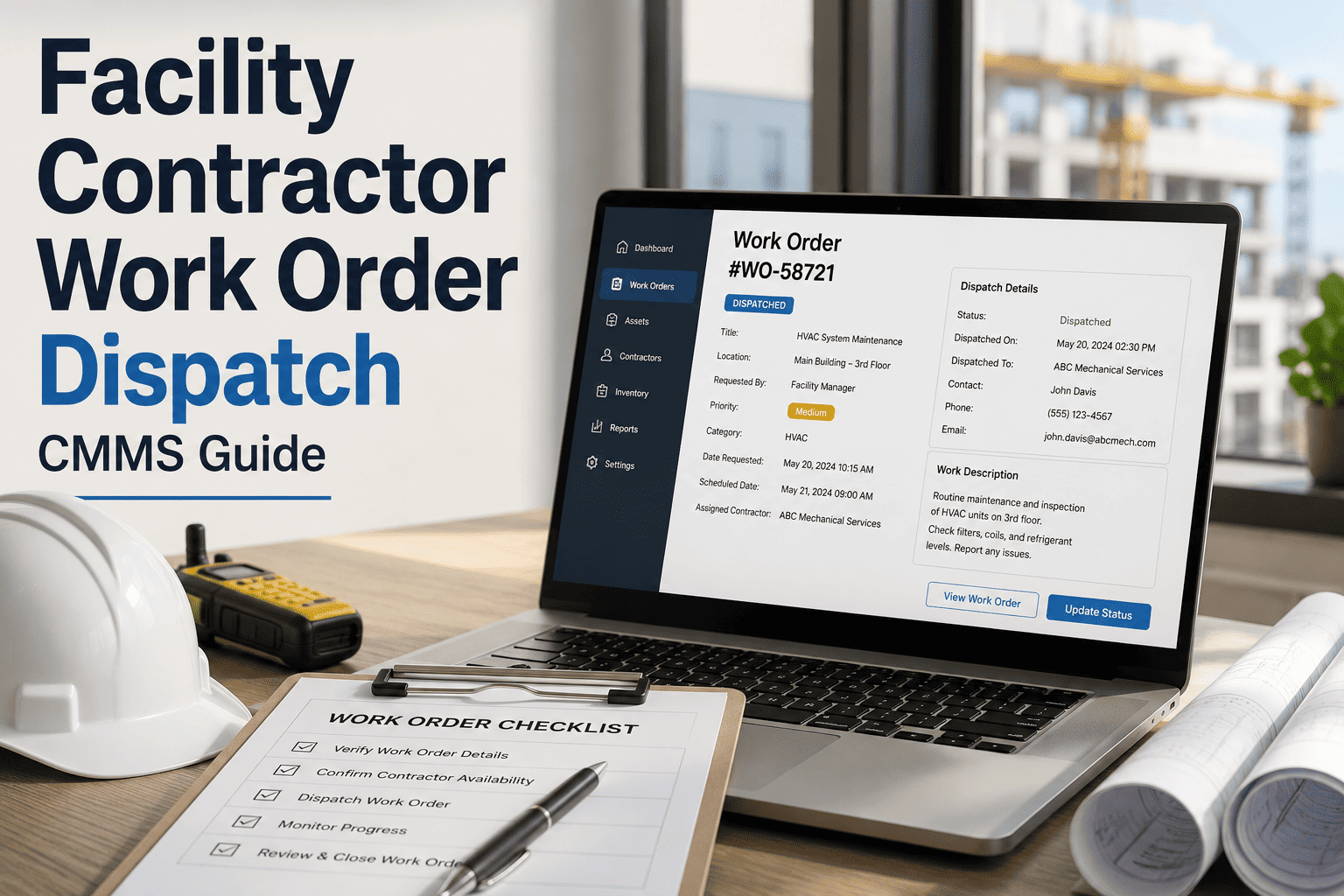
Route all contractor dispatches through CMMS-generated work orders instead of email/phone. Contractors receive a link-based portal to accept, update, and close — no app install required. Target: 70% of outsourced WOs CMMS-logged by day 60.
SLA Tracking & Cost Benchmarking
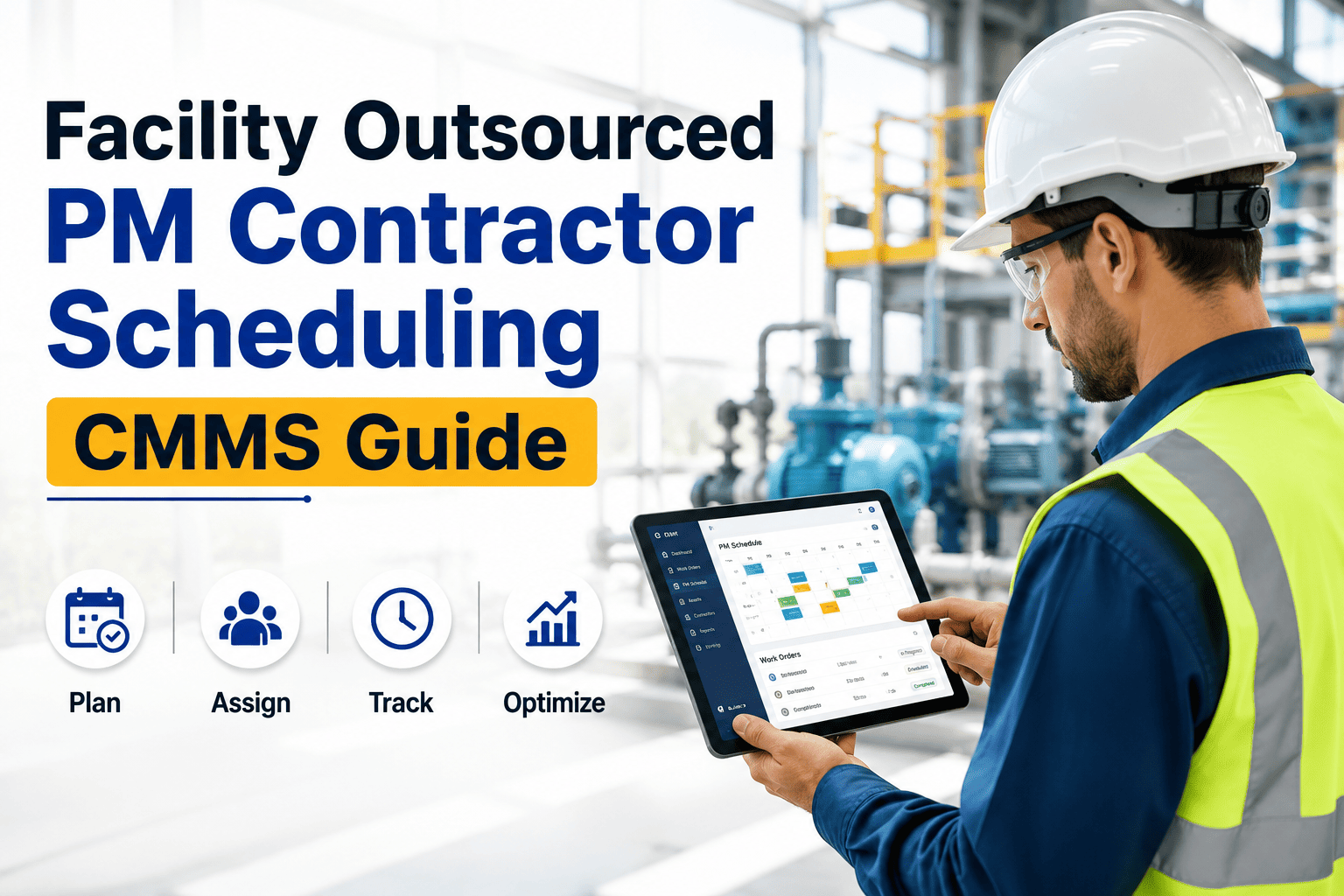
Activate SLA timers on response, on-site arrival, and resolution. Begin cost-per-asset and cost-per-trade benchmarking across vendors. Identify the 15–20% of contracts that are 30%+ above market rate for renewal negotiation.
Full Visibility & Audit Readiness
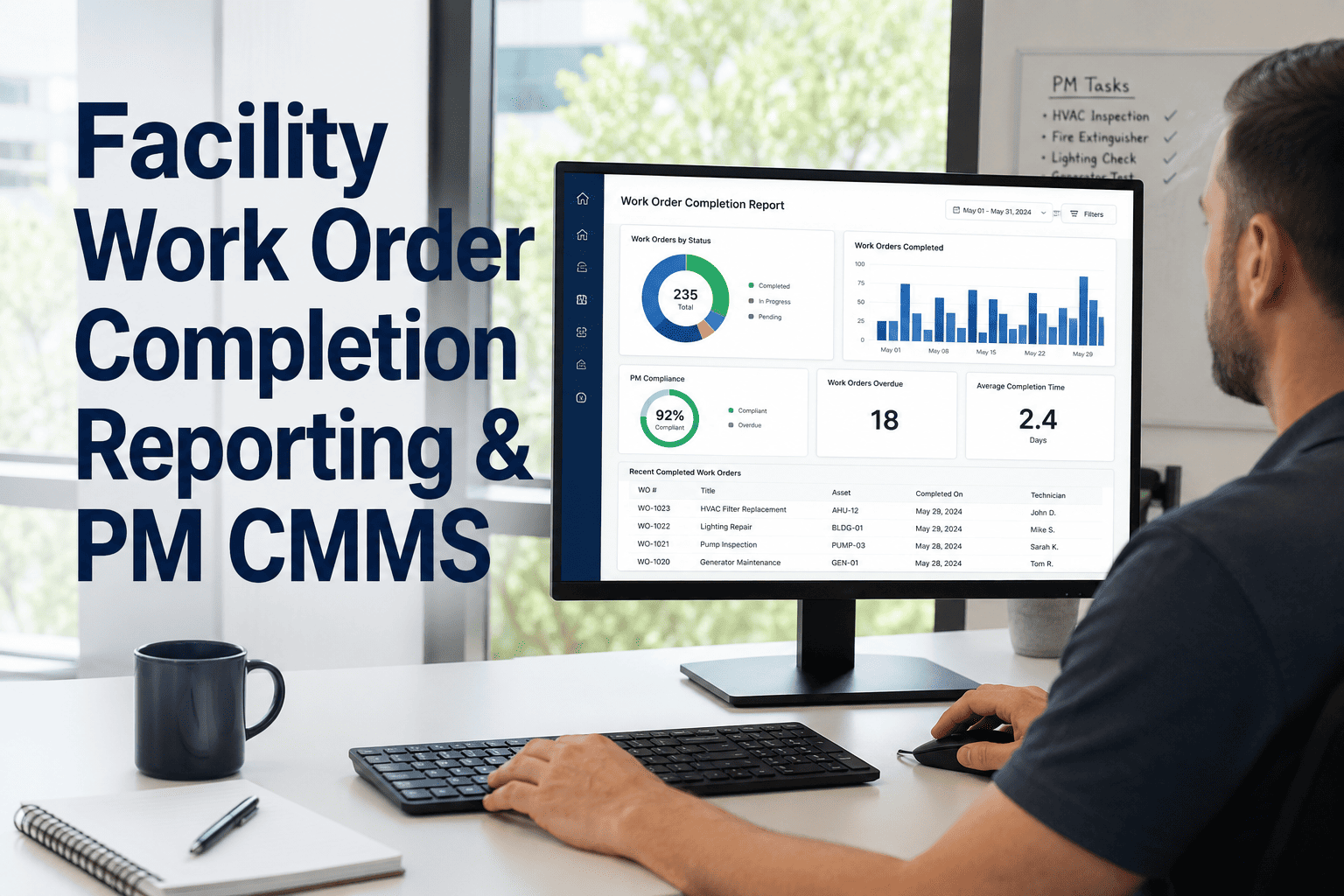
100% of outsourced work orders CMMS-recorded with asset history, SLA compliance, and cost data. Generate audit-ready reports in under 5 minutes. Typical outcome: 12–18% reduction in outsourced spend at next contract cycle through data-backed negotiation.
The outsourced-visibility transformation
The shift from inbox-managed contractor work to CMMS-recorded workflow changes what you can measure, negotiate, and prove.
- Contractor requests live in email threads and text messages
- Asset history breaks when a vendor completes the repair — no record feeds back
- SLA compliance is verbal or buried in monthly PDF summaries
- Invoice reconciliation takes 6–10 hours per month, manually cross-referencing
- No benchmark to know if you're paying 30% above market for the same trade
- Audit response requires 2–3 days of retrospective document gathering
- Every contractor work order created, dispatched, and closed in the CMMS
- Asset lifecycle record is continuous — internal and outsourced work unified
- SLA timers auto-log response, arrival, and resolution with timestamped proof
- Invoices auto-match to PO and work order; reconciliation drops to under 1 hour
- Cost-per-asset and cost-per-trade benchmarks surface overpriced contracts instantly
- Audit-ready report generated in under 5 minutes with full work-order trail
A 180-asset facility recovering $14,200 in year one
A regional distribution center running 180 tracked assets across HVAC, dock equipment, and fire systems was spending $42,000/yr on outsourced maintenance at 31% of total workload — almost entirely untracked.
Outsourced spend across 7 vendors, managed through email and a shared spreadsheet. Asset history had gaps wherever contractors touched equipment. SLA breaches went unnoticed until quarterly reviews.
Identified recoverable spend: duplicate work orders ($4,100), two overpriced HVAC contracts renegotiated ($2,800), and eliminated manual invoice labor ($1,500). SLA compliance now tracked in real time.
Total recovered and avoided cost in year one, against $4,800 CMMS investment — a 3.9-month payback. Asset-history continuity improved MTBF forecasting by 22% on the 14 most critical assets.
Close the outsourced-visibility gap this quarter
Get every contractor work order into one CMMS-recorded, SLA-tracked, audit-ready system — and benchmark your outsourced spend against real data.
Answers to the five questions facility teams ask most
What percentage of facility maintenance workload is typically outsourced?
Most mid-market facilities outsource 20–50% of total maintenance workload, with an average around 27%. The percentage climbs toward 50% in operations with specialized assets (elevators, fire suppression, industrial refrigeration) where in-house trade expertise is limited. The critical threshold is 20%: once a fifth of your workload is external, the blind-spot cost of not tracking it in a CMMS typically exceeds the system's annual cost.
How does a CMMS track outsourced contractor work orders?
Contractors receive link-based work orders — no app installation required — that let them accept, timestamp arrival, log labor and parts, upload photos, and close the order. Every action feeds the asset's lifecycle record in real time, exactly as internal work orders do. SLA timers run automatically from dispatch to resolution, and invoices auto-match to the original purchase order. You can see this workflow live — Book a Demo and we'll walk through a real contractor dispatch.
What's the biggest cost of not tracking outsourced maintenance in a CMMS?
Duplicate work orders — the same repair dispatched internally and externally, or to two different vendors — account for 8–13% of outsourced spend. That's the largest single leakage source, followed by SLA breach penalties (3–5%) and scope creep beyond contracted SOW (4–7%). Together these typically total 15–25% of the annual outsourced budget, all recoverable through CMMS-based deduplication, SLA tracking, and approval gates.
How long does it take to bring outsourced work into CMMS visibility?
A facility at 20–50% outsourced workload can reach full CMMS-recorded contractor coverage in 90–120 days using a phased rollout: vendor inventory and onboarding (Month 1), work-order channel migration (Month 2), SLA and cost benchmarking activation (Month 3), and full audit readiness (Month 4). The payback period averages 3.9 months against the recovered spend. Start your own rollout today — Start Free Trial and onboard your first vendor in under ten minutes.
Does CMMS-based outsourced tracking help with ISO 55000 or audit compliance?
Yes. ISO 55000 asset-management compliance requires evidence of continuous asset-history records and verified maintenance execution — both of which break when outsourced work lives outside the CMMS. A CMMS-recorded contractor workflow produces audit-ready work-order trails, SLA compliance documentation, and cost-per-asset benchmarks in under five minutes, compared to the 2–3 days of retrospective document gathering typical in untracked environments.
See 100% of your maintenance workload in one system
Bring every internal and outsourced work order into a single CMMS-recorded, SLA-tracked, audit-ready dashboard. Start free or book a guided walkthrough.
Free 14-day trial · No credit card