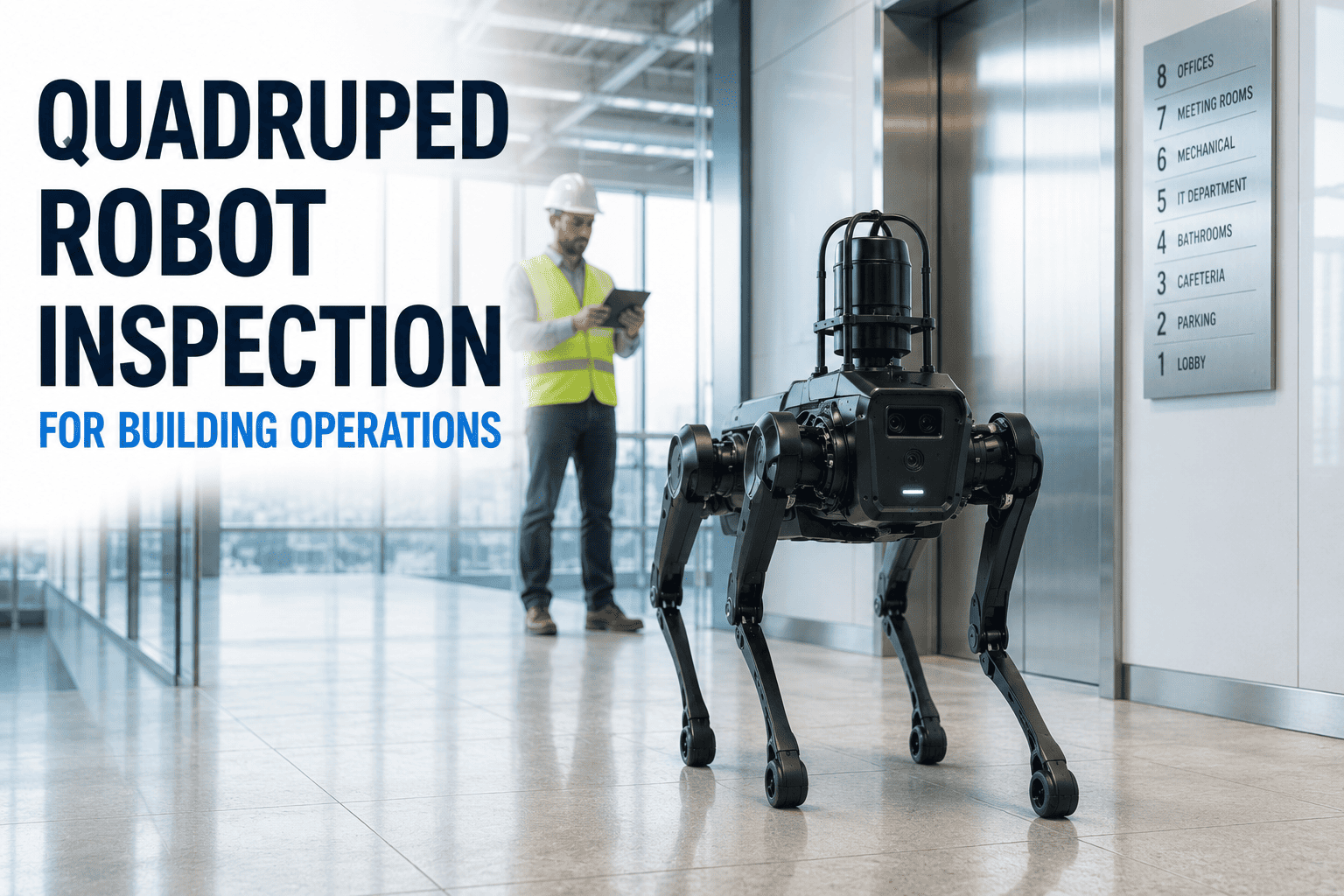
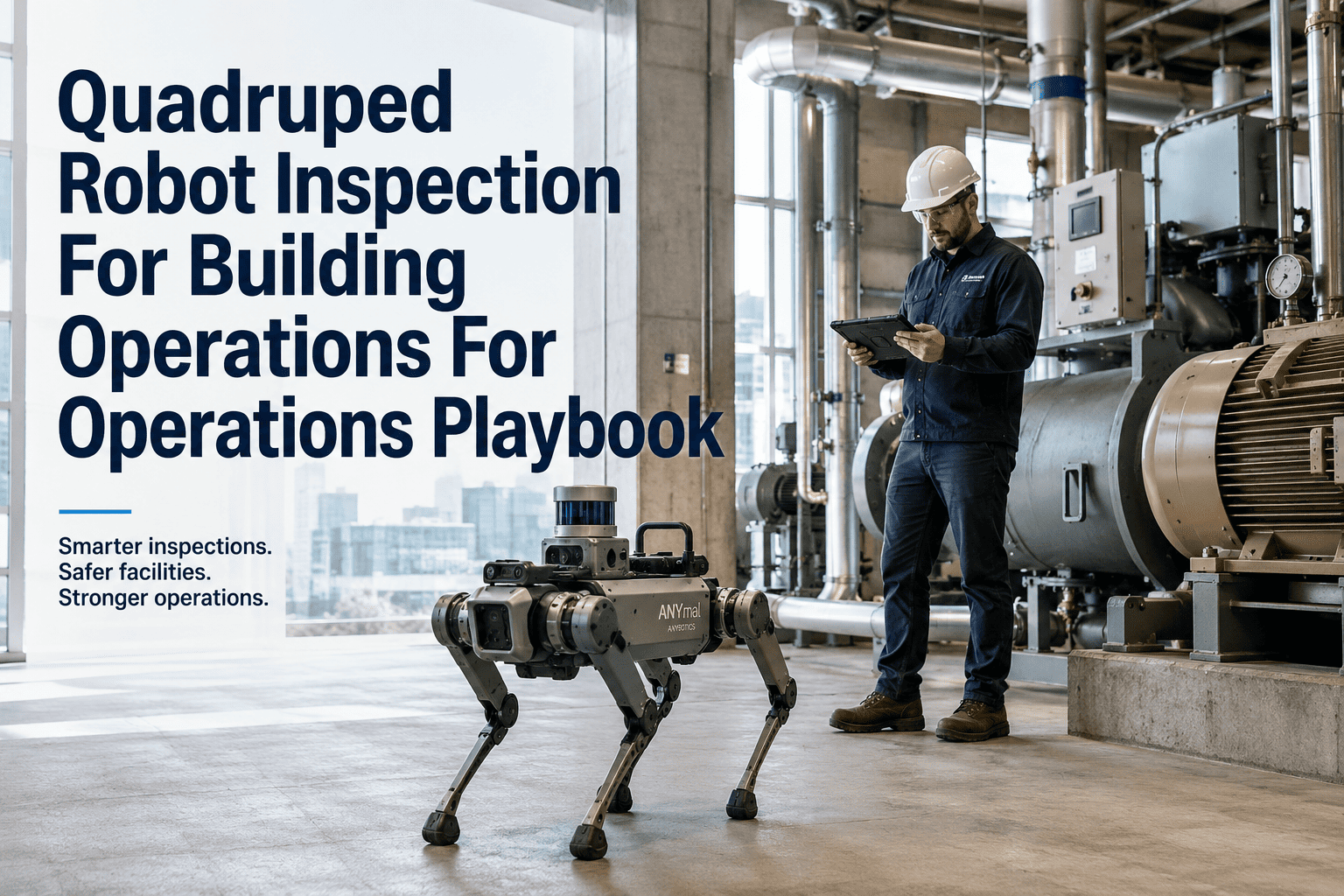
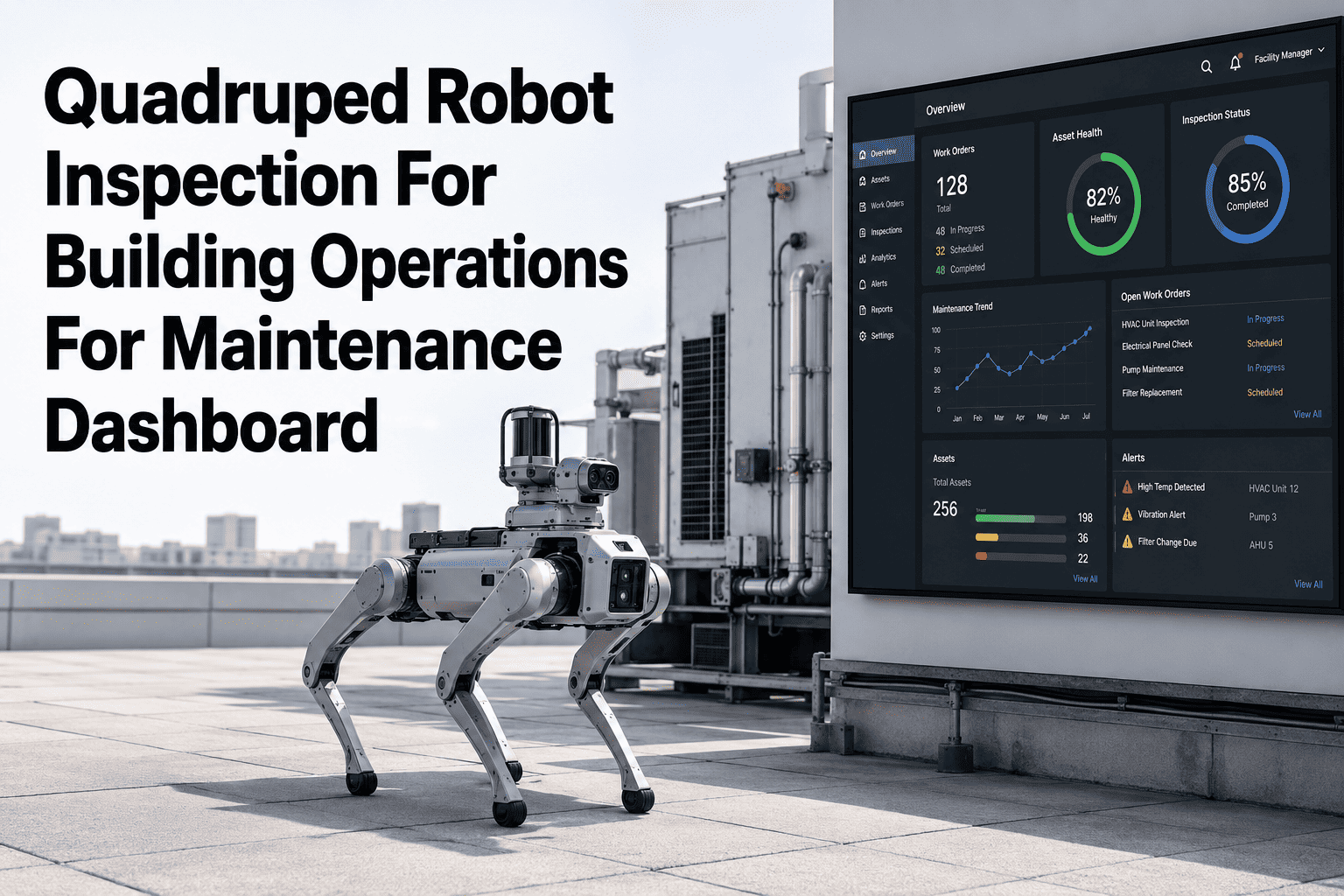
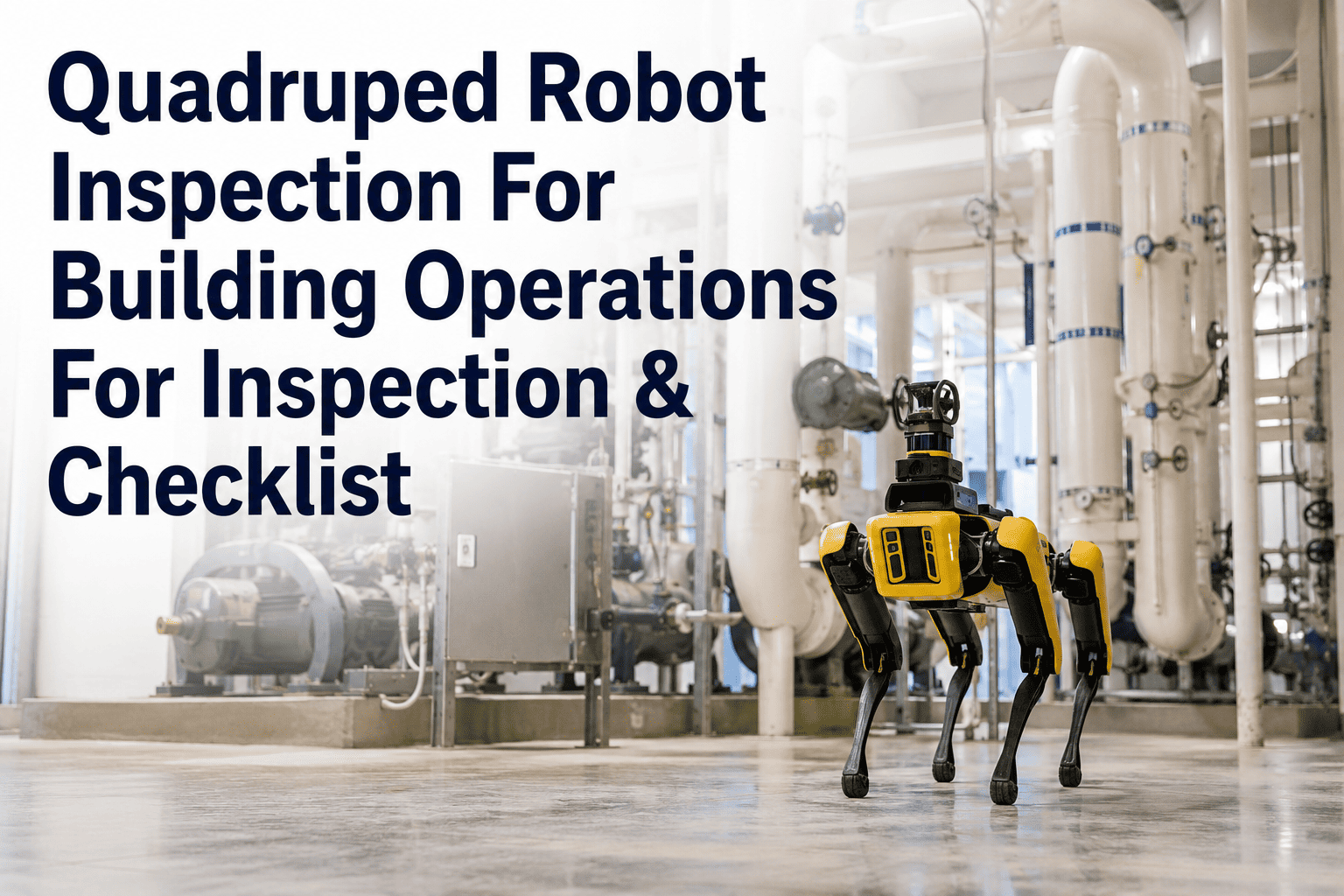
A four-legged robot walking the same loop through a manufacturing plant every two hours sounds futuristic, but it solves a very old problem — humans skip rounds when they are short-staffed, tired, or sent to fight a different fire. Quadruped robot inspection puts a consistent set of eyes and sensors on every asset, every time, without exception. The real value is not the robot itself, it is what happens to the data it captures next. OxMaint turns every patrol into structured inspection records, flags anomalies automatically, and opens a work order before a human ever reviews the footage. For plant and facility teams running 24-hour operations, this closes the gap between "we walked past it" and "we caught it in time." Book a 30-minute demo to see a robot patrol turn into a work order in real time.
Robotic Inspection · Facility Operations · CMMS
Quadruped Robot Inspection, Connected to Your CMMS
Stop treating robot patrol footage as a video archive. OxMaint reads sensor and visual data from every walk, flags what matters, and creates the work order automatically.
94%
of physical assets get walked past on a normal manual round
2.5x
more inspection points covered per shift versus a manual walker
0
skipped rounds — robots patrol on a fixed schedule regardless of staffing
From Patrol to Work Order — Four Steps
1
Deploy & Patrol
The robot follows a fixed or programmable route, covering panels, pumps, gauges, and structural points on a set schedule.
2
Capture & Scan
Thermal, visual, and acoustic sensors record condition data at every stop point along the route, automatically and consistently.
3
Anomaly Flagged
OxMaint compares each reading against baseline values and flags temperature spikes, gauge drift, or visual defects instantly.
4
Work Order Created
A work order is generated automatically with the photo, location, and reading attached — assigned to the right technician.
Most facilities already own a robot patrol unit and still review footage by hand at the end of the week. OxMaint removes that delay completely.
What a Quadruped Robot Covers on Every Route
01
Electrical panel thermal scans for hot-spot detection
02
Pump and motor vibration and sound signature checks
03
Analog gauge readings converted to digital values
04
Fire extinguisher and safety device presence checks
05
Floor-level leak and spill detection along the route
06
Structural crack and corrosion photo documentation
Manual Walkthrough vs Quadruped Robot + OxMaint
| Capability | Manual Walkthrough | Robot + OxMaint |
| Route consistency |
Varies by walker, shift, and workload |
Identical route and stop points every time |
| Defect detection |
Visual only, dependent on attention span |
Thermal, visual, and acoustic sensing combined |
| Record keeping |
Paper or memory, reviewed days later |
Logged and timestamped at the moment of capture |
| Work order creation |
Manual entry after the round is finished |
Created automatically when an anomaly is flagged |
| Coverage during short-staffed shifts |
Rounds are skipped or shortened |
Patrol runs on schedule regardless of headcount |
Expert Review
"Most plants treat robot inspection as a camera on legs. The actual gain is when the readings feed directly into a maintenance system — that's when a thermal spike on a Tuesday patrol becomes a closed work order by Wednesday morning, instead of a breakdown three weeks later."
Arjun Mehta — Senior Maintenance Solutions Architect, OxMaint
Frequently Asked Questions
Does OxMaint control the robot, or just process the data it collects?
OxMaint does not pilot the robot. It receives the sensor readings, images, and route data the robot already captures and turns that stream into structured inspection records and work orders. Most quadruped platforms export this data in a format OxMaint can ingest directly.
Start a free trial to connect your first route.
How does OxMaint decide what counts as an anomaly worth a work order?
Every monitored point has a baseline reading range set during onboarding. When a thermal, vibration, or visual reading falls outside that range on a patrol, OxMaint raises a flag and opens a work order with the evidence attached, instead of waiting for someone to review the footage manually.
Can a robot inspection route replace a regulatory compliance walkthrough?
In most cases robot patrols supplement rather than fully replace compliance walkthroughs, since some checks still require a qualified person to sign off. OxMaint keeps both records in one place so compliance teams can see robot-captured data alongside human sign-offs.
Book a demo to review compliance configuration options.
What happens if the robot misses a stop point or loses connectivity mid-route?
OxMaint logs the gap as an incomplete route segment and notifies the facility team, rather than silently treating it as a clean pass. This prevents the common failure mode where a connectivity drop is mistaken for "nothing found."
How long does it take to get a quadruped robot route live inside OxMaint?
Most facilities map their first route, set baseline thresholds, and see automated work orders within the same week of connecting the robot's data feed.
Sign up free to begin mapping your first inspection route.
Turn Every Patrol Into a Closed Loop, Not a Video File
A robot that walks the plant and a system that only stores footage is half a solution. OxMaint closes the loop from sensor reading to work order to resolution — without anyone having to watch the tape.