Facility management teams running manual inspection rounds across large buildings face a structural reliability problem — human walkthroughs miss 30 to 45 percent of early-stage equipment faults, checklist completion is inconsistent across shifts, and corrective actions rarely get logged before the issue escalates. Quadruped robot inspection integrated with a building CMMS eliminates that gap by deploying autonomous four-legged inspection robots that navigate corridors, plant rooms, and roof-level assets on a fixed schedule — completing every checklist item with sensor-grade data, timestamped evidence, and automatic work order generation. Where a human inspector might complete a 40-point building round in 90 minutes with variable accuracy, a quadruped robot completes the same circuit with 97 percent checklist coverage, every time, without a missed floor or a skipped equipment bay. Book a demo with Oxmaint to see how robotic inspection data feeds directly into your building maintenance workflow — replacing paper rounds with a fully digital, audit-ready inspection and corrective action system.
Facility Management · Inspection & Checklist · 2026
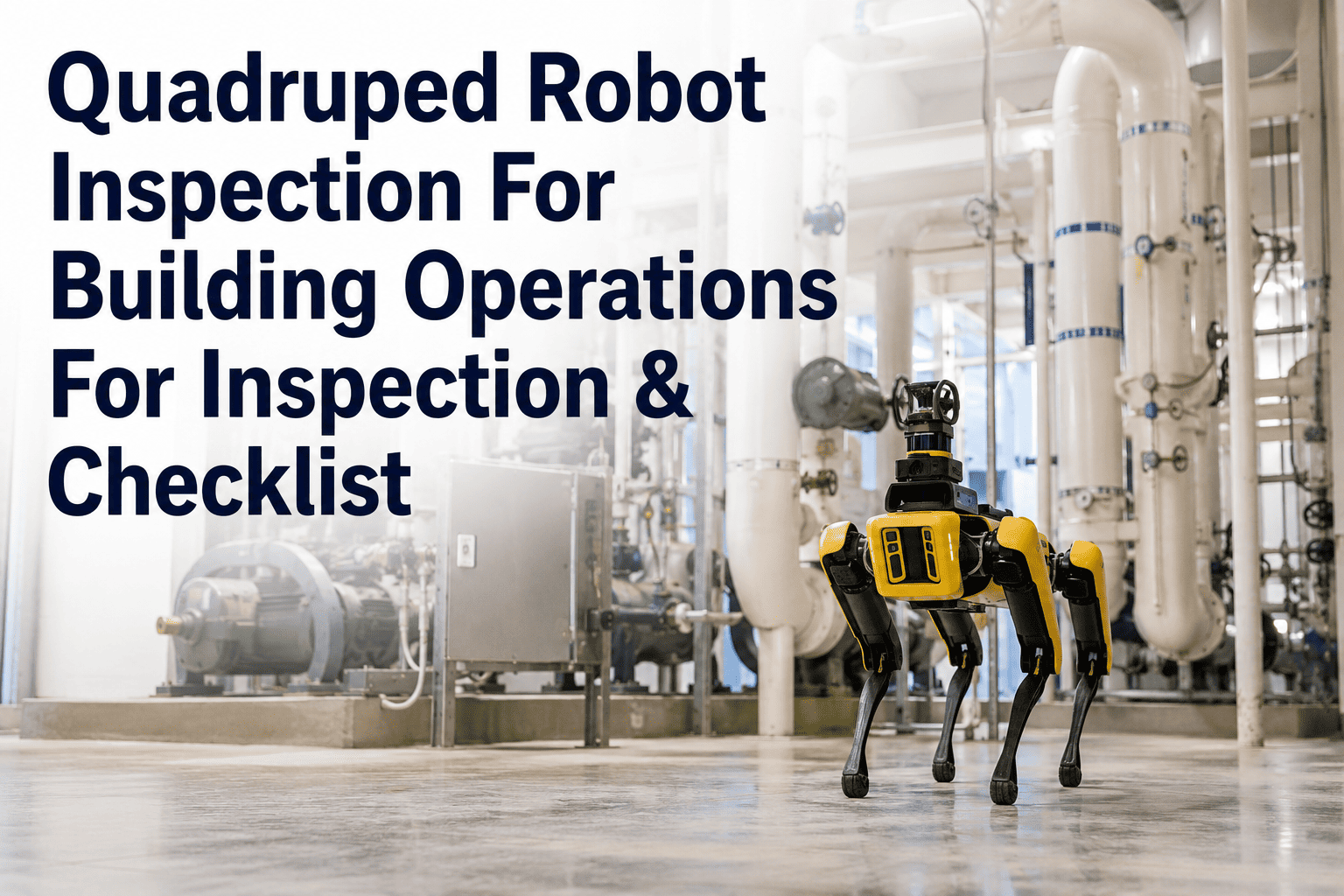
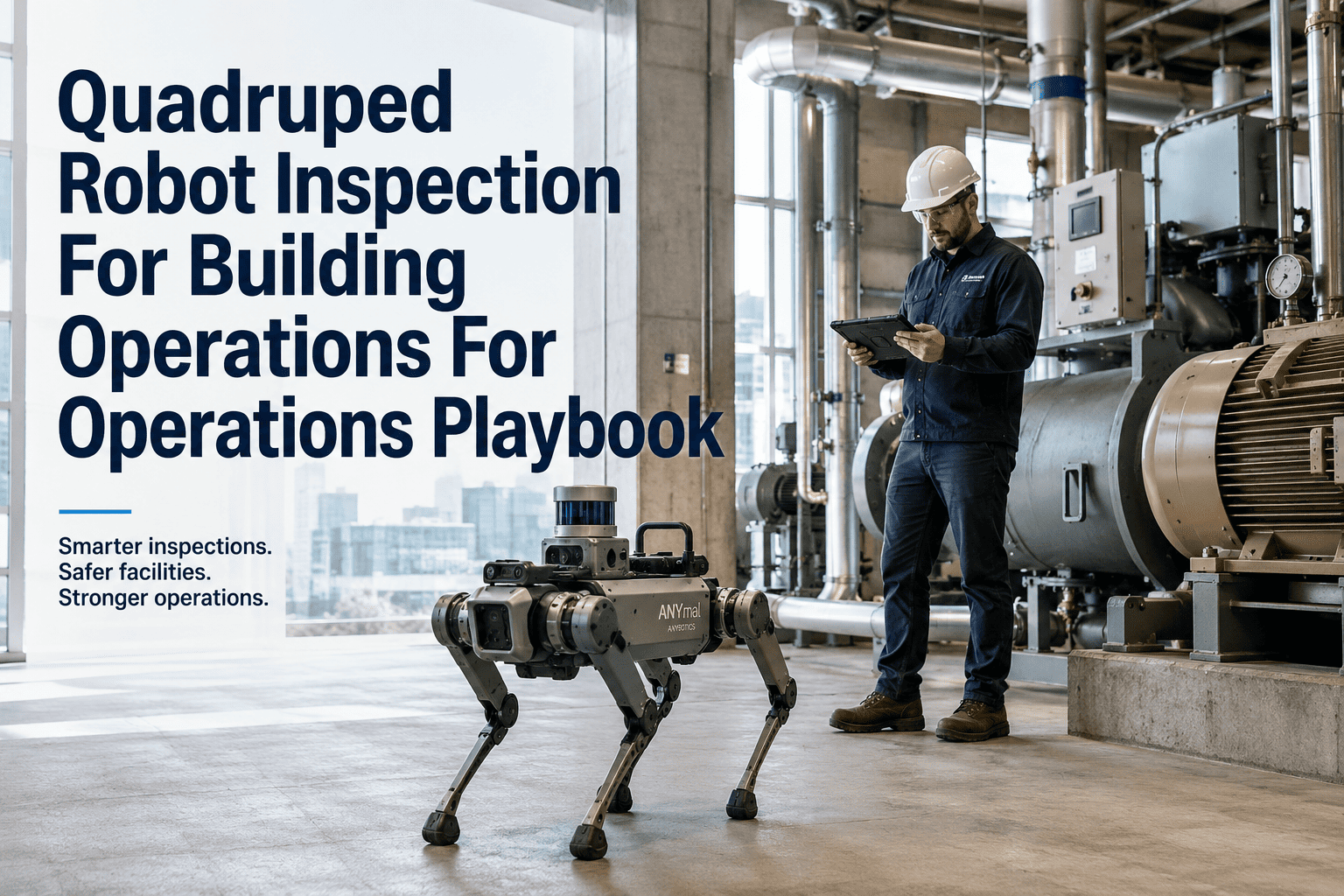
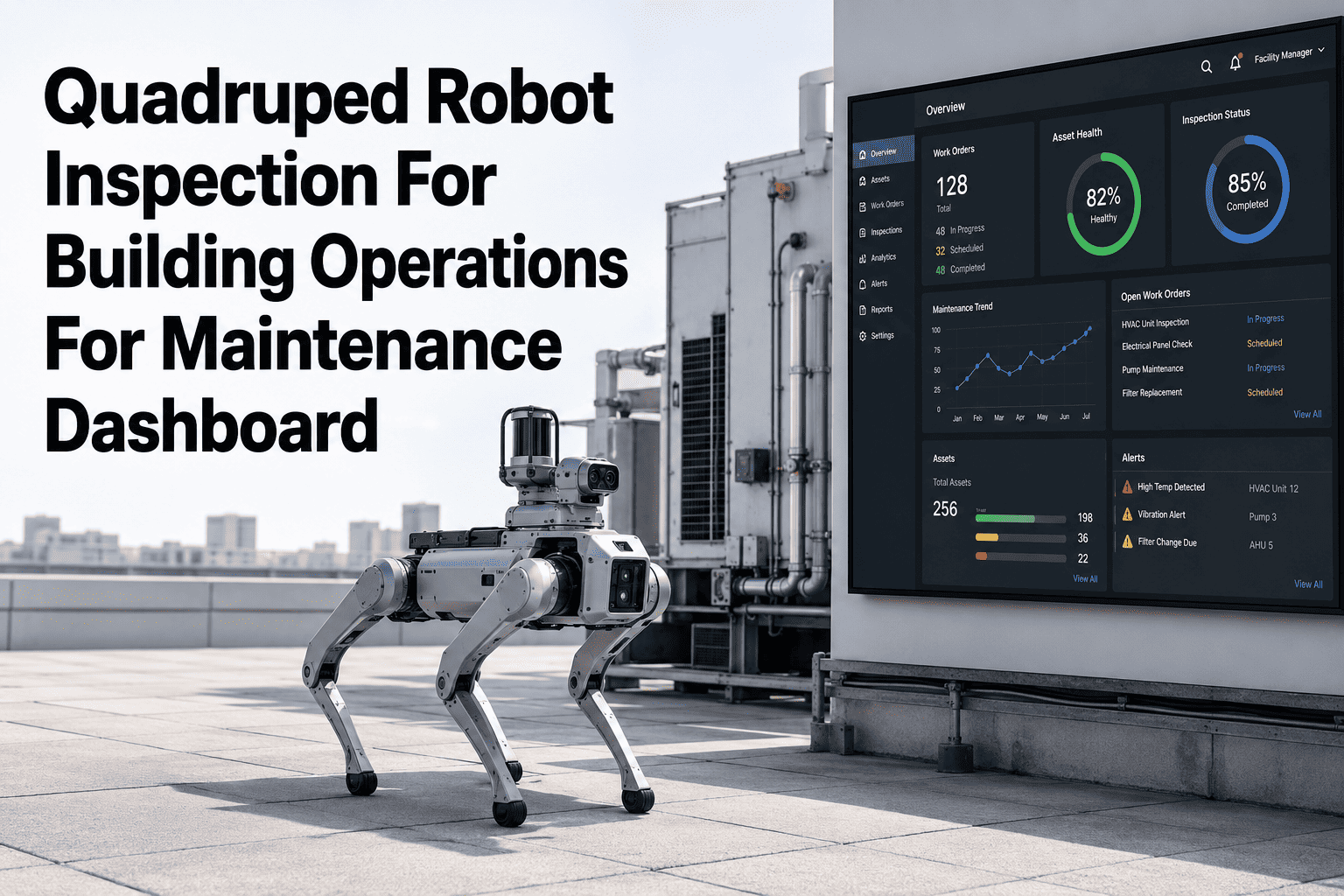
Quadruped Robot Inspection for Building Operations
The complete checklist system for facility teams deploying quadruped robots — from inspection rounds and fault detection to corrective action tracking and audit-ready compliance records in Oxmaint CMMS.
97%
checklist completion rate for quadruped robot inspection rounds vs 63% for manual walkthroughs
3x
more equipment faults detected per inspection cycle compared to human visual checks
40 min
saved per building round when corrective actions auto-route to CMMS work orders
100%
audit-ready documentation per inspection round when linked to Oxmaint
Master Checklist
Quadruped Robot Inspection Checklist for Building Operations
This checklist covers all critical inspection zones, equipment categories, and sensor data points that a quadruped robot should capture and log during a standard building operations round. Each item maps to a corresponding Oxmaint CMMS task for corrective action routing.
HVAC Unit Visual Condition
Robot camera captures casing integrity, belt condition, visible corrosion — logged with timestamp and unit asset ID in CMMS
Thermal + Visual
Pump and Motor Vibration Reading
Acoustic and vibration sensors detect abnormal operating frequencies — auto-triggers predictive maintenance work order if threshold exceeded
Vibration Sensor
Pipe and Valve Leak Check
Thermal imaging identifies temperature anomalies around pipe joints and valve bodies — findings classified and routed to plumbing maintenance queue
Thermal Imaging
Electrical Panel Thermal Scan
Infrared scan of switchboards and distribution panels — hotspots above 10 degrees variance from ambient flagged as critical corrective action
Safety-Critical
Floor and Drain Condition
Camera inspection of plant room floor for pooling, drainage blockage, oil residue — visual evidence attached to inspection record automatically
Visual
UPS and Battery Room Inspection
Temperature, humidity, and visual check of UPS units and battery banks — abnormal readings trigger immediate corrective work order to electrical team
Multi-Sensor
Server Room Ambient Temperature Log
Temperature and airflow readings per rack row logged to CMMS — alerts generated if readings fall outside acceptable operating band
Thermal + Air
Cable Tray and Conduit Integrity
Robot visual scan identifies unsecured conduit, cable damage, or access panel gaps — findings logged with photo evidence and asset zone reference
Visual
Emergency Lighting Verification
Camera-based check of emergency light indicator status across the floor — non-functional units flagged as compliance corrective actions in Oxmaint
Compliance
Fire Exit and Door Clearance Check
Robot confirms fire exit corridors are unobstructed and door closure mechanisms are functional — OSHA compliance record auto-generated per check
Safety-Critical
Ceiling and Overhead Structure Scan
Upward-facing camera inspects suspended ceilings, light fixtures, and ductwork for visible deterioration or displacement
Visual
Air Quality and CO2 Monitoring
Onboard air quality sensor logs CO2, particulates, and VOC levels per zone — readings stored to asset record and compared against building baseline
Air Quality
Slip Hazard and Floor Condition
Camera detects liquid spills, floor tile displacement, or worn surface — tagged to building zone and routed to facilities team as corrective task
Visual
Cooling Tower and Chiller Inspection
Thermal and visual inspection of cooling towers, fin coils, and chiller units — scale buildup and corrosion flagged for scheduled maintenance
Thermal + Visual
Roof Membrane and Drainage Check
Robot navigates accessible roof areas, identifies ponding, membrane separation, or blocked drains — findings georeferenced to roof zone map
Visual
Antenna and Comms Equipment Status
Visual check of rooftop communications hardware for physical damage, loose mounting, or cable exposure — non-urgent findings logged for next maintenance cycle
Visual
Solar Panel and Inverter Scan
Thermal imaging identifies underperforming panels, shading faults, or inverter hotspots — linked to energy asset record with before/after thermal evidence
Thermal Imaging
Sump Pump and Drainage System
Sensor checks sump pump operational status and water ingress level — automatic corrective work order if water level exceeds threshold or pump shows no-run status
Level + Visual
Structural Column and Wall Inspection
Camera captures cracking, spalling, or efflorescence on structural concrete — findings classified by severity and routed to structural maintenance queue
Structural
Gas and Utility Meter Reading
Robot optical reader captures utility meter values and logs to asset record — enabling automated consumption tracking and anomaly detection against benchmarks
OCR + Sensor
Ready to automate your building inspection rounds?
Oxmaint connects quadruped robot inspection data to CMMS work orders, compliance records, and corrective action tracking — without manual re-entry.
Severity Framework
How Checklist Findings Are Classified and Routed
P1 — Critical
Immediate work order, on-call supervisor alerted within 15 minutes
Electrical hotspot, structural crack, active water ingress, fire exit blocked
SLA: Same shift resolution
P2 — High
Work order created and assigned to department queue within 4 hours
Pump vibration anomaly, UPS temperature deviation, drain obstruction
SLA: 24 to 48 hours
P3 — Moderate
Scheduled into next planned maintenance window
HVAC belt wear, cable tray gap, minor floor surface deterioration
SLA: 7 to 14 days
P4 — Monitor
Logged to asset record, re-checked at next inspection cycle
Surface discoloration, minor corrosion, early vegetation near external plant
SLA: Next inspection cycle
Data Flow
From Robot Sensor to Closed Work Order
R
Robot Completes Round
All 5 zones inspected per schedule. Sensor data, images, and checklist completion logged automatically.
C
Findings Classified
Each anomaly is categorized P1 through P4 by severity. Normal readings confirm asset health to record.
W
Work Orders Created
P1 and P2 findings auto-generate Oxmaint work orders with evidence, asset ID, and repair scope attached.
A
Assigned and Tracked
Work orders routed to the correct team. SLA timer starts. Escalation triggers if deadline approaches without closure.
D
Compliance Record Stored
Closed work orders generate timestamped compliance records — audit-ready for building safety, insurance, and regulatory review.
Before vs. After
Manual Building Rounds vs. Quadruped Robot Inspection
Manual Inspection Rounds
63% average checklist completion rate across shifts
Fault detection relies on inspector experience and visibility
Paper or verbal fault reports lost between handoffs
No automatic corrective action creation
Compliance records assembled manually before audits
After-hours rounds often skipped or shortened
Quadruped Robot + Oxmaint
97% checklist completion — every zone, every round, every shift
Thermal, vibration, and visual sensors catch what eyes miss
Every finding logged with photo evidence and asset link
Work orders auto-generated and routed within minutes
Compliance records created automatically per completed round
Robot operates on full schedule regardless of time or staffing
Inspection Schedule
Recommended Robot Inspection Frequency by Building Zone
| Building Zone |
Inspection Frequency |
Primary Sensors Used |
CMMS Trigger Type |
Priority Level |
| Mechanical Plant Room |
Every 8 hours |
Thermal, vibration, visual |
Shift-based auto-schedule |
High |
| Electrical and Data Rooms |
Every 12 hours |
Thermal, humidity, visual |
Shift-based auto-schedule |
High |
| Common Areas and Corridors |
Daily |
Air quality, visual |
Calendar-based auto-task |
Standard |
| Rooftop and External Plant |
Weekly |
Thermal, visual |
Calendar-based auto-task |
Specialist |
| Basement and Substructure |
Daily |
Level sensor, visual, OCR |
Shift-based auto-schedule |
High |
Expert Review
Quadruped robots in facility management represent the most significant shift in building inspection reliability since digital CMMS replaced paper work orders. Their ability to operate on a fixed schedule independent of staffing constraints, combined with multi-sensor data capture that exceeds human visual inspection in accuracy, removes the two largest failure points in conventional building rounds — inconsistency and incompleteness. When integrated with a CMMS for automatic work order generation, the result is a closed-loop inspection system with no data loss between detection and repair.
Facility Technology and Maintenance Management Review, 2025
Analysis of autonomous inspection adoption across 85 commercial, government, and industrial building portfolios
Frequently Asked Questions
What building types and zones can quadruped robots inspect?
Quadruped robots are designed for environments that wheeled robots cannot access — stairs, ramps, uneven mechanical plant floors, and outdoor rooftop areas. They are used in commercial office buildings, data centers, hospitals, industrial facilities, and public sector buildings. In Oxmaint, each robot is assigned inspection zones matching its access profile, and
zone-specific checklists are configured per building asset type — so mechanical plant rooms, electrical rooms, corridors, and basements each have their own sensor-matched inspection protocol.
How does robot inspection data connect to corrective action tracking in Oxmaint?
When a quadruped robot logs a finding above the configured threshold — whether a thermal anomaly, vibration spike, or visual defect — Oxmaint automatically creates a work order containing the sensor evidence, asset ID, defect classification, and recommended repair action. The work order is routed to the responsible maintenance team with an SLA deadline applied based on severity.
Book a demo to see the full corrective action routing workflow configured for your building's team structure and maintenance policy.
Can the inspection checklist be customized for different building types and compliance requirements?
Yes. Oxmaint checklist templates are fully configurable per asset class, building zone, and compliance standard. A data center's electrical room checklist differs from a hospital's plant room checklist — both in sensor thresholds and in the regulatory documentation required at closure. Each
checklist item can be linked to a specific compliance requirement, so when the item is completed by the robot and confirmed in CMMS, the compliance record is generated automatically without additional documentation effort from the facility team.
How does Oxmaint generate audit-ready documentation from robot inspection rounds?
Every completed robot inspection round in Oxmaint generates a timestamped inspection record containing zone coverage confirmation, checklist completion percentage, all sensor readings, flagged findings with evidence images, and linked work order status. This record is stored against the building asset in the CMMS and is retrievable instantly for safety audits, insurance reviews, or regulatory inspections — with no manual assembly required from the facility management team.
Replace Paper Rounds with Robot-Grade Accuracy
Oxmaint connects quadruped robot inspection data to your building maintenance workflow — automated checklists, instant corrective actions, and compliance records that are always audit-ready.