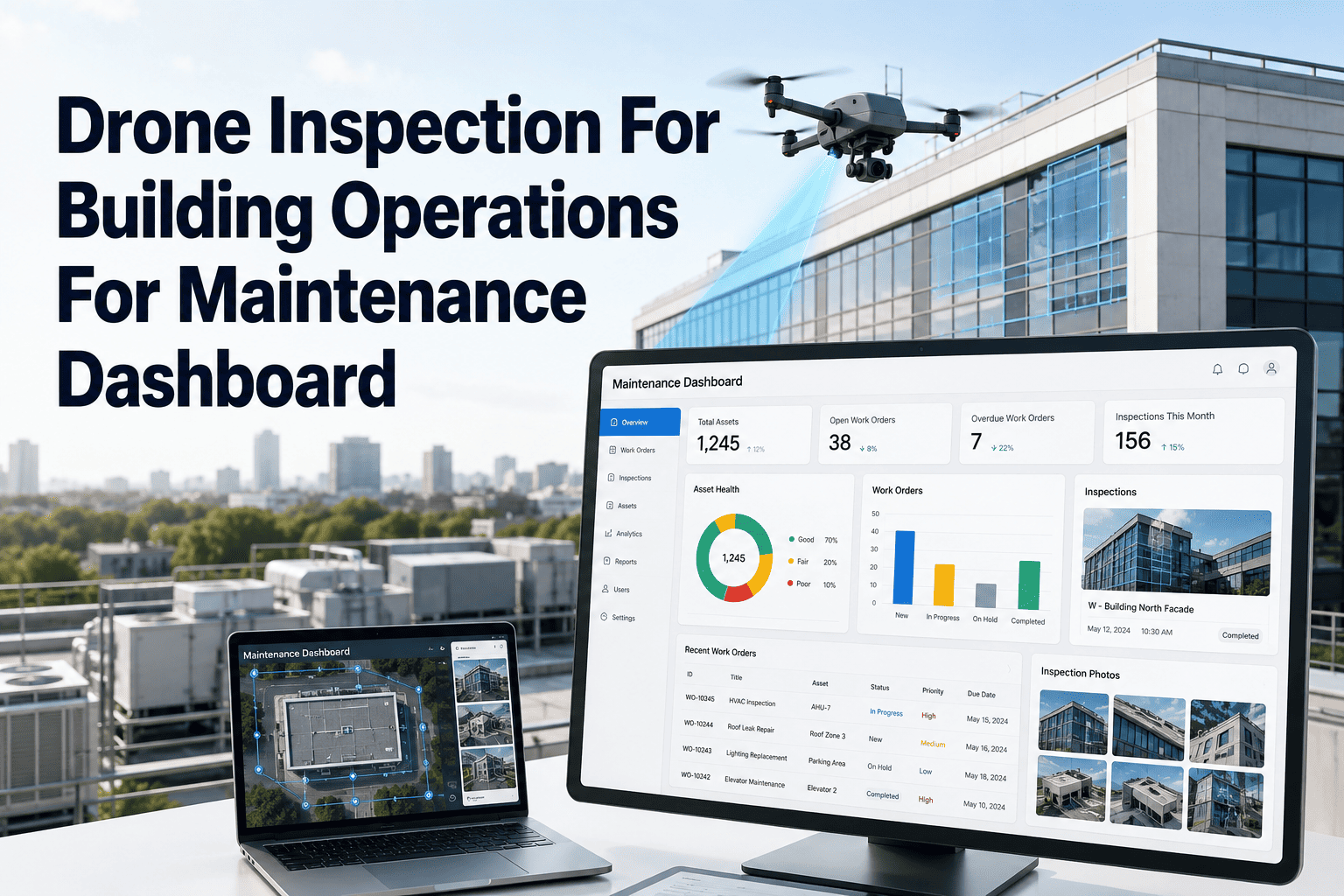
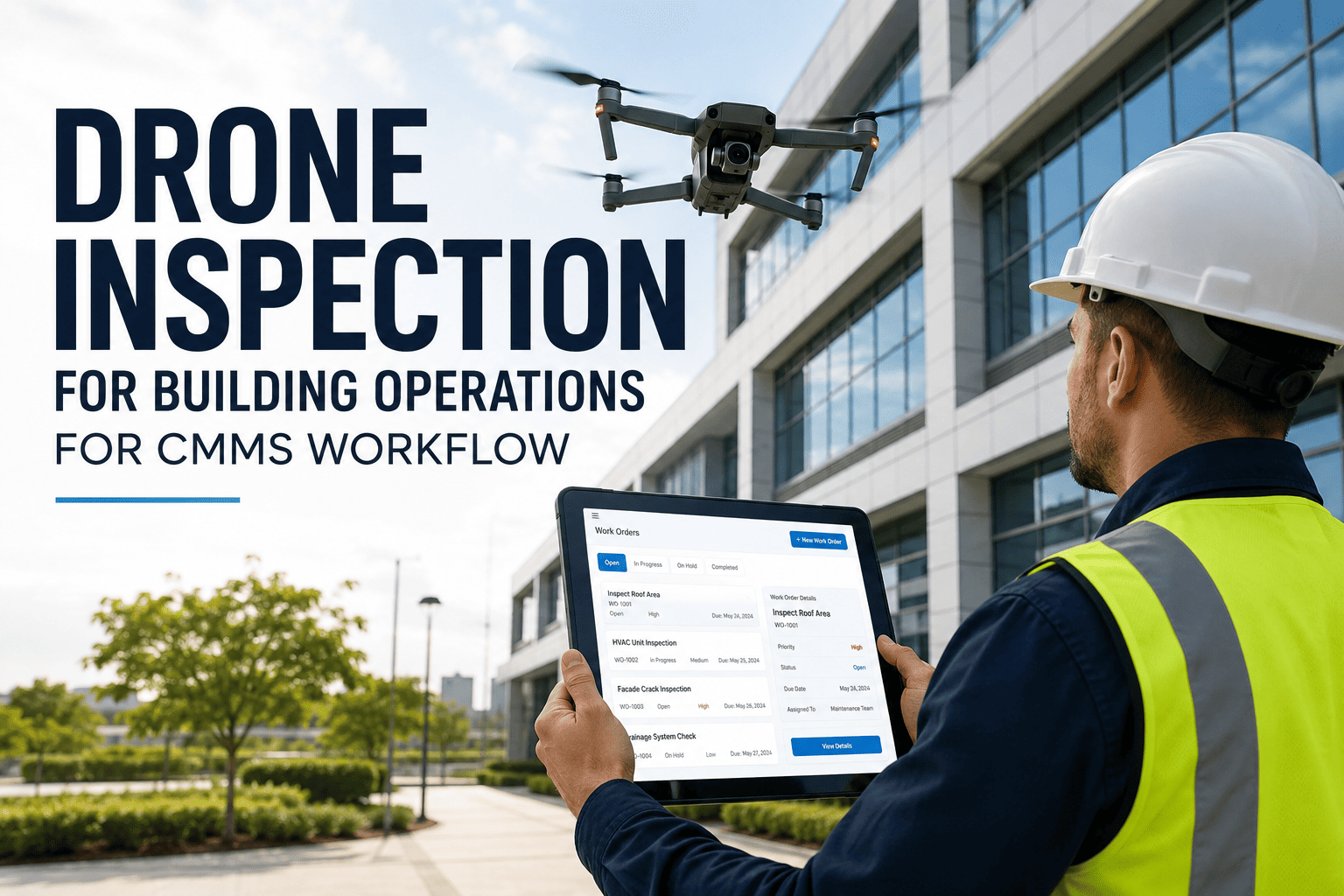
A cement plant has more vertical risk than almost any other industrial site — a 100-meter preheater tower, clinker silos, and a kiln shell that runs hot enough to make a close visual check genuinely dangerous. Ground-level inspection from a distance misses early shell hot spots and stack cracking that only show up close, and rope access for a tower that tall is slow, expensive, and rarely done as often as it should be. A drone covers the full height of a stack or silo in one flight, capturing thermal and visual data at every level. OxMaint turns that flight into a leveled inspection record, tagging exactly where on the structure each defect sits and opening a work order without anyone climbing. Book a demo to see a kiln shell scan turned into tracked findings.
Drone Inspection · Cement Plant Assets · CMMS
Inspect Stack, Silo, and Kiln Shell Without the Climb
OxMaint reads drone thermal and visual data from tall cement plant structures and turns every flagged level into a tracked work order.
One Flight, Every Level of the Structure
Top Section
Stack lining condition and emission point structural checks.
Upper Section
Shell coating wear and joint seal condition at height.
Mid Section
Thermal hot-spot scan for refractory lining degradation.
Base Section
Foundation cracking and dust buildup around support structure.
1 flight
covers full stack or silo height versus multi-day rope access
0
technicians exposed to kiln shell heat during the inspection itself
Leveled
findings tagged by exact height, not just "somewhere on the stack"
A thermal scan of a kiln shell is only useful if the hot spot is tied to an exact section. OxMaint keeps every finding leveled, not lumped into one vague report.
Cement Plant Assets Drone Inspection Covers
01
Kiln Shell
Thermal scans flag refractory wear before a shell hot spot becomes a forced shutdown.
02
Clinker Silo
Shell corrosion and structural fastener checks across the full silo height in one pass.
03
Preheater Tower
Visual and thermal coverage of duct joints and external structural steel at height.
04
Conveyor & Stacker
Belt alignment and structural wear checks along long, hard-to-walk conveyor runs.
Ground & Rope Inspection vs Drone + OxMaint
| Factor | Ground / Rope Access | Drone + OxMaint |
| Time to inspect full stack height |
Multiple shifts, rope access scheduling required |
Single flight, same-day coverage |
| Dust and heat exposure |
Technician works at height in active dust zones |
No technician exposure during the scan itself |
| Defect location accuracy |
General area noted, often estimated by eye |
Tagged by exact level and GPS position |
| Repeat inspection frequency |
Limited by access scheduling, often annual |
Can be run as often as the schedule requires |
Expert Review
"In cement plants, the structures that fail expensively are almost always the ones that are hardest to inspect regularly — the kiln shell and the stack. A drone removes the access excuse. What's left is making sure the finding actually reaches a planner before the next outage window, which is where the work order matters as much as the flight."
Sneha Kulkarni — Maintenance Solutions Lead, OxMaint
Frequently Asked Questions
Can a drone get close enough to a hot kiln shell to capture a useful thermal scan?
Industrial inspection drones are flown at a safe standoff distance using thermal cameras designed to read surface temperature accurately without needing to approach the shell directly, keeping both the equipment and any nearby personnel out of the heat zone.
Start a free trial to review thermal data formats OxMaint accepts.
How does OxMaint know which level of the stack or silo a defect was found on?
Each flight follows a planned altitude pattern, and OxMaint matches every captured image to its level using the flight log, so a finding at 60 meters is recorded as the mid-section rather than a generic "somewhere on the stack" note.
Does dust in the air around a cement plant affect drone inspection image quality?
Flights are typically scheduled around process conditions to minimize dust interference, and OxMaint flags any capture with reduced image quality so it can be re-flown rather than logged as a clean pass.
Book a demo to discuss flight scheduling for active sites.
Can findings from a drone flight be tied to a planned kiln outage window?
Yes. Work orders created from drone findings can be tagged for the next planned outage, so refractory or shell repairs are scheduled with the rest of the outage scope instead of handled as a separate emergency.
How often should a cement plant fly drone inspections on the kiln and stack?
Frequency depends on asset age and condition, but moving from an annual rope-access check to a more frequent drone flight schedule is common once the program is set up in OxMaint.
Sign up free to plan a flight schedule for your assets.
Inspect the Whole Structure, Not Just What You Can Reach
Stack, silo, and kiln shell inspection should not depend on rope access scheduling. OxMaint turns every drone flight into leveled, tracked findings.