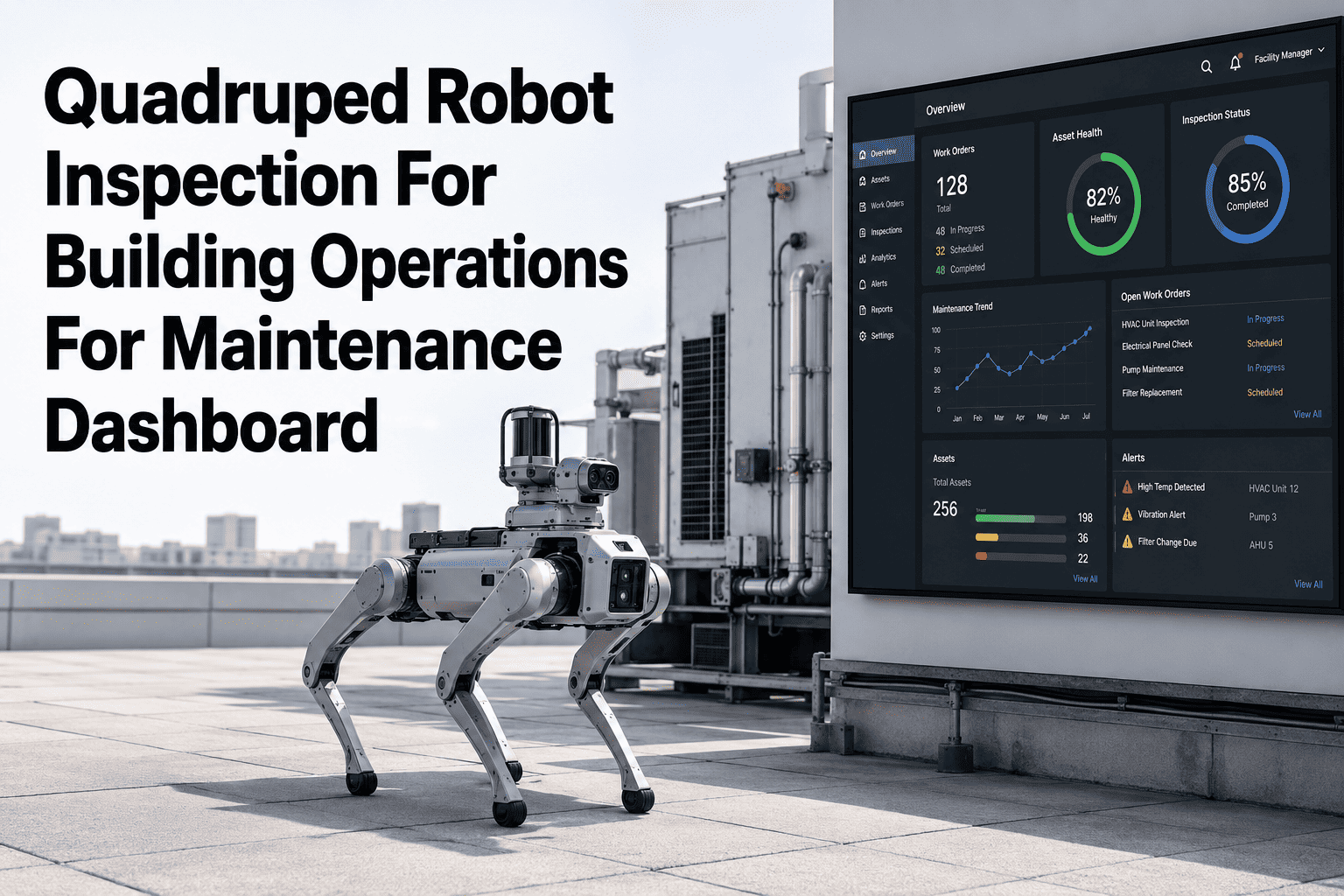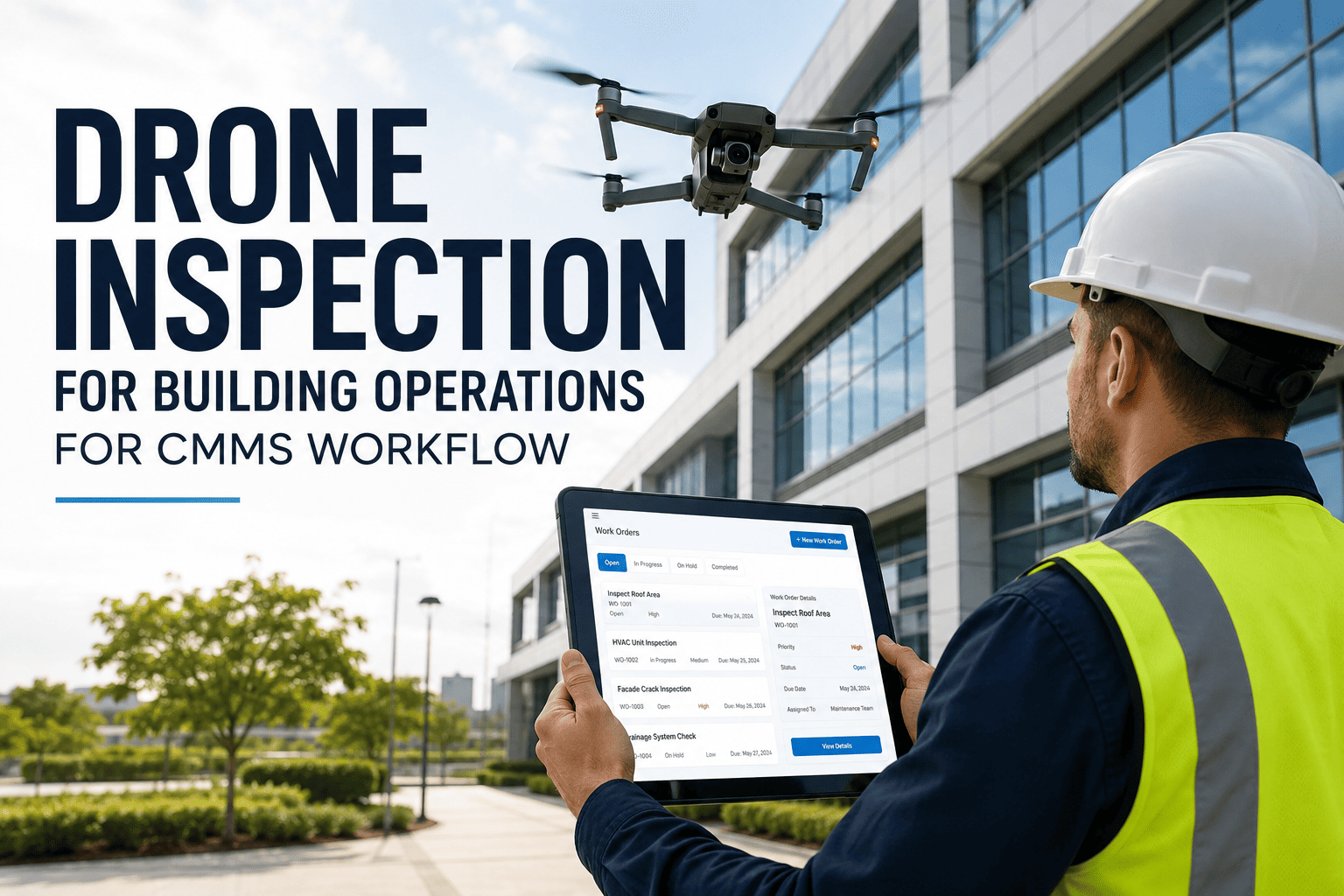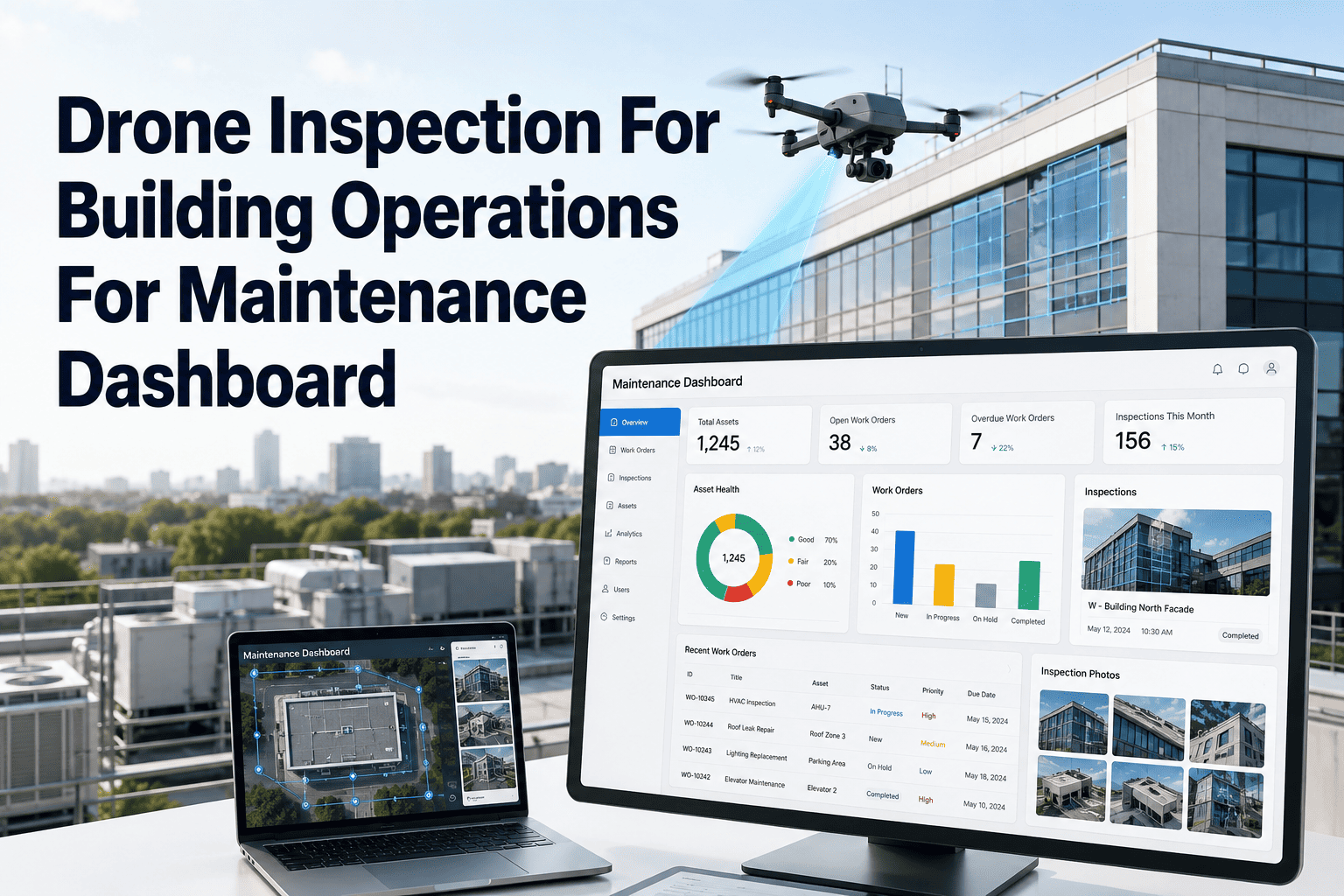
Building inspectors once dangled from rope rigs to photograph rooftop cracks, hired scaffold contractors for facade surveys, and scheduled weeks-long access windows for tower and penthouse mechanical checks. Commercial drones have compressed that process from weeks and thousands of dollars to hours and a fraction of the cost — but the inspection data is only valuable if it flows somewhere actionable. OxMaint gives building operations teams a maintenance dashboard that standardizes drone inspection findings, converts visual anomalies and field flags into tracked repair work orders, and builds the documented evidence chain your auditors, insurers, and compliance officers require — all without manual re-entry of what the drone already saw.
AERIAL INSPECTION CMMS
Stop Losing Drone Data in Shared Folders
Drone footage and inspection photos only drive maintenance outcomes when they are attached to asset records, linked to repair history, and visible to the people scheduling next steps. OxMaint makes that connection automatic.
Roof membrane scan — 14 anomalies flagged
Facade crack detected — Level 2 severity
HVAC exhaust unit blocked — WO auto-created
Gutter overflow risk — PM frequency updated
Parapet wall — no action required
What Drone Inspection Covers That Manual Checks Miss
01
Roof & Waterproofing
Thermal drone cameras detect moisture infiltration beneath membrane surfaces that are completely invisible at grade level — catching leaks before ceiling damage appears inside the building.
02
Facade & Cladding
High-resolution photogrammetry creates millimeter-accurate crack maps on concrete, glass curtain walls, and brick facades — eliminating the need for expensive scaffold access for visual surveys.
03
Rooftop Mechanical
Drones survey HVAC units, cooling towers, exhaust fans, and condenser banks without requiring technician rooftop access — reducing fall hazard exposure while increasing inspection frequency.
04
Skylights & Glazing
Overhead glass structures, atriums, and roof skylights are photographed from above — identifying cracked panels, failed sealant joints, and debris accumulation that block drainage.
05
Perimeter & Grounds
Exterior lighting, fencing integrity, drainage outlets, and site perimeter structures are mapped in a single drone flight — replacing multi-person manual perimeter walkthroughs.
06
Post-Event Assessment
After high winds, hail, or flooding events, drone deployment within hours produces a documented damage report that supports insurance claims and emergency repair prioritization.
Drone Inspection vs. Traditional Building Survey — Cost & Time
| Inspection Type | Traditional Method | Drone Method | Time Saved | Cost Reduction |
|---|---|---|---|---|
| Roof Survey (1 acre) | Scaffold + 2 inspectors, 2 days | 1 drone operator, 90 mins | 85% | Up to 70% |
| High-rise Facade Check | Rope access team, 3–5 days | Drone photogrammetry, 4 hours | 75% | Up to 80% |
| Post-Storm Damage Scan | Manual walkthrough, 1–2 days | Emergency drone deploy, 2 hours | 90% | Up to 60% |
| Rooftop HVAC Visual | Rooftop access, permits required | Drone overhead pass, 30 mins | 95% | Up to 65% |
Drone Inspection to Repair Closure — The OxMaint Workflow
Flight Completed
Drone completes programmed route. Footage and sensor data auto-uploaded to inspection platform.
Findings Classified
AI or inspector reviews footage and classifies findings by severity, asset, and location on the building model.
OxMaint Receives Data
Findings, photos, and GPS coordinates pushed to OxMaint via API — automatically mapped to the correct asset record.
Work Orders Created
Each flagged finding generates a prioritized corrective work order assigned to the right team with all evidence attached.
Repair Tracked to Closure
Work order completion closes the finding loop — updating asset history, compliance log, and scheduling the next inspection.
EXPERT REVIEW
Priya Khanna, LEED AP BD+C
Senior Building Consultant — Commercial Real Estate & Facilities, 15 Years
The biggest mistake I see facility teams make with drone inspection is treating it as a one-time event rather than a scheduled program. A single roof drone survey gives you a snapshot — annual drone inspection with a CMMS behind it gives you trend data showing whether a crack grew six millimeters since last year. That progression data is what engineers need to decide between monitor-and-wait versus immediate remediation. OxMaint storing each inspection cycle against the asset record is what makes drone data a long-term maintenance asset rather than a folder of photos nobody looks at.
START DRONE-CONNECTED MAINTENANCE
Connect Your Drone Inspection Program to OxMaint
Schedule a demo and see how aerial findings become assigned work orders in under two minutes.
Frequently Asked Questions
How does OxMaint store drone inspection photos and link them to asset records?
Every photo uploaded to OxMaint is attached directly to the asset record of the building element it depicts — roof section, facade panel, mechanical unit. Photos retain GPS coordinates, timestamp, and inspection cycle metadata. When the next drone run occurs, new photos are added to the same asset timeline, creating a dated visual history that shows condition change over time. Teams can view the full photo history from any device via the OxMaint mobile app.
Can drone inspection data from third-party platforms feed into OxMaint automatically?
Yes. OxMaint accepts inspection data from third-party drone software platforms via API and webhook. Platforms like DroneDeploy, Pix4D, and Skydio can be configured to push classified findings directly to OxMaint, triggering work orders without any manual export or re-entry. Your integration configuration is handled during onboarding — book a demo to discuss your specific platform setup.
What evidence does OxMaint produce for building insurance claims after drone inspection?
OxMaint generates inspection evidence packages that include the inspection date, GPS-tagged photos before and after any repair, work order history showing when the defect was identified and when it was repaired, and a chain-of-custody log showing technician sign-offs. Insurance adjusters and loss assessors increasingly accept this format as proof of maintenance due diligence — reducing claim disputes and supporting faster settlements for storm or damage events.
How do we set inspection scheduling in OxMaint to align with drone availability?
OxMaint's PM scheduler lets you create recurring drone inspection work orders tied to calendar dates, seasonal triggers, or event-based triggers such as post-storm protocols. Drone inspection tasks are treated the same as any PM task — assigned to a responsible party (internal drone team or external operator), tracked for completion, and linked to the asset records they cover. Schedule frequency is fully configurable per building zone or asset type.