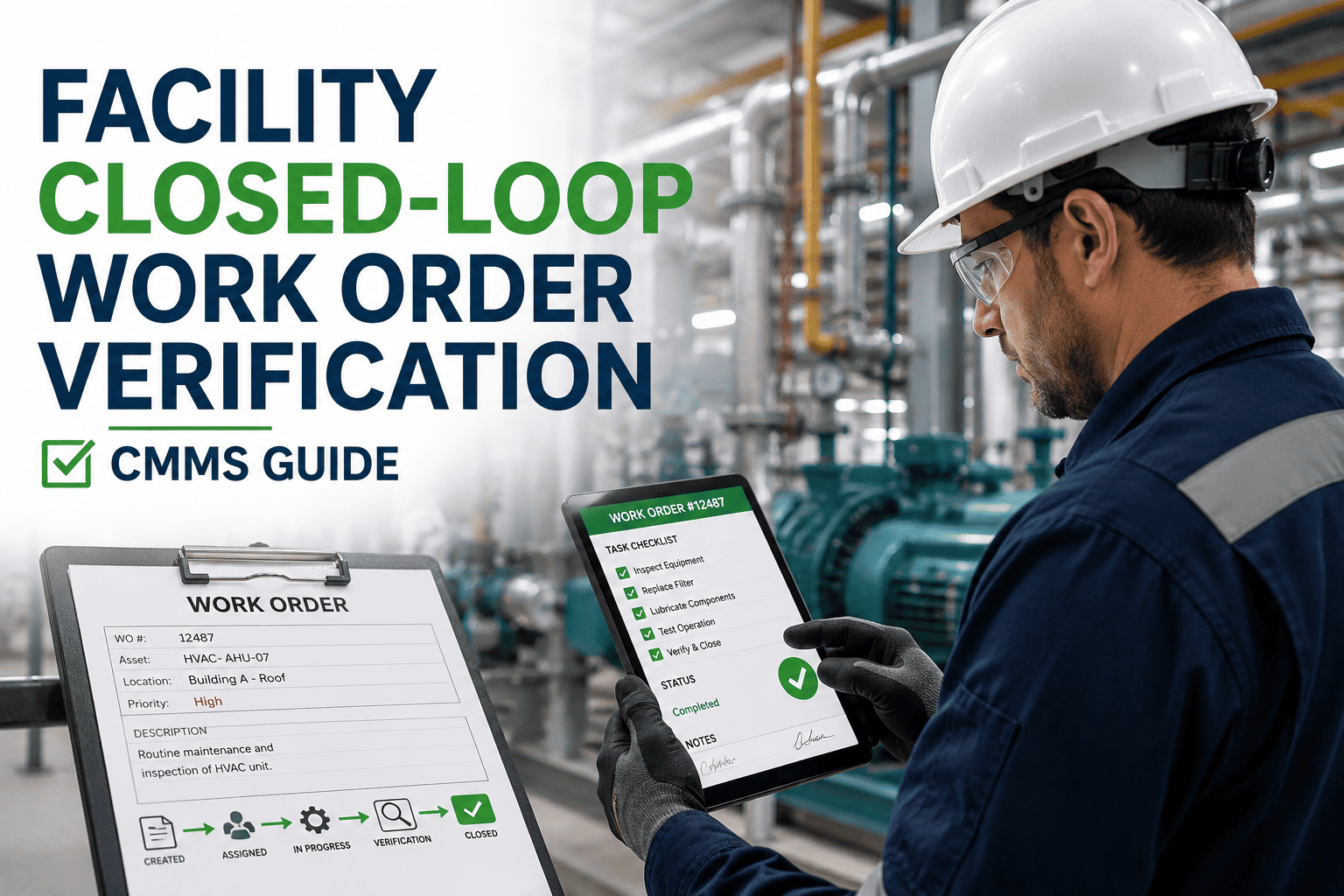
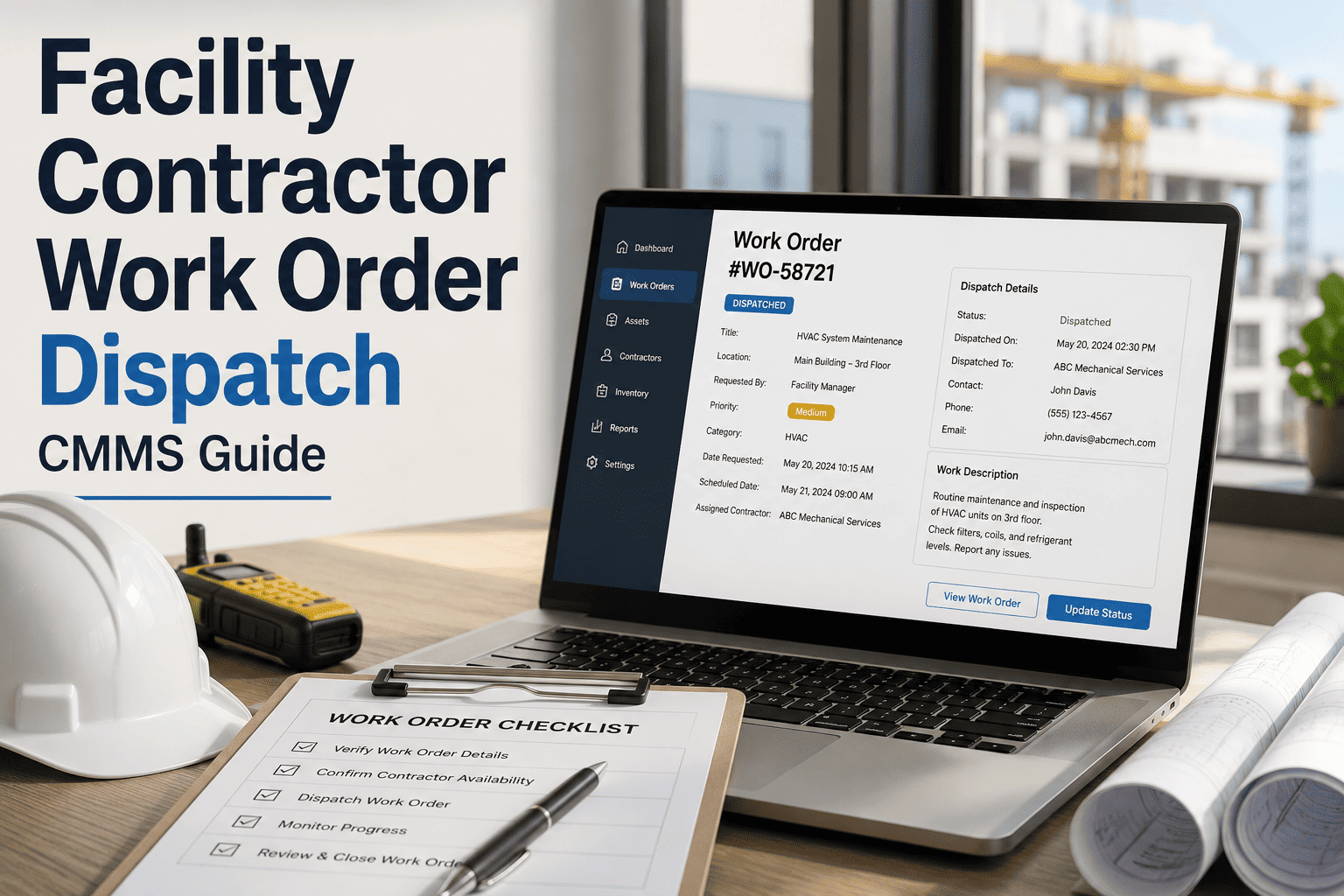
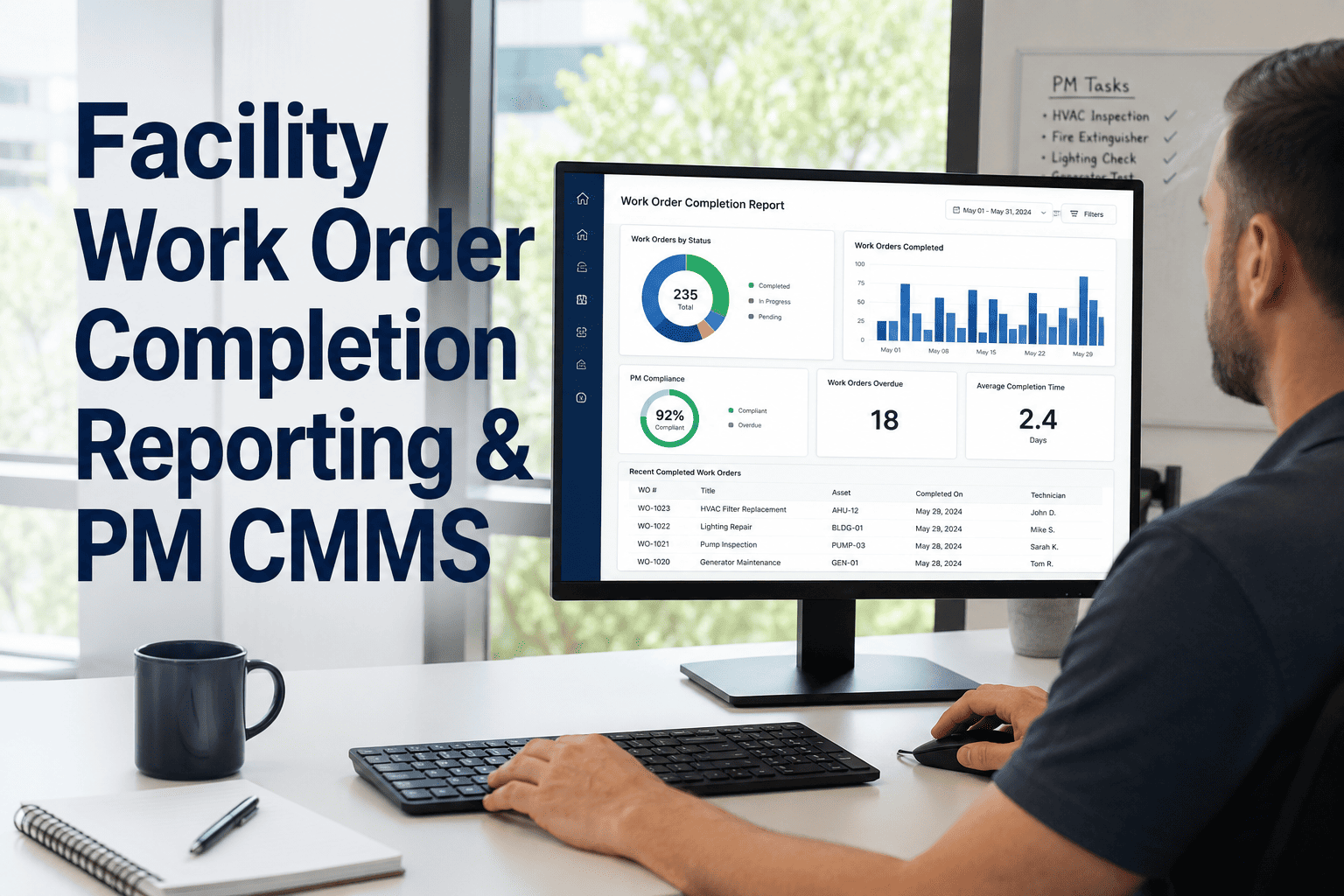
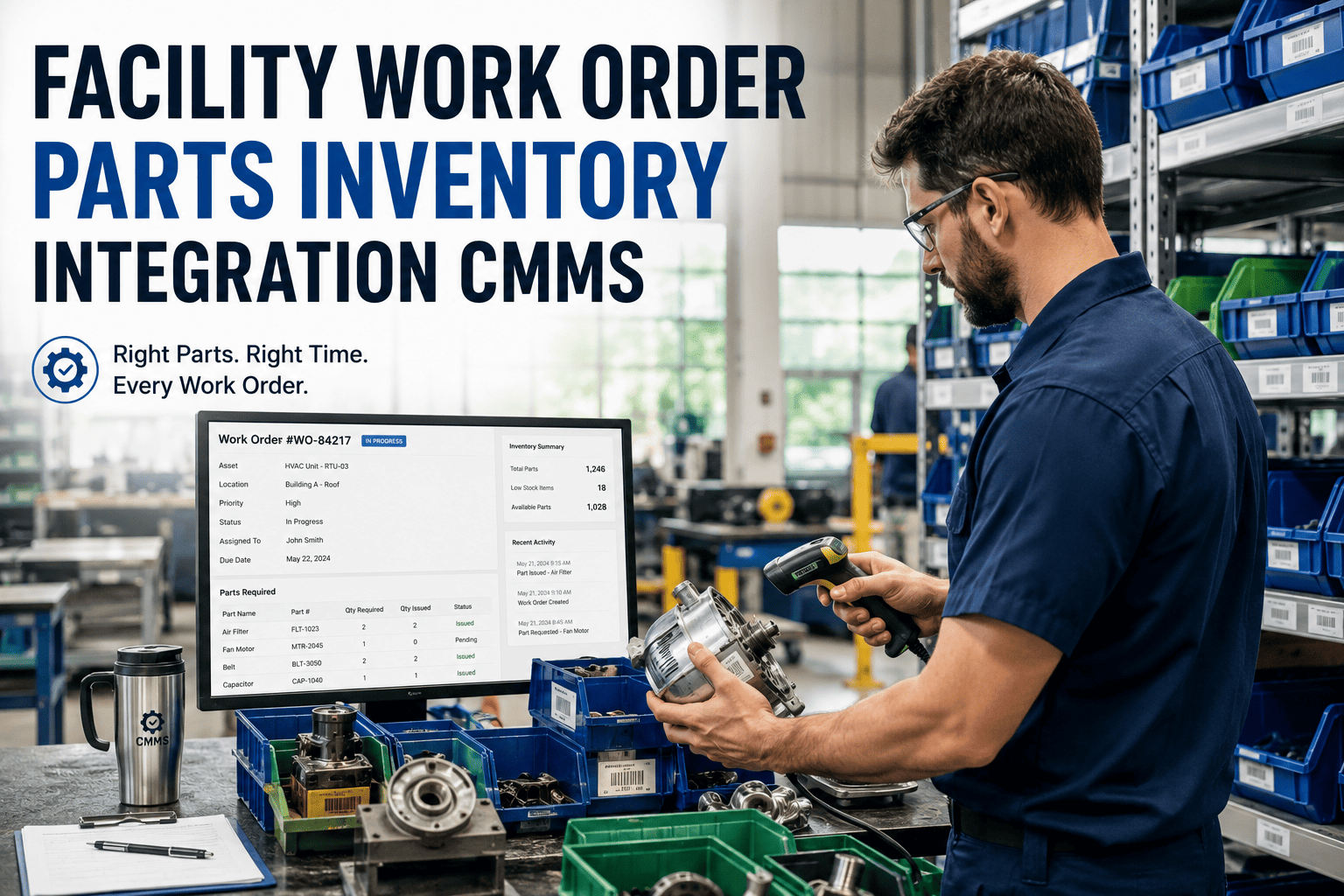
Most maintenance teams measure success by how many work orders get closed — not by how many stay fixed. Industry data shows repeat failures make up 15 to 25 percent of all emergency work order volume, and most of those are the same fault, on the same asset, resurfacing weeks after someone marked the job "complete." The gap is almost never the repair itself. It is the missing step between "the technician says it's done" and "the facility can prove it's done, done right, and unlikely to happen again." A supervisor sign-off, a photo comparison, a meter reading against spec, or a short observation window closes that gap — and facilities that build this into every work order cut repeat failures by roughly 28 percent. Book a demo to see how OxMaint turns work order closure into verified, audit-ready proof.
Work Order Automation · Closed-Loop Verification
A Closed Work Order Isn't the Same as a Fixed Asset
Closed-loop verification is the missing checkpoint between "technician marked it complete" and "the facility can prove the fault is actually resolved." Here is what happens to your maintenance data without it — and how a CMMS closes the loop automatically.
15–25%
of emergency work orders are the same fault recurring on the same asset
28%
fewer repeat failures when a verification step runs before closure
60%
of reliability insight is lost when work orders close with incomplete data
The Verification Gap — Two Ways the Same Repair Ends
A work order can follow the exact same repair steps and still produce two very different outcomes, depending on whether anyone checked the result before closing the ticket. This is what changes when verification becomes a required stage instead of an afterthought.
Without Verification
Technician closes the work order the moment the repair "feels" done — no reading, no photo, no second check.
Fault resurfaces in days or weeks; no one connects it to the earlier repair since the record shows "resolved."
Root cause is never captured, so the next technician starts diagnosis from zero, again.
Audit or insurance review finds a closed ticket with no evidence the asset was actually returned to spec.
With Closed-Loop Verification
Work order requires a post-repair reading, photo, or sign-off before the status can move to closed.
Recurring faults are flagged automatically because the system compares this fault to the asset's history.
Failure code and root cause are captured at closure, building a searchable record for the next event.
Closure produces a timestamped, signed record that satisfies compliance review in minutes, not days.
The Closed-Loop Verification Cycle
Closed-loop verification is not an extra form — it is four connected checkpoints that turn a single repair into a permanent, trustworthy record. Each stage feeds the next, and the cycle closes back into the asset's history so the next fault is diagnosed faster.
1
Fault Reported
Issue logged against the specific asset with a failure description, priority, and photo — not a vague ticket.
2
Diagnosed & Repaired
Technician works from asset history and a digital checklist, logging parts, time, and readings as the job happens.
3
Verified Against Spec
Post-repair reading, before/after photo, or requester confirmation is captured and compared against the expected result.
4
Confirmed & Closed
Supervisor signs off, failure code is logged, and the record locks into permanent, auditable asset history.
Closed record feeds root-cause data back into Stage 1 — the next technician starts with answers, not guesswork
CLOSED-LOOP VERIFICATION · OXMAINT CMMS
Stop Closing Work Orders on Trust. Start Closing Them on Proof.
OxMaint requires verification data before a work order can close, flags recurring faults automatically, and builds the audit-ready record your compliance reviews and CapEx decisions depend on.
Verification Methods — What Catches an Incomplete Repair
Not every asset or fault needs the same verification method. The table below shows what each method actually catches, where it fits best, and how OxMaint applies it inside the work order workflow.
| Verification Method |
What It Catches |
Best Used For |
OxMaint Capability |
| Supervisor sign-off |
Incomplete steps, missing safety checks, rushed closures |
Priority 1 and Priority 2 critical work orders |
Closure locked until a supervisor reviews and digitally signs the record |
| Before/after photo comparison |
Cosmetic or partial fixes that a reading alone won't show |
Visual faults — leaks, damage, corrosion, alignment |
Photo fields required on the mobile work order before status can change |
| Meter or sensor reading |
Repairs that "look" done but haven't returned to operating spec |
HVAC, pressure systems, rotating equipment |
Reading logged against asset spec range, flags automatically if out of tolerance |
| Requester or tenant confirmation |
Repairs marked complete without the affected party's awareness |
Occupant requests, shared or tenant-facing assets |
Automated confirmation prompt sent before final closure |
| Effectiveness review (30–60 day) |
Fixes that hold briefly, then fail again after the record is closed |
Recurring failure modes and prior corrective actions |
Auto-scheduled review work order linked back to the original closure |
What Changes When Every Work Order Closes the Loop
Verification is not paperwork for its own sake — it changes measurable outcomes across the maintenance operation. These are the shifts facilities typically see once closure requires proof, not just a status change.
85%+
First-Time Fix Rate
Skill-matched assignment plus a verification checkpoint eliminates most of the rework that drags this number down.
-28%
Repeat Failure Rate
Requiring a check before closure catches the fixes that wouldn't have held, before they become a second ticket.
-35%
Rework From Skipped Steps
Digital checklists tied to closure stop technicians from skipping torque specs, test steps, or safety checks.
100%
Audit-Ready Closure Records
Every closed work order carries a timestamp, signature, and verification record searchable in seconds.
Expert Review
Facility teams rarely have a repair quality problem — they have a confirmation problem. The technician did the work, but nobody captured proof that the work held. When I audit a maintenance programme, the first thing I check is not the PM schedule, it's whether closed work orders carry evidence: a reading, a photo, a sign-off. Programmes without that step cannot tell a real fix from a temporary one until the asset fails again, and by then the root cause investigation is starting from nothing. Building a verification checkpoint into the closure process, rather than trusting a status field, is the single change that most improves both repair quality and audit outcomes.
Priya Nandakumar, CMRP
Certified Maintenance and Reliability Professional · 15 years in asset reliability and CMMS implementation across commercial and industrial facilities · Specialist in work order quality auditing and root-cause programme design
Frequently Asked Questions
What is closed-loop work order verification?
It is a required checkpoint between repair completion and work order closure, where a reading, photo, or sign-off confirms the fault is actually resolved before the record can close.
Start free to see it running on a live work order.
Why does the same fault keep recurring after a work order is closed?
Most repeat faults trace back to a closure that never confirmed the fix held — no reading, no observation window, no root cause captured, so the same conditions produce the same failure again.
What should a post-repair verification step actually include?
At minimum: a reading or photo compared against spec, a supervisor or requester confirmation, and a logged failure code — the three data points that turn a closed ticket into evidence.
How does closed-loop verification help with compliance audits?
Every closed work order carries a timestamped, signed verification record, so an auditor's request for proof of resolution is answered from the system directly instead of reconstructed from memory.
Book a demo to see an audit-ready record pulled live.
Can OxMaint run closed-loop verification across multiple facility sites?
Yes. Verification rules can be set per asset class or site, with a single portfolio dashboard showing which locations are closing work orders with proof and which are not.
CLOSED-LOOP VERIFICATION · OXMAINT CMMS
Every Work Order Should Prove the Fix Held — Not Just Say It Did
OxMaint builds verification into every closure: readings compared to spec, photos required for visual faults, supervisor sign-off on critical work, and automatic flags the moment a fault repeats. Fewer callbacks, cleaner data, audit-ready records.