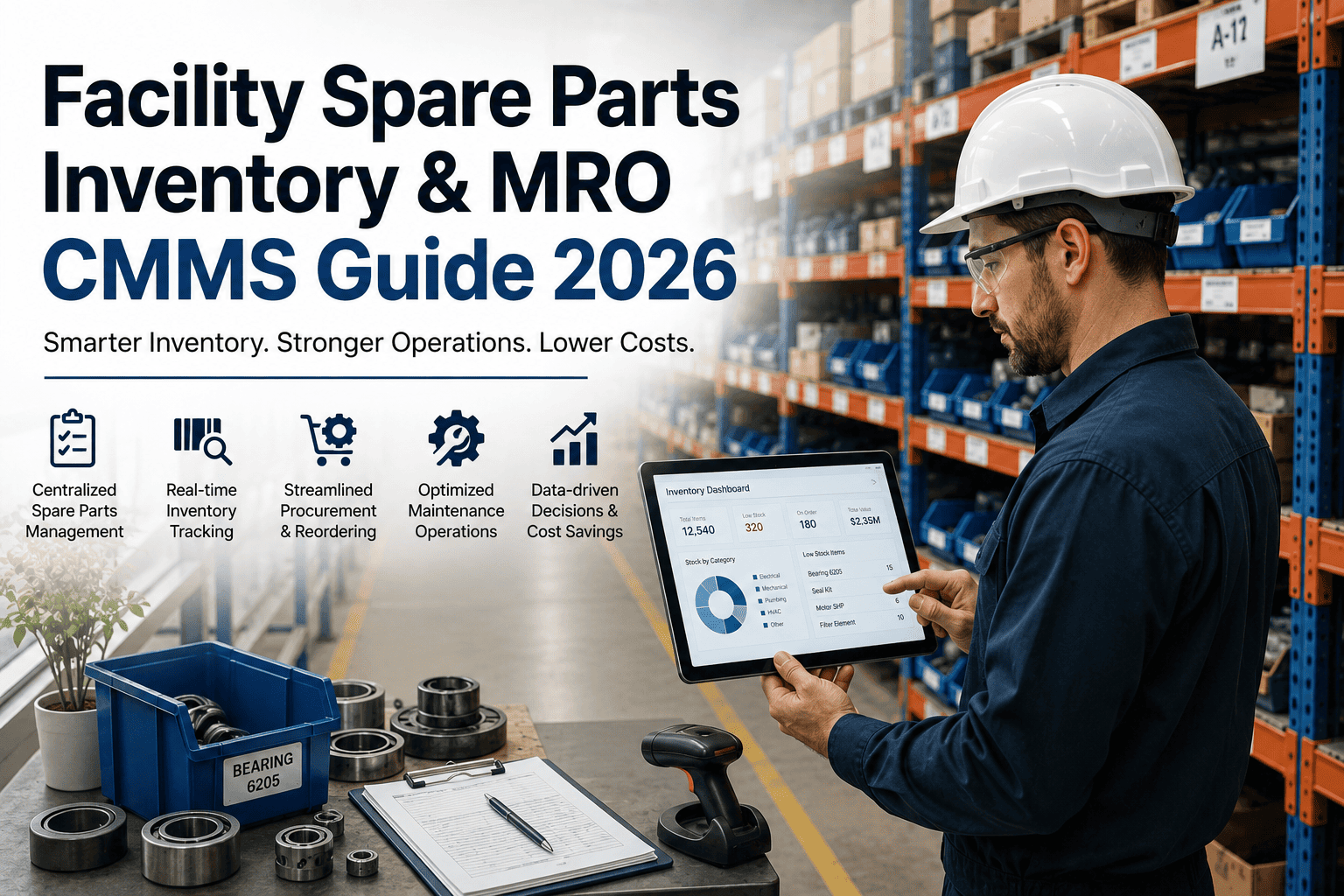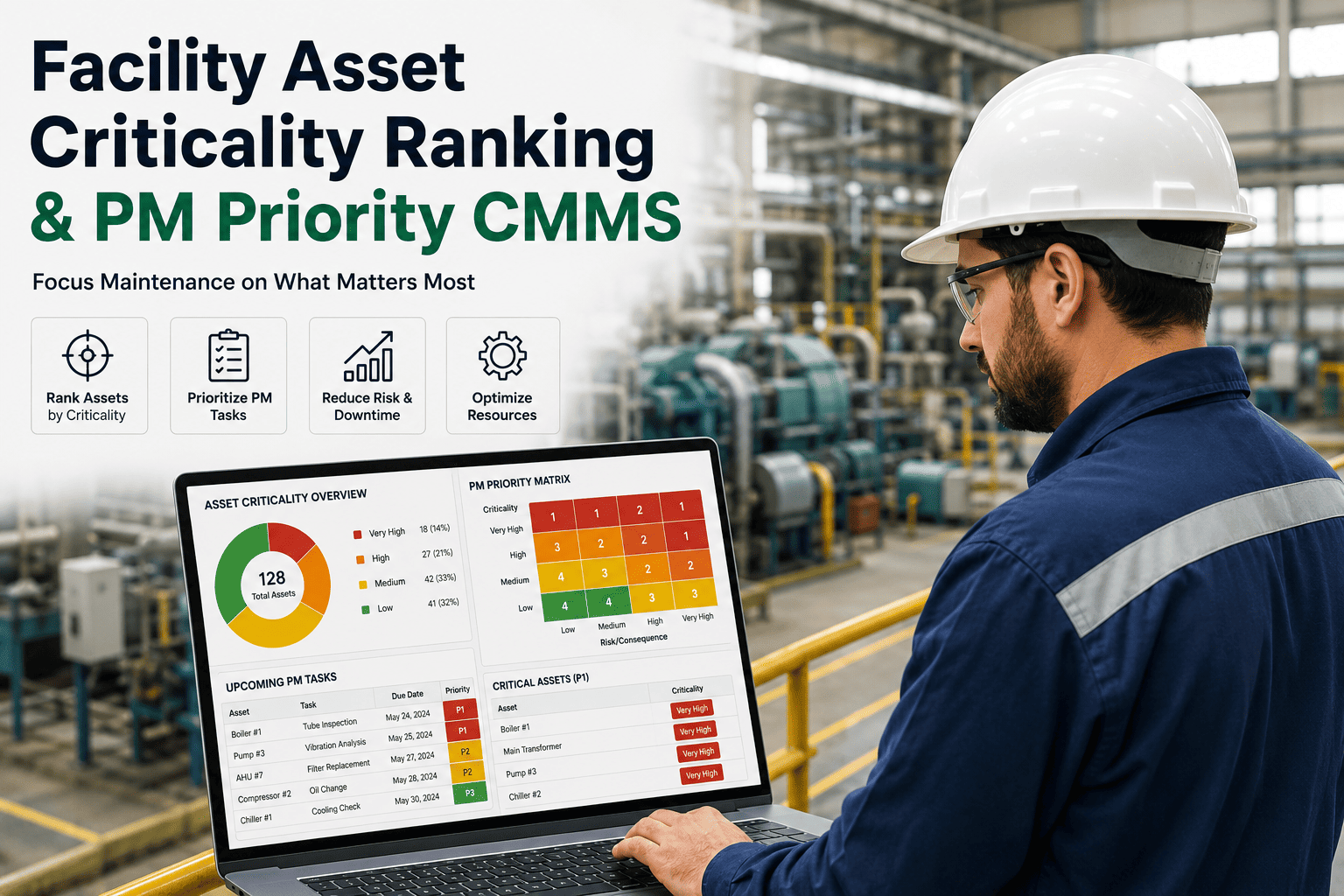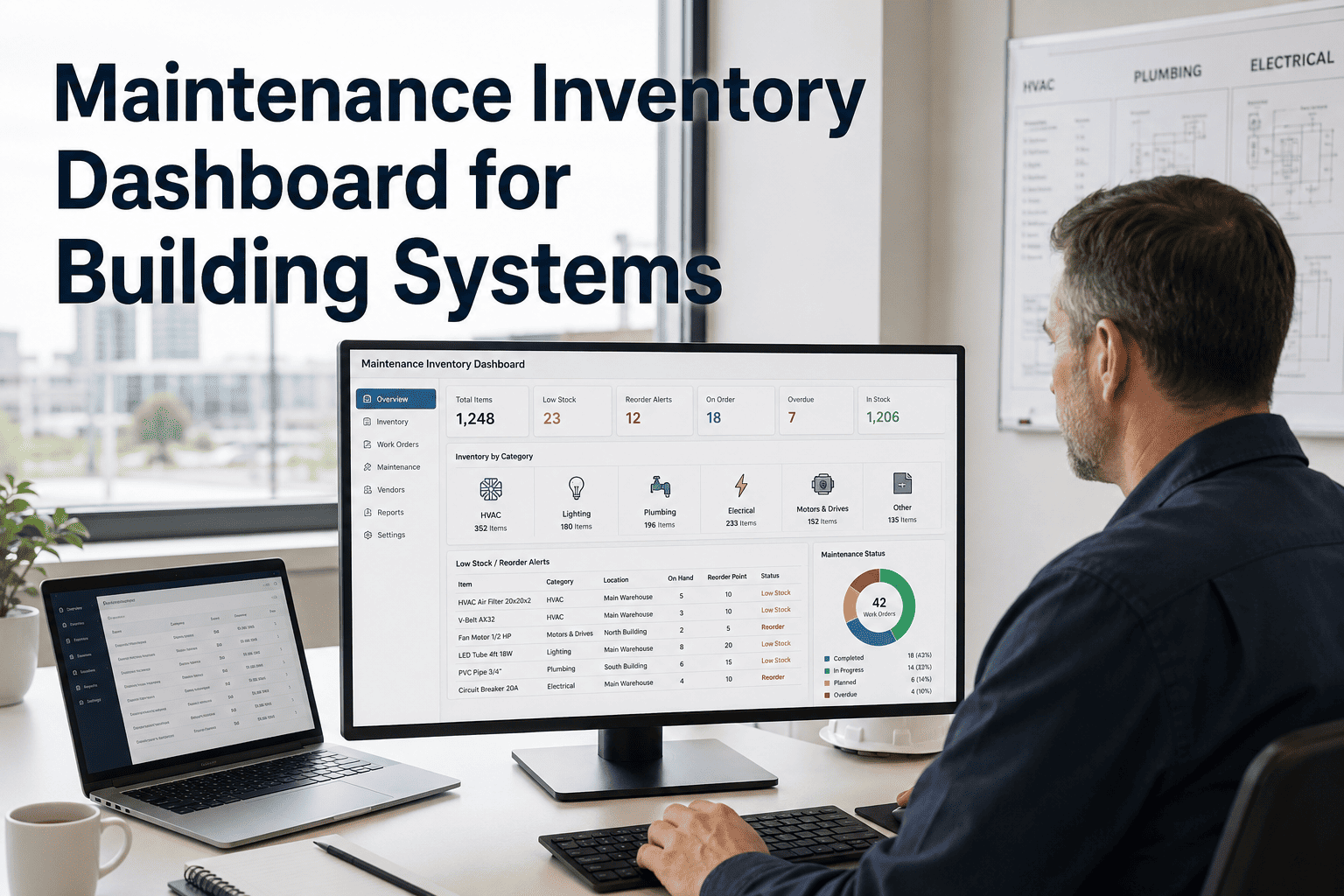
Over 60% of commercial buildings in North America are operating equipment that is more than 30 years old — and emergency maintenance events in facilities over 25 years old rose 15% in 2024. When a chiller compressor fails at 11 PM on a Thursday and your nearest vendor has a 6-week lead time on the replacement shaft seal, the question is not why it failed — it is why that seal was not already on the shelf. Critical spare parts optimisation is the discipline of ensuring that the parts most likely to cause extended downtime are stocked before the failure happens, at every building in your portfolio, with the minimum capital tied up in inventory that will never be used. OxMaint's asset lifecycle management module maps every critical building system asset to its failure-probability parts list, tracks stock levels against minimum quantities, and generates purchase orders before a stockout creates a downtime event.
Critical Spares Optimization for Building Systems
HVAC. Electrical. Plumbing. Life safety. Every building system has a set of parts whose absence during a failure converts a 2-hour repair into a 2-week downtime event. This guide identifies those parts — and the inventory logic that keeps them on the shelf.
The ABC Classification Framework: Not Every Part Needs to Be on the Shelf
The most common inventory mistake is trying to stock everything. A building stores 2,000 SKUs "just in case," 80% of which have never been used, while the three parts most likely to cause a downtime event are on a 6-week lead time from the sole-source supplier. The ABC framework solves this by forcing a prioritisation decision on every part in the building's asset register.
Critical Spares Register by Building System
The table below defines the Class A critical spares for the four primary building systems. These are the parts that, when absent during a failure event, convert a routine repair into an extended downtime incident. Every building should have these items physically verified in stock during the annual PM cycle.
| Building System | Class A Critical Spare | Failure Consequence Without It | Typical Lead Time | OxMaint Min-Stock Alert |
|---|---|---|---|---|
| HVAC — Chiller | Compressor shaft seal · Refrigerant sight glass · Purge unit rebuild kit | Chiller offline — 2–6 week repair window without seal on-site | 3–8 weeks (OEM) | Alert at zero stock, 6 weeks before peak cooling season |
| HVAC — AHU | Main fan drive belt · VFD control board · Filter bank (F7/F9) · Bearing set (main shaft) | Total air supply loss to served zone — occupancy and compliance impact | Belt: 1 day · VFD board: 4–6 weeks | Belt: min 2 units · VFD board: min 1 unit |
| Electrical — MV/LV | Main breaker fuse block · Transformer primary fuse · BMS zone controller · UPS battery module | Complete power loss to affected zone — life safety and security systems at risk | Fuse: 2–3 days · Controller: 3–5 weeks | Alert when any Class A electrical spare at zero |
| Plumbing — Pumps | Pump mechanical seal · Impeller (for critical pumps) · Check valve (circulation loop) | Heating/cooling loop failure — multiple floors or zones lose service | Seal: 2–5 days · Impeller: 2–4 weeks | Min 1 seal set per pump model in building |
| Fire Suppression | Sprinkler heads (15 spare per NFPA 25) · Control valve gasket set · Alarm valve clapper | System impairment — AHJ notification required, fire watch initiated | Heads: same day · Valve parts: 1–3 weeks | NFPA 25 minimum spare count enforced as non-negotiable minimum |
| Life Safety — Fire Alarm | NAC panel battery · Heat/smoke detector heads (model-specific) · FACP control board | Fire alarm system impairment — AHJ notification and monitoring cost | Battery: same day · Control board: 4–8 weeks | Battery: replace every 3 years · Control board: 1 unit on shelf |
| BMS / Controls | Zone controller · DDC field module · Network communication card | Automated control loss — manual overrides required, energy performance degrades | 2–6 weeks (model-specific) | Min 1 unit per controller model per 10 installed units |
How to Build Your Critical Spares Register in 4 Steps
The most expensive conversation I have in facilities management is the one that starts with "we didn't have the part." Every facilities director has had that conversation — the chiller that ran through two weeks of summer because the shaft seal was on backorder, the fire alarm that triggered an AHJ impairment notice because the control board lead time was six weeks. What strikes me every time is that the part itself costs almost nothing compared to the consequence. A VFD control board is $1,400. The two weeks of portable cooling units, emergency contractor callouts, and tenant compensation that followed its absence was $38,000. The inventory carrying cost of having that board on the shelf is about $7 per month. The business case for critical spares is not complicated — it is just rarely calculated until after the event that makes it obvious. A CMMS that maps parts to assets, tracks stock levels, and fires a reorder alert before you hit zero is not a luxury feature. It is the infrastructure that separates a managed facility from a reactive one.
Frequently Asked Questions
How does OxMaint link spare parts to specific assets?
Each asset in OxMaint has an associated parts list where individual SKUs are mapped as critical, important, or routine — matching the ABC classification framework in this guide. When a work order is created for that asset, the critical parts list is automatically surfaced for the planner before scheduling — confirming parts are available before dispatching a technician. Parts used during a job are consumed from stock via the work order close process, so inventory records update automatically without a separate goods-issue step. Start your free trial to configure the asset-to-parts mapping for your building inventory.
How does OxMaint handle critical spare parts across a multi-building portfolio?
OxMaint's multi-site inventory module gives facility managers network-wide visibility of stock levels across all buildings. When a critical part reaches minimum stock at one building, the system checks whether surplus stock exists at another location before generating an external purchase order — enabling inter-site transfers that avoid emergency procurement costs. Portfolio-level reorder rules can trigger consolidated purchasing when combined network stock drops below a threshold, replacing building-by-building ordering with portfolio-level procurement at better prices. Book a demo to see the multi-building inventory dashboard for your portfolio size.
What is the right minimum stock quantity for a Class A critical spare?
The minimum for a Class A part is calculated from three inputs: mean time between failures (MTBF) for that part, supplier lead time, and consequence cost per day of downtime. For most Class A building spares, the answer is 1 unit with an automatic reorder point set at 1 — so the moment stock reaches 1, a purchase order fires and the shelf is never empty. For high-MTBF parts with long lead times (like VFD control boards with 6-week lead times), 1 unit minimum is the standard. For high-consumption Class A parts like shaft seals on critical pumps, 2 units is more appropriate. OxMaint allows you to set minimum and reorder quantities independently per SKU per site. Start your free trial to configure minimum stock levels for your critical spares register.
How often should a building's critical spares register be reviewed?
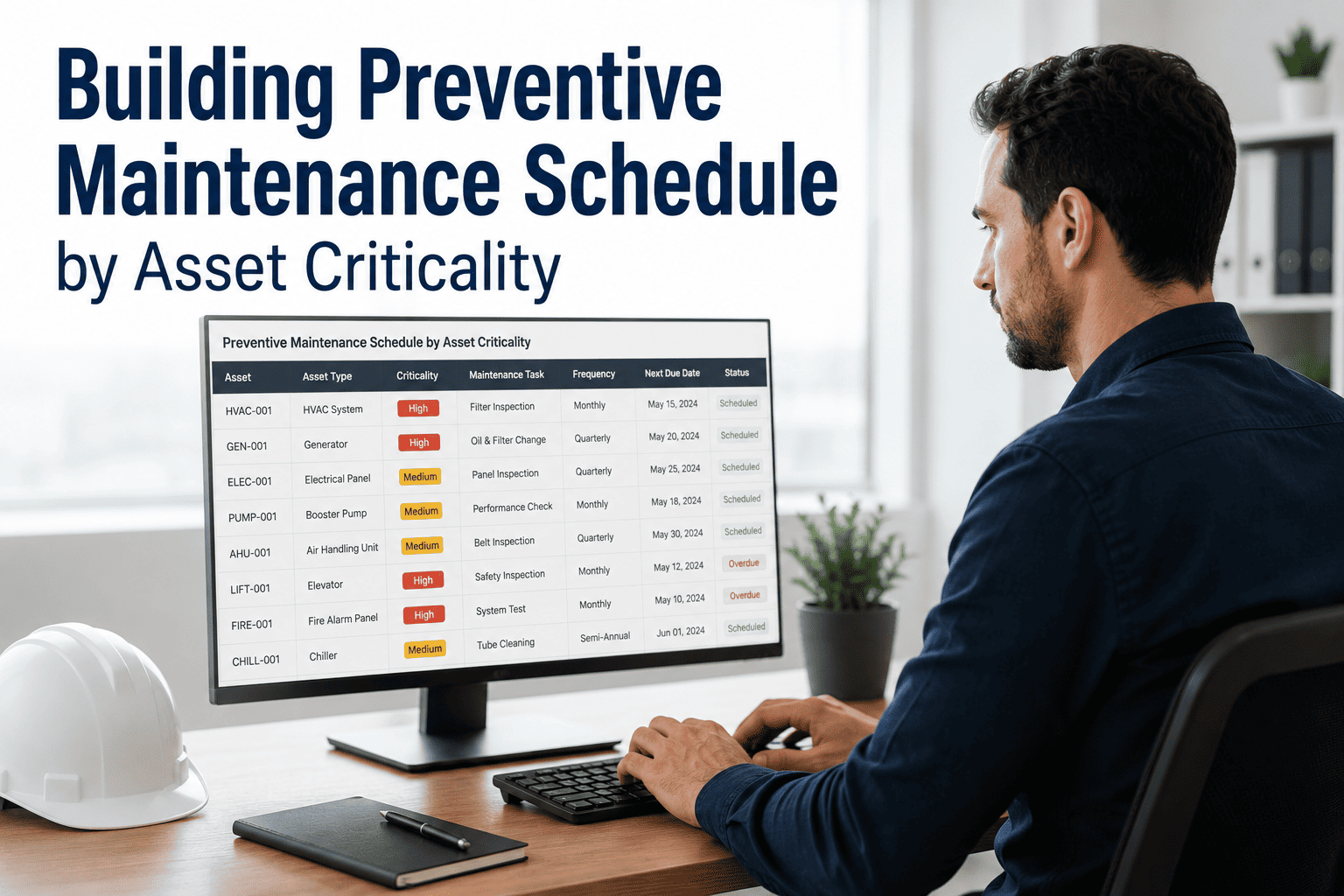
The register should be reviewed on three triggers: annually as part of the PM cycle (physical verification), whenever a new piece of equipment is installed or an old one is replaced (asset change drives parts change), and whenever an unplanned failure occurs where a part was unavailable (retrospective update — add that part to the Class A list). OxMaint generates the annual physical stock check work order automatically and flags any work order that was delayed due to parts unavailability as a candidate for critical spares register update. Book a demo to see the annual spares review workflow in OxMaint.
The Part Was $185. The Downtime Was $22,980. The Difference Was Whether It Was on the Shelf.
OxMaint maps critical spares to every building asset, tracks stock against configurable minimums, triggers reorder alerts before stockouts, and surfaces parts availability on every work order before a technician is dispatched. Facilities that manage their spares never wait weeks for a seal that should have been on the shelf.