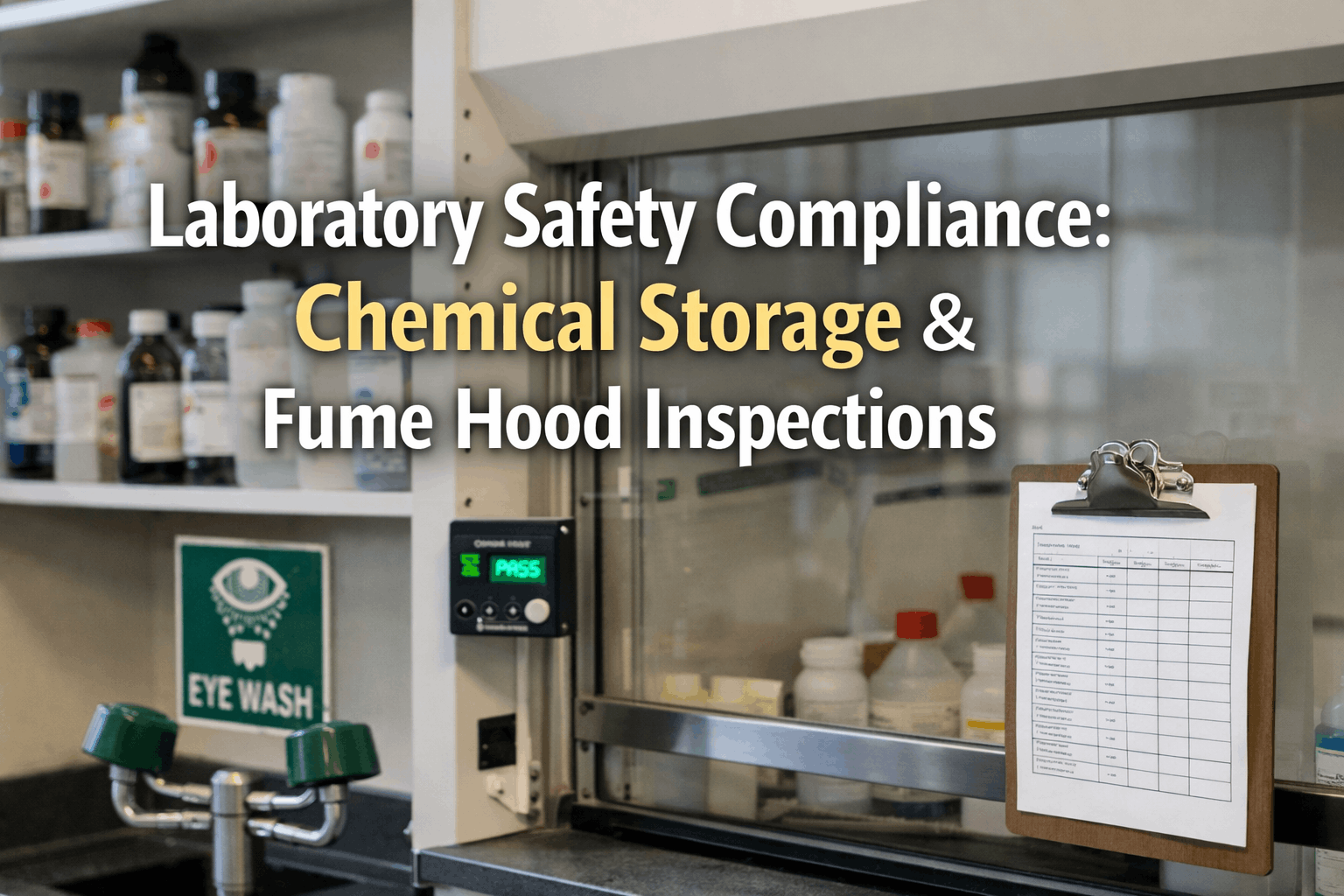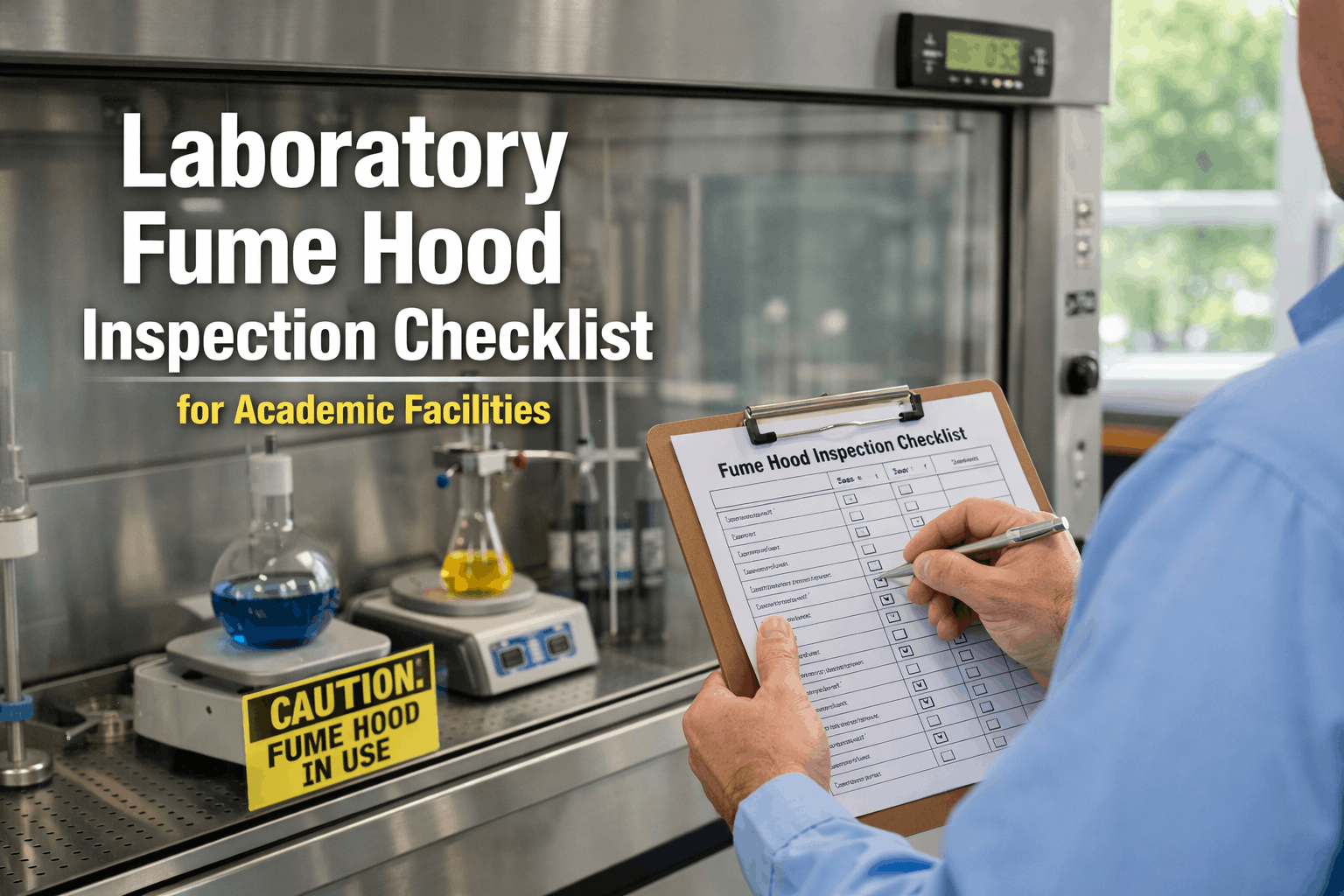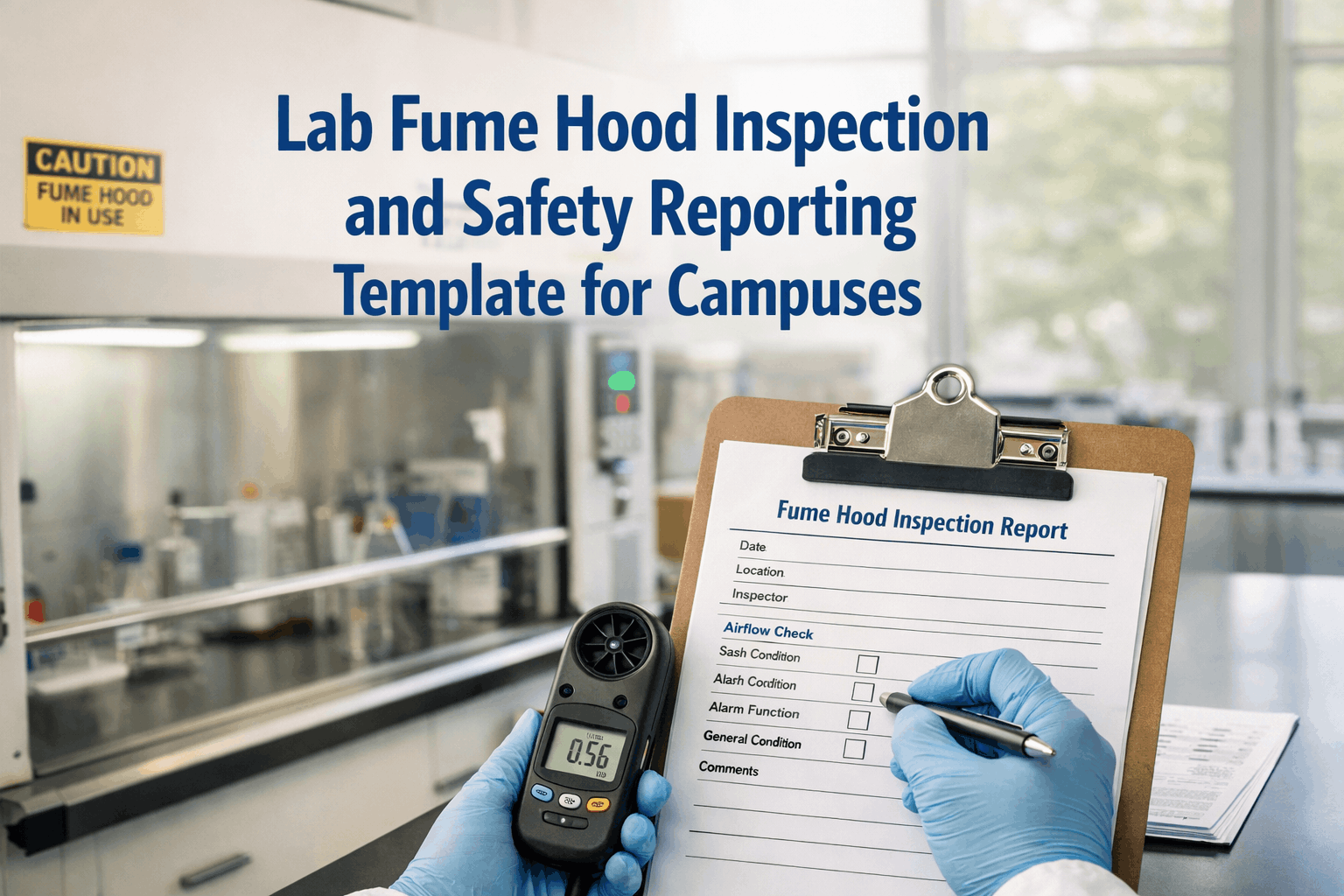
The email arrived at 7:42 AM: "Chemistry Building evacuated. Strong chemical odor on third floor." The investigation revealed a graduate student had been working with volatile solvents in a fume hood that hadn't been certified in 18 months. The face velocity had dropped to 45 fpm—half the safe minimum—and vapors were spilling directly into her breathing zone. She experienced headaches and nausea; it could have been far worse.
The hood looked fine. It sounded normal. But appearances deceive when inspections are skipped. This guide explores the critical components of fume hood safety—not just as regulatory paperwork, but as the systematic verification that stands between students and invisible hazards every time they work with hazardous materials.
The Anatomy of Safe Containment
A comprehensive safety program requires understanding the hood as an engineered system. The following sections break down the ISO, OSHA, and ASHRAE standards into actionable insights for facility managers and university safety officers. Schedule a 30-minute consultation to discover how automated inspection scheduling can transform your compliance program from reactive paperwork to proactive safety management.
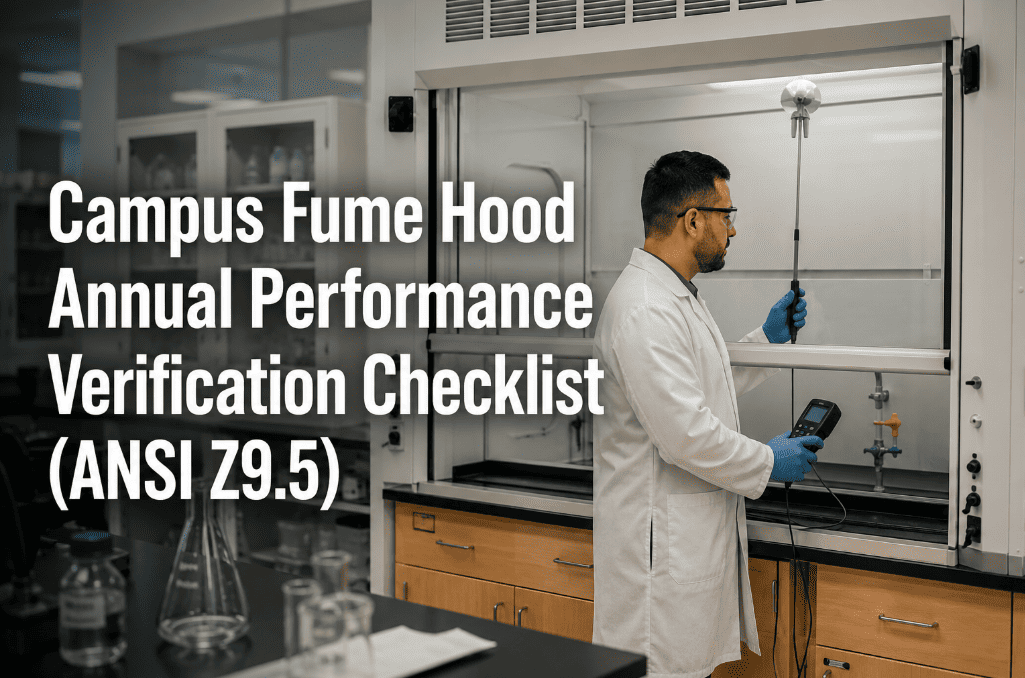
The heart of any fume hood's protective function is its airflow. The face velocity is the speed at which air enters the hood opening, creating an invisible barrier between hazardous materials and the user's breathing zone. Industry standards typically require an average between 80-120 fpm. No single reading should deviate significantly from the average, as uneven airflow creates escape routes for vapors. Beyond simple measurements, smoke visualization tests provide crucial insight—every wisp of smoke should be drawn smoothly into the hood with no escape, rollout, or hesitation. The airflow monitor is the user's only real-time safety indicator, so regular calibration is non-negotiable.
The sash acts as both a safety shield and an airflow regulator. Any compromise here directly impacts user protection. Sash glass must be free of cracks or cloudiness that could impair visibility or shatter under stress. Mechanically, the sash should move smoothly through its entire range; creeping or sticking signals worn cables or counterweight issues that need immediate facilities attention. Frame seals are equally important—even small gaps can allow bypass air, reducing the effective face velocity at the work surface and compromising the containment barrier.
Step back and examine the hood's interior as a containment vessel. The airfoil at the front bottom is engineered to create smooth laminar airflow; if damaged or blocked, turbulence results. The baffle system at the rear directs this airflow and must be positioned correctly for the specific work being performed—upper slots for heat, lower for heavy vapors. The work surface itself must be corrosion-resistant and intact. Pitting or damage can harbor contamination, while poor interior lighting forces researchers to work in shadows, increasing the risk of accidents.
This system is the path that removes contaminated air from the building. The exhaust ductwork connection must be secure; gaps here can leak vapors into the ceiling plenum, endangering occupants on floors above. Whether using constant volume or variable air volume (VAV) systems, the control system must respond appropriately to sash movements. Face velocity should remain constant. Critical to this is the alarm system—a silent alarm during an airflow failure is arguably more dangerous than no alarm at all, as it gives users a false sense of security.
Fume hoods often supply gas, water, and vacuum services, each presenting unique hazards. Gas valves must turn smoothly and shut off completely to prevent slow leaks. Electrical outlets inside the hood require GFCI protection and must be free of chemical corrosion. Most importantly, all utility shutoff controls should be located outside the hood, ensuring they are accessible during a fire or reaction inside. Clear, accurate labeling of these valves prevents confusion during emergency response situations.
Documentation is the proof of safety. The certification sticker must be current, typically dated within the past year, and clearly display the operating parameters. If this sticker is missing or expired, the hood's safety status is effectively unknown. Sash height markings must match certification levels—operating above this mark compromises protection. For hoods that fail inspection, a prominent "Do Not Use" protocol must be in place. Digital tracking of these records is replacing paper logs to ensure audit readiness.
Even a compliant hood fails if used incorrectly. Work area organization is critical; materials should be placed at least 6 inches back from the sash to allow proper containment. Improper storage is a common violation—fume hoods are not storage cabinets, and crowding them disrupts airflow. Encouraging users to keep the sash closed when not in use conserves significant energy and provides safety. Additionally, verifying that appropriate PPE is being used is as important as checking the mechanical systems.
Paper checklists often end up in filing cabinets where valuable data remains hidden. Academic facilities are increasingly switching to digital systems to transform compliance documentation into actionable safety intelligence. When you sign up for a free OxMaint account, you'll immediately access customizable fume hood inspection templates that include photo documentation, automatic scheduling reminders, and compliance reports that take minutes instead of hours to generate—perfect for quarterly EHS reviews or unexpected regulatory audits.
Why Detailed Inspections Matter
Each component of a fume hood targets specific hazards. Understanding these connections helps facilities teams prioritize maintenance and justify budget requests to safety committees.
Recommended Inspection Cadence
Inspection schedules should align with regulatory requirements while accounting for usage patterns in academic settings. The following cadence ensures safety without disrupting research. Universities managing 50+ fume hoods can schedule a personalized implementation walkthrough to see how OxMaint's automated reminder system eliminates manual calendar tracking and ensures zero missed certifications across multiple buildings and departments.
Most universities struggle to track these schedules across dozens of buildings. Signing up for OxMaint solves this by sending reminders before inspections are due, ensuring no hood misses its certification window. Your free account includes inspection templates for all four frequency levels, mobile app access for on-site completion, and automatic email notifications to assignees 7 days before due dates—eliminating the spreadsheet chaos that leads to compliance gaps.
Expert Perspective: Maintenance as Safety Strategy
The universities achieving excellent laboratory safety aren't spending more money on fume hoods—they're maintaining them systematically. When you verify face velocity monthly, you catch the hood that's losing airflow before a researcher notices chemical odors. When you document sash condition quarterly, you identify the cable that's fraying before the sash falls unexpectedly. Inspection checklists aren't regulatory burden. They're the early warning system that lets EHS teams address $200 maintenance issues before they become $20,000 emergency certifications and exposure incidents.
.png)