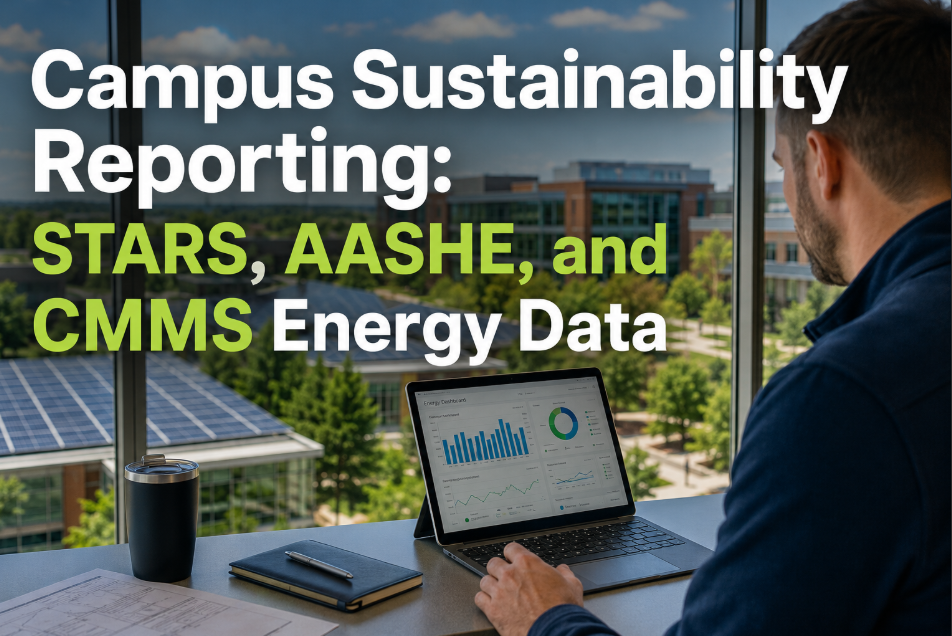
A university sustainability coordinator opens the AASHE STARS reporting portal and faces 17 Operations credits that require asset-level energy data, water consumption breakdowns, building-by-building emissions inventories, and maintenance records tied to efficiency upgrades. The data exists — scattered across utility invoices in accounts payable, spreadsheets on a facilities analyst's desktop, and work order notes buried in an outdated system nobody queries. Assembling this evidence for a single STARS submission takes 4 to 6 months of manual reconciliation. Institutions using a CMMS with integrated energy and asset tracking cut that timeline to 6 weeks — because every meter reading, every efficiency retrofit work order, and every equipment replacement is already tagged to the right building and the right system. If your campus is preparing for STARS submission or annual carbon disclosure, start a free trial of Oxmaint and see how asset-level evidence flows directly into your sustainability reporting workflow.
Campus Sustainability Reporting: STARS, AASHE, and CMMS Energy Data
How universities use CMMS-driven asset and energy data to accelerate STARS submissions, strengthen OP credit evidence, and build audit-ready sustainability records.
What Is STARS and Why Does It Matter for Campus Facilities Teams
STARS — the Sustainability Tracking, Assessment and Rating System — is the most widely adopted framework for measuring campus sustainability in higher education. Developed by AASHE (the Association for the Advancement of Sustainability in Higher Education), STARS evaluates institutions across four categories: Academics, Engagement, Operations, and Planning and Administration. The Operations category is where facilities teams carry 78% of the data burden — energy consumption, water use, waste diversion, building performance, grounds management, and transportation. A STARS Gold or Platinum rating has become a competitive differentiator in student recruitment, with 64% of prospective students saying campus sustainability influences their enrollment decision. But the rating is only as strong as the evidence behind it, and that evidence lives in your maintenance and asset management systems.
Why Most Campuses Struggle with STARS Evidence Collection
The difficulty of STARS reporting is not the framework itself — it is the data infrastructure underneath it. Most universities operate with maintenance records in one system, utility data in another, capital project documentation in a third, and sustainability metrics tracked in spreadsheets maintained by one or two people. When those people leave, the institutional knowledge walks out with them. A 2023 AASHE survey found that 61% of STARS participants cited data collection as their single biggest challenge, and 43% reported that facilities data silos were the primary bottleneck. This is not a sustainability problem — it is an asset management problem.
How a CMMS Closes the STARS Evidence Gap
A CMMS built for campus facilities management transforms sustainability reporting from a periodic data hunt into a continuous evidence stream. Every work order, every asset replacement, every meter reading, and every preventive maintenance task is tagged to a specific building, system, and piece of equipment. When STARS submission time arrives, the data is already organized by the same hierarchy your OP credits require — building by building, system by system. Institutions using Oxmaint for campus maintenance have reduced STARS evidence compilation time by 72% and improved their OP credit scores by an average of 14 points. Want to see how your campus maintenance data maps to STARS credits? Book a demo and we will walk through your specific credit requirements.
Map Your Campus Maintenance Data to STARS OP Credits in Oxmaint
Oxmaint's campus asset hierarchy and reporting engine align directly with AASHE STARS Operations credits. Energy, water, emissions, and equipment data flows from daily maintenance operations into submission-ready evidence — no manual reconciliation required.
STARS Reporting: Manual Process vs CMMS-Integrated Process
| Dimension | Manual / Spreadsheet Process | CMMS-Integrated Process |
|---|---|---|
| Evidence compilation time | 4-6 months of manual reconciliation | 4-6 weeks with pre-mapped reports |
| Building-level energy data | Estimated from whole-campus bills | Sub-metered and asset-tagged by building |
| Efficiency upgrade evidence | Relies on staff memory and project files | Every upgrade is a documented work order |
| Audit defensibility | Weak — data sources hard to trace | Full audit trail from credit to source record |
| Year-over-year consistency | Breaks with staff turnover or method changes | Consistent baseline maintained in system |
| Staff hours per cycle | 300+ hours across multiple departments | 80-100 hours with automated data pulls |
Measurable Outcomes from CMMS-Driven Sustainability Reporting
Which STARS Operations Credits Depend on CMMS Data
Not every STARS credit requires facilities data, but the Operations credits carry the heaviest data requirements — and they are the credits where most institutions leave points on the table. Here is a mapping of the OP credits that benefit most from CMMS integration and the specific data types each credit requires. Universities that connect their CMMS to sustainability reporting consistently score higher on these credits because the evidence is granular, traceable, and complete. If you want to see how Oxmaint maps to your specific STARS version, start a free trial and explore the reporting templates.
Frequently Asked Questions
Can Oxmaint export data in the format AASHE STARS reviewers expect?
Yes. Oxmaint's reporting engine includes pre-configured exports that align with STARS OP credit data fields — building-level energy consumption, water use by source, equipment replacement records, and efficiency upgrade documentation. Each export includes the source reference (work order ID, meter reading timestamp) so AASHE reviewers can trace any data point back to its origin. Want to see the export templates for your STARS version? Book a demo and we will walk through your specific credit requirements.
How does a CMMS help with Scope 1 and Scope 2 emissions calculations?
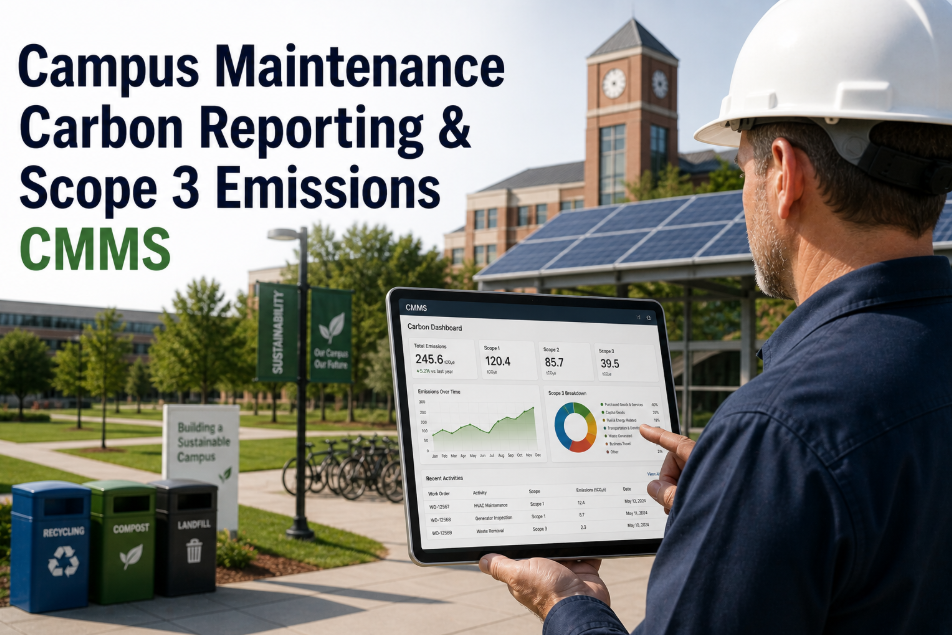
Scope 1 emissions require equipment-level fuel consumption data (natural gas boilers, diesel generators, fleet vehicles) and refrigerant tracking. Scope 2 requires building-level electricity consumption. Oxmaint tracks all of these at the asset level — every boiler has fuel use logged through maintenance records, every chiller has refrigerant charge documented, and every building has utility data linked to its asset profile. This eliminates the estimation methods that weaken most campus GHG inventories.
What if our campus does not have sub-meters on every building?
Many campuses lack full sub-metering. Oxmaint supports both metered and estimated allocation methods — you can assign energy consumption by building based on available sub-meter data, proportional GSF allocation for unmetered buildings, or a hybrid approach. As you add sub-meters over time, the system transitions each building from estimated to metered data. The key is having the allocation methodology documented and consistent, which the CMMS enforces automatically.
How long does it take to set up STARS-aligned reporting in Oxmaint?
Most campuses have their asset hierarchy, building profiles, and initial utility data loaded within 3-4 weeks. The reporting templates for STARS OP credits are pre-configured — you map your buildings and systems to the template fields during onboarding. By the end of the first month, you are capturing maintenance and energy data in a format that flows directly into your next STARS submission. Start a free trial to begin the setup process with your campus data.
Turn Your Campus Maintenance Data Into STARS-Ready Sustainability Evidence
Oxmaint connects every work order, meter reading, and asset record to the buildings and systems your STARS submission requires. Stop spending months reconciling spreadsheets — start your next reporting cycle with data that is already organized, traceable, and audit-ready.
![university-sustainability-initiatives-carbon-tracking-scope-1-2-3-cmms[1]](./manage-post-2k26/uploads/university-sustainability-initiatives-carbon-tracking-scope-1-2-3-cmms[1].png)