The dehumidifier coil in the natatorium Pool Pak unit fails at 5:48 AM on a Tuesday in February. By 7:00 AM, the pool deck humidity has climbed from 55% to 78%. By 9:30 AM, condensation is streaming down the structural steel above the diving well, the women's swim team has been pulled from morning practice, and the campus risk officer is on the phone asking why a $14 million natatorium is unusable two days before a FINA-sanctioned meet. Pool Pak failures in university natatoriums are rarely sudden — they show up in compressor amperage drift, refrigerant pressure trends, and coil temperature deltas weeks before the catastrophic event. A CMMS that tracks these signals against asset-specific thresholds turns a $180K emergency into a $4K scheduled coil clean. Want to see what predictive natatorium maintenance looks like — start a free trial or book a demo with our aquatic facilities team.
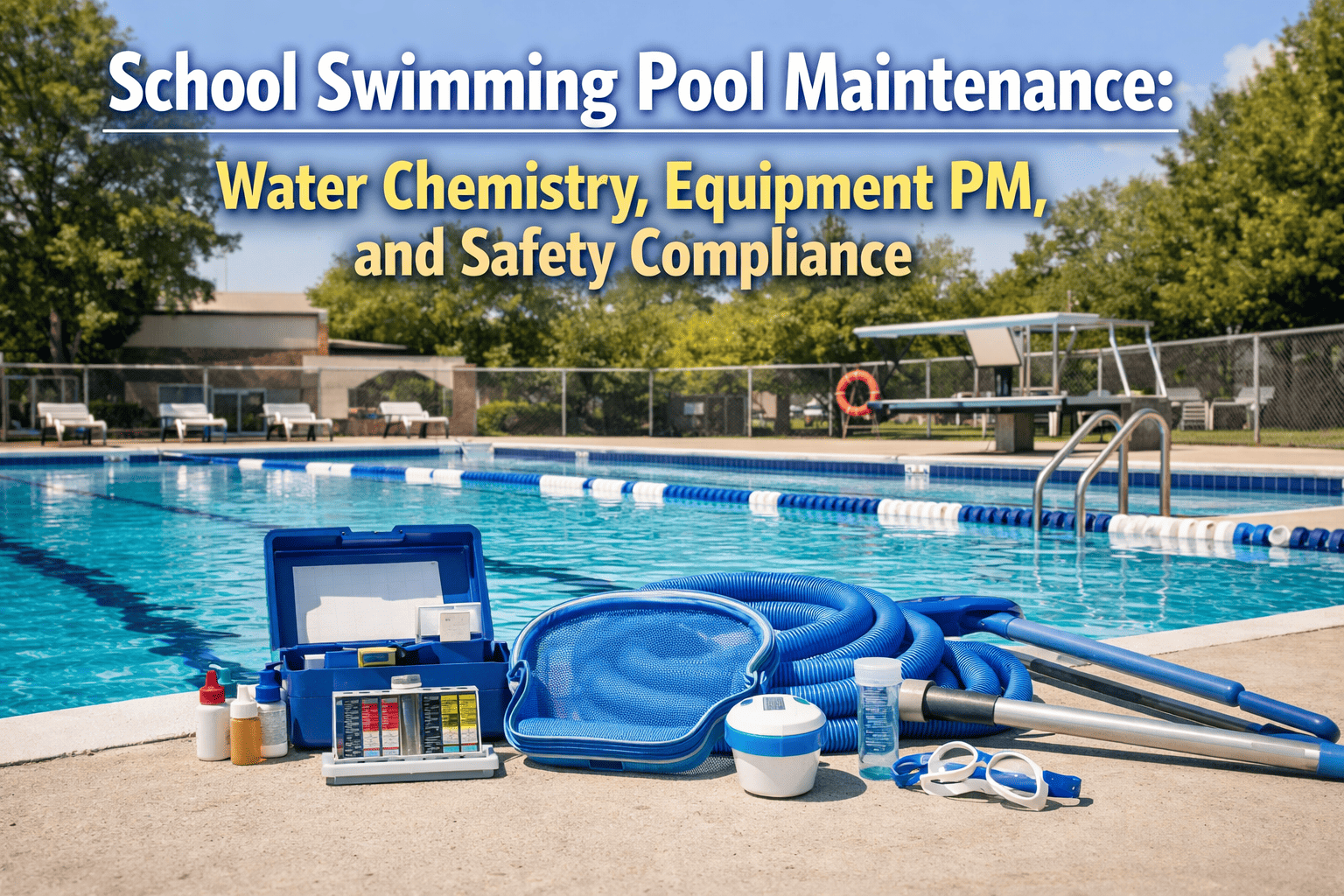
University Natatorium Maintenance: Pool Pak, VFD Pumps, and FINA Compliance
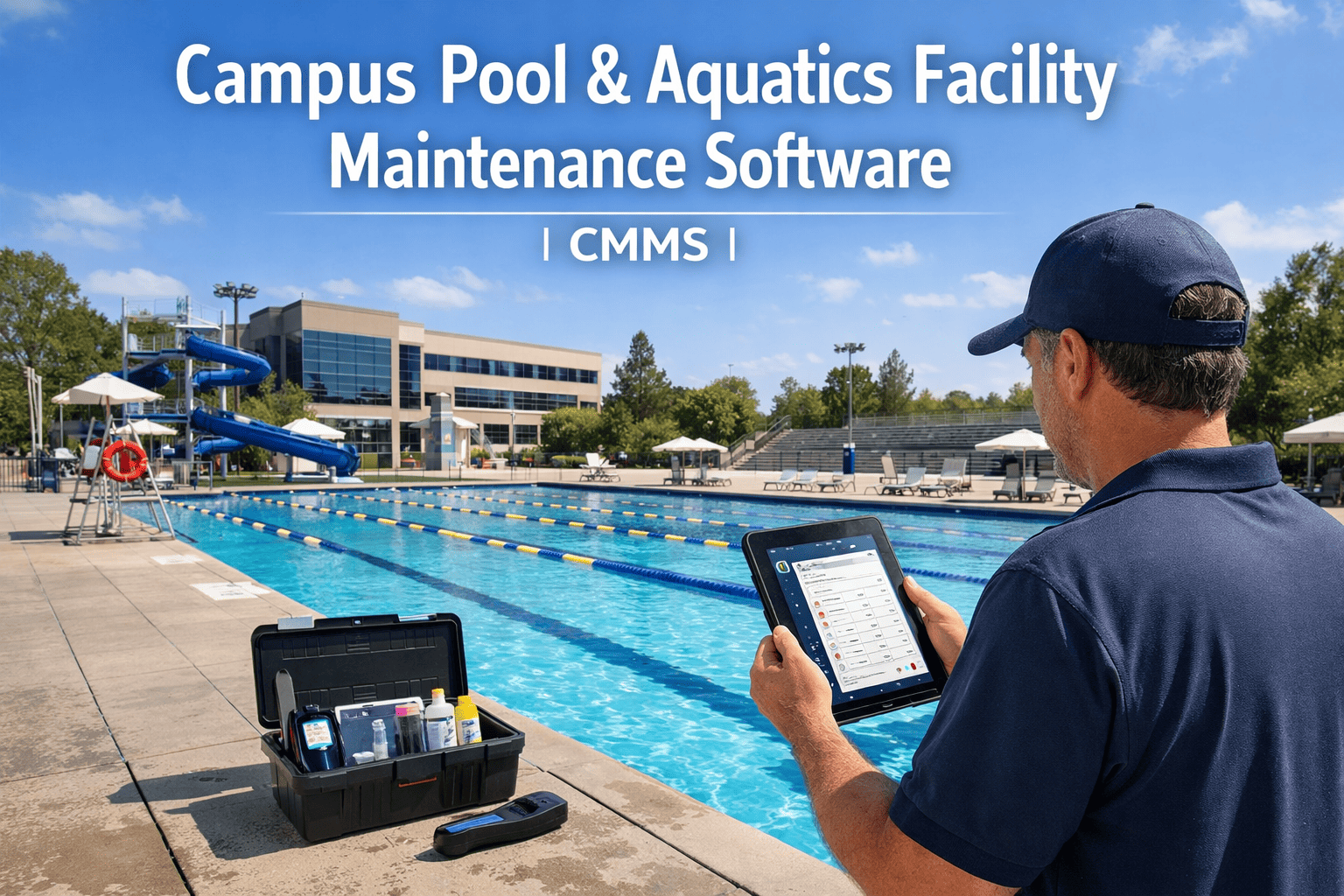
Pool Pak dehumidification, VFD circulation pumps, water chemistry logs, and FINA-aligned compliance — managed in a single CMMS built for university aquatic facilities.
What Natatorium Maintenance Actually Covers
A university natatorium is the most mechanically complex single-room facility on most campuses. Inside one envelope sit a 700,000-gallon pool body, a Pool Pak dehumidification system removing 200+ pounds of moisture per hour, three to five VFD circulation pumps, a UV or ozone sanitation skid, a chemical controller injecting sodium hypochlorite and muriatic acid, a spectator HVAC zone, a deck heating loop, FINA-compliant timing systems, and structural steel that corrodes if humidity drifts above 60%. Natatorium maintenance means keeping every one of these systems within tolerance — and proving it on paper for the campus rec director, the swim coach, the public health inspector, and the FINA technical official. To see how a unified CMMS handles this complexity, book a demo.
Six Critical Natatorium Systems Every CMMS Must Track
Top Pain Points in University Natatorium Operations
How Oxmaint Manages a Modern Natatorium
Reactive Natatorium Operations vs Planned CMMS Operations
| Activity | Reactive Model | Oxmaint Planned Model |
|---|---|---|
| Pool Pak failure cost per event | $180,000 emergency | $4,000 scheduled coil clean |
| Chemistry log compliance rate | 88% (paper logs) | 99.7% (mobile logs) |
| Annual pump energy cost | $70,000 fixed-speed | $28,000 VFD-controlled |
| Humidity excursion response | 4–8 hours | Under 15 minutes |
| FINA meet prep time | 6–10 staff hours | 2 staff hours |
| Structural inspection cycle | Annual binder review | Quarterly condition-scored |
| CapEx forecast accuracy | ±35% | ±8% |
Stop the Next Pool Pak Failure Before It Costs You $180K
Oxmaint monitors compressor amperage, refrigerant pressures, and coil temperatures continuously — so the drift that becomes a catastrophic failure shows up as a scheduled work order weeks in advance. To see it in action, start a free trial or book a demo.
Measurable Outcomes for University Aquatic Facilities
Frequently Asked Questions
Does Oxmaint integrate with Pool Pak and BMS controllers?
Yes. Oxmaint connects to Pool Pak, Desert Aire, and Seresco dehumidifier controllers via BACnet or Modbus, and integrates with Siemens, Honeywell, and Johnson Controls BMS platforms. Sensor data flows into asset records and triggers condition-based work orders. To explore integration for your specific equipment, book a demo.
Can Oxmaint replace paper chemistry logs and still satisfy state health code?
Yes. Oxmaint's mobile chemistry log captures free chlorine, combined chlorine, pH, ORP, temperature, and turbidity with a digital technician signature and timestamp. The exported PDF is accepted by state public health departments across the US that allow electronic record-keeping for aquatic facilities. Start a free trial to see the chemistry log workflow.
How does Oxmaint help meet FINA competition certification requirements?
Oxmaint provides pre-built FINA meet readiness checklists covering lane line tension, touch pad calibration, starting block torque, water depth verification at racing distances, water clarity, and timing system pre-meet test. Each completed checklist is exportable for the technical official's pre-meet review.
What does a typical university natatorium implementation look like?
Most university natatoriums are live on Oxmaint within 3–5 weeks: asset import for Pool Pak, pumps, chemical feed, UV, structural envelope, and FINA equipment in week 1; PM template configuration and BMS integration in weeks 2–3; mobile staff rollout in week 4. To scope your facility, book a demo.
Bring Your University Natatorium Under Predictive Control
Pool Pak condition monitoring, VFD pump optimization, mobile chemistry logs, FINA meet readiness, and 25-year CapEx forecasting in one CMMS built for university aquatic facilities. No heavy implementation fees, no long onboarding — just a working natatorium operating discipline within weeks.