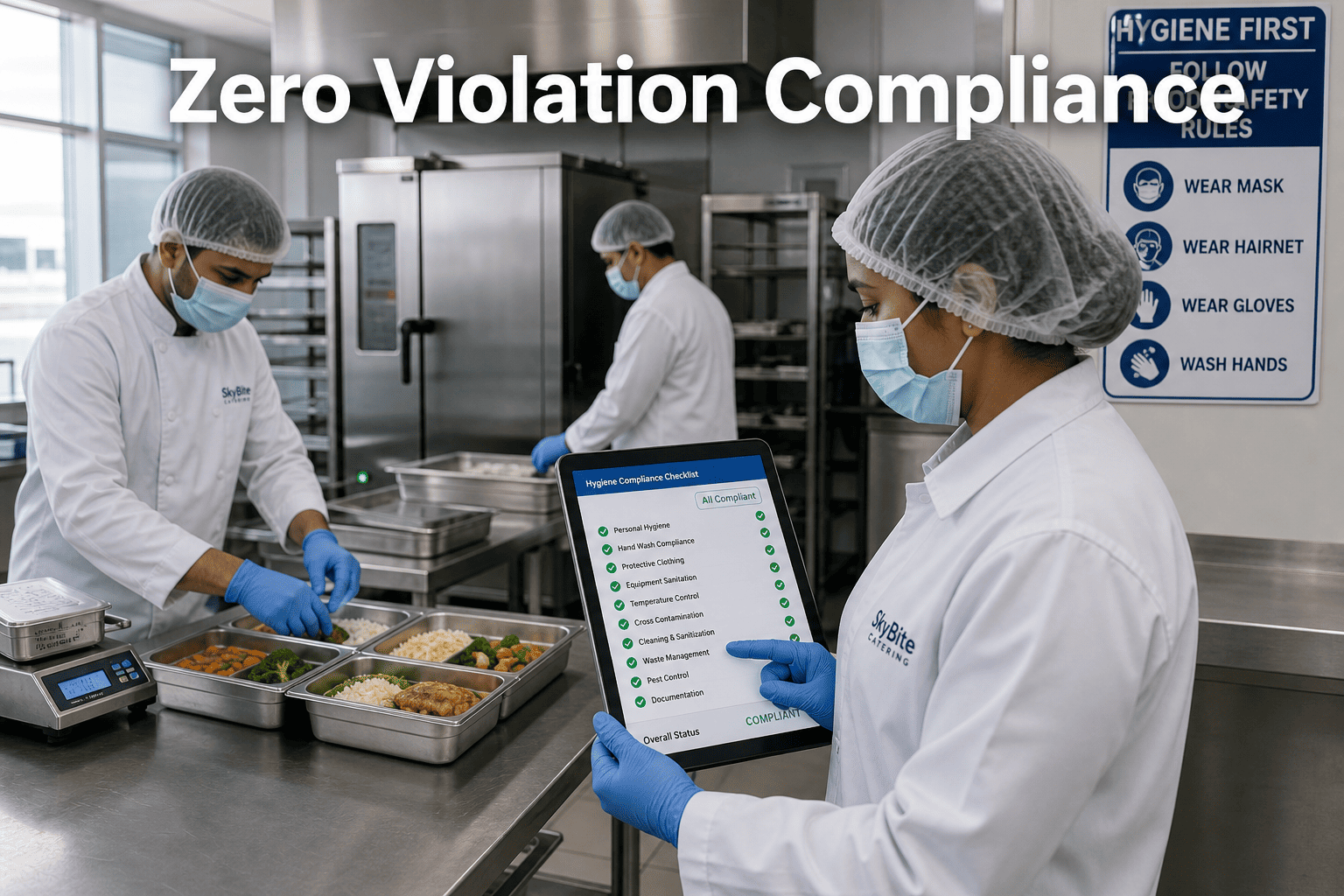
A mid-sized regional airport in the southeastern United States operates five food service tenants across two terminals — three quick-service restaurants, one sit-down cafe, and one grab-and-go kiosk. In December 2023, the local health department conducted unannounced inspections across all five operators and issued seventeen critical violations: improper cold-holding temperatures on pre-made sandwiches, inadequate hand-washing compliance, pest evidence in dry storage, and missing temperature logs across multiple shifts. The airport facilities director received the inspection reports by fax forty-eight hours after the inspectors left. By that time, four of the five tenants had already served another 9,600 meals to departing passengers. The airport authority had no centralized system tracking daily sanitation compliance, equipment temperature logs, or pest control service schedules. Six months later — after deploying OxMaint CMMS with integrated food safety checklists, automated temperature monitoring alerts, and contractor credential tracking — the same five tenants passed a follow-up inspection with zero critical violations. Airport food facilities managing health compliance without digital sanitation tracking run this exact risk every shift — and most health departments will not give advance notice before the next inspection. Book a demo to see how OxMaint operationalizes food safety compliance with scheduled PM on hoods, walk-ins, and grease traps logged against health department inspection cycles.
Airport Food Safety Compliance — CMMS-Driven Sanitation
Zero Health Violations, Zero Surprises
Daily temp logs · hood suppression PM · pest control schedules · grease trap service · inspection-ready audit trails
77%
Of restaurants at Reagan National had violations
USA Today review, 10 US airports
42%
Critical violations at Seattle-Tacoma Airport
Health inspection audit, 2024
70%
Of diners avoid restaurants with health violations
Consumer behavior study, 2024
48M
Annual foodborne illness cases in US
CDC — 128,000 hospitalizations, 3,000 deaths
What Is Airport Food Facility Health Inspection Compliance?
Airport food facility health inspection compliance is the practice of maintaining continuous adherence to local health department sanitation standards across all food service operations within airport terminals — restaurants, cafes, grab-and-go kiosks, airline catering kitchens, and employee cafeterias — such that unannounced inspections result in zero critical violations and passing grades that protect both public health and the airport authority's operational license. Unlike standalone restaurants, airport food operators face jurisdictional complexity: county health departments regulate terminal concessions, USDA FSIS oversees airline catering facilities serving international flights, and TSA enforces sterile-area food service protocols simultaneously.
The operational challenge is that airport food service runs on shift-based contractor labor with high turnover, shared equipment across multiple tenants, and compressed prep spaces where cross-contamination risk is structural. A quick-service tenant operating four gates across two concourses has eight separate walk-in coolers, twelve hood suppression systems, and forty food-contact surfaces that must meet temperature, cleaning, and maintenance standards every single shift. When inspectors arrive unannounced and find expired temperature logs, evidence of pest activity, or cold-holding violations on grab-and-go sandwiches, the airport authority — not just the tenant — faces reputational and regulatory exposure. Start a free trial to see how OxMaint schedules hood PM, tracks grease trap service, and logs daily temperature compliance with mobile checklists that close the loop between facility management and tenant food safety, or book a demo with our airport operations team.
The Six Critical Food Safety Systems in Airport Terminals
A passing health inspection at an airport food facility depends on six operational systems that must run flawlessly across every shift, every tenant, and every piece of shared infrastructure. OxMaint structures airport food compliance around these six pillars.
01
Temperature Monitoring and Logging
Walk-in coolers, hot-holding cabinets, and grab-and-go display cases must maintain documented temperature compliance. OxMaint mobile checklists prompt shift supervisors to log temps every four hours with photo evidence.
02
Hood Suppression System PM
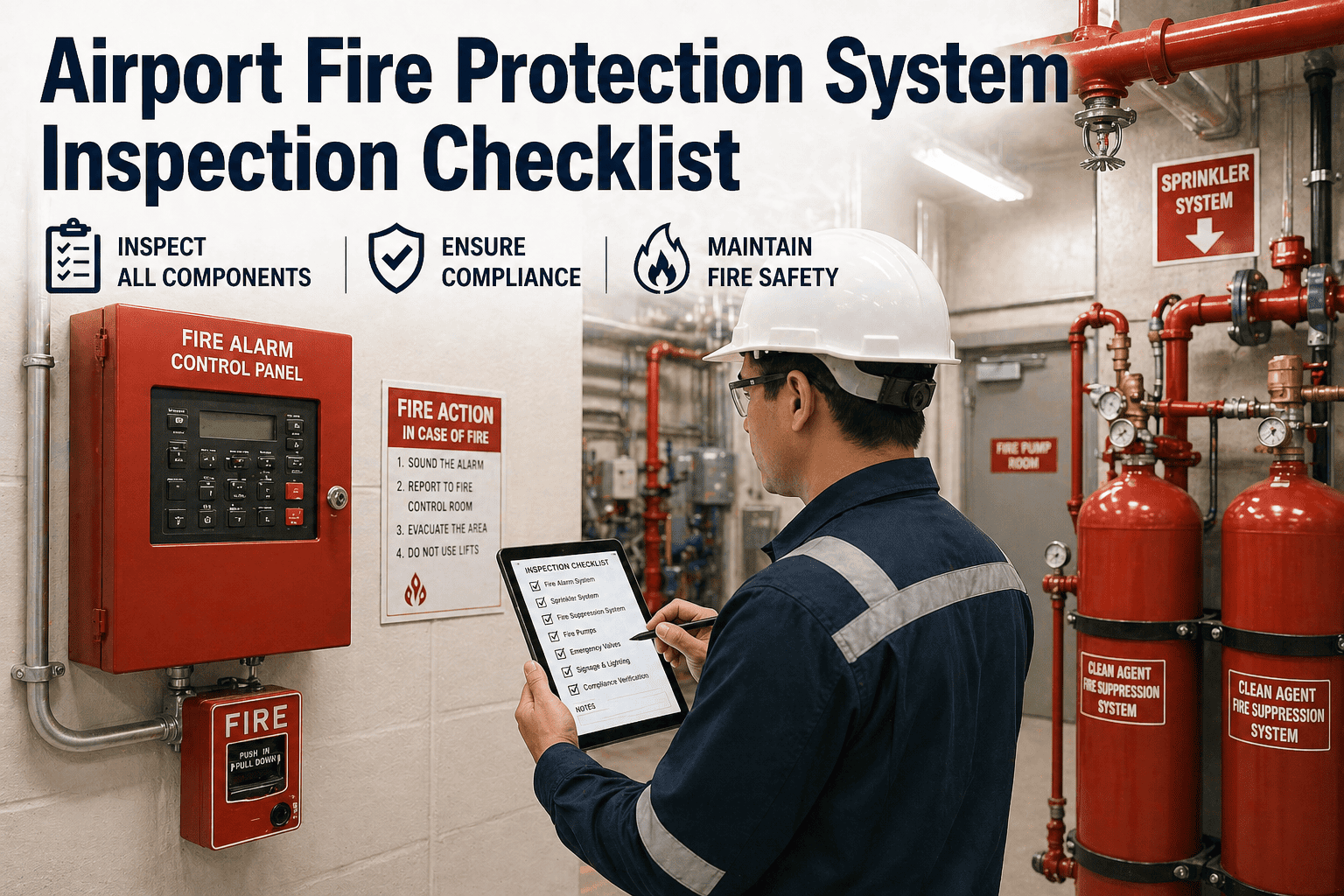
Commercial kitchen hoods require quarterly cleaning and semi-annual suppression system inspection per NFPA 96. OxMaint schedules contractor PM and flags overdue service before health inspectors cite violations.
03
Grease Trap Service and Compliance
Grease interceptors must be pumped monthly or quarterly depending on capacity. OxMaint tracks service dates, contractor invoices, and waste disposal manifests — proving compliance when inspectors ask for records.
04
Pest Control Monitoring
Monthly pest control service must include inspection logs, bait station placement maps, and corrective action records. OxMaint uploads pest reports automatically and alerts when evidence is found in dry storage.
05
Hand Sink and Sanitation Station Availability
Every food prep area requires functional hand sinks with hot water, soap, and paper towels. OxMaint PM schedules prevent sink outages and log daily functionality checks during opening and closing shifts.
06
Food Handler Certification Tracking
Health departments require proof that all food handlers hold current certifications. OxMaint stores cert documents per employee, sends expiry alerts 60 days in advance, and blocks assignment of lapsed staff to food prep.
Why Airport Food Facilities Fail Health Inspections
The violation patterns are predictable — and almost always trace back to the absence of structured PM scheduling, real-time compliance tracking, or centralized record-keeping that inspectors can verify on demand.
Missing or Incomplete Temperature Logs
Paper logs taped to walk-in cooler doors go unfilled for days. Inspectors flag missing records as critical violations because the facility cannot prove safe cold-holding between shifts.
Overdue Hood and Grease Trap Service
Hood suppression PM scheduled quarterly gets delayed eight months because no one tracks the service calendar. Inspectors cite fire code violations and order immediate remediation before reopening.
Pest Evidence in Dry Storage
Mice droppings found in dry goods storage trigger automatic critical violations and immediate closure orders. The pest control contractor was there three weeks ago — but the facility has no logged inspection report.
Improper Food Storage and Cross-Contamination
Raw chicken stored above ready-to-eat salads in a shared walk-in cooler. Inspectors cite cross-contamination risk and require corrective action training for all staff before the follow-up inspection.
Expired Food Handler Certifications
Three employees working the breakfast shift have certifications that expired four months ago. Health department issues violation notices and requires proof of recertification within fourteen days.
No Centralized Compliance Records
Inspectors ask for pest control logs and grease trap service invoices. The facility manager searches email threads and file cabinets for twenty minutes — and cannot produce complete records for the past six months.
Each violation compounds the next. A single critical finding triggers a follow-up inspection within fourteen to forty-five days. Three critical violations in one year can result in operating license suspension. Book a demo to walk through how OxMaint centralizes every compliance record, or start a free trial and configure your first food safety PM schedule today.
How OxMaint Operationalizes Airport Food Safety Compliance
OxMaint structures airport food facility management so that every health department requirement — temperature logs, hood PM, pest control, grease trap service, and certification tracking — runs on scheduled work orders with mobile checklist completion and automatic expiry alerts.
Mobile Temperature Logging Checklists
Shift supervisors open the OxMaint mobile app and complete temperature checks for all walk-ins, hot-hold cabinets, and grab-and-go cases. Photo evidence attaches automatically. Missing checks trigger alerts to facility management.
Scheduled Hood and Grease Trap PM
Hood suppression systems and grease traps are logged as assets with PM schedules. OxMaint auto-generates quarterly work orders, assigns to contractors, and flags overdue service seventy-two hours before the deadline.
Pest Control Service Documentation
Upload monthly pest control inspection reports, bait station maps, and corrective action records. OxMaint stores every report against the service schedule and alerts when evidence of pest activity is documented.
Food Handler Certification Expiry Tracking
Store employee food handler certificates in OxMaint. The system sends alerts sixty and thirty days before expiry, blocks work order assignment to lapsed staff, and generates compliance reports for health inspections.
Inspection-Ready Audit Trails
When health inspectors arrive and request six months of temperature logs, hood service records, and pest control reports, OxMaint exports the complete audit pack in under three minutes — timestamped, photo-evidenced, and signed.
Tenant-Specific Compliance Dashboards
Each food service tenant logs into their portal and sees their open PM tasks, overdue certifications, and upcoming health department deadlines — driving accountability without airport authority micromanagement.
Manual Records vs CMMS-Driven Compliance — Side by Side
Below is a like-for-like comparison of how an airport food facility operating five tenant restaurants manages health inspection compliance with paper-based records versus OxMaint CMMS integration.
| Compliance Task |
Paper-Based System |
OxMaint CMMS |
| Daily temperature logging |
Paper log on cooler door — often incomplete |
Mobile checklist with photo — alerts on missing entries |
| Hood suppression PM scheduling |
Manual calendar reminder — frequently missed |
Auto-generated quarterly work orders — contractor dispatch |
| Grease trap service tracking |
Invoices in email — no expiry alerts |
Scheduled PM with contractor sign-off and invoice upload |
| Pest control documentation |
Printed reports filed in binder — often lost |
Digital upload with automated storage and retrieval |
| Food handler certification tracking |
Scanned PDFs in shared drive folder |
Employee profiles with expiry alerts 60 and 30 days out |
| Health inspection audit pack assembly |
2–3 hours searching files and emails |
One-click export — complete in under 3 minutes |
| Cross-tenant compliance visibility |
None — each tenant manages independently |
Airport authority sees all tenants on single dashboard |
| Follow-up inspection readiness |
Manual verification of corrective actions |
Work order closeout with photo proof and contractor sign-off |
The economic argument is decisive — a single failed health inspection with temporary closure costs $15,000 to $40,000 in lost revenue per tenant per day. Start a free trial to build your food facility compliance structure, or book a demo to see a live walkthrough of mobile temperature logging and hood PM scheduling.
Results — What Airport Food Facilities Report After CMMS Deployment
Below are the measured outcomes airport food facilities using OxMaint for health compliance management documented in the first twelve to eighteen months post-deployment. These are operational numbers validated during health department follow-up inspections.
Zero
Critical violations in follow-up inspection
From 17 violations six months prior
94%
Temperature log completion rate
Up from 62% with paper logs
100%
On-time hood and grease trap PM
Automated scheduling eliminates missed service
3 min
Inspection audit pack assembly time
vs 2–3 hours manual file searching
$124K
Avoided closure cost per critical violation prevented
Mid-sized airport, five tenants, three-day closure
100%
Food handler certification compliance
Expiry alerts prevent lapsed staff from working
Frequently Asked Questions
Can OxMaint track temperature compliance for multiple food service tenants in the same terminal?
Yes — each tenant is configured as a separate entity with their own walk-in coolers, hot-hold cabinets, and grab-and-go cases logged as individual assets. Temperature checklists run on mobile devices per shift, and the airport authority sees aggregated compliance across all tenants while each tenant sees only their own data.
How does OxMaint handle hood suppression PM scheduling and contractor coordination?
Hood suppression systems are logged with NFPA 96 PM intervals — quarterly cleaning and semi-annual system inspection. OxMaint auto-generates work orders on schedule, assigns to the contracted hood service provider, and sends alerts if service is overdue. Contractor uploads inspection reports and photos directly into the system for health department verification.
Can OxMaint generate an inspection-ready audit pack when health inspectors arrive unannounced?
Yes — OxMaint exports temperature logs, hood PM records, grease trap service invoices, pest control reports, and food handler certifications in a single PDF package. The export includes timestamps, photo evidence, contractor sign-offs, and employee signatures. Generation time is under three minutes versus two to three hours manual assembly.
How does OxMaint prevent expired food handler certifications from going unnoticed?
Food handler certificates upload to employee profiles in OxMaint with expiration dates. The system sends email and SMS alerts sixty days and thirty days before expiry. When a certification lapses, OxMaint blocks that employee from being assigned to food prep work orders until updated certification is uploaded and verified.
Airport Food Safety Compliance — OxMaint CMMS
Your Next Health Inspection Is Unannounced. Are Your Temperature Logs Complete?
OxMaint turns airport food compliance from a paper-based gamble into a digital system where every hood PM, every grease trap service, and every temperature check is logged, timestamped, and inspection-ready.