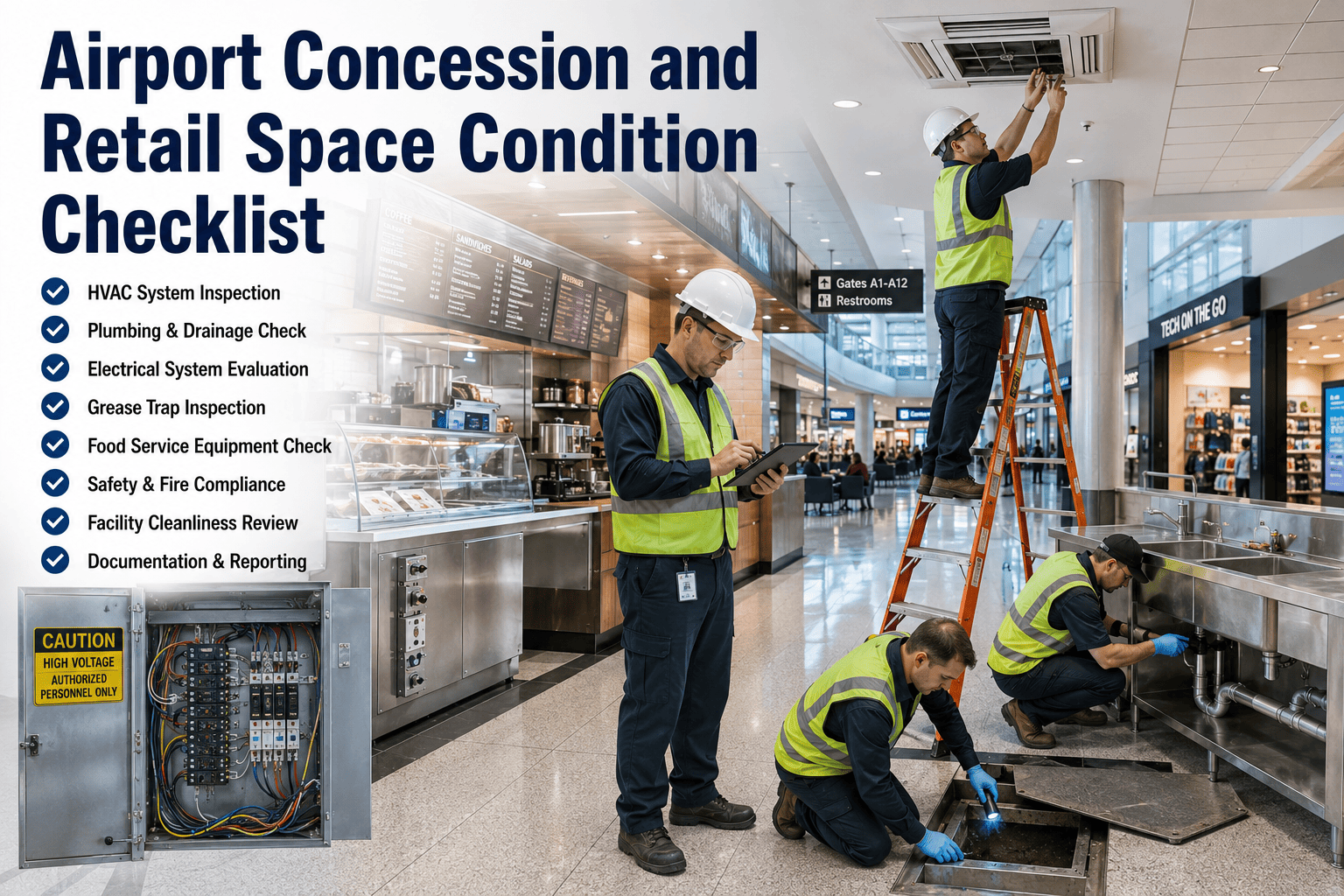
Airport Concession and Retail Space Inspection Checklist
By Jack Edwards on May 6, 2026
Airport concession and retail spaces operate under one of the most demanding compliance environments in commercial food service — health department inspections, airport authority tenant audits, fire marshal oversight, and FOG (fats, oils, grease) discharge permit requirements all converge on a single kitchen. At Miami International Airport alone, concessionaires must maintain a Sanitation Plan aligned to MDAD Operational Directive OD-21-01, submit grease interceptor maintenance logs on demand, and document exhaust hood cleaning per NFPA 96 — with pest control services required at minimum monthly. A single high-priority violation during a health department inspection can trigger immediate closure, and unlike a standalone restaurant, a closed airport concession cannot simply reopen tomorrow: it affects terminal revenue, passenger experience scores, and lease compliance simultaneously. The structured inspection checklist below covers every system your facilities team and concession managers need to track — HVAC, grease management, plumbing, electrical, fire suppression, and tenant condition — start a free trial to schedule and track every concession inspection cycle in Oxmaint across your full terminal portfolio, or book a demo and we will map your concession spaces and tenant compliance schedules in one session.
Airport Concession Maintenance Platform
Close Health Code and Tenant Compliance Gaps Before the Inspector Arrives
Auto-scheduled grease trap, hood cleaning, and pest control inspection cycles
Tenant compliance documentation retrievable for airport authority audits in minutes
5–10 year CapEx forecasting for HVAC, plumbing, and commercial kitchen equipment
No heavy implementation. Works across multi-terminal concession portfolios. Live in days, not months.
High-volume airport food concessions require grease trap pump-outs every 30–90 days depending on volume and local FOG permit requirements
1–12
Months: NFPA 96 Hood Cleaning
NFPA 96 mandates exhaust hood cleaning every 1–12 months based on cooking volume — high-volume airport fryers require quarterly service minimum
Monthly
Pest Control Minimum
Airport concession standards such as MDAD OD-21-01 require pest control services at minimum monthly — evidence of pests triggers immediate health closure
3+
High-Priority Violations = Closure
Three or more high-priority health violations — grease buildup, pest evidence, improper temperatures — can trigger emergency closure orders on first inspection
What Is Airport Concession Space Inspection?
Airport concession space inspection is the systematic evaluation of all physical, mechanical, and sanitation conditions within food service, retail, and commercial tenant spaces — covering the full scope of systems that affect health compliance, fire safety, structural integrity, and airport lease obligations. Unlike standard commercial property inspections, airport concession inspections operate under a layered authority structure: the local health department sets food safety standards, the airport authority enforces tenant design and maintenance standards, the fire marshal governs suppression and egress, and environmental agencies regulate grease interceptor discharge compliance.
Food and beverage concessions face the most intense scrutiny — kitchen exhaust systems, grease interceptors, commercial cooking equipment, cold storage, and plumbing all require documented maintenance cycles that must be available for unannounced health inspections at any time. Retail concessions face a different but equally structured set of requirements: HVAC performance, electrical safety, ADA compliance, storefront and signage condition, and structural lease boundary maintenance. Both categories operate within the airport authority's Tenant Design Standards — documents like Minneapolis-St. Paul's MAC guidelines and Salt Lake City International's tenant design standards specify mandatory maintenance schedules that tenants must submit, including grease trap maintenance, duct cleaning, and equipment maintenance contractors.
The consequences of gaps are sharper in airports than standalone retail: a failed health inspection closes the unit but the space remains a dead storefront visible to tens of thousands of daily passengers — affecting terminal brand perception, lease revenue, and flight-day passenger satisfaction scores that airports track closely. A structured digital inspection program that auto-schedules every compliance cycle is the operational baseline that separates proactive airport concession management from crisis response — start a free trial to build your full concession inspection schedule in Oxmaint this week.
Eight Systems Every Airport Concession Inspection Must Cover
01
Grease Trap and FOG Management
Monthly inspection minimum; pump-out every 30–90 days by licensed hauler. FDA Food Code Section 5-402.13 and EPA 40 CFR 403 require documented maintenance logs available on demand. Missed pump-outs cause FOG blockages, sewer overflows, and wastewater permit violations.
02
Kitchen Exhaust Hood and NFPA 96
NFPA 96 requires exhaust hood, plenum, ductwork, and rooftop fan cleaning every 1–12 months based on cooking type and volume. High-volume fryer operations require quarterly service. Certification sticker from licensed contractor must remain posted on the unit.
03
HVAC and Ventilation
Airport HVAC systems often mandate outdoor air rates 30% above ASHRAE 62.1 minimum. Tenant units must maintain filter changes, coil cleaning, and condensate drain maintenance on documented schedules submitted to the airport authority's concessions team.
04
Cold Storage and Temperature Control
Walk-in coolers must hold below 41°F; freezers below 0°F. Health inspectors require twice-daily temperature logs and check door seals, evaporator coil condition, and drainage sanitation. Refrigerant compliance and EPA Section 608 certification apply to all CFC-containing systems.
05
Fire Suppression and Life Safety
Ansul or equivalent kitchen hood suppression systems require semi-annual inspection by certified contractor per NFPA 17A. Portable extinguishers require annual inspection. Emergency egress must remain unobstructed at all times — a critical lease compliance requirement at all airport authorities.
06
Plumbing and Drains
Floor drains in commercial kitchens accumulate grease and biological material rapidly — daily scrubbing and periodic high-pressure drain cleaning are required to prevent pest harborage. Hand-washing sinks must be accessible, stocked, and clearly designated at all times during health inspections.
07
Electrical Safety and Compliance
Commercial kitchen electrical systems require annual GFCI testing, panel labeling verification, and equipment cord condition inspections. Airport authorities conduct periodic tenant electrical audits — improper modifications to distribution panels or service entries are lease violations subject to default notices.
08
Storefront and Tenant Space Condition
Airport lease agreements specify maintenance standards for storefront, signage, flooring, ceilings, and fixtures. Quarterly airport authority walkthrough audits assess tenant condition against lease maintenance schedules — deficiencies generate cure notices with cure periods that, if missed, trigger lease remedies.
Most airport concession compliance failures are not caused by a single critical event — they are caused by missed routine maintenance cycles that compound silently until an inspector arrives unannounced.
Six Pain Points That Break Airport Concession Compliance Programs
Grease Trap Overflow and FOG Violations
Grease traps should be pumped when solids reach 25–50% of trap capacity — in high-volume airport units this can happen in under 30 days. Facilities tracking pump-out cycles on paper or verbal reminder systems routinely allow traps to overflow, causing sewer line blockages, wastewater permit violations, and pest harborage that triggers health code action across multiple adjacent tenant units.
Hood Cleaning Certification Gaps
NFPA 96 requires hood cleaning on a documented schedule with certification posted on the unit. Airport concessions operating at high cooking volumes without quarterly hood service accumulate grease in ducts and rooftop fans that creates direct fire risk — and a missing or expired certification sticker is an automatic critical violation during fire marshal inspections regardless of actual duct condition.
Pest Evidence in Food Zones
Evidence of rodents or roaches is the single most damaging health inspection finding — it results in immediate closure orders and public posting of results in many jurisdictions. Airport concession pest programs managed reactively (call the exterminator when you see something) fail consistently: by the time visual evidence appears, infestation has been established for weeks in wall voids, under equipment, and in drain lines.
Missing Maintenance Documentation
Airport authorities require tenants to maintain and submit maintenance schedules for duct cleaning, equipment maintenance, and grease trap service. Health departments require maintenance logs available on demand. Facilities using paper logs stored at the unit level cannot produce complete documentation during unannounced inspections — the absence of records is treated as evidence of non-compliance, not uncertainty.
Lease Cure Notice Accumulation
Airport authority walkthrough audits generate deficiency notices with cure periods — typically 30 days. Facilities teams managing multiple concession units across a terminal often track these notices in email threads, losing visibility into which units have open deficiencies approaching their cure deadline. Missed cure periods escalate to lease default proceedings that are far more costly than the original maintenance item.
Cold Storage Temperature Failures
Walk-in cooler failures that go undetected overnight result in product loss, potential food safety incidents, and health code violations for improper temperature storage. Concessions relying on manual twice-daily temperature logging miss the 2am compressor fault that warms a unit from 38°F to 55°F over six hours — resulting in a full product discard and health department notification requirement.
Airport Concession and Retail Space Inspection Checklist
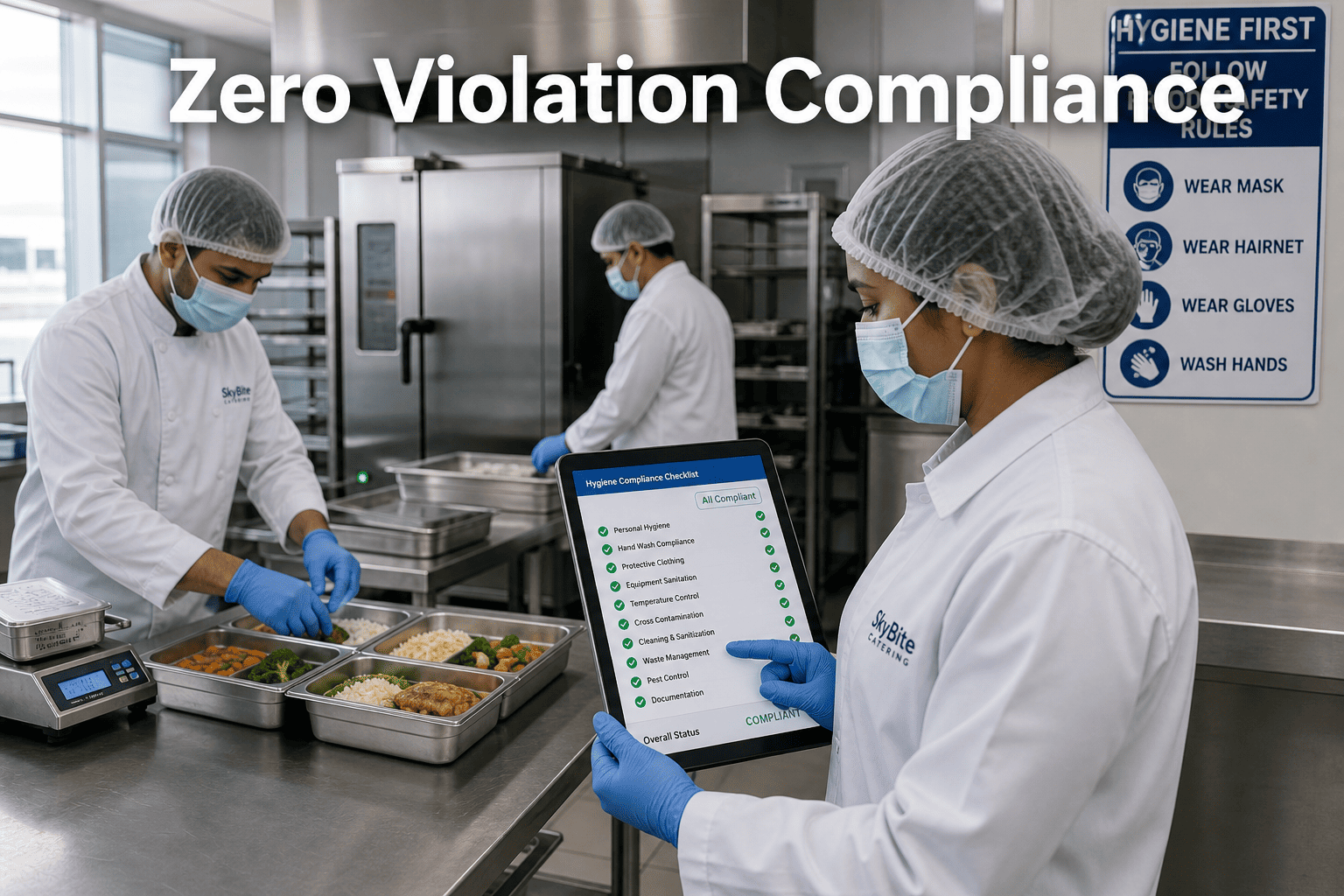
This checklist is organized by system and aligned to FDA Food Code 2022, NFPA 96, NFPA 17A, EPA 40 CFR 403, ASHRAE 62.1, and typical airport authority tenant maintenance standards. Food and beverage concession sections should be completed by the facilities team or designated compliance manager. Retail-specific sections apply to non-food tenants. All completed inspections should produce timestamped, signed records with photo attachments for deficiencies.
Section 1
Grease Trap and FOG Management
Monthly inspection minimum | Pump-out: every 30–90 days by licensed hauler | F&B concessions only
Monthly Visual and Functional Inspection
Pump-Out Documentation (Per Service Event)
Section 2
Kitchen Exhaust Hood and Fire Suppression (NFPA 96)
Floor drains: daily scrub | Drain cleaning: monthly minimum | Hand sink audit: per shift
Commercial Kitchen Plumbing
Hand-Washing Facilities (Health Code Critical)
Section 5
Electrical, Lighting, and Structural Compliance
Frequency: Monthly walk-through | Annual: panel and GFCI testing | Per lease: signage and storefront condition
Electrical Safety
Lighting, Storefront, and Tenant Lease Compliance
Section 6
Pest Control and Food Safety Compliance
Pest control service: monthly minimum | Self-inspection: weekly | Temperature logs: twice daily (food)
Pest Prevention and Monitoring
Food Safety Documentation
Facilities teams managing 10+ concession units that shift to digital inspection scheduling report 95%+ compliance cycle completion — versus below 60% for paper-based multi-unit programs.
How Oxmaint Solves Airport Concession Compliance Gaps
Multi-Cycle Compliance Scheduling
Manages simultaneous grease trap (30–90 day), hood cleaning (quarterly to annual), pest control (monthly), and suppression system (semi-annual) cycles across every concession unit — with automated alerts before each due date and escalation if tasks go overdue.
Health Inspection–Ready Documentation
Every inspection produces timestamped records with technician sign-off, photo attachments, and maintenance log entries — satisfying health department on-demand document requirements and airport authority audit requests without manual binder assembly.
Deficiency and Cure Notice Tracking
Airport authority walkthrough deficiency notices are logged as work orders in Oxmaint with the cure deadline, assigned owner, and completion verification — so cure periods approaching expiry trigger automatic alerts before they escalate to lease default proceedings.
Multi-Unit Terminal Portfolio View
Structures your concession portfolio as Terminal > Concourse > Unit, with each space's inspection schedule, open deficiencies, and compliance status visible in a single dashboard — eliminating the blind spots that allow individual units to fall behind undetected.
Contractor and Vendor Integration
Assigns hood cleaning, grease trap pump-out, and pest control tasks to specific licensed contractors with certification tracking, service report attachment, and completion verification — maintaining the complete vendor compliance trail required by airport authorities and health departments.
Automatic Work Orders from Findings
Failed checklist items — pest evidence, grease trap over threshold, hood certification expired, temperature exceedance — automatically generate corrective work orders with priority, assigned crew, and target date, closing the gap between finding a problem and scheduling its fix.
Reactive vs. Planned: Airport Concession Compliance Compared
Compliance Area
Reactive Approach (Paper-Based)
Planned Approach (Oxmaint CMMS)
Grease Trap Pump-Out
Scheduled by memory or posted note; overflows discovered when drain backs up or inspector arrives
Auto-scheduled per volume threshold; hauler manifest filed to asset record; full FOG compliance log on demand
Hood Cleaning Certification
Scheduled annually regardless of volume; expired sticker discovered during fire marshal inspection
Frequency set by cooking volume; 30-day advance alert; certification scan attached to work order; never expires undetected
Pest Control
Monthly contractor visits tracked in paper service log stored at unit; binder missing during health inspection
Monthly service triggers auto work order; contractor report attached digitally; full 24-month history retrievable in seconds
Authority Deficiency Notices
Tracked in email; cure deadlines missed when facilities manager is on leave; escalates to lease default
Each notice logged as a work order with cure date alert; assigned owner; escalation to manager if not resolved 5 days before deadline
Cold Storage Monitoring
Twice-daily manual temperature logs; overnight failures undiscovered until morning shift
Temperature logs digitized with timestamped entries; exceedance flags generate immediate alert to facilities manager
Audit Documentation
Paper logs in binders at unit; retrieval takes hours; gaps found when auditor is already on site
Complete inspection history per unit retrievable in one click; compliance summary report generated in minutes
ROI of Structured Airport Concession Inspection Programs
95%+
Inspection Completion Rate
Digital CMMS-managed concession programs achieve 95%+ on-time compliance cycle completion vs. below 60% for paper-based multi-unit programs
$0
Emergency Closure Cost
Average daily revenue loss per closed airport concession unit — prevented entirely by proactive compliance programs that catch violations before inspector visits
10 min
Audit Report Generation
Average time to generate complete health department or airport authority compliance report with Oxmaint vs. hours of manual document assembly
30 days
Cure Period Protection
Typical airport authority cure window for deficiency notices — Oxmaint tracks every notice with deadline alert so no cure period expires unresolved
How often do airport concession grease traps need to be pumped out?
Grease trap pump-out frequency depends on trap capacity, cooking volume, and local FOG control program requirements — but high-volume airport food concessions typically require service every 30–90 days. The universal standard is that traps should be pumped before solids accumulate to 25% of trap depth, regardless of calendar schedule. Maryland Aviation Administration guidance requires weekly inspection of grease traps and pump-out whenever the trap is more than 50% full of solids. FDA Food Code Section 5-402.13 requires properly maintained grease traps as part of food service sanitation compliance. All pump-outs must be performed by a licensed waste hauler, and waste manifests must be retained as documentation for health department and wastewater permit compliance. Oxmaint auto-schedules pump-out reminders and attaches hauler manifests to the digital asset record, maintaining a complete FOG compliance trail available on demand.
What does NFPA 96 require for airport concession kitchen exhaust hood cleaning?
NFPA 96 (Standard for Ventilation Control and Fire Protection of Commercial Cooking Operations) requires that the entire exhaust system — including the hood canopy, plenum, ductwork, and rooftop exhaust fan — be cleaned by a qualified contractor at intervals determined by the type and volume of cooking. High-volume operations using solid fuel or wok cooking require monthly cleaning; high-volume fryer and charbroiler operations require quarterly cleaning; moderate-volume operations require semi-annual cleaning; and low-volume operations require annual cleaning. The certification sticker from the licensed contractor must remain posted on the hood after each service, showing the cleaning date and next scheduled service. At airport food concessions, many airport authorities require tenants to submit and maintain documented hood cleaning schedules as part of their lease compliance obligations.
What maintenance documentation do airport authorities require from concession tenants?
Airport authority requirements vary by operator, but major airports following Tenant Design Standards (such as Minneapolis-St. Paul MAC and Salt Lake City International) require concessionaires to submit and maintain documented schedules for duct cleaning, equipment maintenance, and grease trap maintenance — including the contractor names and service frequencies. Health departments require maintenance logs for grease traps, temperature records for cold storage, sanitizer concentration logs, and pest control service records — all available on demand during unannounced inspections. Fire marshals require hood cleaning certification stickers and fire suppression inspection reports. Digital CMMS platforms like Oxmaint centralize all of this documentation against each unit's asset record, enabling instant retrieval for any inspection type without manual binder assembly or cross-referencing separate files.
How can CMMS software help manage compliance across multiple airport concession units?
Managing compliance across 10, 20, or 50+ concession units in a multi-terminal airport portfolio is fundamentally a scheduling, documentation, and visibility problem that CMMS software is designed to solve. Oxmaint auto-schedules all compliance cycles — grease trap pump-outs, hood cleaning, pest control, suppression system inspections — per unit, with advance alerts before each due date and automatic escalation if tasks go overdue. Airport authority deficiency notices are logged as work orders with cure deadline tracking, so no cure period expires unresolved. Every completed inspection produces timestamped, signed documentation retrievable in seconds for health department or authority audits. The multi-unit dashboard gives facilities managers a single view of every unit's open deficiencies, upcoming compliance deadlines, and inspection status — replacing the spreadsheets and email threads that cause portfolio-level blind spots in paper-based programs.
Airport Concession Compliance Platform
Stop Losing Revenue to Preventable Compliance Closures
Turn every concession unit into a compliant, audit-ready, fully documented tenant space with Oxmaint — from daily grease trap checks to annual authority walkthroughs.
Auto-scheduled grease trap, hood, pest control, and suppression inspection cycles
Health department and airport authority audit documentation in under 10 minutes
Deficiency cure notice tracking with deadline alerts across your full terminal portfolio
No heavy implementation. Works across multi-terminal concession portfolios. Live in days, not months.