Airports with documented deterioration history may extend to triennial full PCI surveys
What Is Airfield Pavement Condition Assessment?
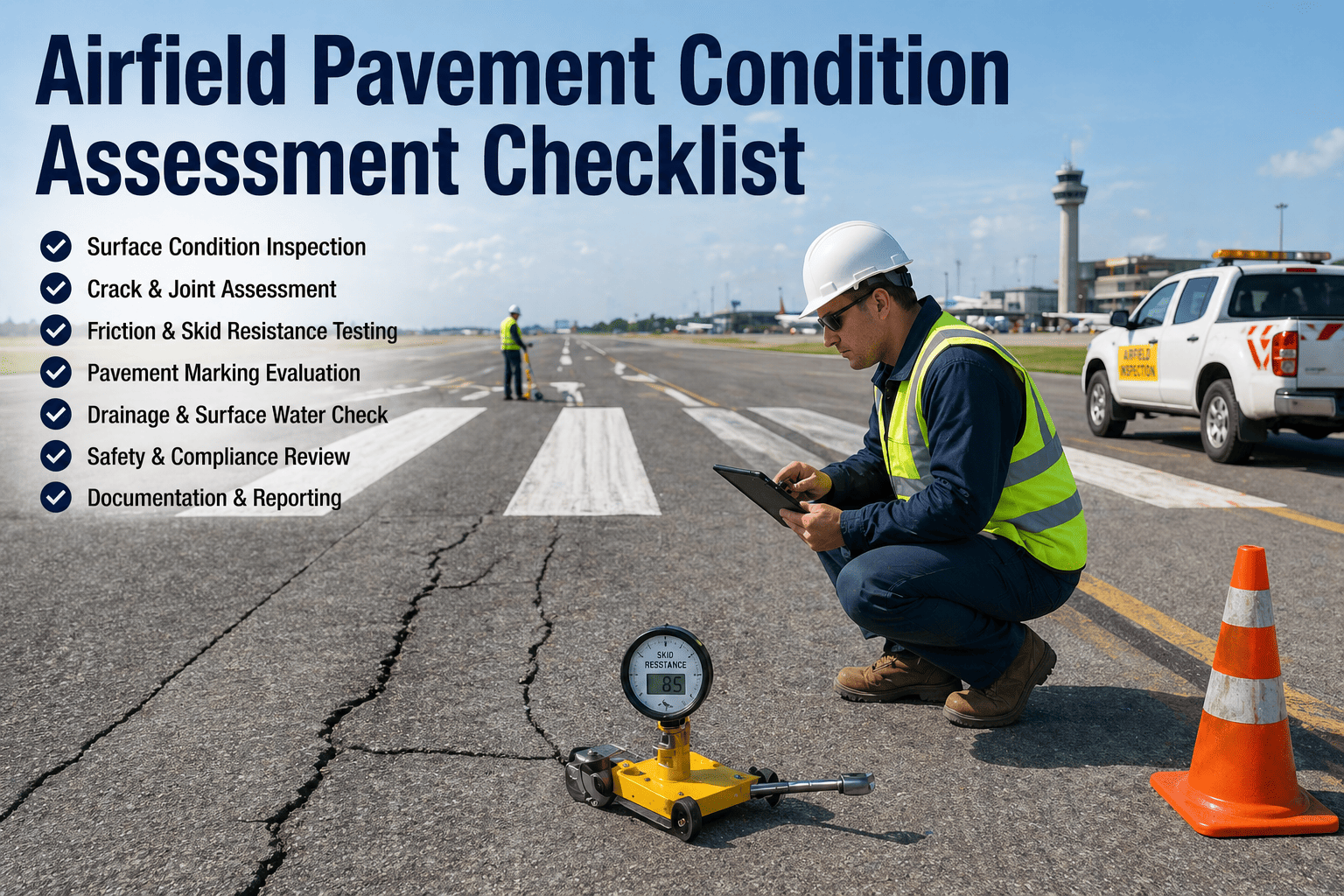
Airfield pavement condition assessment is the systematic process of evaluating the structural integrity and surface condition of all load-bearing pavement areas at an airport — runways, taxiways, aprons, and holding pads — using standardized inspection protocols, measurable distress indices, and regulatory compliance frameworks. The primary quantitative output is the Pavement Condition Index, a score from 0 to 100 derived from ASTM D5340 visual survey procedures that the FAA, U.S. Army Corps of Engineers, and international aviation authorities recognize as the baseline for maintenance and rehabilitation planning.
A complete assessment goes beyond surface scoring. It includes friction testing for runway skid resistance (per FAA AC 150/5320-12), structural load analysis using ACN/PCN ratios, Foreign Object Damage (FOD) potential indexing, and crack severity classification across distress types ranging from fatigue cracking and rutting to joint spalling and surface delamination. Each distress type is rated by density and severity — low, medium, or high — and that data feeds directly into maintenance prioritization and CapEx forecasting.
FAA Advisory Circular 150/5380-6 establishes that airport owners must conduct at least one detailed inspection annually, plus monthly drive-by checks. Airports with PCI history on record may shift to a three-year full-survey cycle, but all must maintain documented records retrievable on FAA request. Facilities without a structured checklist system routinely fail this documentation requirement — start a free trial to see how Oxmaint auto-generates audit-ready pavement inspection records aligned with FAA AC 150/5380-6.
Core Framework: 8 Pavement Assessment Dimensions
01
PCI Visual Survey
Systematic walkover of each pavement section recording distress type, severity (L/M/H), and density. Scored 0–100 per ASTM D5340 — the mandatory FAA baseline for all maintenance decisions.
02
Distress Type Classification
Identifies 19 standard asphalt and concrete distress types including fatigue cracking, rutting, joint spalling, delamination, raveling, and swelling. Each type requires a different repair strategy.
03
Friction Testing
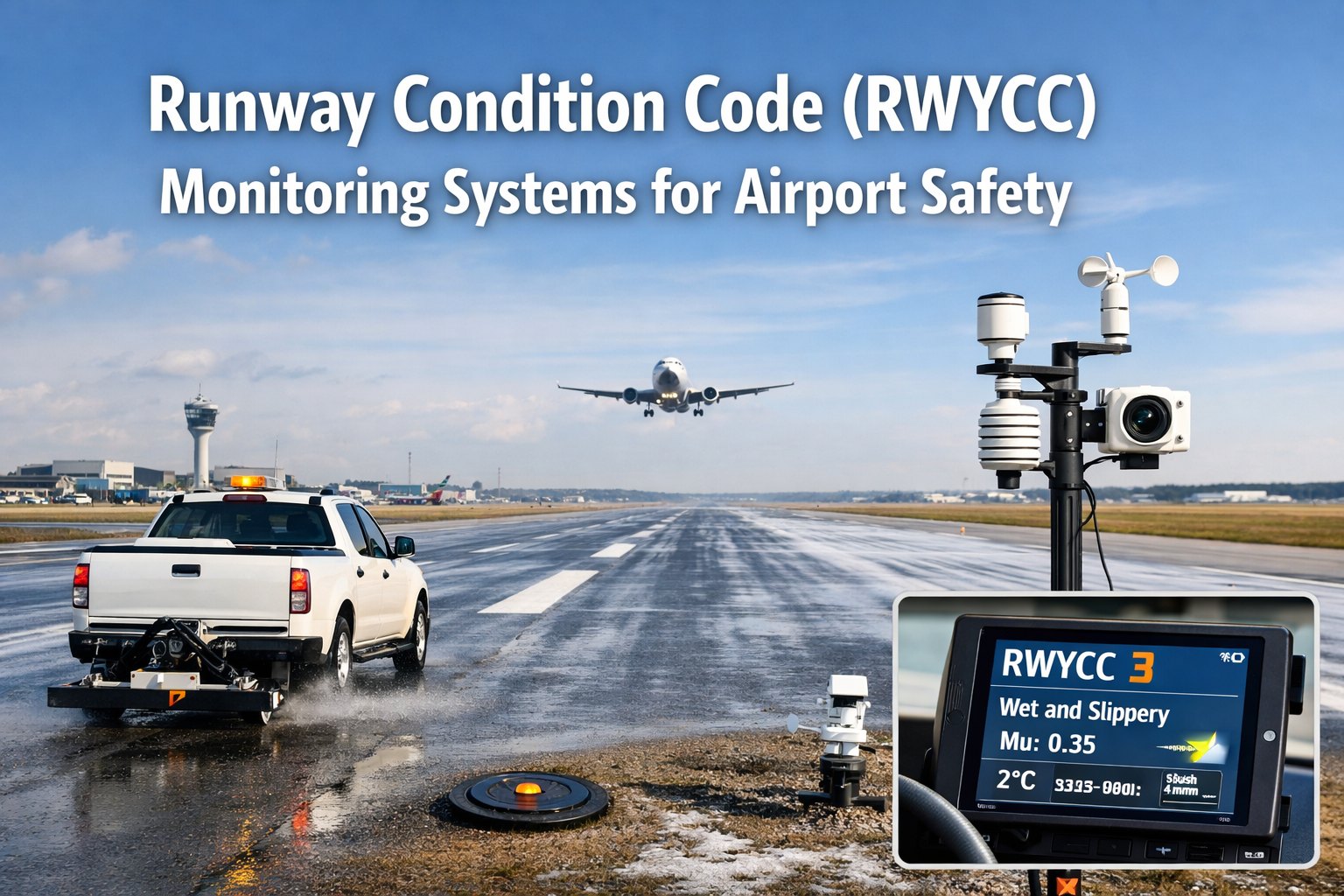
Continuous friction measurement using CFME equipment (GripTester, Mu-meter, TATRA) per FAA AC 150/5320-12. Runway friction below minimum action levels triggers immediate maintenance or NOTAM.
04
ACN/PCN Structural Index
Ratio of Aircraft Classification Number to Pavement Classification Number. ACN/PCN below 1.1 is good; 1.1–1.4 is fair; above 1.4 indicates structural overloading risk requiring engineering review.
05
FOD Potential Indexing
Quantifies the risk of loose pavement debris generating Foreign Object Damage to aircraft engines and structures. Determined from PCI distress data — high FOD index triggers priority crack sealing.
06
Drainage Assessment
Evaluates surface cross-slope, edge drain condition, inlet grates, and subsurface drainage adequacy. Poor drainage is the primary accelerant of pavement deterioration and frost heave damage.
07
Marking and Striping Condition
Assesses retroreflectivity of runway centerlines, threshold markings, touchdown zones, and taxiway guidance. Faded markings are an immediate safety issue and FAA Part 139 compliance violation.
08
CapEx Deterioration Modeling
Uses PCI trend data to project when each pavement section will cross rehabilitation thresholds — enabling 5–10 year capital budget planning before emergency failure forces unplanned closure.
Most airports delay pavement rehabilitation until PCI drops below 40 — at that point, repair costs are 3–5x higher than timely preventive intervention.
Industry Pain Points: Where Airfield Pavement Programs Break Down
No Distress Trending Over Time
Annual inspections recorded on paper cannot show rate of deterioration between cycles. Without trend data, maintenance teams cannot predict when a PCI-65 section will drop to PCI-40 — the threshold where mill-and-overlay becomes full-depth reconstruction.
FOD Risk from Missed Crack Surveys
Spalled concrete and loose aggregate from untracked medium-severity distresses are the leading source of engine FOD incidents at commercial airports. A missed quarterly inspection can mean months of undetected crack propagation in high-traffic runway zones.
FAA Documentation Failures
FAA requires all inspection records to be retrievable on request. Airports relying on binders and spreadsheets frequently fail retrieval requirements during compliance audits — exposing the airport to AIP funding suspension and Part 139 violations.
CapEx Surprise Spikes
Without PCI trend modeling, runway rehabilitation needs appear suddenly in budget cycles rather than being planned 3–5 years ahead. Emergency runway closures for unplanned reconstruction cost airports an average of $500K+ per day in diverted flight operations.
Inspector Knowledge Gaps
PCI distress classification requires trained inspectors who can distinguish fatigue cracking from block cracking, or identify the difference between low- and medium-severity rutting. Without a standardized digital checklist, consistency across inspectors and shifts is impossible to guarantee.
No Friction Data Integration
Runway friction results from CFME equipment often sit in separate files from PCI records, creating a fragmented picture of runway surface condition. Integrated tracking is required to catch situations where a high PCI score masks a friction value approaching the minimum action level.
The checklist below covers all FAA-required pavement inspection elements organized by zone and distress category. Each item is a standardized assessment point aligned with AC 150/5380-6 and ASTM D5340 survey procedures. Complete this checklist during each annual detailed inspection and adapt the monthly drive-by version to the visual items in Sections 1 and 5.
Section 1
Pre-Inspection Setup and Documentation
Duration: 30 min | Assigned to: Lead pavement inspector
Setup and Records
Section 2
Runway Surface Distress Assessment
Duration: 2–4 hrs | Assigned to: Certified PCI inspector
Duration: 1–2 hrs | Assigned to: CFME equipment operator
Continuous Friction Measurement
Section 5
Drainage, Markings, and FOD Inspection
Duration: 1 hr | Assigned to: Pavement inspector + airfield ops team
Drainage Systems
Runway Markings
FOD and Surface Debris
Airports that track PCI trends digitally identify rehabilitation needs 18–24 months earlier — reducing rehabilitation cost by 40% compared to emergency reconstruction.
How Oxmaint Solves Airfield Pavement Management Gaps
PCI Survey Scheduling Engine
Auto-schedules annual detailed inspections and monthly drive-by checks per FAA AC 150/5380-6, with 30-day advance notifications to inspection leads and automatic escalation if tasks go overdue.
Digital Distress Recording
Mobile-first data entry for all 19 ASTM D5340 distress types with severity selection, density input, and photo attachment — structured data that feeds directly into PCI calculation and trending dashboards.
FAA-Ready Audit Documentation
Every inspection produces timestamped, inspector-signed records retrievable on demand — satisfying FAA AIP compliance requirements without hours of binder searching before audits.
PCI Trend and CapEx Modeling
Plots PCI deterioration curves by section and projects rehabilitation trigger dates up to 10 years out — enabling airports to plan mill-and-overlay or reconstruction in budget cycles rather than emergency responses.
Multi-Zone Asset Hierarchy
Structures your airfield as Portfolio > Airport > Pavement Zone > Section, so condition data from runway 10L, taxiway Alpha, and apron Gate 22 remain organized, searchable, and never siloed across inspection cycles.
Work Order Generation from Findings
Failed inspection items — high-severity fatigue cracking, faulting above 6mm, friction below minimum levels — automatically generate corrective work orders assigned to the appropriate maintenance crew, closing the gap between finding and fixing.
How often must airports conduct airfield pavement inspections under FAA requirements?
FAA Advisory Circular 150/5380-6 requires airport owners to conduct at least one detailed pavement inspection per year, plus monthly drive-by inspections for all federally obligated airports. Airports with a documented PCI history on file may extend the full detailed inspection to a three-year cycle. All inspection records must be maintained and be retrievable on FAA request. Digital CMMS platforms like Oxmaint automatically schedule both the annual detailed inspection and monthly drive-by tasks, with automatic reminders and timestamped completion records that satisfy FAA retrieval requirements without manual filing.
What is the difference between PCI, SCI, and FOD index in airfield pavement assessment?
The Pavement Condition Index (PCI) scores 0–100 based on visual distress type, severity, and density per ASTM D5340 — it is the FAA's primary metric for surface maintenance planning but does not directly measure structural capacity or friction. The Structural Condition Index (SCI) evaluates load-carrying capacity relative to aircraft traffic, using the ACN/PCN ratio; an ACN/PCN below 1.1 is good, 1.1–1.4 is fair, and above 1.4 indicates structural risk. The FOD Potential Index quantifies the risk of loose pavement material generating Foreign Object Damage to aircraft engines — derived from PCI distress data and particularly critical in high-thrust zones. All three indices are used together for comprehensive airfield pavement management.
At what PCI score does runway pavement require rehabilitation?
FAA benchmarks generally hold that runways should maintain a PCI of 70 or above, with taxiways and aprons at 60 or above. When PCI drops below 55–60 on a runway, mill-and-overlay or surface treatment is typically required. Below PCI 40, full-depth reconstruction is generally the only viable option — and at that point, repair costs are 3–5 times higher than if preventive treatment had been applied at PCI 65. The Alaska DOT, for example, mandates minimum PCI ratings of 70 for runways and 60 for taxiways and aprons as grant compliance thresholds. Proactive PCI tracking with digital tools allows airports to intervene at PCI 65–70, dramatically reducing lifecycle rehabilitation costs.
How does CMMS software improve airfield pavement inspection compliance?
A CMMS like Oxmaint eliminates the three most common compliance failures in airfield pavement programs: missed inspection scheduling, lost paper records, and inability to retrieve documentation during FAA audits. Oxmaint auto-schedules annual PCI surveys and monthly drive-by inspections per FAA cycle requirements, sends advance alerts to inspection leads, captures digital distress records with photo evidence and GPS coordinates, and generates audit-ready reports retrievable in seconds. Failed inspection items automatically generate corrective work orders assigned to the appropriate crew — closing the loop between finding a distress and repairing it. Airports using Oxmaint report 95%+ inspection completion rates and zero documentation retrieval failures during compliance reviews.
Airfield Pavement Management Platform
Stop Losing Millions to Reactive Runway Management
Turn every airfield pavement section into a predictable, trackable asset with Oxmaint — from monthly drive-by checks to 10-year CapEx forecasting.
Real-time pavement condition visibility across all airfield zones
FAA-compliant inspection records retrievable in one click
5–10 year runway rehabilitation CapEx forecasting
No heavy implementation. Works across multi-site airport portfolios. Live in days, not months.