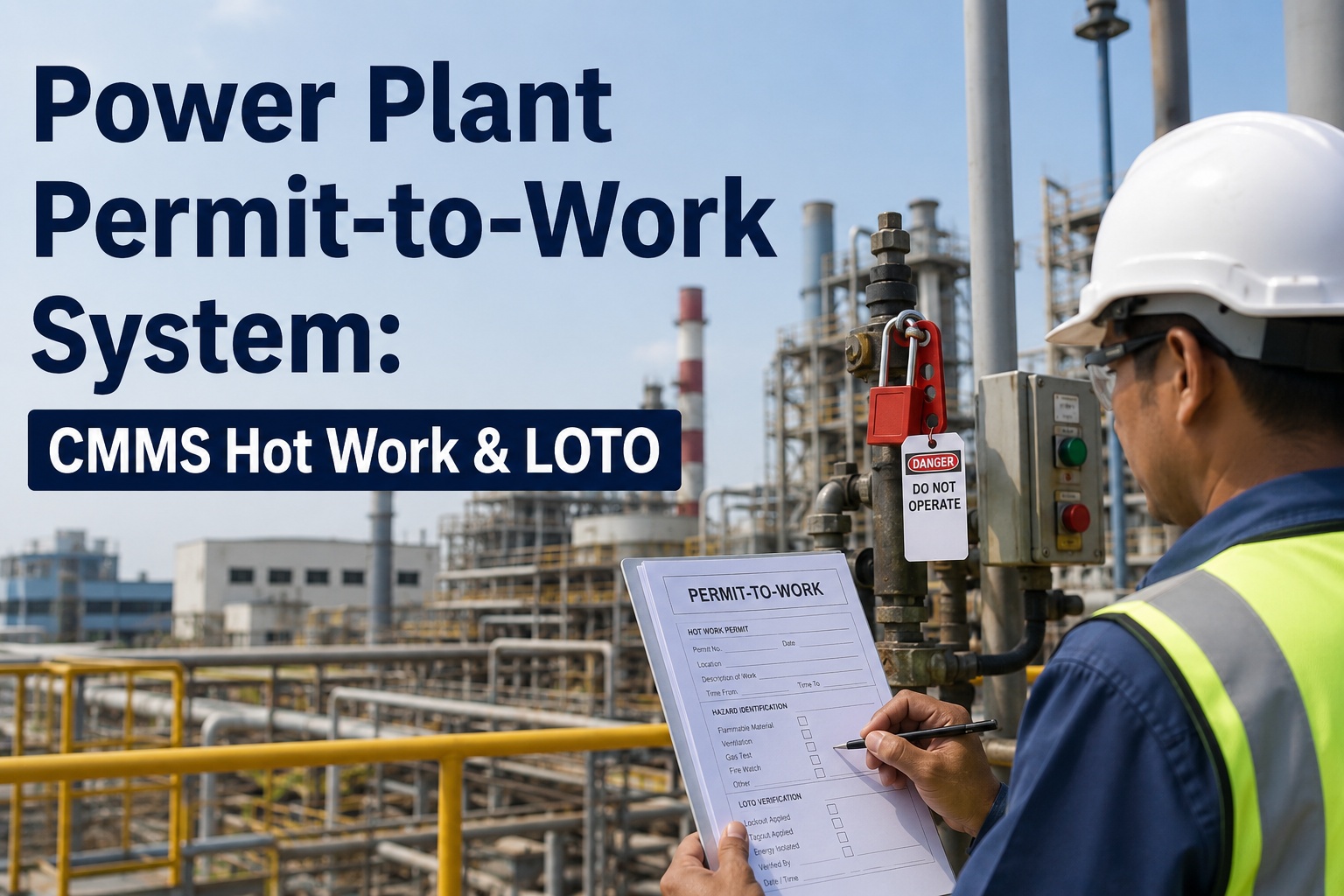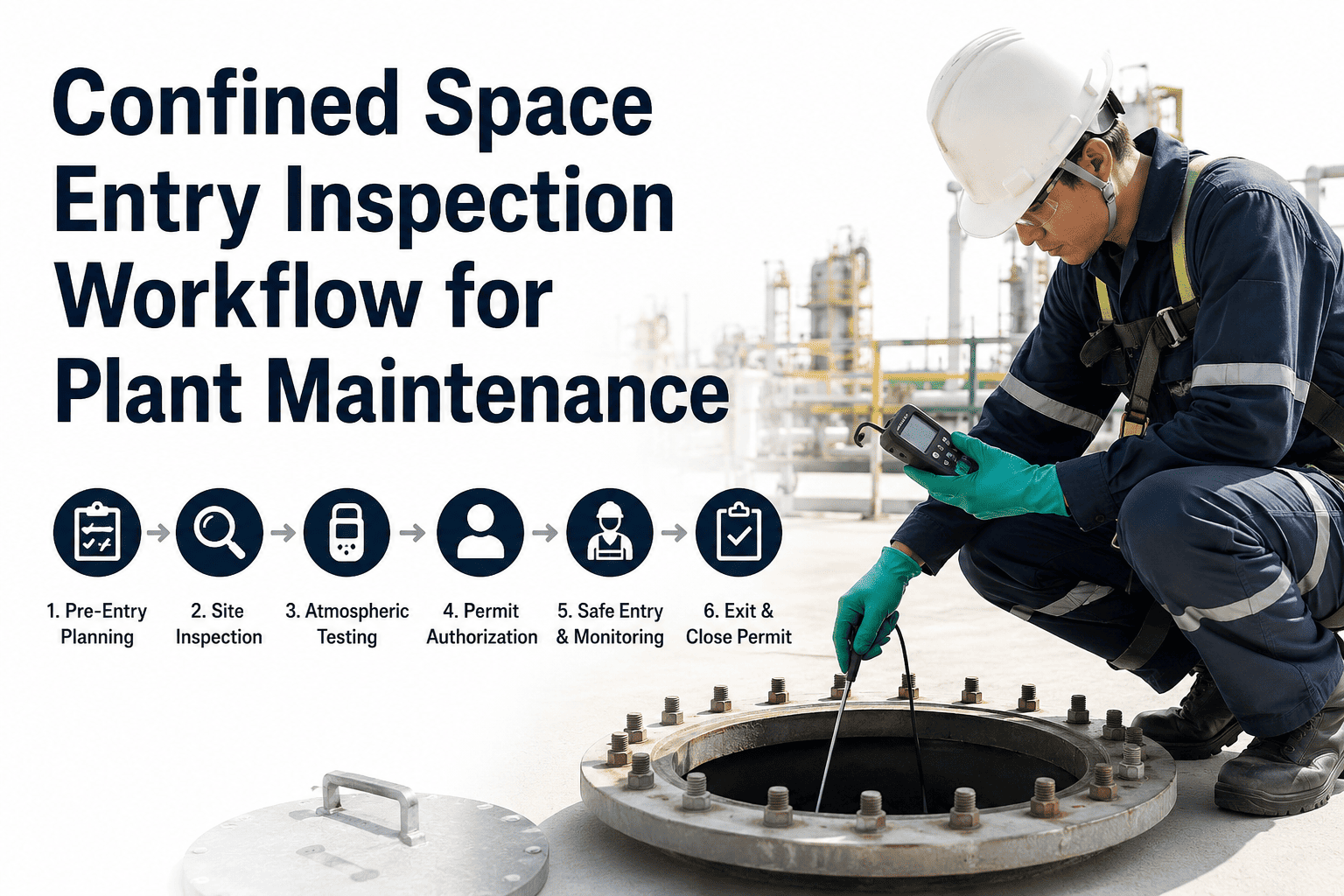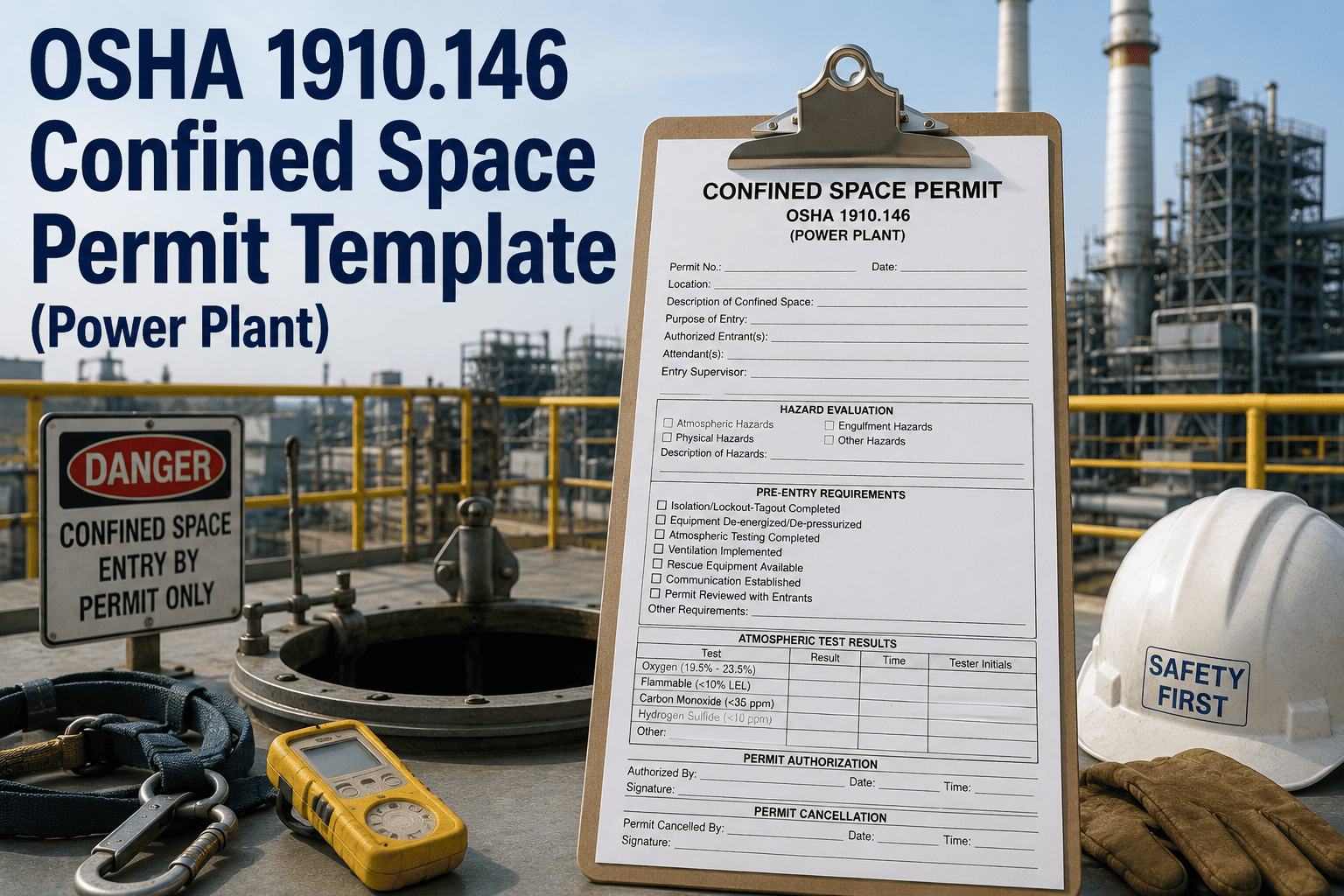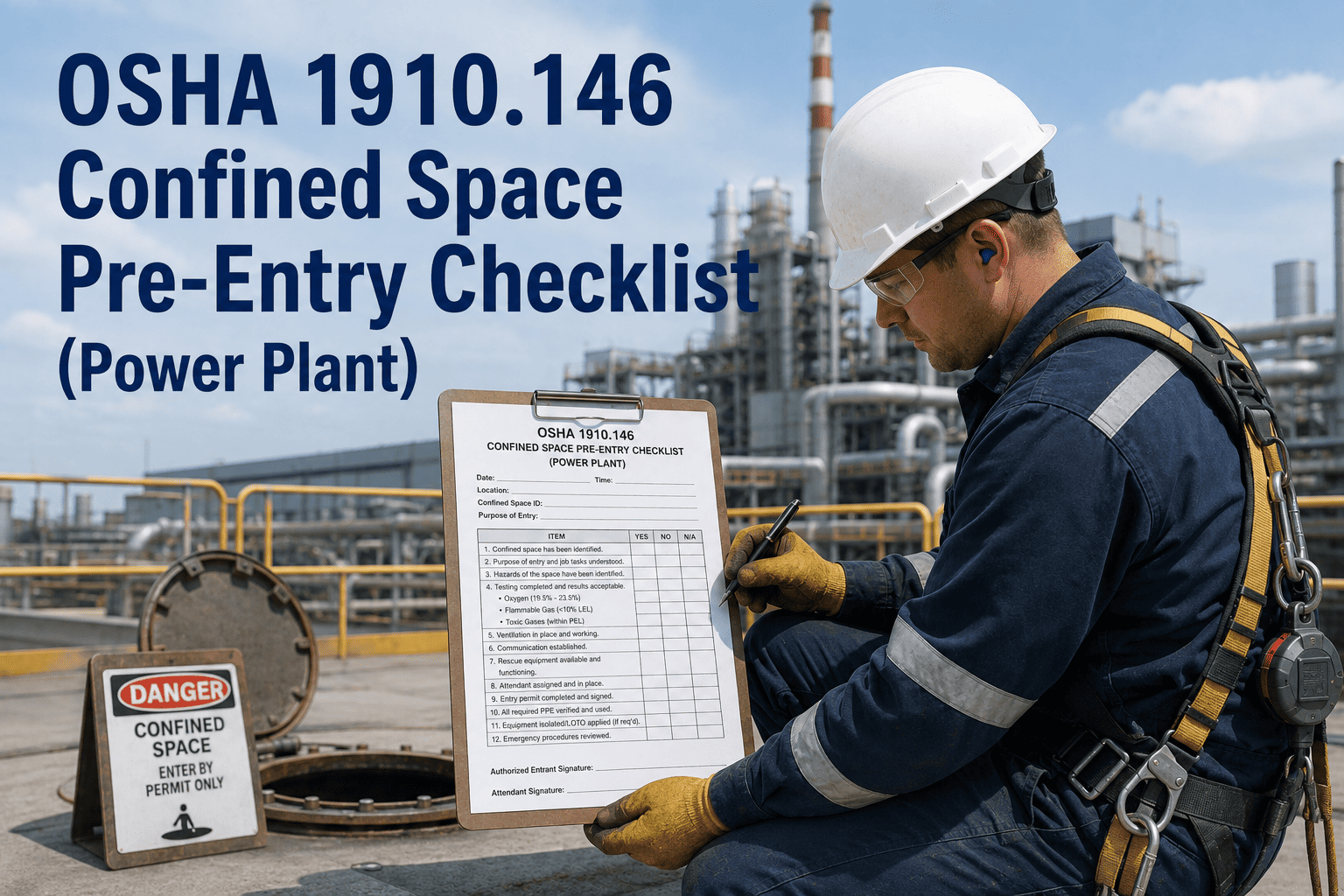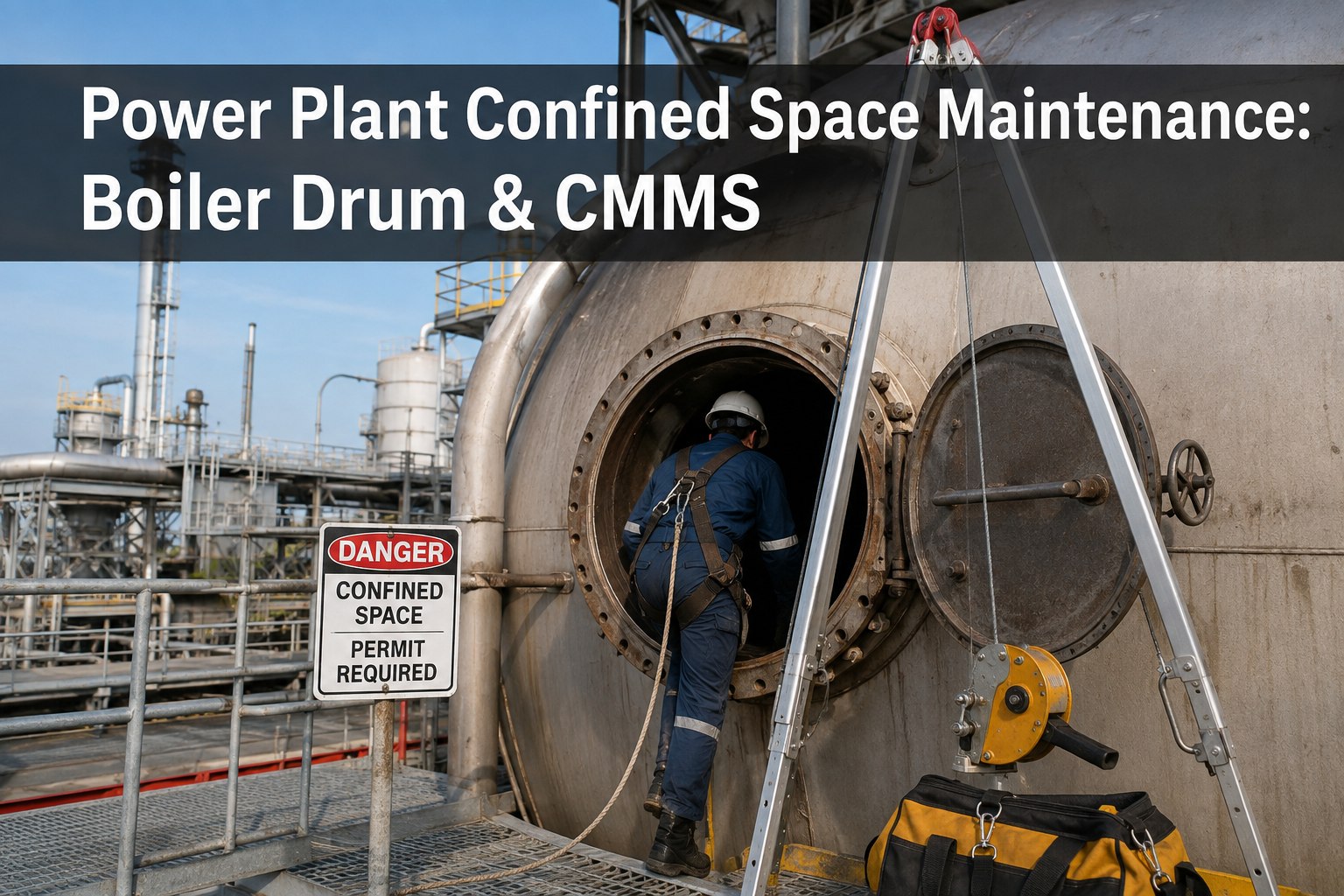
Power plant confined space maintenance — boiler drum entry, HRSG confined space work, and condenser tube inspection — carries some of the highest life-safety risk in any industrial facility. Over 60% of confined-space fatalities in heavy industry stem from atmospheric hazards that a proper boiler entry procedure and continuous atmospheric monitoring would have caught. A purpose-built CMMS like Start Free Trial digitises the entire confined space permit power workflow — from lockout-tagout verification to gas-test logging and attendant logs — so your maintenance and reliability teams execute every power plant entry procedure with audit-ready precision.
Is your boiler drum entry procedure still paper-bound?
Power plant confined space maintenance demands airtight permit control, real-time atmospheric monitoring, and audit-ready documentation — every single entry, no exceptions. OxMaint replaces clipboards and three-ring binders with a digital confined space CMMS that tracks every permit, gas test, attendant, and rescue plan from request to close-out.
How to build a compliant boiler drum entry procedure
A single boiler drum confined space entry at a 500 MW coal plant can involve 12-18 permit steps, 4 gas tests, 3 isolation points, and 6 signatures. Missing one can mean an OSHA recordable, a forced outage extension, or worse.
Isolation & Lockout-Tagout
- Close and lock all feedwater, blowdown, and steam-stop valves
- De-energize drum level transmitters and all connected DCS logic
- Verify double block-and-bleed on ash-handling connections if present
- Apply individual locks to every isolation point; log in CMMS
Cooling & Atmospheric Testing
- Confirm drum surface temperature below 38°C / 100°F before entry
- Purge drum with forced air; verify 19.5–23.5% O2 with calibrated meter
- Test for CO, H2S, and combustible gases at top, mid, and lower drum zones
- Record baseline readings in CMMS confined space permit — timestamped
Permit Authorization & Entry
- Authorized supervisor signs digital permit — no wet-signature delays
- Station trained attendant at manway with continuous comm link
- Confirm on-site rescue team and tripod retrieval system are staged
- Set 4-hour permit expiry with automatic CMMS re-test alert
Power plant entry procedure: atmospheric monitoring requirements
Continuous atmospheric monitoring is the single most critical control for any HRSG confined space or condenser-access job. OSHA 1910.146 requires testing before entry and at regular intervals — a requirement that manual logs routinely fail during shift changes.
| Confined Space | Primary Hazards | Test Frequency | Required PPE / Equipment |
|---|---|---|---|
| Boiler Drum | Residual steam, O2 displacement, hot surfaces | Every 30 min + continuous | SCBA, retrieval tripod, heat gloves |
| HRSG Cavity | CO, NOx, catalyst dust, temperature | Every 20 min + continuous | 4-gas monitor, cooling vest, comms |
| Condenser Waterbox | O2 deficiency, H2S from biofouling | Every 30 min + continuous | 4-gas monitor, full-body harness |
| Baghouse / SCR Hopper | Combustible dust, asphyxiation, engulfment | Every 15 min + continuous | Dust respirator, spark-proof tools |
| Coal Bunker / Silo | Methane, CO, smoldering fire, engulfment | Every 15 min + continuous | SCBA, lifeline, anti-static clothing |
A 600 MW combined-cycle plant in the Midwest eliminated 100% of paper-permit gaps by routing atmospheric monitoring data directly into OxMaint — gas readings auto-populate the permit record every 15 minutes, and an alert fires to the shift supervisor if any value drifts outside the safe zone.
The real cost of paper permits in confined space maintenance
Most plants still run confined space permits on carbon-copy forms stuffed in a binder. The result: lost documentation, missed re-tests, extended outages, and six-figure regulatory exposure.
OxMaint CMMS: 0.5 days × $120K + $0 risk = $60,000 annual exposure
Worked example: a 500 MW coal plant performing 14 boiler drum entries and 8 HRSG inspections per year.
How OxMaint digitises your confined space CMMS workflow
OxMaint is built for the realities of power plant maintenance — high-pressure outages, rotating shift crews, and zero tolerance for safety lapses. Here is how specific capabilities map directly to confined space permit power and execution.
Digital Confined Space Permits
Create, route, and approve permits from any mobile device. Mandatory fields — isolations, gas-test results, attendant assignment, rescue plan — must be completed before the permit unlocks. No partial approvals, no paper.
Integrated Atmospheric Monitoring
Connect Bluetooth-enabled 4-gas monitors to auto-populate O2, LEL, CO, and H2S readings directly into the active permit record. Set custom alarm thresholds per space — boiler drum, HRSG cavity, condenser waterbox.
Asset-Linked Work Orders
Every confined space entry ties to a parent asset work order — boiler drum B, HRSG module 2, condenser half A. Maintenance history, last-tube-thickness data, and inspection findings stay in one record across outages.
Audit-Ready Permit Archive
Search any past confined space permit by asset, date range, personnel, or permit type in under 5 seconds. Export a complete compliance packet for OSHA, insurer, or corporate EHS audit in one click.
See OxMaint on your assets — book a 30-minute demo
Walk through a live confined space permit workflow from request to audit-ready close-out. Bring your toughest entry scenario.
Power plant confined space — frequently asked questions
What makes a boiler drum a confined space in a power plant?
A boiler drum qualifies as a confined space because it has limited entry and exit points (manways), is large enough for a person to enter and perform work, and is not designed for continuous occupancy. OSHA 1910.146 classifies it as a permit-required confined space due to hazards like residual steam, oxygen-deficient atmospheres, and potential engulfment from connected piping that was not properly isolated.
How often should atmospheric monitoring be done during power plant confined space entry?
Atmospheric monitoring must be conducted before entry and at regular intervals — typically every 15-30 minutes depending on the space and hazards — plus continuous monitoring throughout the entry. For high-risk spaces like HRSG cavities and coal silos, continuous 4-gas monitoring with data logging into your CMMS is the industry standard. You can see how OxMaint automates this by scheduling a demo at Book a Demo.
Can a CMMS manage confined space permits for power plants?
Yes — a purpose-built CMMS like OxMaint digitises the entire permit workflow: isolation checklists, gas-test logging, attendant and rescue-team assignment, supervisor authorization, time-stamped entry/exit logs, and post-entry close-out. It eliminates paper binders, prevents incomplete permits from being approved, and creates a searchable audit trail for every boiler drum, HRSG, and condenser entry.
What is the difference between a confined space permit and a hot work permit?
A confined space permit authorizes entry into a space with restricted access and potential atmospheric or engulfment hazards. A hot work permit authorizes activities like welding, cutting, or grinding that could ignite combustible materials. In power plants, boiler drum and HRSG work often requires both permits simultaneously — OxMaint links them to the same work order so isolations, fire-watch assignments, and gas tests are managed in one unified record.
How long must confined space entry permits be retained?
OSHA requires confined space entry permits to be retained for at least one year, but most power plants and corporate EHS policies mandate 3-5 years for liability and audit purposes. Insurance carriers often request permit histories during renewal underwriting. OxMaint retains digital permits indefinitely — searchable by asset, date, personnel, or permit type — so you never scramble to reconstruct documentation. Start your archive today with a Start Free Trial.
Stop trusting paper with your crew's safety
Digitise every confined space permit, gas test, and entry log with OxMaint — built for power plant maintenance and reliability teams.
Free 14-day trial · No credit card