Confined space fatalities in power plants do not follow a single pattern — workers die from oxygen deficiency in boiler drums that were opened hours earlier, from hydrogen sulphide accumulation in wet condensate vessels, from engulfment in ash hoppers that shift without warning, and from entrapment in ductwork when ventilation systems are activated without communication. What these incidents share is not a lack of awareness — every power plant maintenance team knows confined spaces are dangerous — but a gap between the written confined space entry procedure and the documentation that proves it was actually followed before anyone descended. OxMaint's Inspection Management module closes that gap by structuring confined space entry as a fully digital, permit-linked inspection workflow — ensuring atmospheric testing, isolation verification, rescue plan confirmation, and attendant assignment are documented before the entrant crosses the boundary, and generating the compliance evidence your OSHA 1910.146 audit requires. Learn how leading power plant maintenance teams use digital confined space workflows to protect workers and satisfy inspectors simultaneously.
Safety Permits · Inspection Management
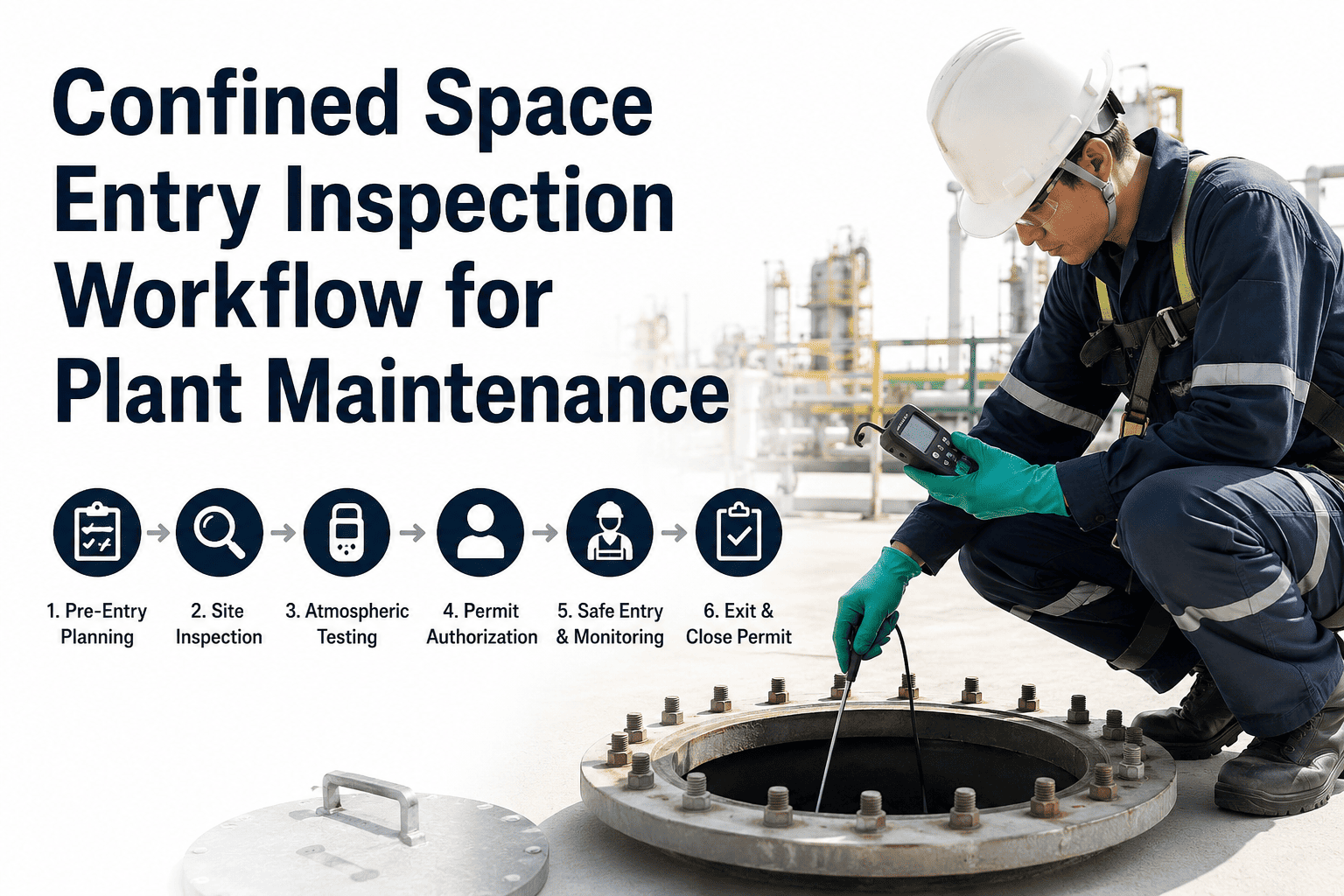
Confined Space Entry Inspection Workflow for Power Plant Maintenance
Structure every confined space entry as a digital, permit-linked inspection workflow — atmospheric testing records, isolation verification, rescue plan sign-off, and attendant assignment documented before entry and stored permanently for OSHA 1910.146 and NFPA 350 compliance evidence.
Why Confined Space Documentation Failures Are Fatal
136
confined space fatalities recorded in the US in the most recent three-year OSHA reporting period
60%
of confined space deaths involve would-be rescuers who entered without proper atmospheric testing
$156K
average OSHA penalty for a confined space fatality — plus stop-work orders and civil liability
1910.146
OSHA standard requiring written permit, atmospheric testing, and rescue planning before every permit-required entry
Power Plant Confined Spaces — Classification and Risk Profile
Not every confined space in a power plant is a permit-required confined space — but misclassifying a permit-required space as a general industry confined space is one of the most common precursors to confined space incidents. OxMaint's confined space asset registry allows each space to be classified, profiled, and maintained so entry teams begin every job with accurate hazard information rather than assumptions.
Permit-Required
Highest-Risk Power Plant Spaces
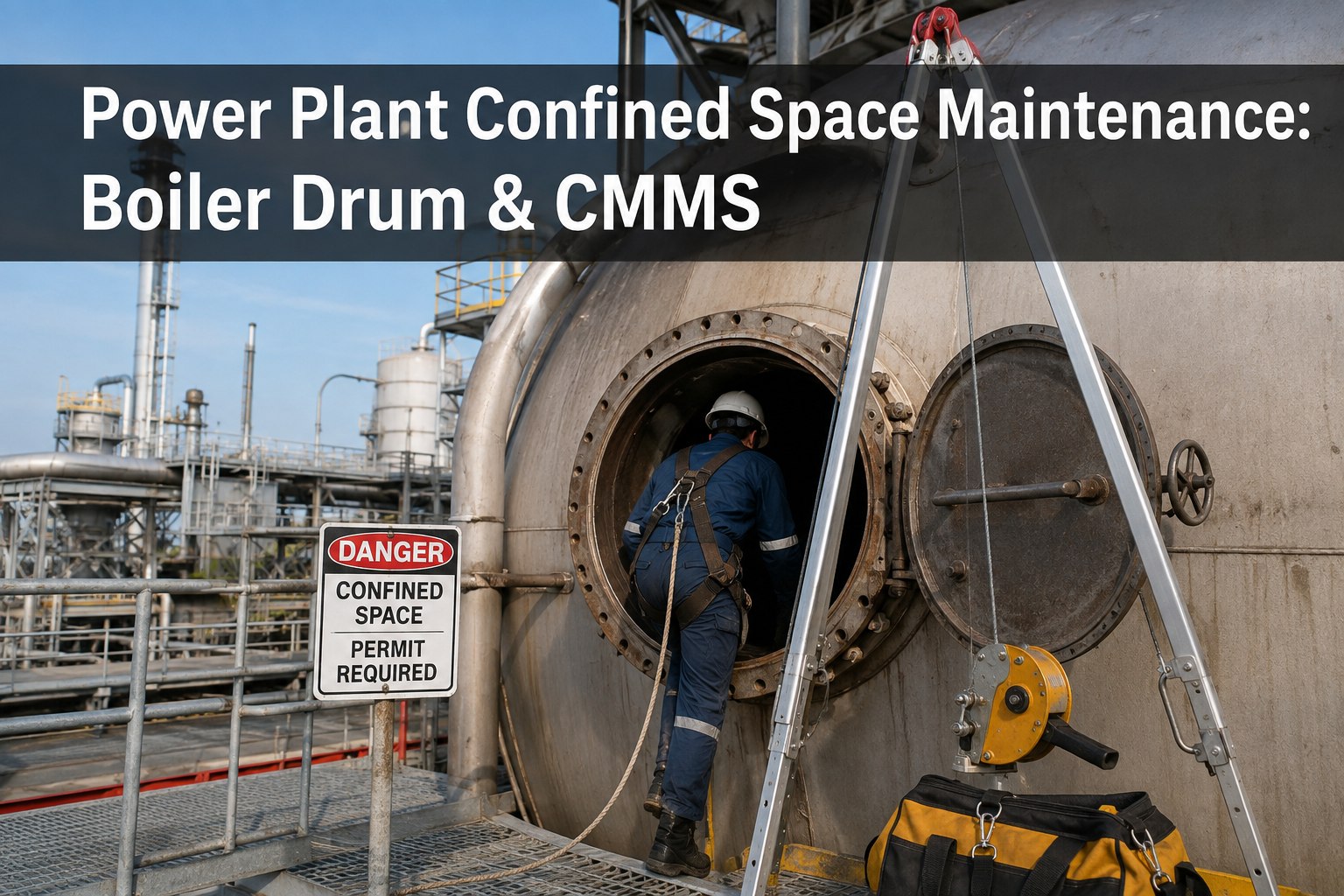
Boiler drums and steam drums — oxygen deficiency risk from purging, atmospheric methane from residual hydrocarbons
Condenser hotwell and waterboxes — H₂S risk from biofouling, engulfment from unexpected valve operation
Coal mills, bunkers, and silos — engulfment, combustible dust, and oxygen displacement risk
Ash hoppers and economiser hoppers — engulfment from unstable ash pack, toxic dust inhalation
Lube oil tanks and fuel oil day tanks — flammable vapour, LEL hazard, oxygen deficiency
Flue gas ducts and SCR reactor chambers — residual SO₂, NO₂, and oxygen deficiency from inert gas purging
Assess Before Entry
Variable Classification Spaces
Cooling tower basins — may contain H₂S from biological activity, slippery surfaces, engulfment from pump start
Underground cable vaults and duct banks — oxygen deficiency from cable insulation off-gassing or flooding
Condenser air extraction ducts — potential vacuum during operation, chemical residuals from treatment
Heat exchanger shells (drained) — residual process gas, toxic chemical residuals from shell-side fluids
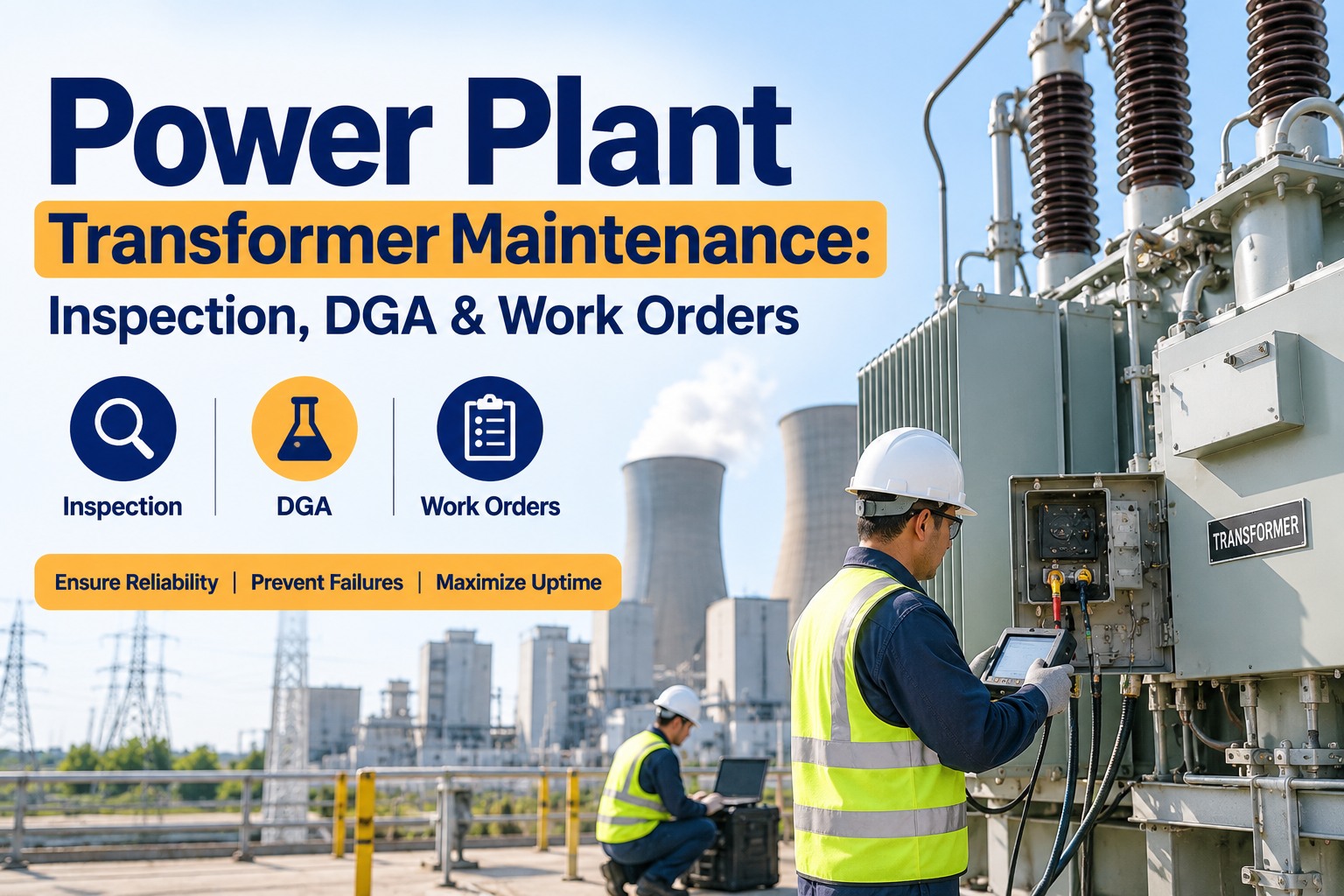
Transformer inspection hatches — SF₆ gas accumulation in large oil-filled transformers with inspection ports
Non-Permit (Verify Before Reclassifying)
Lower-Risk Confined Spaces
Air-only ventilation ducts (confirmed clean air, no cross-connections)
Water-only pipe sections (drained, ventilated, isolated from chemical injection)
Control cable trays with adequate access (if ventilation is confirmed adequate)
HVAC plenums — may require reclassification if adjacent to combustion equipment or chemical storage
The Digital Confined Space Entry Workflow in OxMaint
OxMaint structures confined space entry as a multi-stage workflow — from work order creation through atmospheric testing, permit issuance, entry monitoring, and permit closure — with every stage documented, timestamped, and linked to the specific confined space asset record. The workflow is configurable to match your plant's specific permit procedure.
Confined Space Work Order Creation
A maintenance work order requiring entry into a permit-required confined space triggers automatic flagging in OxMaint. The system identifies the space from the asset registry, retrieves its hazard classification, known atmospheric hazards, required isolation points, and last-entry atmospheric test results. This pre-population ensures the entry team begins planning with current, specific hazard information rather than generic confined space procedures.
Isolation and Energy Control Verification
The digital inspection checklist walks through all required isolations — LOTO points, blinding/blanking positions, valve closure confirmation, ventilation system lockout. Each isolation point is confirmed and signed off digitally by the authorising person. For spaces requiring mechanical isolation plus atmosphere purging, the workflow sequences these steps to prevent entry into an incompletely isolated space — a documented cause of multiple power plant fatalities.
Atmospheric Testing Documentation
Pre-entry atmospheric testing results — oxygen percentage, LEL percentage, H₂S ppm, CO ppm, and any space-specific contaminants — are entered into OxMaint with timestamp, instrument ID, calibration status, and the identity of the qualified tester. Acceptable entry conditions are predefined per space in the asset registry (OSHA 1910.146 acceptance criteria). OxMaint prevents permit generation until all atmospheric tests meet the required thresholds — removing the possibility of a verbal "it's fine" overriding the procedure.
Entry Permit Generation and Sign-Off
With isolations verified and atmosphere confirmed acceptable, OxMaint generates the confined space entry permit — pre-populated with space details, hazard profile, atmospheric test results, isolation confirmation, rescue plan reference, entry team names, attendant identity, and permit validity period. The authorising supervisor reviews and digitally signs the permit on mobile or desktop. The permit is immediately accessible to all entry team members and the emergency response team.
Entry Monitoring and Permit Closure
During entry, the attendant logs atmospheric monitoring readings at configured intervals against the active permit in OxMaint. Any reading that approaches or exceeds alarm threshold triggers an immediate notification to the entry supervisor. When work is complete, permit closure is documented — all personnel confirmed out, space secured, isolations maintained or restored per post-entry requirements. The closed permit becomes a permanent compliance record against the confined space asset.
Every Confined Space Entry. Fully Documented. OSHA-Ready.
OxMaint digitises your confined space entry workflow from hazard identification through permit closure — ensuring no step is skipped, no entry is undocumented, and every compliance record is immediately accessible when OSHA comes to your plant.
OSHA 1910.146 Documentation Requirements — and How OxMaint Satisfies Each
OSHA 1910.146 establishes specific documentation requirements for permit-required confined space programs. The following table maps each regulatory documentation requirement to the OxMaint record that satisfies it.
Scroll right to view full table
| OSHA 1910.146 Requirement |
Regulation Citation |
OxMaint Record Type |
Retention |
| Written confined space program |
1910.146(c)(4) |
Confined space asset profile with space classification, known hazards, and required controls |
Permanent — updated when hazard conditions change |
| Permit with required elements before entry |
1910.146(f) |
Digital entry permit generated from work order — includes all 1910.146(f)(1-16) elements |
Minimum 1 year after permit cancellation |
| Atmospheric testing results with instrument ID |
1910.146(d)(5)(ii) |
Atmospheric test log — O₂, LEL, H₂S, CO with timestamp and instrument calibration record link |
Retained with permit record — 1 year minimum |
| Rescue procedure and rescue team designation |
1910.146(d)(9), (k) |
Rescue plan reference attached to confined space asset profile and repeated on each permit |
Updated annually or after rescue team changes |
| Annual program review |
1910.146(e)(6) |
Annual inspection work order — reviews cancelled permits, incident reports, near misses from prior year |
Annual review record retained with the year's cancelled permits |
| Entrant and attendant training records |
1910.146(g) |
Technician qualification field in OxMaint — confined space entry certification linked to personnel record |
Duration of employment plus 1 year |
Frequently Asked Questions
Can OxMaint handle confined spaces that require reclassification from permit-required to non-permit based on controlled conditions?
Yes — OSHA 1910.146(c)(7) permits reclassification of a permit-required confined space to a non-permit space if all hazards can be eliminated through engineering controls without entry. OxMaint supports a reclassification workflow where the authorising person documents the control measures applied, the atmospheric test results confirming hazard elimination, and formally reclassifies the space status for the duration of the specific entry. The reclassification record is timestamped and retained, and the space reverts to its default permit-required classification when the specific entry is closed. This ensures the reclassification exception is documented, time-bounded, and reviewed rather than becoming a permanent informal workaround.
Sign in to configure confined space classification workflows.
How does OxMaint manage confined space entry when multiple contractors are working in different spaces simultaneously during a planned outage?
During planned outages at large power plants, multiple contractors may be executing confined space entries in different locations simultaneously — boiler drum inspection, condenser waterbox cleaning, HRSG ductwork survey, and condenser tube repair at the same time. OxMaint manages concurrent entries through parallel permit workflows, each linked to its specific confined space asset and contractor work order. The outage coordinator has a real-time view of all active entry permits — spaces currently occupied, atmospheric monitoring status, and permit expiry times — from a single dashboard. This simultaneous visibility prevents the coordination failures that can lead to inadvertent isolation removal while entrants are still inside.
Book a demo to see concurrent permit management.
What happens in OxMaint when atmospheric conditions change during an active confined space entry?
OxMaint's continuous atmospheric monitoring log — updated by the attendant at defined intervals — compares each new reading against the acceptable entry thresholds configured for that specific space. If an entered reading approaches or exceeds a threshold (for example, H₂S rises from 0 ppm to 8 ppm against a 10 ppm entry limit), OxMaint generates an immediate alert to the entry supervisor and the safety officer. The alert includes the space identity, the specific reading, and the applicable limit — providing the information needed to make an immediate evacuation decision without delay for investigation. The alert and the subsequent action taken are recorded against the active permit.
How does OxMaint's confined space workflow integrate with a plant's existing permit-to-work system?
OxMaint's confined space entry workflow is designed to complement rather than replace a plant's broader permit-to-work (PTW) system. The confined space entry permit in OxMaint links directly to the parent maintenance work order and can reference associated hot work permits, LOTO permits, and lifting permits from the same job package. Where a plant uses a separate PTW platform, OxMaint's confined space records — atmospheric test results, isolation confirmation, entry log — can be exported or API-linked to the PTW system to create a unified job record. OxMaint handles the inspection and record-keeping layer; the PTW system handles the authorisation hierarchy; both systems reference the same confined space asset identifier for traceability.
Sign in to configure permit integration settings.
Can OxMaint generate confined space compliance reports for OSHA inspections at short notice?
Yes — OxMaint generates confined space compliance report packages that include: all entry permits issued in a specified date range, atmospheric test records per permit, isolation confirmation records, rescue plan references, annual program review records, and technician qualification records filtered by confined space certification. This package is generated from OxMaint in minutes, covering any date range an OSHA inspector specifies — including historical records from well before an inspection was anticipated. The report format presents records chronologically per confined space, making it straightforward for inspectors to verify that each permit was correctly authorised, atmospheric testing was current, and rescue resources were identified.
Book a demo to see the compliance report output format.
Digital Confined Space Entry Workflows That Protect Your Workers and Satisfy OSHA
OxMaint structures every confined space entry as a documented, sequenced digital workflow — from space hazard identification through permit closure — with atmospheric testing records, isolation confirmation, rescue plan sign-off, and continuous monitoring logs retained permanently as OSHA 1910.146 compliance evidence. Stop relying on paper permits. Start building an audit-ready confined space program.