Power plant confined space entry is not a judgment call — it is a permit-required confined space operation governed by OSHA 1910.146, and every entry without a completed pre-entry checklist is a federal compliance violation from the moment the first technician crosses the threshold. Boiler drums, ash hoppers, condensate pits, turbine enclosures, and underground cable vaults are all confined spaces under 1910.146, and every one of them requires atmospheric testing, attendant assignment, rescue equipment verification, and entry supervisor authorization before work begins. This checklist translates OSHA 1910.146's permit-required confined space entry requirements into a pre-entry verification workflow that maintenance supervisors, entry attendants, and safety coordinators can execute before every entry — with every test result, every attendant assignment, and every rescue plan confirmation logged and auditable in real time. Sign up for Oxmaint to deploy this OSHA 1910.146 confined space pre-entry checklist as a digital permit system integrated with your maintenance work orders.
1910.146
Federal standard for permit-required confined space entry in power plants
19.5%
Minimum oxygen level required — below this, entry is prohibited without supplied air
100%
Atmospheric testing completion required before entry authorization — no exceptions
CMMS
Digital tracking ensures no confined space entry proceeds without completed permit
OSHA 1910.146 Requirements
What OSHA 1910.146 Requires for Confined Space Entry in Power Plants
OSHA 1910.146 defines a permit-required confined space as a space large enough for an employee to enter, has limited or restricted means of entry or exit, and is not designed for continuous employee occupancy. If the space also contains or has the potential to contain a hazardous atmosphere, contains material that could engulf an entrant, has walls that converge inward or floors that slope downward and taper into a smaller area, or contains any other recognized serious safety or health hazard, it is a permit-required confined space. Power plants contain dozens of such spaces — boiler drums, ash hoppers, coal silos, condensate pits, steam tunnels, and underground electrical vaults. Every entry into these spaces requires a permit, and every permit requires a completed pre-entry checklist before the entry supervisor authorizes the first person to enter. This is not a safety recommendation — it is a federal regulatory requirement that applies to every power generation facility in the United States.
Atmospheric Testing
Oxygen, flammable gas, and toxic gas levels tested before and during entry — continuous monitoring required
Entry Attendant
Trained attendant stationed outside space for entire entry duration — no exceptions permitted
Rescue Plan
Non-entry rescue equipment or on-site rescue team identified before entry authorized
Entry Supervisor Authorization
Designated entry supervisor signs permit after verifying all pre-entry requirements completed
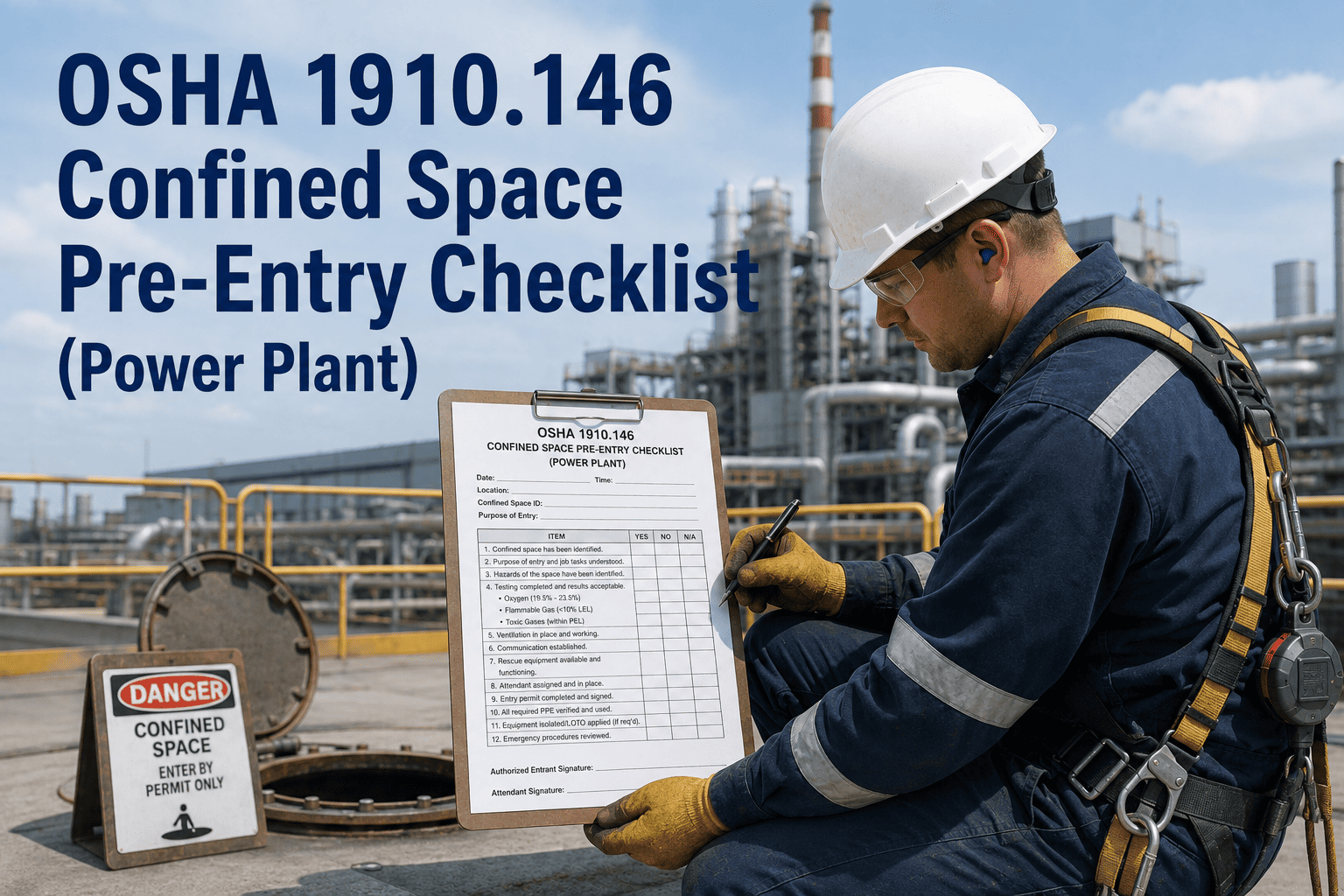
Pre-Entry Checklist
OSHA 1910.146 Confined Space Pre-Entry Checklist — Before First Entry Authorization
This checklist is completed by the entry supervisor before authorizing the first entrant to cross the entry portal. Every item must be verified and documented before the entry permit is signed. The checklist ensures that atmospheric conditions, personnel assignments, rescue equipment, and communication systems required by 1910.146 are in place and functional before entry begins. An incomplete checklist means the permit cannot be authorized — and the entry cannot proceed.
Your confined space entries depend on paper permits that can't enforce pre-entry verification — one skipped test away from a fatality.
Oxmaint digitizes OSHA 1910.146 confined space pre-entry checklists with mandatory atmospheric test logging, attendant assignment enforcement, and rescue equipment verification — every entry tracked, every requirement met, every permit auditable.
Atmospheric Testing Protocol
Power Plant Confined Space Atmospheric Testing — Test Sequence and Acceptance Criteria
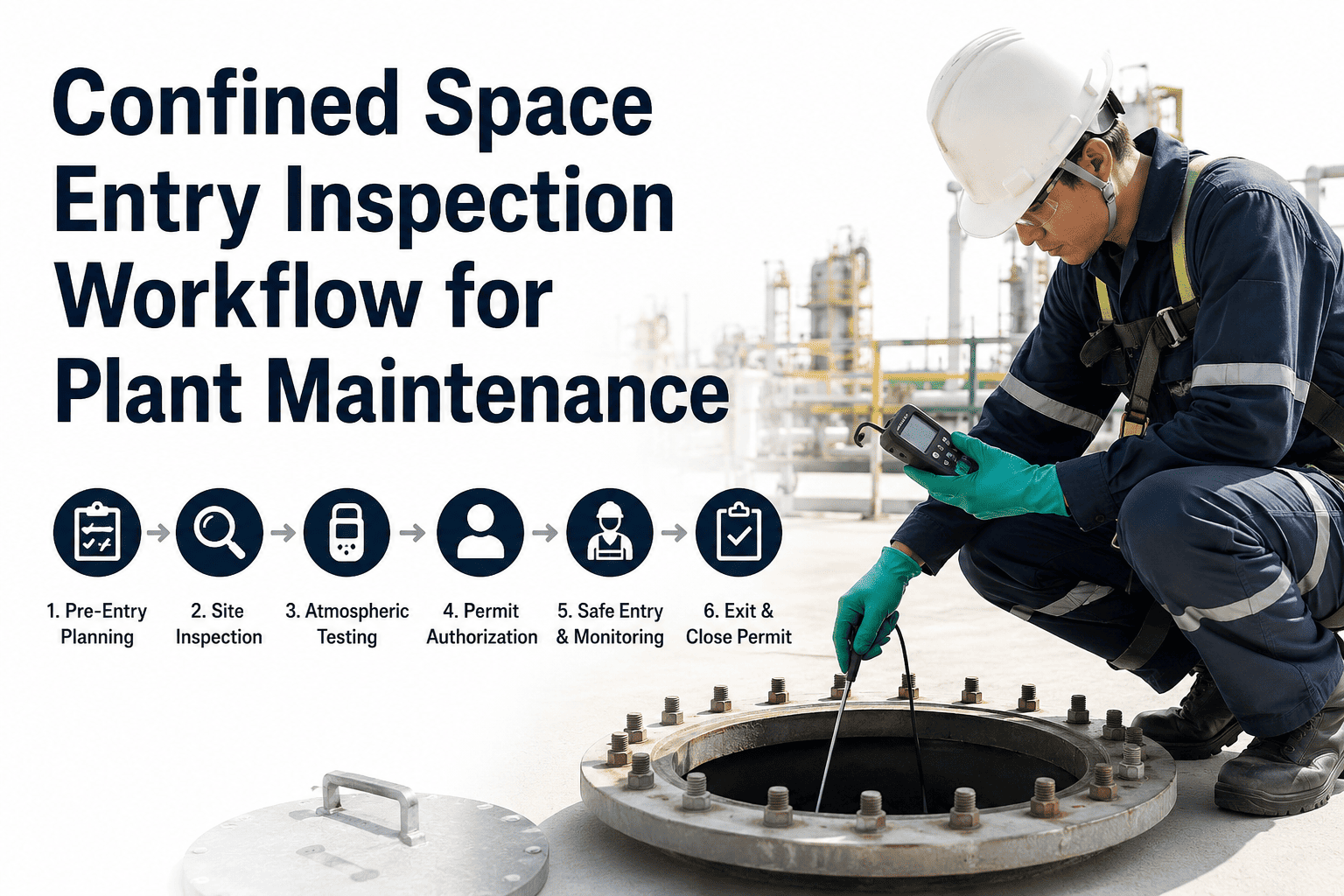
Atmospheric testing is the most critical element of the pre-entry checklist — and the most commonly performed incorrectly. OSHA 1910.146 requires testing in a specific sequence and at specific locations within the space. Testing must be performed from outside the space using a probe before any person enters. The test sequence is oxygen first, then combustible gases, then toxic gases — because the sensor readings for combustible and toxic gases are unreliable in oxygen-deficient atmospheres. Every test result must be recorded before entry authorization.
1
Oxygen Testing
Safe range: 19.5% to 23.5%. Below 19.5% = oxygen deficient. Above 23.5% = oxygen enriched. Both prohibit entry.
2
Combustible Gas Testing (LEL)
Safe level: Below 10% of LEL. At or above 10% LEL, entry prohibited until atmosphere ventilated and retested.
3
Toxic Gas Testing (H2S, CO, etc.)
Safe level: Below OSHA PEL for each gas. Common power plant toxic gases: H2S <10ppm, CO <35ppm, SO2 <2ppm.
4
Continuous Monitoring
Monitoring continues throughout entry. Alarm set at 19.5% O2, 10% LEL, and PEL for toxic gases. Alarm triggers evacuation.
Testing Locations Within Space
Top Level
Oxygen-enriched atmospheres and lighter-than-air gases accumulate at top of space
Middle Level
Representative of general space atmosphere — test at entrant working height
Bottom Level
Heavier-than-air gases (CO2, H2S) and oxygen deficiency accumulate at bottom
Dead Spaces
Test pockets, corners, and recesses where ventilation may not reach
Rescue Equipment Requirements
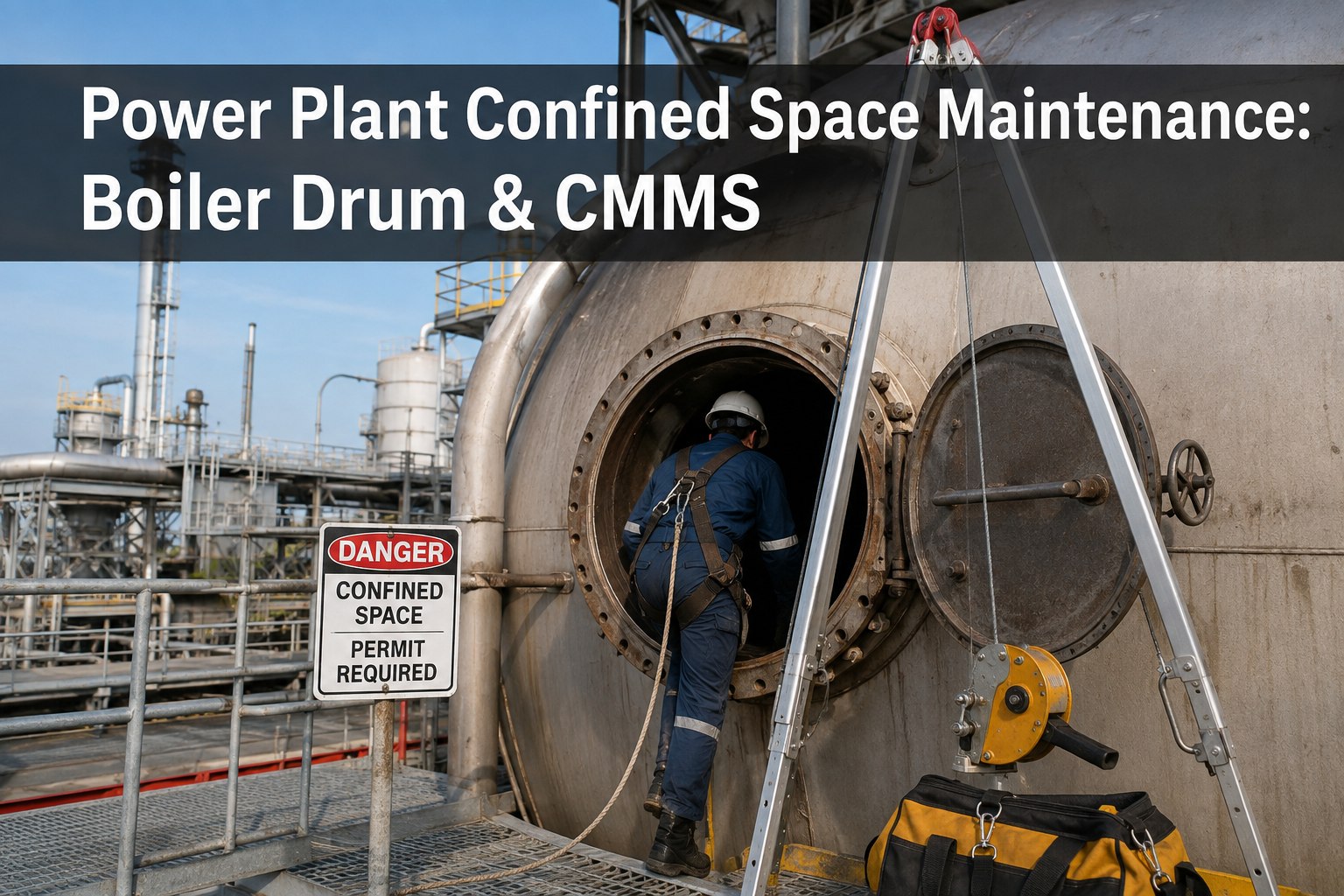
Non-Entry Rescue Equipment — What 1910.146 Requires at Every Vertical Entry
OSHA 1910.146 requires that rescue and emergency services be available before entry is authorized, and that rescue be possible without the rescuer entering the space. For vertical entries such as boiler drums, ash hoppers, and underground vaults, this means mechanical retrieval equipment must be set up and tested before entry. The standard retrieval system consists of a tripod, mechanical winch, wire rope or synthetic retrieval line, and a full-body harness worn by each entrant with the retrieval line attached to the dorsal D-ring. The system must be capable of lifting an unconscious entrant from the lowest point of the space without a rescuer entering.
Retrieval Tripod
Rated for 5,000 lbs minimum, adjustable legs, anchor point over entry opening
Mechanical Winch
Self-braking, hand-cranked or powered, rated for 400 lbs minimum per entrant
Retrieval Line
Wire rope or synthetic, 3,000 lbs breaking strength minimum, inspected before use
Full-Body Harness
Class II or III, dorsal D-ring, inspected for damage, properly fitted to entrant
Pre-Entry Retrieval System Test Procedure
Step 1: Set up tripod over entry opening and verify all legs locked
Step 2: Attach winch to tripod anchor point and verify self-braking function
Step 3: Attach retrieval line to winch and lower test weight (200 lbs minimum) to lowest point of entry
Step 4: Winch test weight to surface without assistance — if retrieval requires more than two minutes or winch binds, system fails test
Step 5: Log test result in Oxmaint with pass/fail outcome and tester name before authorizing entry
Entry Attendant Role
Confined Space Entry Attendant — Duties and Responsibilities Under 1910.146
The entry attendant is the most important safety role in a confined space entry — more critical than the entry supervisor or the entrants themselves. The attendant is the person stationed outside the space who maintains continuous contact with entrants, monitors conditions inside and outside the space, and initiates rescue procedures if an emergency occurs. Under 1910.146, the attendant must remain at the entry point for the entire duration of the entry — no exceptions. If the attendant must leave the entry point for any reason, all entrants must evacuate the space immediately. The attendant cannot enter the space to perform rescue unless relieved by another trained attendant.
Verify all pre-entry checklist items completed
Receive signed entry permit from entry supervisor
Confirm communication method with each entrant
Position at entry point with rescue alarm access
Maintain continuous communication with entrants
Monitor atmospheric readings if continuous monitoring used
Prevent unauthorized persons from entering space
Order evacuation if unsafe conditions develop
Activate rescue alarm immediately if entrant in distress
Initiate non-entry retrieval if entrant unconscious
Summon emergency services via radio or phone
Do NOT enter space to perform rescue unless relieved
Every confined space entry in your plant should have a complete digital audit trail from atmospheric testing to rescue equipment verification — not scattered paper permits.
Oxmaint integrates OSHA 1910.146 pre-entry checklists with work order management, logging every test result, every attendant assignment, and every rescue plan confirmation in a system that OSHA inspectors can review in minutes, not hours.
Implementation Guide
Deploying OSHA 1910.146 Pre-Entry Checklists in Oxmaint — Setup and Operational Workflow
Implementing the OSHA 1910.146 pre-entry checklist in Oxmaint requires identifying all permit-required confined spaces in your facility, creating digital entry permits for each space, and configuring the pre-entry checklist as a mandatory permit approval step. Once configured, the checklist becomes an automatic gate that prevents entry authorization until all pre-entry requirements are verified and logged in the system.
Setup Phase
1
Identify and inventory all permit-required confined spaces in plant — load into Oxmaint with hazard classifications
2
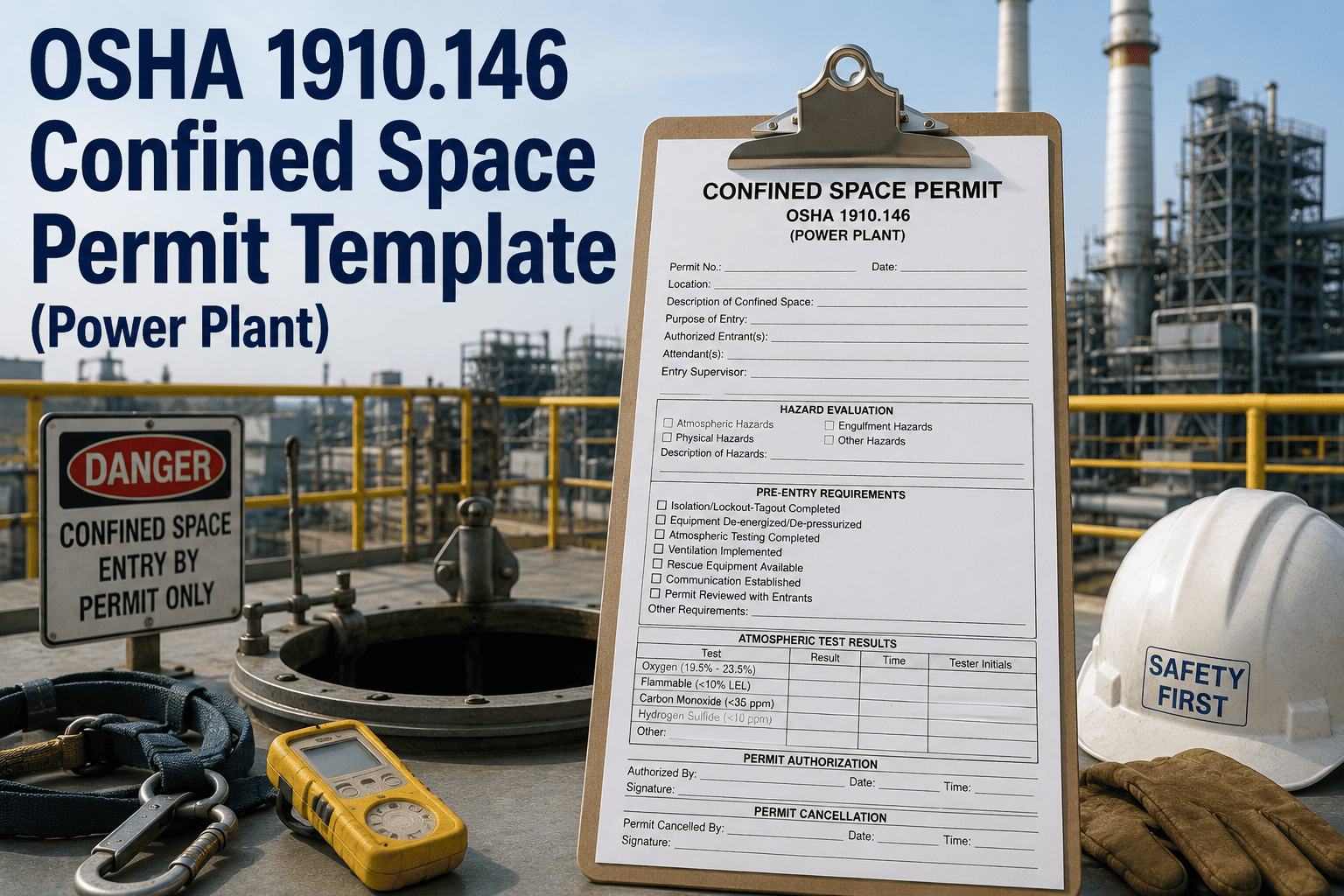
Create digital entry permit template with space-specific hazards, testing requirements, and rescue procedures
3
Configure pre-entry checklist as mandatory permit approval step — permit cannot be signed until checklist complete
Operational Workflow
1
Work order requires confined space entry — entry supervisor creates permit in Oxmaint linked to work order
2
Atmospheric testing performed — tester logs results in Oxmaint with timestamp and instrument serial number
3
Entry supervisor completes pre-entry checklist in Oxmaint — verifies attendant, rescue equipment, communication, ventilation
4
Entry supervisor signs permit in Oxmaint — entry authorized only after all checklist items verified
5
Entry complete — supervisor closes permit in Oxmaint with all entrant sign-offs and incident notes if applicable
FAQ
OSHA 1910.146 Confined Space Pre-Entry — Common Questions
Does OSHA require atmospheric testing before every confined space entry even if the space was tested yesterday?
Yes. OSHA 1910.146 requires atmospheric testing immediately before every entry. A test performed yesterday is not valid for today's entry because atmospheric conditions can change due to work activities, temperature changes, or material migration. The only exception is continuous atmospheric monitoring — if monitoring equipment is installed and operating continuously, pre-entry testing can be replaced by verification that the monitor shows safe readings.
Sign up for Oxmaint to log atmospheric test results for every entry with automatic timestamp and tester verification.
Can one entry attendant monitor multiple confined space entries at the same time?
No. OSHA 1910.146 requires one attendant per entry. The attendant must be stationed at the entry point and must be able to maintain continuous communication with all entrants in that space. An attendant cannot monitor multiple entries because they cannot physically be at two entry points simultaneously and cannot perform rescue duties for two spaces at once.
What is the difference between a permit-required confined space and a non-permit confined space?
A permit-required confined space is a confined space that contains or has the potential to contain a hazardous atmosphere, material that could engulf an entrant, internal configuration that could trap or asphyxiate, or any other recognized serious hazard. A non-permit confined space has none of these hazards. Power plant spaces like boiler drums, ash hoppers, and condensate pits are almost always permit-required due to atmospheric hazards or engulfment potential.
Book a demo to see how Oxmaint classifies confined spaces and enforces permit requirements automatically.
How long is a confined space entry permit valid once it is signed?
OSHA 1910.146 does not specify a maximum permit duration, but most plants limit permits to one shift or 8-12 hours. The permit is valid only as long as the conditions verified on the permit remain unchanged. If atmospheric conditions change, if the attendant leaves the entry point, or if work activities introduce new hazards, the permit is immediately invalid and a new permit must be issued after re-verifying all pre-entry requirements.
Does Oxmaint support continuous atmospheric monitoring integration for confined space entries?
Yes. Oxmaint can integrate with continuous atmospheric monitoring systems that transmit real-time gas readings to the CMMS platform. When continuous monitoring is active, Oxmaint logs the monitor alarm setpoints and confirms that readings are within safe limits before the entry supervisor can sign the permit. If the monitor alarms during entry, Oxmaint flags the permit as invalid and notifies the entry supervisor and attendant immediately.
Sign up for Oxmaint to configure continuous monitoring integration for your confined space program.
OSHA 1910.146 Confined Space Entry Compliance — Make It Digital, Make It Enforceable, Make It Auditable.
Power plants that manage confined space entry permits on paper are operating with pre-entry checklists that cannot enforce atmospheric testing, cannot verify attendant assignment, and cannot block entry authorization when requirements are incomplete. Oxmaint digitizes the entire OSHA 1910.146 confined space pre-entry workflow — from atmospheric test logging to rescue equipment verification to entry supervisor sign-off — with every requirement enforced automatically and every permit record audit-ready from the moment the entry begins.