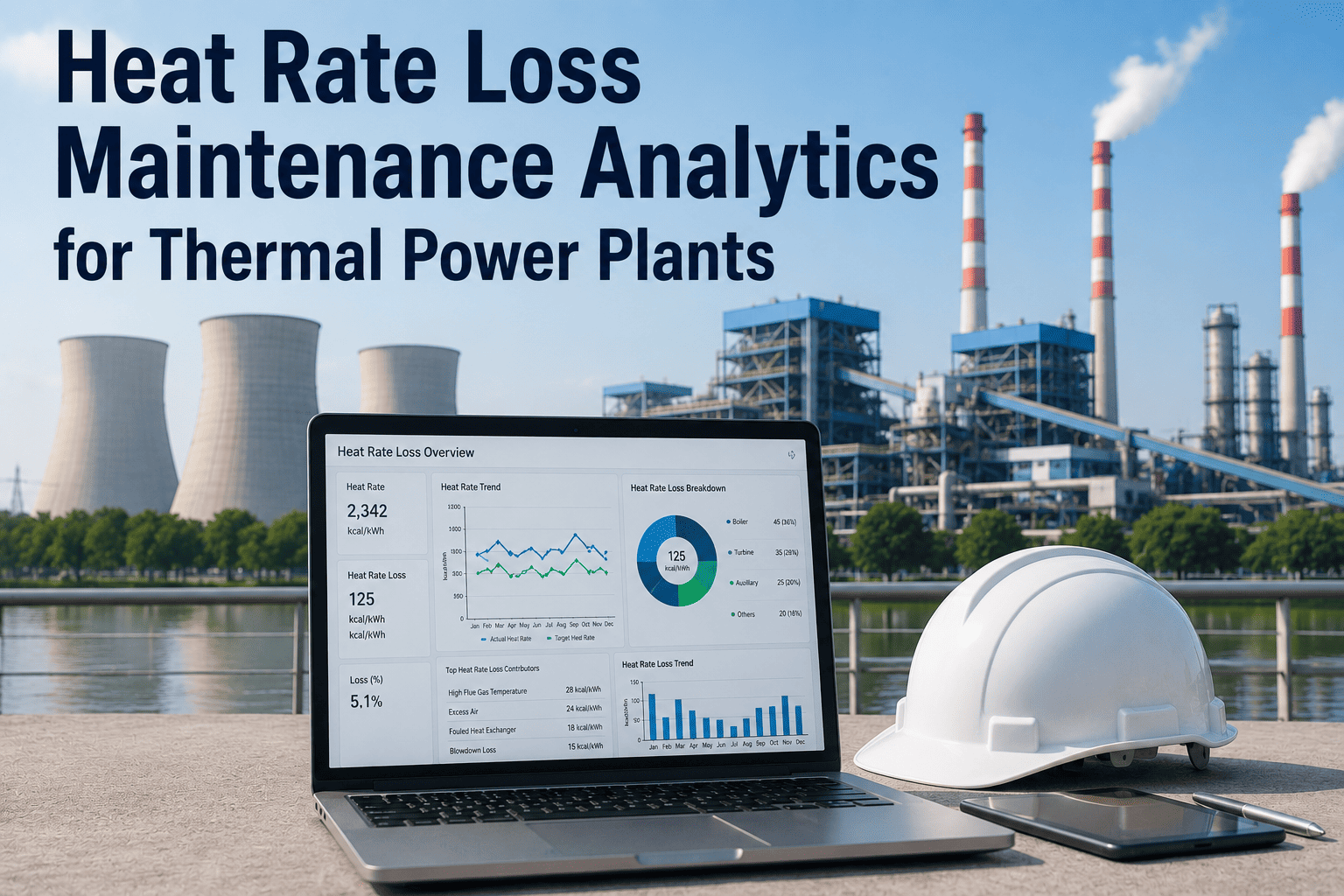
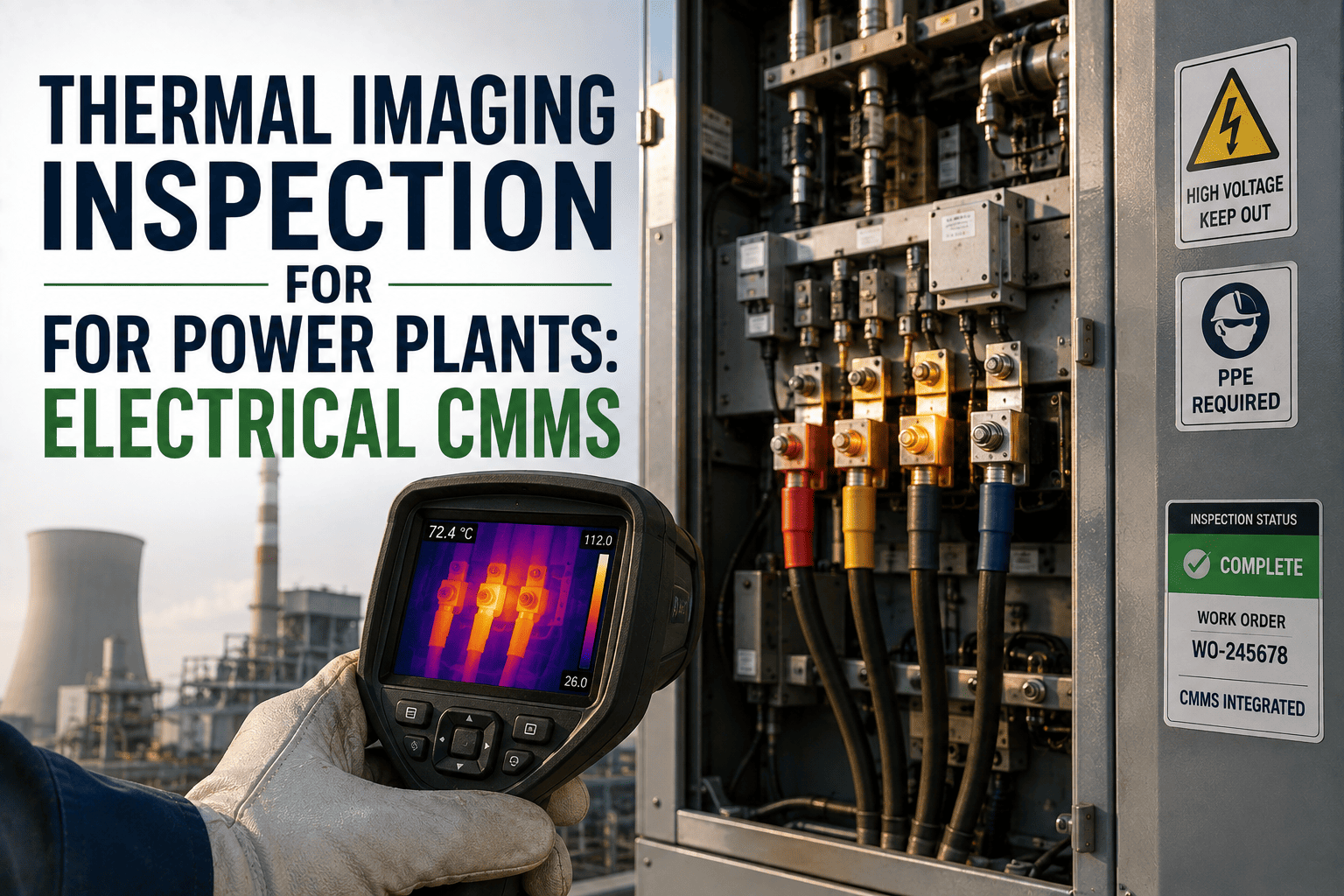
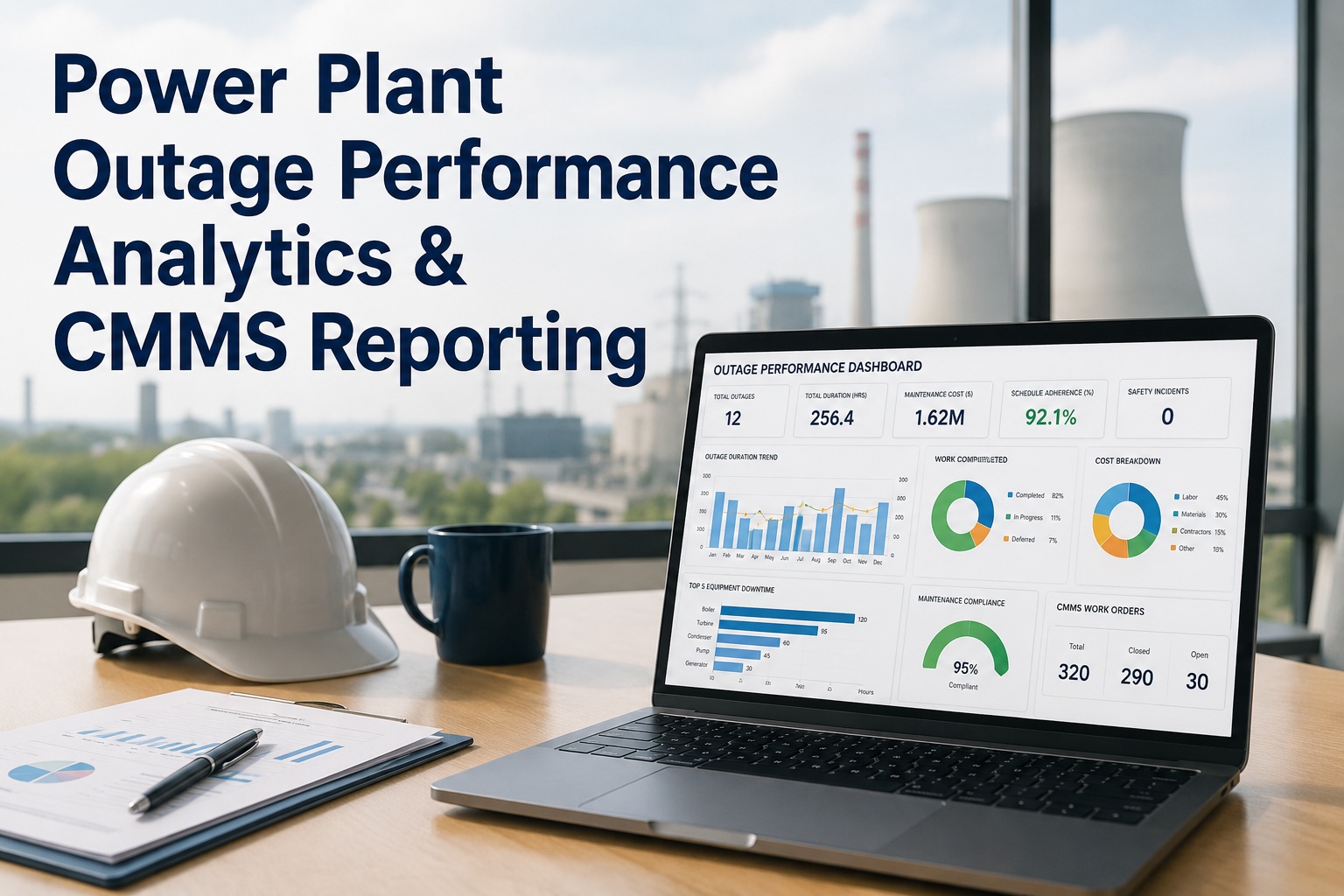
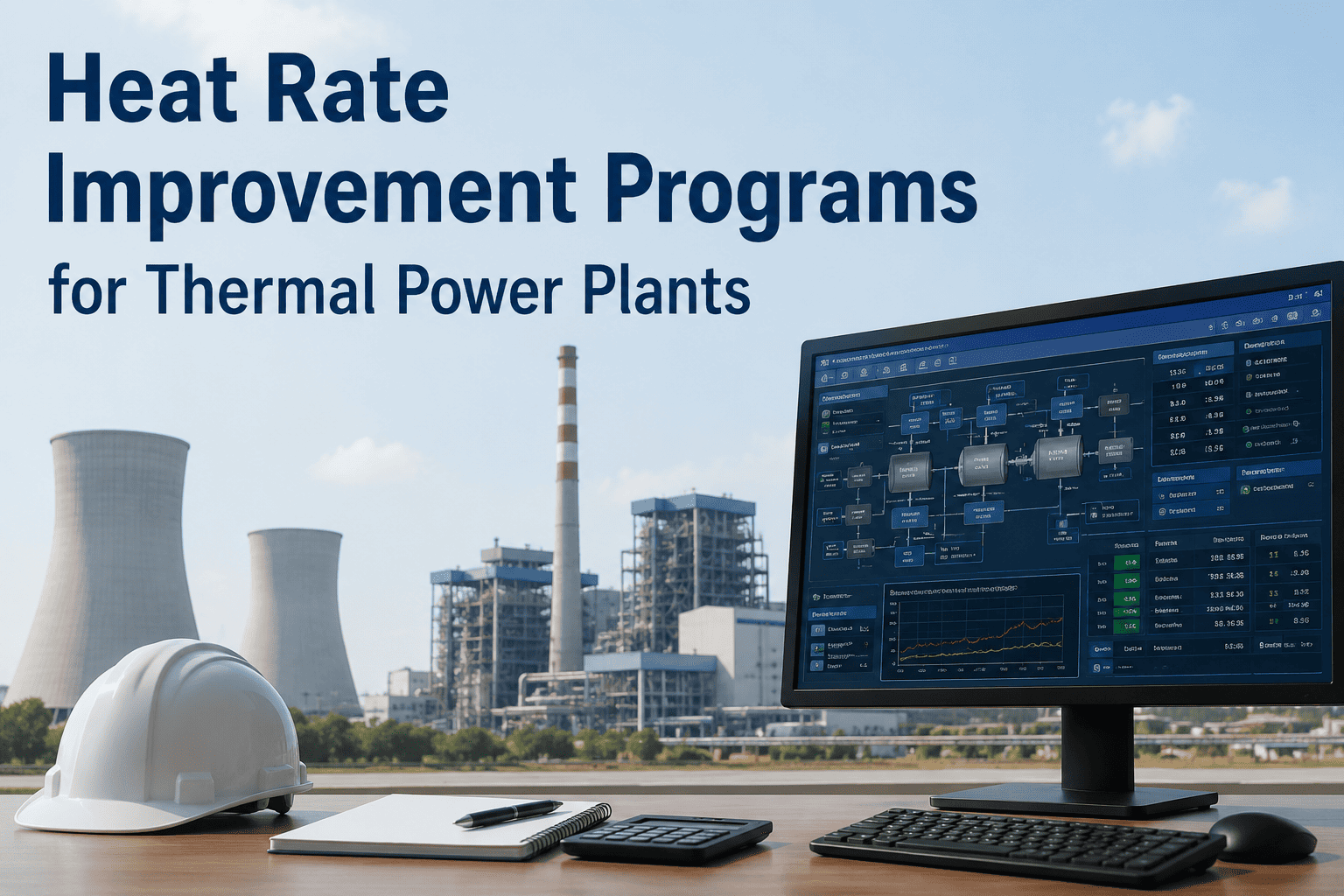
Heat rate creep is one of the most expensive problems in a thermal power plant precisely because it rarely shows up as an alarm — it shows up as a slowly rising fuel bill. For a typical 500 MW coal-fired unit, every 1 inch Hg increase in condenser backpressure adds roughly 200 Btu/kWh to the heat rate, and restoring that single inch can be worth hundreds of thousands of dollars a year in fuel costs. In many fossil and nuclear units, nearly half of all heat rate loss traces back to something as unglamorous as leaking isolation valves quietly bypassing steam around the cycle. OxMaint's Heat Rate Loss Maintenance Analytics connects condenser, air heater, and valve condition data directly to maintenance work orders so these losses get caught early. Book a demo to see heat rate analytics for your unit.
Blog · Performance Optimization
Heat Rate Loss Maintenance Analytics for Thermal Power Plants
200 Btu/kWh
heat rate increase per 1 in. Hg rise in condenser backpressure (500 MW unit)
$800K/yr
potential fuel savings from recovering just 1 in. Hg of backpressure
~50%
of heat rate loss in many units traced to leaking cycle isolation valves
Root Causes
Where Heat Rate Loss Hides
Condenser Tube Fouling & Air In-Leakage
Mechanism: Scale or biofouling reduces heat transfer while air ingress raises backpressure
Early signal: Declining cleanliness factor and rising dissolved oxygen in condensate
Air Preheater Fouling
Mechanism: Ash and soot deposits reduce gas-side heat transfer and raise stack temperature
Early signal: Rising exit gas temperature and increasing draft loss across the heater
Cycle Isolation Valve Leakage
Mechanism: Leaking isolation valves bypass high-pressure steam directly to the condenser
Early signal: Abnormal valve body temperature or unexplained makeup water increase
Boiler Tube Fouling and Slagging
Mechanism: Ash deposits on tube surfaces reduce radiant and convective heat absorption
Early signal: Rising furnace exit gas temperature and increased attemperator spray flow
The Loss Cascade
How a Small Fault Becomes a Fuel Cost Problem
Equipment degrades — fouling, leakage, or wear begins
Heat transfer or cycle efficiency starts to drop
Condenser backpressure or stack temperature rises
Turbine output drops for the same fuel input
Heat rate increases — more fuel burned per MWh, often unnoticed for weeks
Catch Heat Rate Creep Before It Shows Up in the Fuel Bill
OxMaint links condenser, air heater, and valve condition data to maintenance work orders, so heat rate deviations get a root cause and an action — not just a monthly chart.
Monitoring Parameters
Key Parameters OxMaint Monitors for Heat Rate Analytics
| Parameter |
Monitored Location |
Indicates |
OxMaint Action |
| Condenser Cleanliness Factor |
Cooling water inlet/outlet temperatures |
Tube fouling severity |
Trend alert when factor drops below baseline, auto work order for cleaning |
| Condenser Backpressure |
Condenser shell pressure |
Air in-leakage or fouling |
Correlated with heat rate deviation to flag likely root cause |
| Air Heater Exit Gas Temperature |
Air preheater outlet duct |
Air preheater fouling |
Predicts cleaning cycle before efficiency loss compounds |
| Valve Body Temperature |
Cycle isolation valve body |
Internal valve leakage |
Flags leaking valves for repair during the next planned outage |
| Furnace Exit Gas Temperature |
Boiler furnace exit |
Tube slagging or fouling |
Triggers soot blower optimization or cleaning schedule |
Financial Impact
Why These Root Causes Are Worth Tracking
High Impact
Condenser Fouling & Air In-Leakage
On a 500 MW unit, each inch of recoverable backpressure can be worth roughly $800,000 per year in fuel cost.
High Impact
Cycle Isolation Valve Leakage
Leaking isolation valves can account for close to half of total heat rate loss in affected units.
Medium Impact
Air Preheater Fouling
A leading cause of unplanned maintenance, with efficiency loss that compounds the longer it goes unaddressed.
Medium Impact
Boiler Tube Slagging
Increased attemperator spray to control steam temperature reduces overall cycle efficiency margin.
Industry Insight
What Condenser Performance Research Shows
A roughly 1 psia rise in condenser backpressure has been shown to reduce turbine work output significantly, equating to several megawatts of capacity loss at typical steam flows, which is why small, gradual backpressure increases deserve the same attention as larger equipment faults.
Based on condenser thermodynamic performance analysis
Sudden drops in condenser cleanliness factor over a short period are rarely caused by normal waterside fouling, and instead often point to a discrete event such as a shell crack or seal failure that allows excess air in-leakage.
Based on power plant condenser monitoring case studies
FAQs
Frequently Asked Questions
How much can condenser performance really affect heat rate?
On a typical 500 MW coal unit, a 1 inch Hg increase in backpressure raises heat rate by about 200 Btu/kWh, which can translate into hundreds of thousands of dollars in additional annual fuel cost.
Start free to track this for your unit.
What is cycle isolation and why does it matter for heat rate?
Cycle isolation refers to how well valves prevent high-pressure steam from bypassing the turbine. Leaking isolation valves can be responsible for close to half of total heat rate loss in some units.
How does OxMaint detect air preheater fouling before it affects efficiency?
OxMaint trends air heater exit gas temperature and draft loss against historical baselines, flagging a developing fouling trend early enough to schedule cleaning during a planned window.
Can heat rate analytics be tied directly to maintenance work orders?
Yes. When a tracked parameter such as cleanliness factor or backpressure crosses its threshold, OxMaint generates a work order linked to the likely root cause and affected asset.
How does OxMaint integrate with existing performance monitoring systems?
OxMaint reads condenser, air heater, and valve condition data through OPC-UA and historian connections such as AVEVA PI, without disrupting existing performance monitoring tools.
Book a demo to review your tag list.
Performance Optimization
Turn Heat Rate Drift Into a Scheduled Fix, Not a Surprise Fuel Bill
OxMaint connects condenser, air heater, and valve condition signals to your maintenance workflow so heat rate loss gets caught at the source.