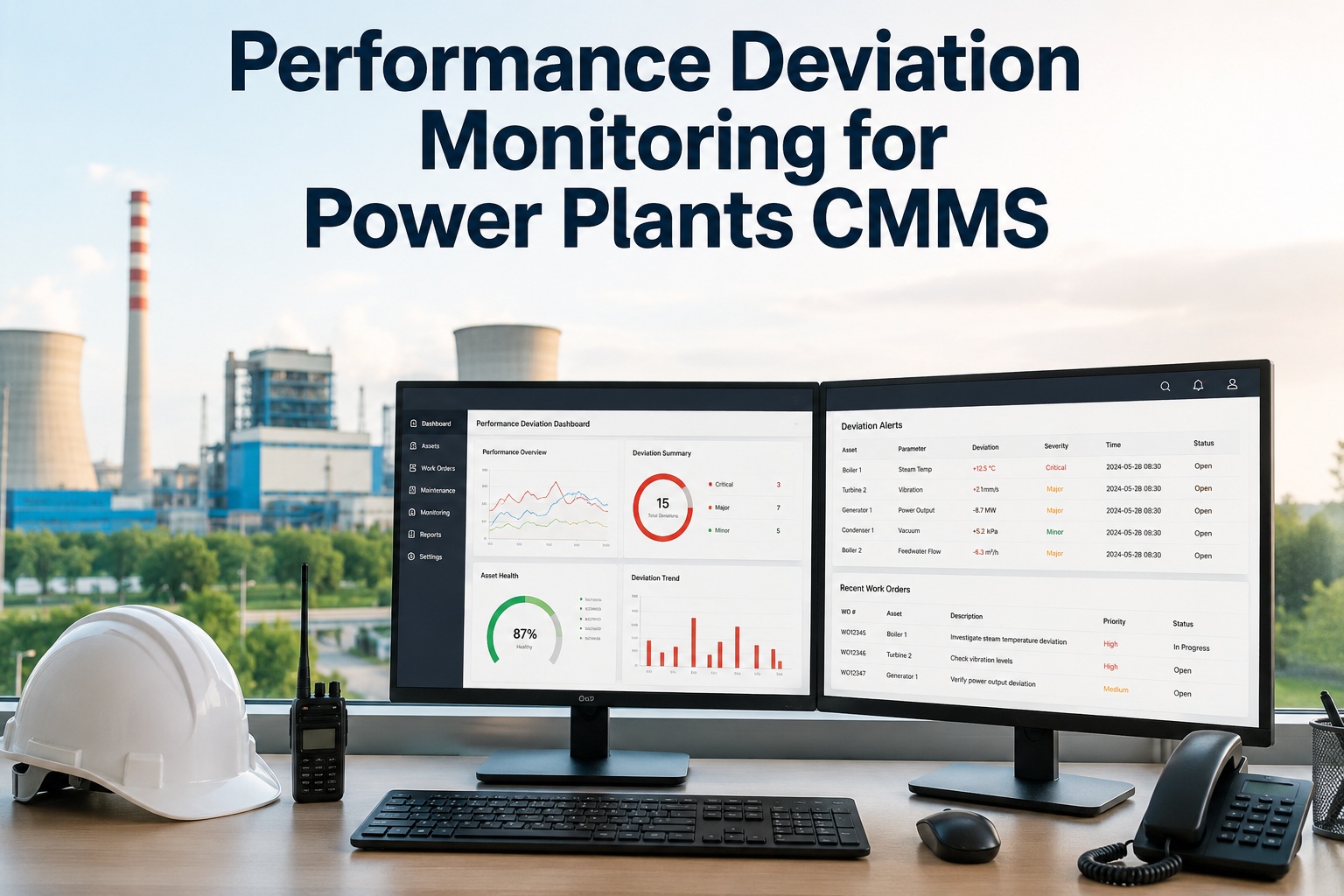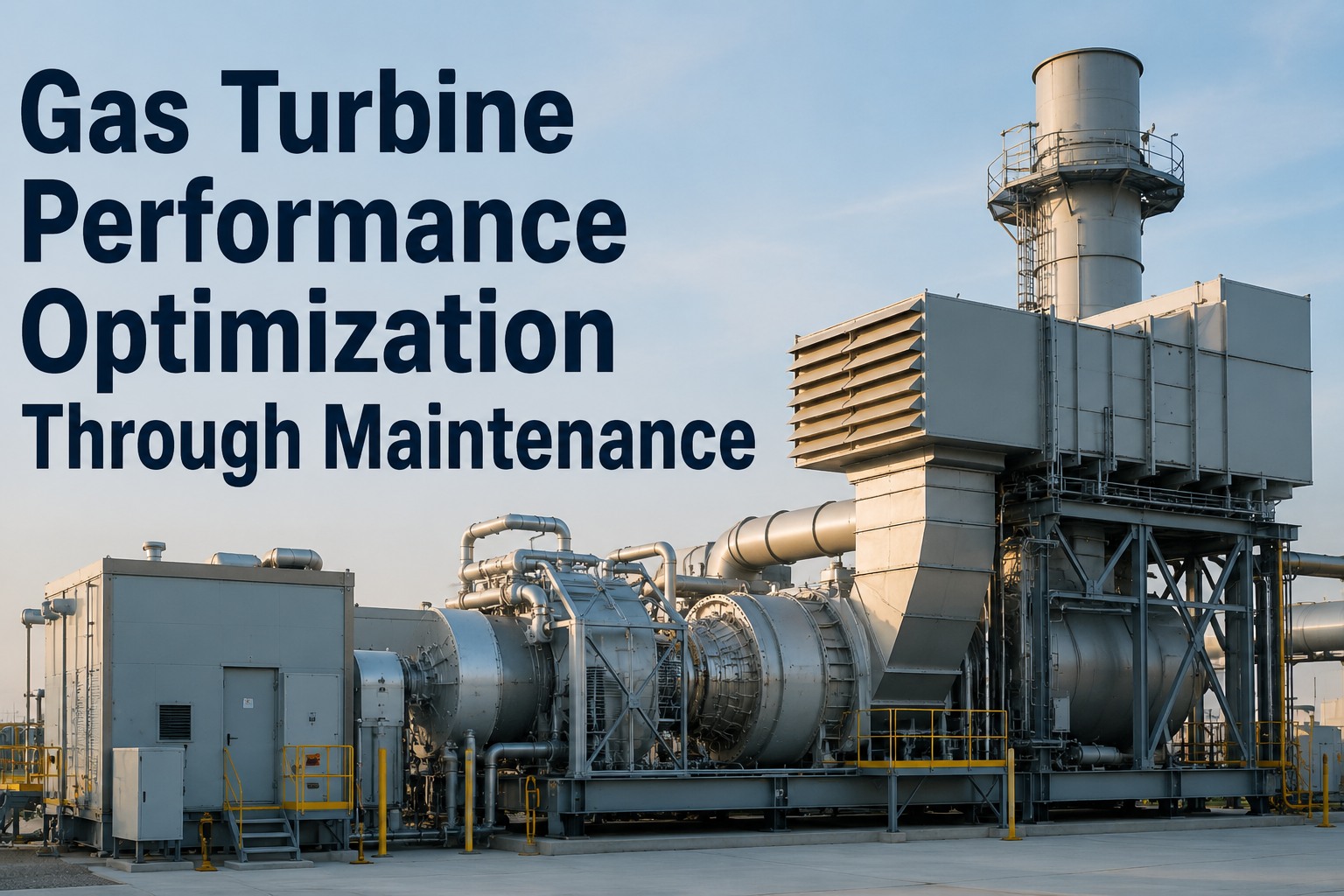
Gas turbine performance optimization through maintenance is the single highest-leverage activity available to any plant operating aeroderivative or heavy-frame units — a well-executed program can recover 2–5% of lost heat-rate efficiency, extend hot-section intervals by 15–25%, and prevent unplanned outages that routinely cost $50,000–$250,000 per event. Every operating hour a turbine runs without intervention, fouling, thermal degradation and tip-clearance growth silently erode output; the maintenance teams that quantify and arrest this degradation using a modern CMMS see measurable payback within the first compressor-wash cycle. This guide breaks down compressor washing ROI, combustion tuning, blade replacement timing, and how OxMaint turns turbine performance maintenance into a data-driven, automated workflow — you can Start Free Trial to see it on your assets today.
Gas Turbine Performance 2026
A 2–5% efficiency loss on your gas turbine is already costing you — every single hour.
Fouling, combustion drift and blade degradation compound silently across thousands of operating hours. OxMaint's CMMS-based turbine performance optimization program detects, arrests and prevents that loss — turning maintenance from a cost center into your highest-ROI reliability function.
The Degradation Curve
Why gas turbine performance degradation accelerates if left unchecked
A new gas turbine typically loses 2–3% of its baseline output within the first 1,000 operating hours — and up to 5% before the first major overhaul. Three degradation mechanisms drive this curve: compressor fouling (airborne particulates coating blade aero-surfaces), combustion hardware wear (nozzle and transition-piece distortion), and hot-section blade tip-clearance growth. Without turbine performance maintenance, each mechanism feeds the next: a fouled compressor raises exhaust temperature, which forces the control system to burn more fuel, which accelerates hot-section wear.
Compressor Fouling
2–5% output loss
Particulate, salt and oil-mist deposits on compressor blades disrupt airflow and raise the compressor discharge temperature. Online and offline compressor washing restores 1–3% of that loss per cycle.
Combustion Hardware Wear
1–2% efficiency drift
Nozzle distortion and transition-piece cracking alter combustion dynamics, shifting the flame temperature profile and forcing the DLN system into richer, less efficient operation. Regular tuning restores the margin.
Turbine Blade Degradation
3–5% power loss per cycle
TBC spallation, creep elongation and tip-clearance growth on Stage 1 and 2 blades reduce stage efficiency and increase leakage. Planned blade replacement timing, tied to measured output trends, is the only remedy.
ROI Analysis
Gas turbine compressor washing ROI: a worked example
Compressor washing is the fastest-payback maintenance intervention on any gas turbine — yet most plants still run it on a fixed calendar interval instead of condition-based triggers. Below is a defensible ROI model for a 180-MW Frame 7FA-class peaker running 4,200 hours per year. Adjust the inputs for your own fleet and the logic holds.
Recovered Output Formula
kW recovered = (Current MW × % loss) × wash recovery factor
Example: 180 MW × 2.5% fouling × 0.80 recovery = 3.6 MW recovered per wash
Annual Savings Formula
$ saved = kW recovered × hours run × marginal power price ($/MWh)
Example: 3.6 MW × 4,200 hrs × $48/MWh = $725,760 recovered per year
| Wash Strategy | Annual Wash Cost | Output Recovered | Year-One Savings | Payback |
|---|---|---|---|---|
| Reactive (no wash) | $0 | 0 MW | $0 | — |
| Fixed calendar interval (quarterly) | $8,400 | 1.2 MW | $235,200 | 2 weeks |
| Condition-based (CMMS-triggered) | $12,600 | 3.6 MW | $713,160 | < 1 week |
| Predictive (OxMaint AI model) | $11,200 | 4.1 MW | $826,560 | < 1 week |
Figures illustrative based on industry averages; actual results vary by unit class, fuel and duty cycle. A CMMS-based turbine optimization program with condition-based wash triggers is the single fastest-payback change a reliability team can make.
Turbine Optimization Guide
A 5-step timeline for turbine maintenance optimization
Gas turbine optimization is not a single event — it is a phased program that builds from baseline measurement to predictive, AI-driven intervention. Below is the sequence used by mature reliability teams to move from reactive firefighting to condition-based turbine maintenance performance over a 6-month rollout.
Month 1
Baseline performance & asset registry
Import every turbine, aux and BOP asset into OxMaint. Record baseline heat rate, compressor discharge temperature, exhaust temperature spread, and firing temperature at ISO conditions. This is your reference line — without it, you cannot measure degradation.
Month 2
Automate compressor-wash triggers
Replace fixed-interval wash schedules with condition-based work orders triggered by CDT rise, megawatt deviation or differential-pressure thresholds. OxMaint auto-generates the wash WO, assigns the crew and tracks post-wash recovery automatically.
Month 3
Combustion tuning & DLN margin
Schedule and track DLN tuning events in OxMaint. Capture pre- and post-tune emissions (NOx, CO) and exhaust-spread data on every work order so combustion drift is trended — not guessed — across combustion inspections.
Month 4–5
Blade replacement timing & life tracking
Track operating hours, starts and trips per turbine section in OxMaint. Use predictive analytics to model remaining useful life on Stage 1 and 2 blades so replacement happens before a forced outage — not after.
Month 6
Closed-loop analytics & continuous optimization
OxMaint dashboards now show recovered MW, wash-cycle ROI, combustion-drift trends and MTBF per unit. The program becomes self-funding — every maintenance dollar is tied to a measurable performance outcome.
How OxMaint Helps
CMMS turbine optimization: how OxMaint turns data into recovered megawatts
Most plants already have SCADA data, historian tags and a spreadsheet of work orders — what they lack is a system that connects condition data to automated maintenance action and tracks the financial outcome. OxMaint closes that loop. Here is how four specific capabilities map directly to gas turbine performance optimization.
Condition-based work order automation
OxMaint ingests turbine sensor data (CDT, MW deviation, vibration) and auto-generates a compressor-wash or inspection work order the moment a threshold is crossed — no manual triggering, no missed intervals.
→ Cut unplanned turbine downtime 30–50%
Performance trend & degradation analytics
Every work order captures pre- and post-intervention performance data. OxMaint trends heat rate, exhaust spread and recovered MW across the fleet so you can see exactly how much each maintenance event bought you.
→ Quantify recovered output per wash cycle
Predictive blade-life & parts inventory
OxMaint's AI models remaining useful life on hot-section components and links it to your spare-parts inventory — so the right blade, gasket and transition piece are on the shelf before a CI or HGPI outage opens.
→ Cut outage duration 15–25% with pre-staged kits
Audit-ready compliance & reporting
Every wash, tune and inspection is logged with timestamps, technician sign-off, parts consumed and performance deltas — giving you a defensible audit trail for OEM warranty claims and ISO 55000 asset-management alignment.
→ Pass any audit without rebuilding spreadsheets
Real-World Scenario
A 180-asset peaker plant recovered 3.6 MW and $725K in year one
Before OxMaint we were washing on a calendar — every quarter, whether the turbine needed it or not. After moving to condition-based wash triggers inside OxMaint, we recovered 3.6 MW of lost output on our 7FA and cut unplanned trips by 40% in the first year. The platform paid for itself before the first CI outage.
See OxMaint on your turbines — book a 30-min demo
Walk through a live turbine performance optimization workflow: condition-based wash triggers, degradation trending, predictive blade-life modeling and the ROI dashboard your CFO will actually believe. No slides — just your assets in the platform.
FAQ
Gas turbine performance optimization — your questions answered
How often should a gas turbine compressor be washed?
A fixed calendar interval (e.g. quarterly) is a starting point, but condition-based washing is far more cost-effective. The optimal trigger is a 2–3°C rise in compressor discharge temperature at baseline load, or a 1–2% deviation in megawatt output. OxMaint's CMMS monitors these tags and auto-generates a wash work order the moment a threshold is crossed — eliminating both over-washing (wasted water, chemicals and downtime) and under-washing (lost output). You can Start Free Trial to connect your turbine data and see the difference.
What is the typical ROI of a gas turbine compressor washing program?
For a mid-size Frame 7FA-class unit running 4,000+ hours per year, a condition-based compressor washing program typically delivers a 2.5–3.5x return on investment in year one. A single wash that recovers 3–4 MW at $45–55/MWh can return $50,000–$90,000 in recovered output, while the wash itself costs $2,000–$4,000. Payback is usually achieved within the first one to two wash cycles.
How does a CMMS improve gas turbine efficiency?
A CMMS improves turbine efficiency by closing the loop between condition data and maintenance action. Instead of running on fixed intervals, the system triggers washes, combustion tunes and inspections based on measured degradation — then captures pre- and post-intervention performance data so the team can quantify exactly how much efficiency was recovered. OxMaint extends this with predictive analytics for blade-life and automated spare-parts staging, so outages are shorter and fewer are unplanned.
When should turbine blades be replaced for optimal performance?
Stage 1 and 2 turbine blades should be replaced based on operating-hour accumulation, creep-life consumption and measured performance degradation — not a generic OEM interval. Signs it is time include TBC spallation beyond OEM limits, a sustained 3–5% drop in stage efficiency, or exhaust-temperature spread that cannot be corrected by combustion tuning. OxMaint tracks all three indicators and flags the blade set for replacement before a forced outage occurs. Book a Book a Demo to see the blade-life model on a live unit.
Can predictive maintenance prevent gas turbine trips?
Yes. The majority of gas turbine trips are preceded by detectable signatures — rising vibration, increasing exhaust spread, bearing-temperature drift or combustion-dynamics excursions — that appear hours to weeks before the protection system trips the unit. A predictive maintenance model trained on these patterns can flag the developing fault early enough for a planned intervention, cutting unplanned trip frequency by 30–50% in mature deployments.
Stop accepting 2–5% as normal
Turn gas turbine maintenance into your highest-ROI reliability program
Every hour your turbines run without condition-based optimization, recoverable megawatts — and dollars — are slipping away. OxMaint gives you the CMMS, predictive analytics and ROI dashboards to arrest degradation, prevent unplanned trips and prove the value of every maintenance dollar to your CFO.
Free 14-day trial · No credit card