Boiler Tube Failure (BTF) Root Cause Analysis and Prevention Programs

By Johnson on May 18, 2026

boiler-tube-failure-(btf)-root-cause-analysis-and-prevention-programs

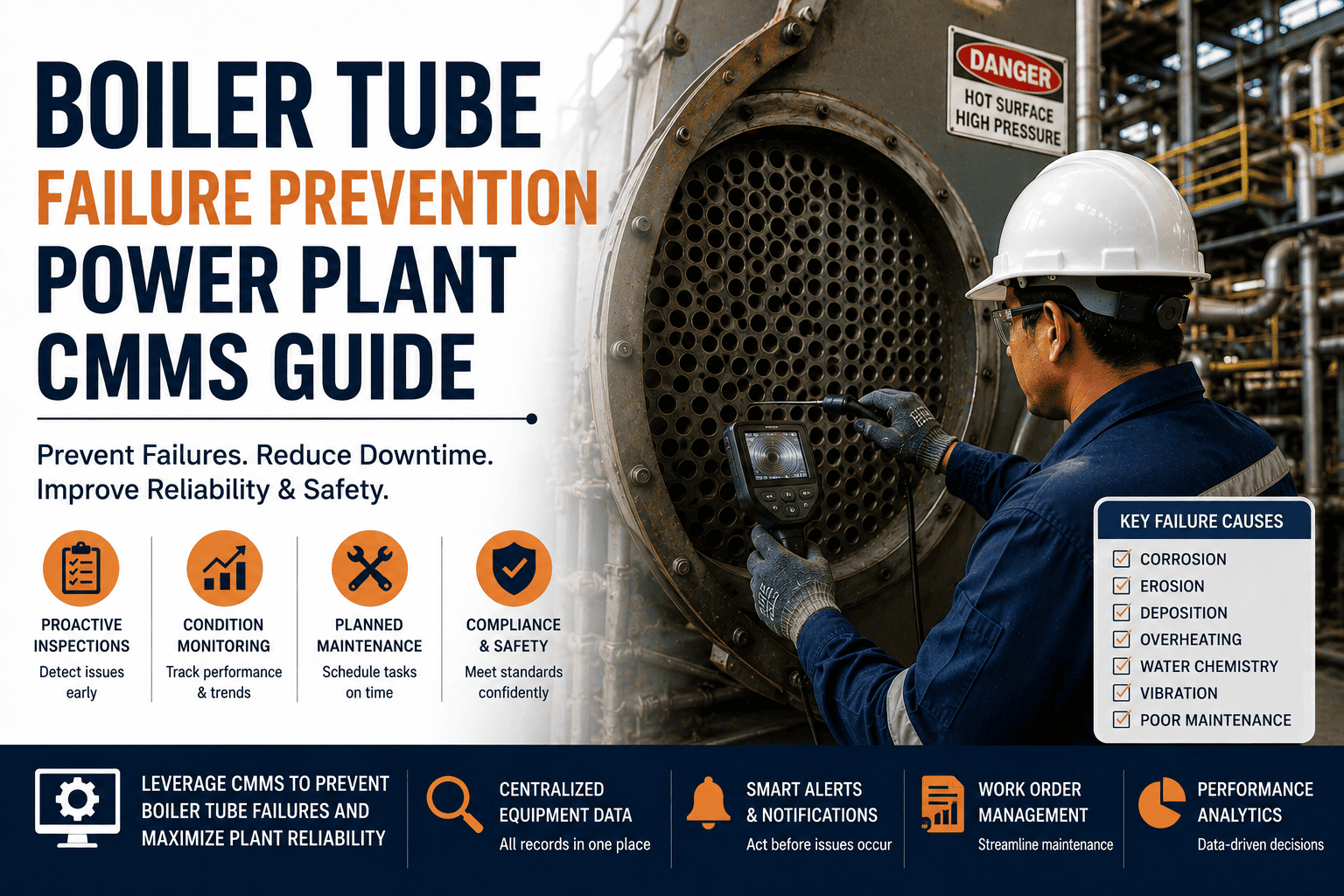
A waterwall tube rupture at 03:00 forces an emergency boiler shutdown — 96 hours offline and $2.4 million in lost revenue while the plant scrambles to locate spare tubes and qualified welders. A superheater tube failure caused by long-term overheating that could have been detected during the last outage becomes a catastrophic mid-campaign failure requiring a 10-day emergency repair. Economizer tube erosion accumulating for 18 months creates a pinhole leak that propagates into a full rupture within 48 hours of first detection. Power plants that do not track boiler tube failure root causes repeat the same failures across campaigns. OxMaint's Boiler Tube Failure Analysis module records every tube failure with location, failure mode, root cause, repair method, and tube remaining life estimation in one structured CMMS workflow. Every waterwall failure, every superheater crack, every reheater bulge, and every economizer erosion point tracked against the boiler asset with photos and metallurgical findings attached. Book a 15-minute demo to see boiler tube failure tracking running in OxMaint.

Boiler Tube Failure · Root Cause · Power Plant · OxMaint

Boiler Tube Failure Root Cause Analysis and Prevention Programs

Waterwall tube ruptures, superheater overheating failures, reheater stress cracks, economizer erosion tracking — every failure mode recorded with root cause, location mapping, and remaining life estimation in one CMMS platform.

Boiler Tube Failure Zones
Waterwall
42% of failures
Superheater
28% of failures
Reheater
18% of failures
Economizer
12% of failures
$2.4M
Lost revenue from 96-hour waterwall tube rupture outage in 500 MW plant during peak season
18 months
Average time from first economizer tube erosion detection to catastrophic rupture when tracking is absent
60%
Boiler tube failures caused by repeat failure modes at same location across campaigns due to root cause not tracked
10 days
Emergency superheater tube repair outage when long-term overheating damage not detected during planned inspections
Failure Mechanisms

Four Primary Boiler Tube Failure Modes and Their Root Causes


Waterwall
Waterwall Tube Rupture from Flow-Accelerated Corrosion
Flow-accelerated corrosion (FAC) thins waterwall tube walls from 6 mm to 2.5 mm over 24-36 months in high-velocity water flow zones. Tube wall thickness not measured during outages allows FAC to progress until rupture occurs during operation. A 500 MW plant loses 96 hours and $2.4 million when a waterwall tube ruptures at the economizer outlet header connection — the highest-risk FAC zone. OxMaint tracks tube wall thickness measurements per location during outage inspections and flags tubes for replacement when thickness falls below 3.5 mm. Thickness history per tube location creates a FAC rate map showing which zones require more frequent inspection.

Superheater
Superheater Tube Failure from Long-Term Overheating
Superheater tubes operating above design temperature for extended periods develop creep damage and oxide scale buildup on internal surfaces. Tube metal temperature 30-50°C above design for 12-18 months creates microstructural damage visible only through metallurgical examination. Overheating damage not detected during outage inspections leads to mid-campaign rupture requiring 10-day emergency repair. OxMaint records steam temperature deviation from design per superheater section and tracks cumulative overheat hours. When overheat hours exceed threshold, OxMaint triggers metallurgical sampling work order to assess creep damage before failure occurs.

Reheater
Reheater Tube Stress Cracking from Thermal Fatigue
Reheater tubes subjected to repeated thermal cycling during load changes accumulate thermal fatigue damage. Stress cracks initiate at tube bends and weld heat-affected zones after 8,000-12,000 thermal cycles. Crack initiation not detected during visual inspections propagates to through-wall failure within 2,000 additional cycles. OxMaint tracks thermal cycle count per reheater section and schedules liquid penetrant testing at high-risk locations when cycle count reaches 8,000. Crack detection findings logged per tube location create a thermal fatigue damage map for targeted replacement during outages.

Economizer
Economizer Tube Erosion from Fly Ash Impact
Fly ash particles in flue gas erode economizer tube external surfaces at gas velocities above 18 m/s. Erosion reduces tube wall thickness from 5 mm to 2 mm over 12-24 months in high-velocity zones near tube bends. Tube wall thickness not tracked during outages allows erosion to progress until pinhole leak develops and propagates to full rupture within 48 hours. OxMaint schedules ultrasonic thickness testing on economizer tubes every major outage and logs thickness per measurement location. Tubes flagged for replacement when thickness falls below 2.8 mm or when erosion rate exceeds 1 mm per 6,000 operating hours.

See Boiler Tube Failure Tracking Running in OxMaint

Tube wall thickness logged per location · Overheat hours tracked per superheater section · Thermal cycle count recorded per reheater · Erosion rate calculated per economizer zone. Every boiler tube failure mode tracked with root cause and location mapping.

Root Cause Tracking

What Gets Recorded in a Boiler Tube Failure Analysis Program

01
Failure Location Mapping
Every tube failure recorded with precise location — boiler zone, elevation, tube row, and position relative to headers or bends. Location data creates failure heat map showing which zones experience repeat failures across campaigns. High-frequency failure zones flagged for enhanced inspection or design modification.
02
Failure Mode Classification
Failure mode classified per EPRI boiler tube failure database categories — FAC, overheating, erosion, corrosion, stress cracking, or mechanical damage. Failure mode distribution tracked across campaigns identifies systematic issues requiring corrective action beyond tube replacement.
03
Root Cause Documentation
Root cause determined through visual examination, metallurgical analysis, and operating condition review. Root cause recorded per failure — water chemistry excursion, combustion imbalance, design inadequacy, or operational abuse. Root cause history searchable to prevent repeat failures.
04
Repair Method and Material
Repair method documented — tube replacement, weld overlay, or temporary plug. Replacement tube material and heat treatment recorded. Material upgrade decisions tracked per failure location to assess effectiveness of material changes in preventing repeat failures.
05
Operating Hours at Failure
Operating hours since last tube replacement or new boiler commissioning recorded per failure. Hours-to-failure data per failure mode creates remaining useful life estimation model for similar tubes in same operating conditions.
06
Metallurgical Findings
Laboratory metallurgical analysis findings attached to failure record — oxide scale thickness, creep void density, grain boundary carbides, or FAC penetration depth. Metallurgical findings searchable for engineering analysis of long-term degradation trends.
OxMaint Capabilities

How OxMaint Manages Boiler Tube Failure Analysis

Feature 1
Tube Failure Record with Photo and Location Mapping
When a boiler tube failure occurs, maintenance supervisor creates a failure record in OxMaint mobile app on site. Record captures tube location, failure mode, photos of failed tube, and immediate repair action taken. Location mapping links failure to boiler zone and elevation for heat map generation. Failure record timestamped and attributed to reporting user creates audit trail for insurance and regulatory reporting. Sign in to create tube failure records in OxMaint.
Feature 2
Root Cause Analysis Workflow with Metallurgical Findings Attachment
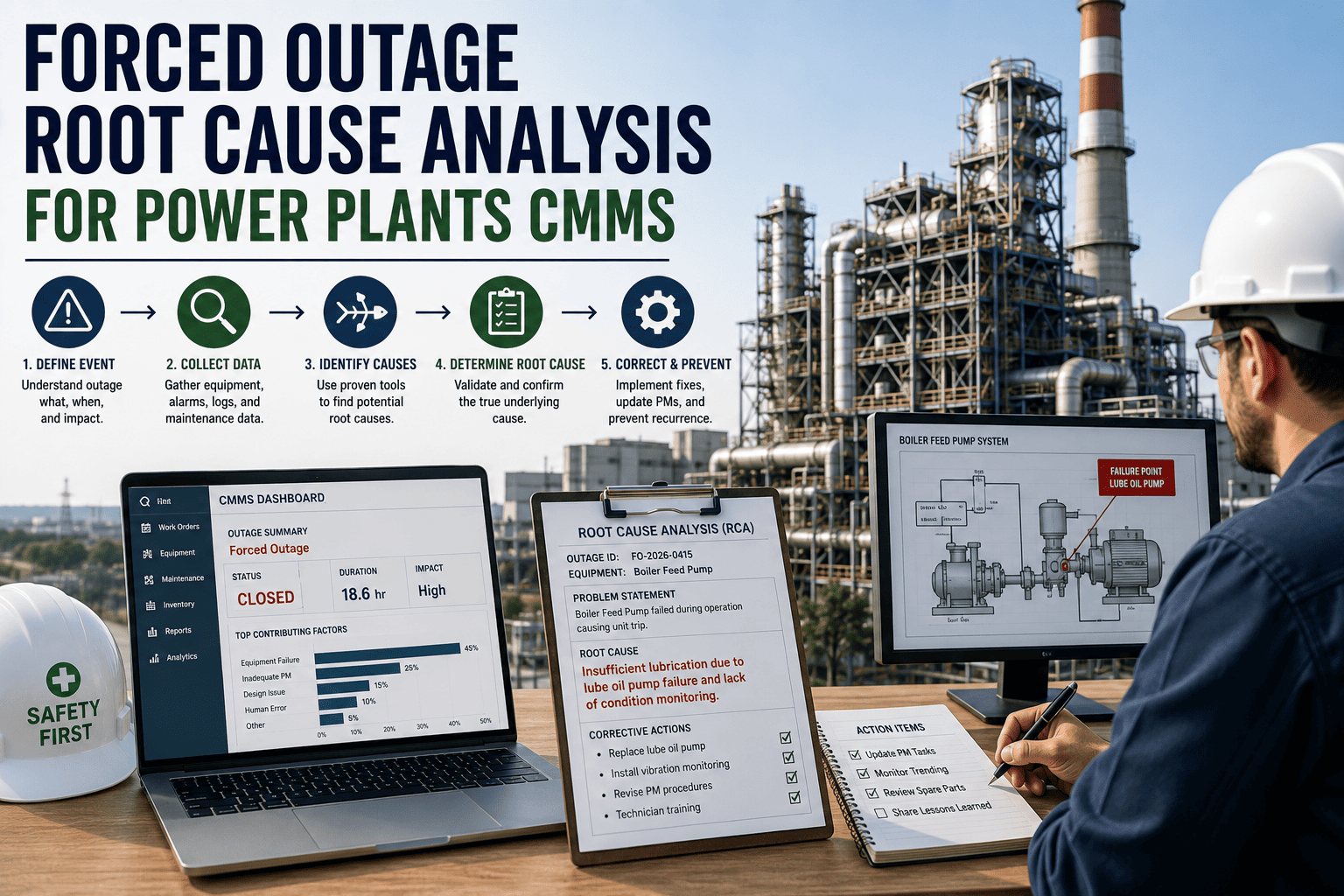
After initial failure record is created, OxMaint triggers root cause analysis workflow. Reliability engineer assigns failure mode classification, determines root cause through visual and metallurgical examination, and attaches lab reports to failure record. Root cause analysis completion required before failure record can be closed. Root cause history searchable across all failures for pattern identification and corrective action planning. Book a demo to see root cause workflow in OxMaint.
Feature 3
Failure Heat Map Showing Repeat Failure Locations
OxMaint generates failure heat map from tube failure location data — showing which boiler zones experience highest failure frequency across campaigns. Heat map visualizes failure clustering at specific elevations or tube rows indicating systematic issues. High-frequency failure zones flagged for enhanced inspection intervals or design modification evaluation. Heat map exportable for engineering review and outage planning. Sign in to see failure heat mapping in OxMaint.
Feature 4
Remaining Useful Life Estimation from Hours-to-Failure Data
OxMaint tracks operating hours at failure per tube location and failure mode. Hours-to-failure data aggregated across similar tubes creates RUL estimation model. For example, if waterwall tubes at economizer outlet fail from FAC at average 28,000 operating hours, tubes at 22,000 hours are estimated to have 6,000 hours remaining. RUL estimates guide outage tube replacement planning and spare tube inventory management. Book a demo to see RUL estimation in OxMaint.

Book a Demo — See OxMaint Managing Boiler Tube Failure Analysis in Your Power Plant

Tube failure records with photos and location mapping · Root cause analysis with metallurgical findings attachment · Failure heat map showing repeat failure zones · Remaining useful life estimation from hours-to-failure data. Every boiler tube failure tracked with complete root cause documentation.

FAQ

Boiler Tube Failure Analysis — Common Questions

How does OxMaint track tube wall thickness measurements during outage inspections?
OxMaint logs tube wall thickness measurements manually — inspectors enter thickness values per tube location after ultrasonic testing during outages. The system trends thickness over campaigns and alerts when thickness falls below minimum or erosion rate exceeds limits. Thickness history per location creates degradation rate map for targeted inspection planning. Sign in to configure thickness tracking in OxMaint.
Can OxMaint track boiler tube failures across multiple units in a multi-unit power plant?
Yes — OxMaint creates separate boiler asset records per unit. Tube failures tracked independently per boiler with location mapping and root cause per unit. Reliability engineers compare failure patterns across units to identify common root causes — if Unit 1 waterwall shows FAC failures and Unit 2 does not, water chemistry or feedwater heater differences become visible. Book a demo to see multi-unit tracking in OxMaint.
How long does it take to implement a boiler tube failure analysis program in OxMaint?
A basic tube failure tracking program — failure records with photos and location mapping — can be configured and live within one day of OxMaint setup. Root cause analysis workflow and failure heat mapping add one additional configuration session. Most power plant teams complete their first fully documented tube failure analysis within one week of OxMaint go-live. Sign in to start tube failure tracking in OxMaint.
Can tube failure records be used for insurance claims and regulatory reporting?
Yes — OxMaint tube failure records are timestamped, attributed to users, and stored with photos and metallurgical reports attached. Insurance adjusters assessing boiler damage claims receive structured failure documentation with root cause analysis. Regulatory authorities requiring tube failure reporting receive exportable records with complete failure history per boiler. Book a demo to see failure record export in OxMaint.
Does OxMaint integrate with metallurgical lab systems for automatic report attachment?
OxMaint supports manual attachment of metallurgical lab reports as PDF files to tube failure records. For labs with digital reporting systems, OxMaint can integrate via API to attach reports automatically. Most plants manually upload lab reports within 7-14 days of receiving metallurgical analysis results. Sign in to attach lab reports in OxMaint.

Share This Story, Choose Your Platform!