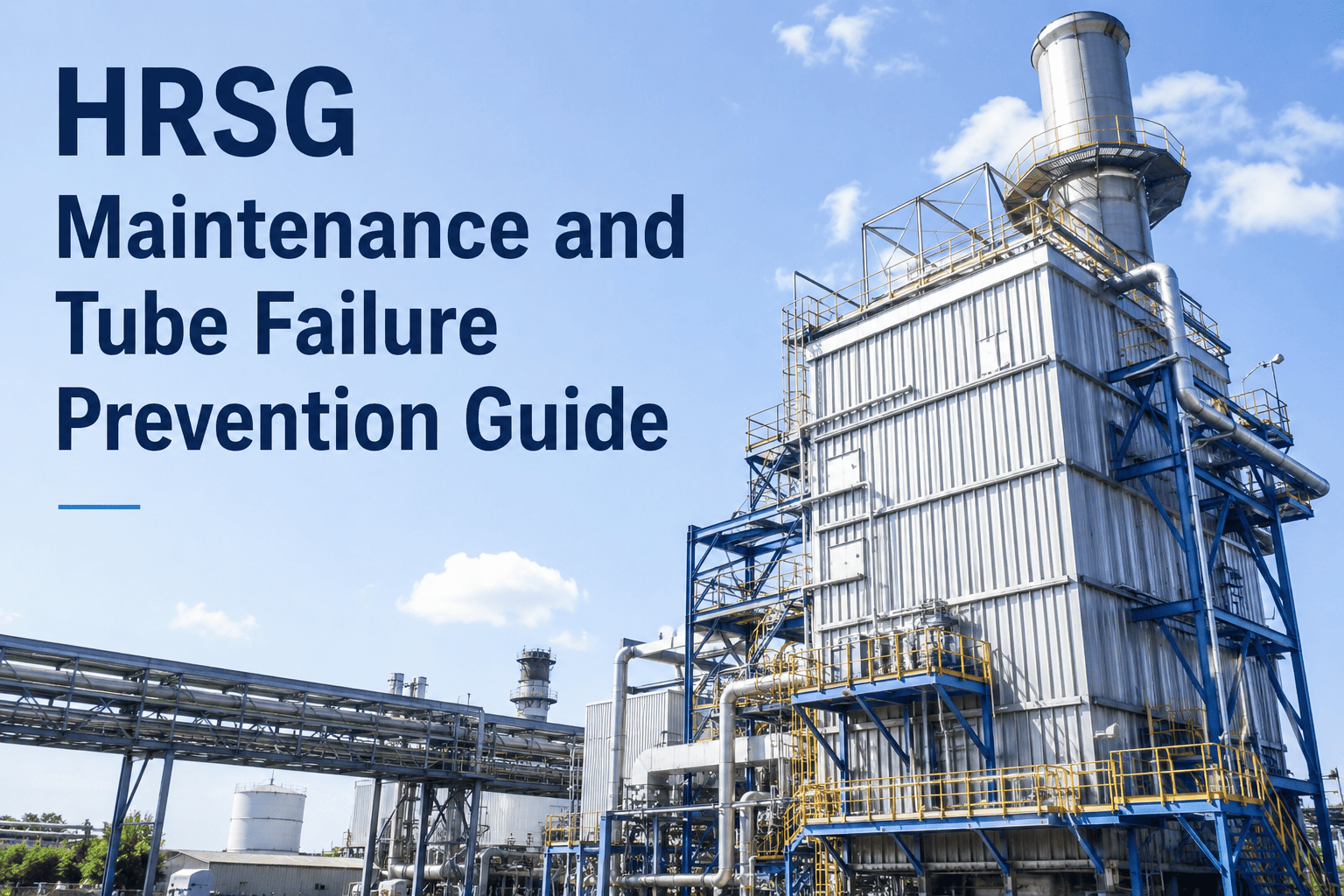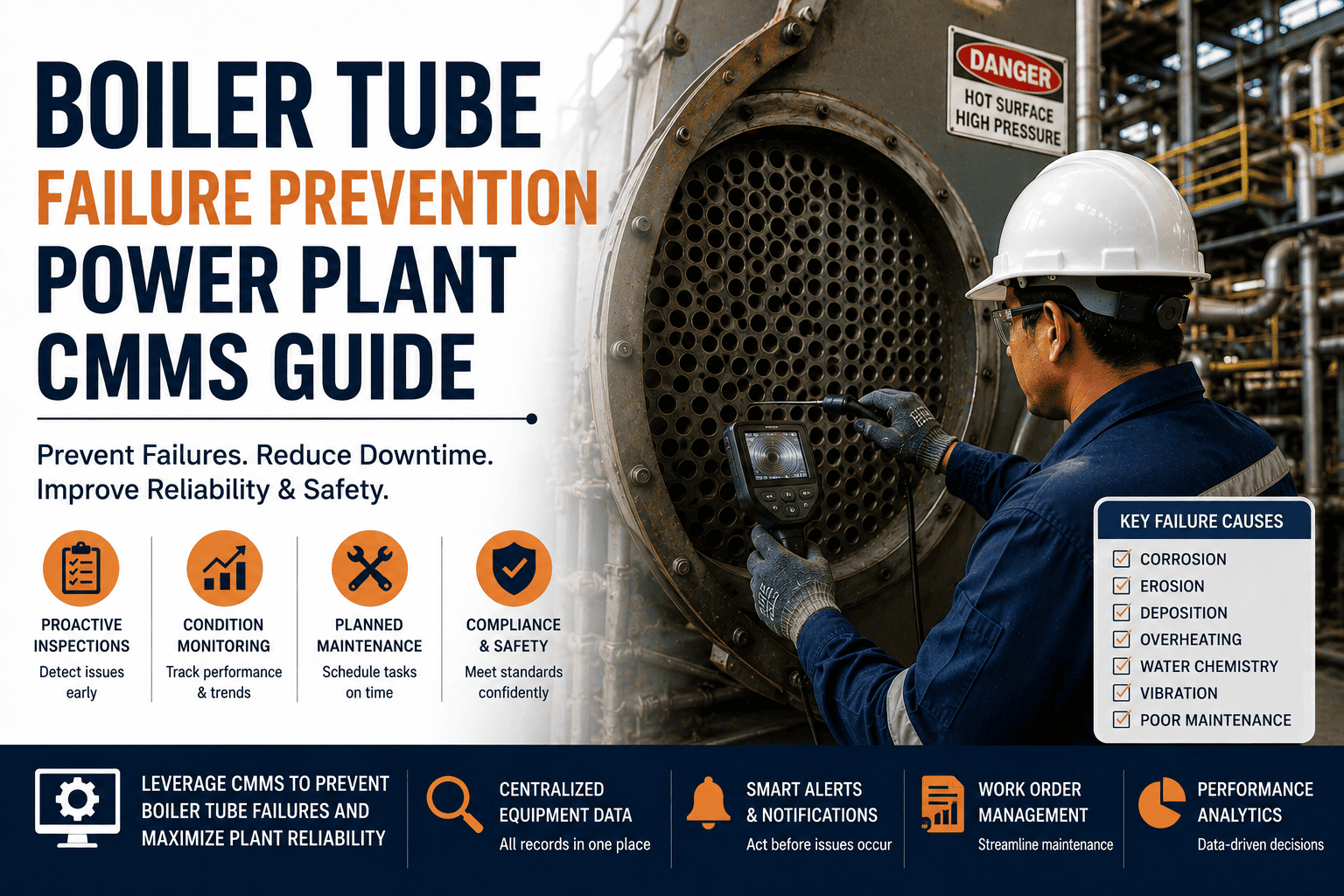
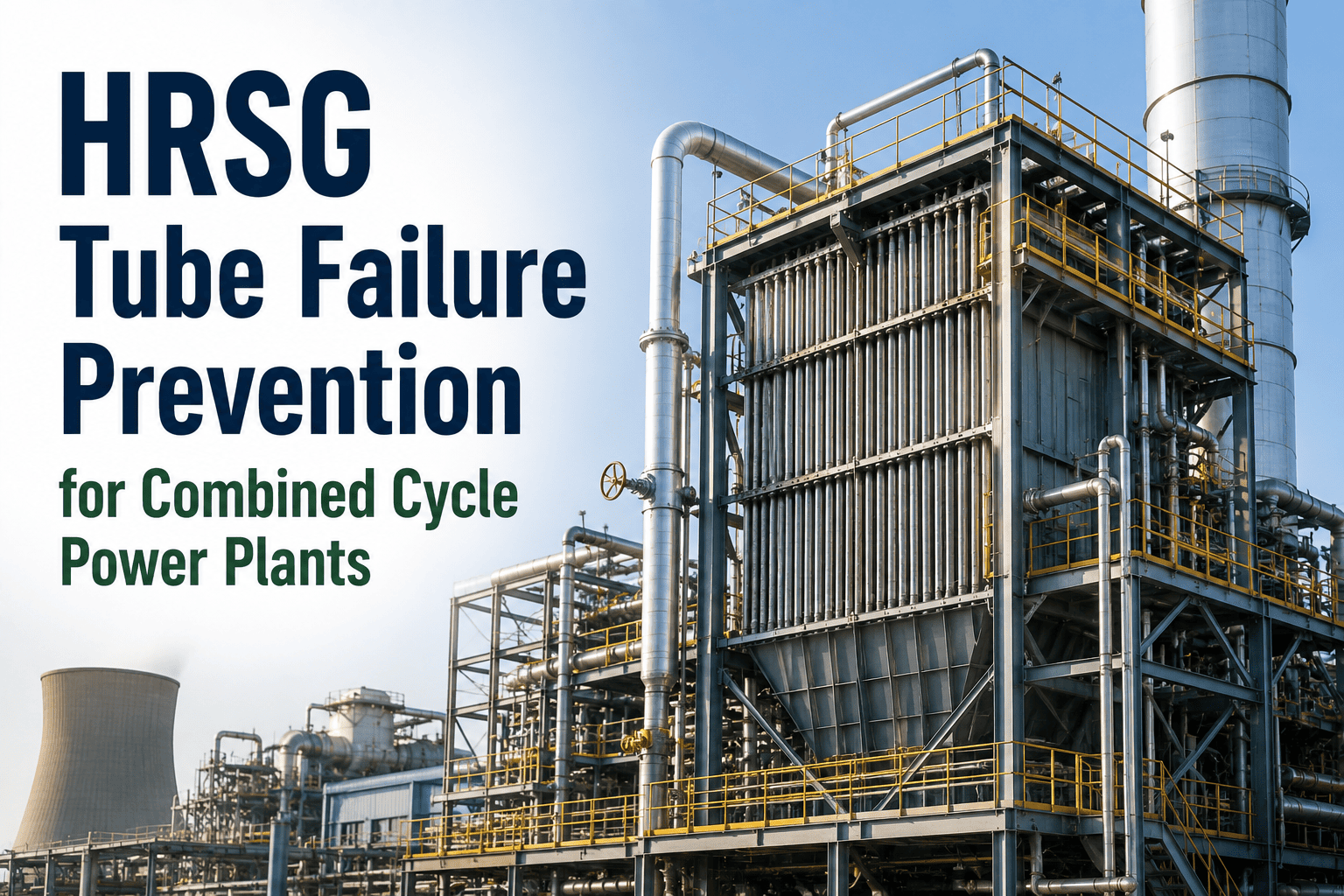
Boiler tube failures account for roughly 40% of unplanned outages in coal- and gas-fired power plants, and a single ruptured superheater tube can force a 600 MW unit offline for 4–7 days, burning through $1–3M in lost generation and emergency repair labor per event. The hard truth most reliability engineers learn too late is that fewer than 15% of these failures are truly unpredictable; the rest trace back to chemistry excursions, missed ultrasonic inspections, and overdue chemical cleaning — all of which a structured CMMS workflow catches weeks before a leak ever opens. This guide walks through the root-cause taxonomy, the seven failure mechanisms worth tracking monthly and the inspection-cleaning-intervention cadence that has cut tube-leak events by 60–80% in plants that commit to it. If you want to operationalize the program immediately, you can Start Free Trial on OxMaint and configure the boiler-tube work-order templates today.
Is your next tube leak already forming inside the boiler right now?
40% of forced outages in fossil plants start with a single tube failure — and most are preventable when chemistry, inspection, and cleaning work orders are tracked to schedule inside a CMMS built for reliability.
Seven mechanisms that cause 95% of tube leaks
EPRI-rooted failure analysis consistently groups boiler tube failures into a short list of recurring mechanisms. Naming the mechanism is the first step toward eliminating it — every work order in your CMMS should carry this code.
Short-Term Overheating
Sudden tube-wall excursions above yield — usually from loss of coolant flow or burner misalignment. Bulged-lip ruptures appear within hours; tube metal may exceed 700°C.
Long-Term Overheating
Creep damage from months of operation 30–80°C above design. Spheroidized carbides and microvoids precede a thick-edge longitudinal crack — the most common superheater failure.
Caustic Gouging
Concentrated NaOH under deposits in waterwall tubes eats 10–20 mils of metal in weeks. Root cause is usually chemistry upset combined with waterside fouling.
Hydrogen Damage
Atomic hydrogen from under-deposit corrosion decarburizes tube steel, forming methane microcracks. Wall loss may be only 5% when sudden brittle rupture occurs.
Pitting Corrosion
Oxygen ingress during outages and improper layup produces localized pits that act as stress concentrators. A 0.5 mm pit in a 6 mm wall can halve fatigue life.
Stress Corrosion Cracking
Caustic or chloride SCC in austenitic stainless superheaters — branching transgranular cracks propagate fast once initiated, often within a single operating cycle.
Erosion / Fly-Ash Wear
Sootblower impingement and ash-laden flue gas thin economizer and re-heater tubes 2–5 mils/year. UT surveys every 18 months catch it; unsurveyed, it ruptures.
Fatigue Cracking
Thermal cycling at header stubs and bends initiates transverse cracks that grow 0.05–0.2 mm per start-stop. Combined-cycle peakers see this 3–5× faster than baseload units.
Dissimilar Metal Welds
Carbon-to-austenitic welds at superheater outlets fail at the ferritic heat-affected zone after 60,000–90,000 hours. Replacement with Inconel 82/182 buffers extends life 4×.
Where metal meets chemistry — and where it fails first
T = absolute metal temp (K), t = hours to rupture, C ≈ 20 for low-alloy steels. A 30°C overshoot on a T22 superheater tube cuts creep life from 100,000 h to roughly 30,000 h — a 70% reduction that goes unnoticed without tube-skin thermocouple trending.
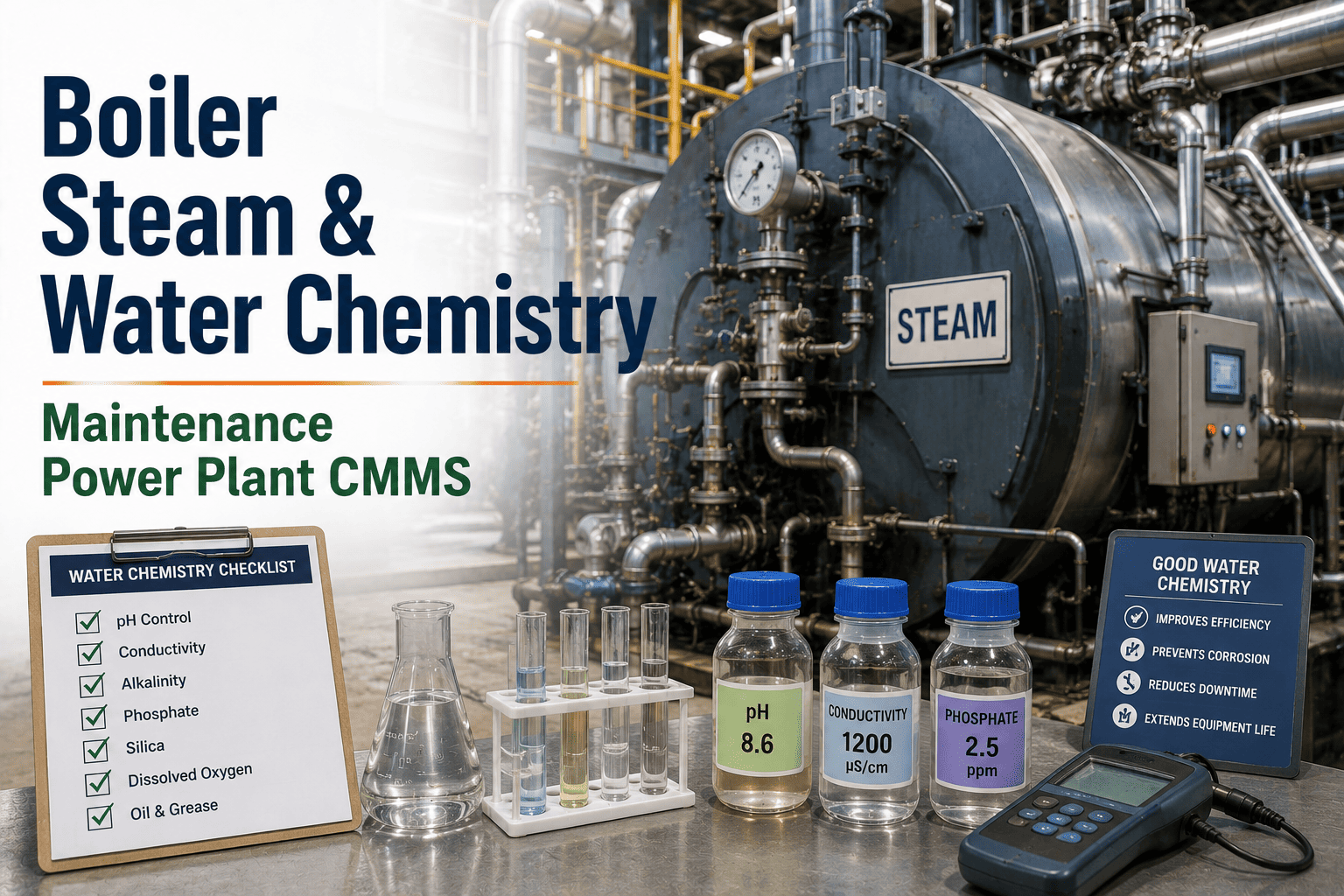
Corrosion rate (mils/yr) scales non-linearly with deposit boiling-point elevation and free caustic. Keeping total dissolved solids under 2 ppm and phosphate hideout below 6 mg/L suppresses K by an order of magnitude versus uncontrolled chemistry.
| Mechanism | Typical Location | Warning Signs | Time-to-Failure |
|---|---|---|---|
| Short-term overheating | Waterwall, burner belt | Loss of feed flow, tube bulging | Hours |
| Long-term creep | Superheater / reheater outlet | Spheroidized microstructure, OD scaling | 20,000–100,000 h |
| Caustic gouging | Waterwall, sloped tubes | NaOH excursions, heavy deposit | Weeks to months |
| Hydrogen damage | Waterwall under deposit | Low pH excursion >48 h | 1–6 months |
| SCC (caustic/chloride) | Austenitic SH, drain lines | Branching cracks, chloride in steam | 1 operating cycle |
| Fly-ash erosion | Economizer, cage row | Wall thinning 2–5 mils/yr at UT | 3–7 years |
A month-by-month tube-integrity program
Plants that drove tube-leak forced-outage hours below 1% of available hours share one trait: the boiler-tube program is scheduled, tracked, and escalated inside a CMMS — not run from spreadsheets and tribal memory. Here is the 12-month cadence a 500 MW unit should commit to.
Post-outage UT baseline & NDE
Complete ultrasonic thickness survey on 100% of high-risk superheater and reheater bends within 60 days of return to service. Log every reading against tube-ID and elevation in the CMMS asset register; flag any wall below 70% nominal for replacement planning.
Boiler chemistry audit
Review 12 months of continuous pH, conductivity, sodium, and silica logs. Confirm phosphate-pH or all-volatile treatment is within EPRI guidelines. Calibrate all in-line analyzers — 30% of plants find a drifted sodium sensor masking caustic risk.
Deposit weight sampling
Pull tubeside deposit samples from waterwall and superheater sections. If deposit density exceeds 40 mg/cm² on waterwalls or 15 mg/cm² on superheaters, schedule chemical cleaning for the next planned outage — do not defer.
Sootblower optimization
Re-verify blower nozzle-to-tube clearances and steam pressure. Erosion-prone economizer rows should get 25% reduced blowing frequency and timed sequencing — single-blower adjustments have cut fly-ash erosion failures by 45% in documented case studies.
Thermography & tube-skin temp review
Run external IR survey of the boiler enclosure under full load. Hot spots >50°C above sibling tubes indicate internal deposition or flow restriction — every flagged tube gets a targeted UT re-check within two weeks.
Outage scope freeze & replacement plan
Finalize tube-replacement scope using the year's UT trends, NDE findings, and failure-history heatmap. Freeze scope 90 days before outage so material (T22, T91, TP347H) is on site — last-minute spool fabrication adds 40% to material cost.
When to clean — and when cleaning causes more harm than it prevents
Chemical cleaning removes waterside deposits but also strips protective magnetite layers and risks hydrogen embrittlement if poorly inhibited. The decision must be data-driven, not calendar-driven.
- Waterwall deposit density > 40 mg/cm²
- Superheater deposit density > 15 mg/cm²
- Two or more under-deposit corrosion events in 5 years
- Tube-skin temps trending 40°C+ above design at same load
- Phosphate hideout exceeding 8 mg/L on AVT-treated units
- Deposit density < 15 mg/cm² with stable chemistry
- Unit within first 30,000 operating hours since last clean
- No under-deposit failure history in the section
- Tube-skin temps within 10°C of baseline at MCR load
- Inhibitor compatibility with existing metallurgy unverified
A 500 MW coal plant in the Midwest accumulated 52 mg/cm² waterwall deposits after deferring cleaning for two cycles. The next forced outage cost $2.8M in replacement power and 11 days offline. A scheduled inhibited hydrochloric-acid clean — budgeted at $180K — would have prevented it. Payback ratio: 15.5× in a single avoided event.
The 18 checks every boiler-tube work order must close out
Configure these as mandatory checklist items inside OxMaint so no inspection is closed until each line is answered — with photo evidence attached.
- UT thickness logged at 100% high-risk bends
- Deposit sample pulled and weighed
- Header bore-scope inspected at 6 points
- Drum internals and separators verified
- Downcomer flow distribution checked
- Blowdown line integrity confirmed
- Sootblower clearances re-verified
- Economizer cage row UT surveyed
- Refractory and slag accumulation noted
- Burner impingement pattern inspected
- Ash hopper erosion points photographed
- Flue gas temperature profile mapped
- pH, sodium, silica analyzers calibrated
- Phosphate-pH or AVT setpoints confirmed
- Condensate polisher resin condition checked
- Deaerator oxygen < 7 ppb verified
- Layup procedure reviewed for next outage
- Tube-failure heatmap updated in CMMS
Turn your boiler-tube program from reactive firefighting into scheduled prevention
Deploy OxMaint's boiler-tube failure templates, UT tracking, and chemistry-alert workflows in under a day — and catch the next leak 90 days before it opens.
Boiler tube failure prevention — answered
What is the single most common cause of boiler tube failure in power plants?
Long-term overheating — creep damage from sustained operation 30–80°C above design metal temperature — is the most frequently confirmed mechanism, typically in superheater and reheater outlet sections. It accounts for roughly 20–25% of all tube failures industry-wide, ahead of caustic gouging and fly-ash erosion. The root cause is almost always inadequate deposit removal or blocked steam-side flow that elevates tube-skin temperature unnoticed.
How often should boiler tubes be ultrasonically inspected?
High-risk superheater, reheater, and waterwall bends should receive a full UT thickness survey every 18–24 months, or at every planned major outage — whichever comes first. Erosion-prone economizer rows and sootblower-lane tubes warrant annual spot checks. All readings must be logged against tube-ID in the CMMS so wall-loss trends become visible across outages, not just as single-point snapshots. You can Start Free Trial and import your last UT survey into OxMaint to begin trending immediately.
When is chemical cleaning actually necessary?
Chemical cleaning is justified when waterside deposit density exceeds 40 mg/cm², superheater deposits exceed 15 mg/cm², or tube-skin temperatures trend 40°C above baseline at the same load. Cleaning below these thresholds adds risk without proportional benefit — inhibited acid strips protective magnetite and can introduce hydrogen damage if the metallurgy is incompatible. Always confirm deposit composition and inhibitor compatibility before scoping a clean.
How does a CMMS specifically reduce tube-failure incidents?
A CMMS like OxMaint enforces inspection checklists, triggers chemistry-excursion work orders automatically from integrated analyzer data, and maintains a failure heatmap so replacement scope is data-driven rather than reactive. Plants using CMMS-tracked tube programs report 60–80% reductions in tube-leak forced outages within two operating cycles — primarily because overdue inspections and deferred cleanings can no longer silently slip through the schedule. To see the boiler-tube module configured for your unit, Book a Demo.
What boiler chemistry parameters should trigger an immediate work order?
Three excursions warrant automatic CMMS work orders: sodium exceeding 10 ppb at the economizer inlet, pH dropping below 8.5 on an all-volatile treatment program, and dissolved oxygen above 7 ppb at the deaerator outlet. Each of these correlates with under-deposit corrosion, hydrogen damage, or pitting within days if uncorrected. Configure OxMaint to open a Priority-1 work order whenever any threshold is held for more than 30 minutes.
Build your boiler-tube failure prevention program this week
Join the plants that cut tube-leak outages by 60% in two cycles. Configure inspections, chemistry alerts, and cleaning scope in a single afternoon.
Free 14-day trial · No credit card
-root-cause-analysis-and-prevention-programs.png)