In 2023, a transformer oil leak at a 350 MW gas plant went undetected for six weeks — during which time an estimated 3,400 litres of dielectric oil migrated into a cable basement. The subsequent fire suppression discharge, transformer isolation, and environmental remediation cost $4.2 million and removed the unit from service for 31 days. The inspection record showed the area had been walked weekly throughout that period. The leak began as a seep at a gasket interface — invisible in the log because nobody was looking specifically for it, and there was no systematic process for detecting the visual signature of an active oil leak during routine rounds. AI vision for oil leak detection is now changing the standard of care in power station maintenance. Sign up for Oxmaint to deploy AI vision oil leak detection across your plant's at-risk asset areas, or book a demo to see oil leak detection AI configured for your transformer bays, turbine hall, and lube oil systems.
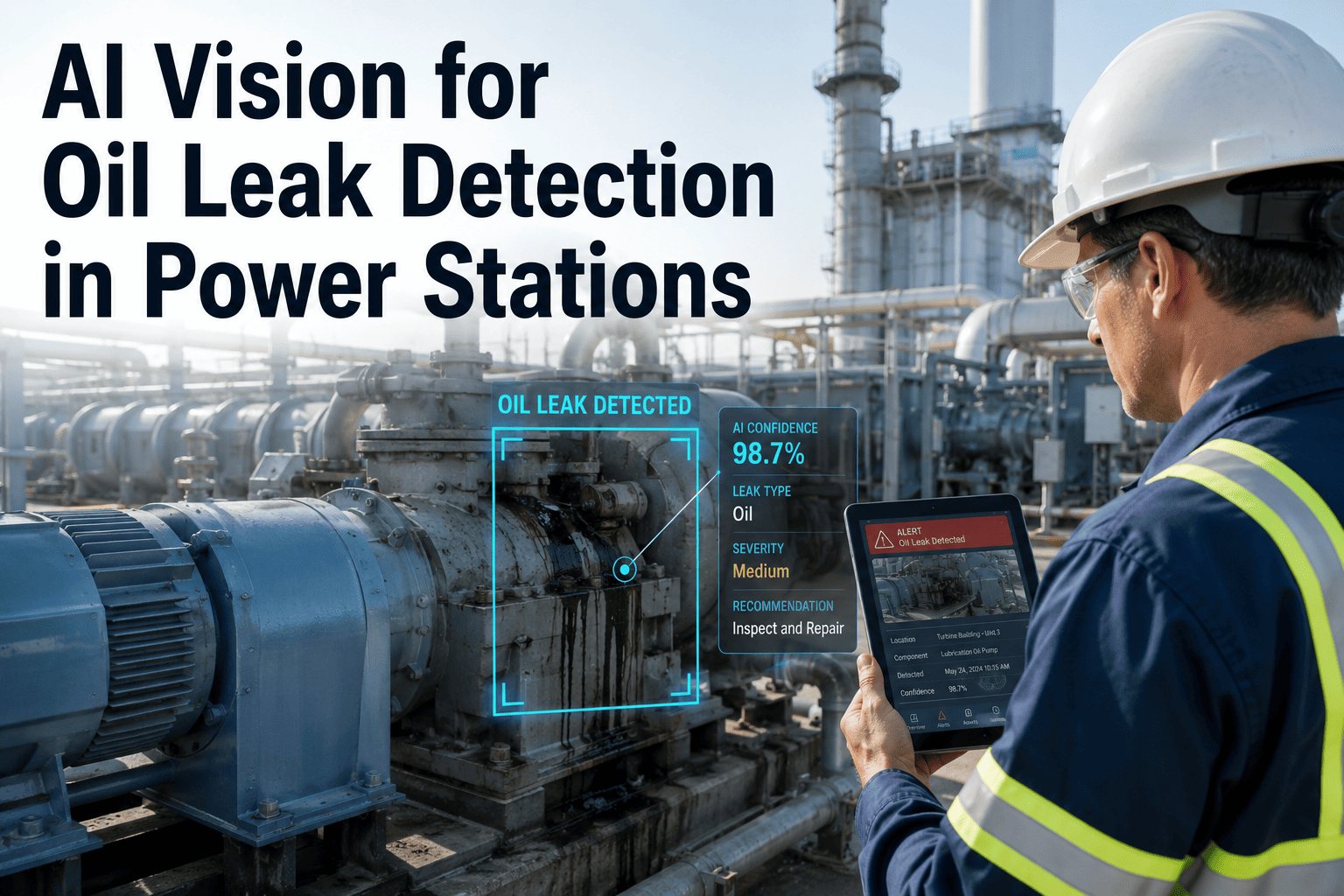
AI Vision for Oil Leak Detection in Power Stations
Continuous or scheduled AI-powered visual inspection that detects oil seeps, drips, pooling, and spray patterns on power station assets — before a maintenance nuisance becomes a fire risk, environmental incident, or forced outage.
Oil Leak Categories That AI Vision Identifies in Power Station Environments
AI vision for oil leak detection is not a single classification task. Different oil systems produce different visual signatures — from the iridescent surface sheen of a dielectric oil seep on concrete to the misting pattern of a high-pressure hydraulic spray — and each requires different detection logic and urgency classification.
Detected via surface sheen, pooling geometry, staining pattern on concrete or bunded surfaces, and oil-on-water iridescence in drain sumps. Transformers contain 5,000–100,000 litres of dielectric oil. A 5-litre-per-day seep at a gasket, bushing, or radiator drain valve is detectable by AI within one inspection cycle — typically invisible to human inspectors for weeks.
Gas and steam turbine lube oil systems operate at 2–5 bar pressure. Leaks at bearing housing seals, oil supply line fittings, and lube oil cooler connections produce misting, surface accumulation on housings, and drip patterns on hot casings. AI detects oil accumulation on bearing housing surfaces at volumes that precede measurable lube oil reservoir level drop.
Hydraulic control systems for steam valves, gas turbine IGV actuators, and governor systems operate at 100–200 bar. A pinhole leak at these pressures produces an atomised spray invisible to unaided human eyes but detectable by AI vision through misting on adjacent surfaces and accumulation patterns on horizontal structural members below actuator bodies.
Fuel oil storage, forwarding pump, and burner supply systems present detection challenges due to the variable colour and viscosity of fuel types. AI vision is trained on heavy fuel oil (HFO), diesel, and gas oil leak signatures on both dry and wet surfaces — including detection of bund containment accumulation that indicates a leak not directly visible at the source.
Detect Oil Leaks in the Inspection Cycle That Follows Their First Appearance — Not Six Weeks Later
Oxmaint's AI vision processes inspection photos from field technicians, fixed cameras, or drone flights — classifying oil leak presence, estimating leak rate category (seep, drip, flow, spray), and generating a work order with severity escalation within minutes of image capture. No specialist hardware required for initial deployment.
Highest-Priority Oil Leak Detection Locations in a Power Station — and Why
| Location | Oil System | Leak Consequence | Recommended Inspection Frequency | AI Detection Advantage |
|---|---|---|---|---|
| Main Power Transformer Bay | Dielectric oil | Critical | Every shift (AI-assisted) | Detects bund accumulation at 1-litre volume — below human detection threshold |
| Gas Turbine Bearing Housings | Lube oil | Critical | Every shift | Detects surface oil accumulation before reservoir level indicators respond |
| HP Steam Valve Actuators | Hydraulic oil | High | Daily | Detects atomised spray misting on structural steelwork — invisible to human inspection |
| Lube Oil Cooler and Filter Housing | Lube oil | High | Every shift | Detects drip pattern on flooring below cooler — indicates seal or connection failure |
| Fuel Oil Forwarding Pump Station | HFO / diesel | High | Daily | Detects fuel accumulation in bund before volume triggers mechanical level alarm |
| Turbine Hall Drain Trenches | Mixed oil drainage | Medium | Weekly | Identifies abnormal oil-to-water ratio indicating upstream leak source |
| Emergency Generator Enclosure | Diesel | High | Weekly | Ensures emergency backup reliability — often uninspected until monthly test run |
How Oxmaint Converts an AI Oil Leak Detection into a Controlled Maintenance Response
Technician photographs the suspect area using the Oxmaint mobile app (or fixed camera transmits automatically). Image is geotagged and timestamped, linked to the asset in the Oxmaint registry.
Oxmaint's vision model classifies the image: no oil present / seep (less than 50ml/hr) / drip (50–500ml/hr) / active flow (greater than 500ml/hr) / spray pattern. Confidence score and defect location overlay returned within 30 seconds.
Seep: work order generated, assigned to next planned maintenance slot. Drip: priority work order, supervisor notification within 5 minutes. Active flow or spray: emergency work order, immediate supervisor and shift manager notification, PTW recommendation generated.
The maintenance team receives a work order pre-loaded with the AI-annotated image, leak rate classification, the asset's previous inspection record (was this detected before?), recommended containment and repair actions, and the applicable environmental reporting checklist if oil-to-ground loss is suspected.
After repair, the technician captures a verification photo at the same location. AI confirms oil-free status. The complete detection-to-repair cycle is recorded in the asset's permanent history — providing documented evidence for environmental compliance and insurer reporting.
AI Vision Oil Leak Detection — Technical and Safety Questions
Oxmaint's AI vision oil leak detection model is trained on images captured in a range of lighting conditions, including the low-ambient-light environments typical of turbine basements, cable tunnels, and underground plant rooms. For fixed camera deployments in permanently low-light areas, Oxmaint recommends infrared-capable cameras that produce usable images without supplemental lighting. For mobile inspection in dark areas, standard smartphone torch illumination produces adequate image quality for oil detection at seep and drip rates. The AI model's confidence score adjusts based on image quality — flagging low-confidence detections for human review rather than generating false-negative clearances on poor-quality images. Book a demo to see detection performance on low-light sample images from your plant environments.
Oxmaint's AI model distinguishes active from historical oil indicators using several visual signatures: fresh oil exhibits surface sheen, wet edge reflection, and three-dimensional pooling geometry that aged staining does not produce. The comparison against baseline and prior inspection images is also critical — if the staining pattern was present in the previous inspection and has not changed in area, volume, or character, the AI classifies it as historical and generates a monitoring note rather than a defect alert. When ambiguity exists, the model flags the image for human reviewer assessment rather than making a binary decision. Sign up to establish baseline images for all oil-risk areas in your plant.
Yes. Oxmaint accepts image and video stream inputs from IP cameras, fixed CCTV systems, and environmental monitoring cameras already installed in transformer bays, turbine halls, and fuel handling areas. Integration is via RTSP stream or scheduled image capture — no camera hardware replacement is required. For continuous monitoring on highest-risk assets (main power transformers, turbine lube oil systems), fixed camera integration enables detection intervals as short as 15 minutes, compared to the 8–12 hour intervals typical of shift-based human inspection rounds. Camera integration is configured during onboarding with no IT infrastructure project required for most deployments. Book a demo to see fixed camera integration configured for a transformer bay.
When Oxmaint's AI detects active oil leakage in a location where oil-to-ground or oil-to-drain contact is possible, the generated work order automatically includes an environmental checklist: is the leak contained within a bunded area, has oil reached a surface water drain, estimated volume of loss, time of first detection, and regulatory notification threshold assessment. The complete AI detection record — timestamped image, severity classification, detection time, response action, and repair verification — is exportable as a structured incident report for submission to environmental regulators, insurers, and corporate EHS teams. This documentation trail is critical for demonstrating due diligence in jurisdictions with mandatory oil spill reporting obligations. Sign up to activate environmental incident documentation workflows for your oil-handling systems.
For mobile inspection deployment — where field technicians capture photos during rounds — Oxmaint AI vision oil leak detection can be configured and active within five business days. This includes asset zone mapping for all oil-risk locations, baseline image capture across priority zones, mobile app configuration with oil leak detection checklists, and threshold configuration for seep, drip, and flow severity levels. Fixed camera integration adds seven to fourteen days depending on the number of cameras and network configuration. Technician training for mobile AI inspection rounds takes approximately 45 minutes per shift group. Most plants have their first AI-detected oil finding documented within the first two inspection cycles. Book a demo to scope the deployment timeline for your plant.
The Next Oil Leak in Your Plant Should Be Found in Hours — Not After Six Weeks of Undetected Loss
Oxmaint AI vision detects oil seeps, drips, pooling, and spray patterns during regular inspection rounds — classifying severity, generating severity-matched work orders, and building a documented detection-to-repair record for every oil-risk location in your plant.