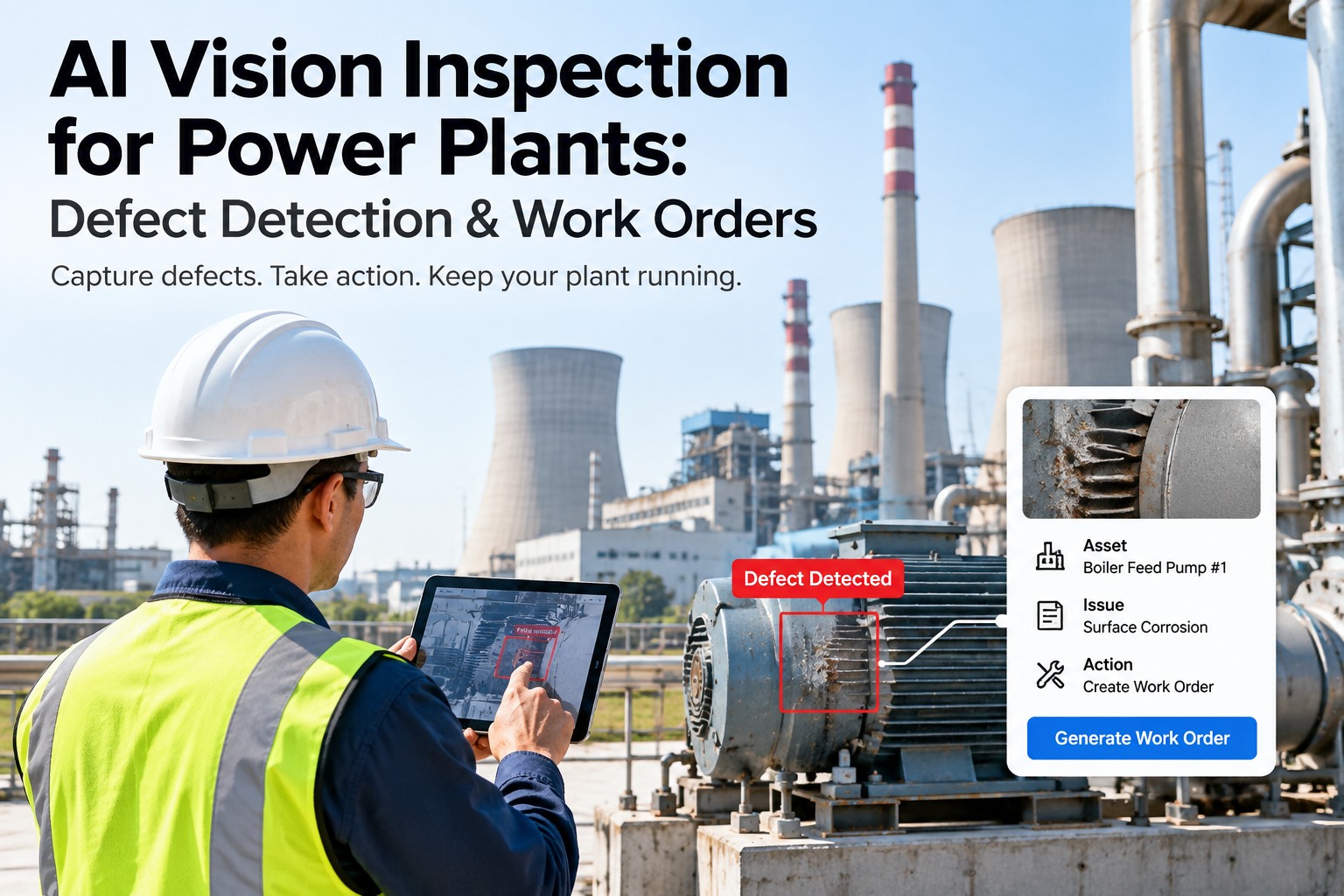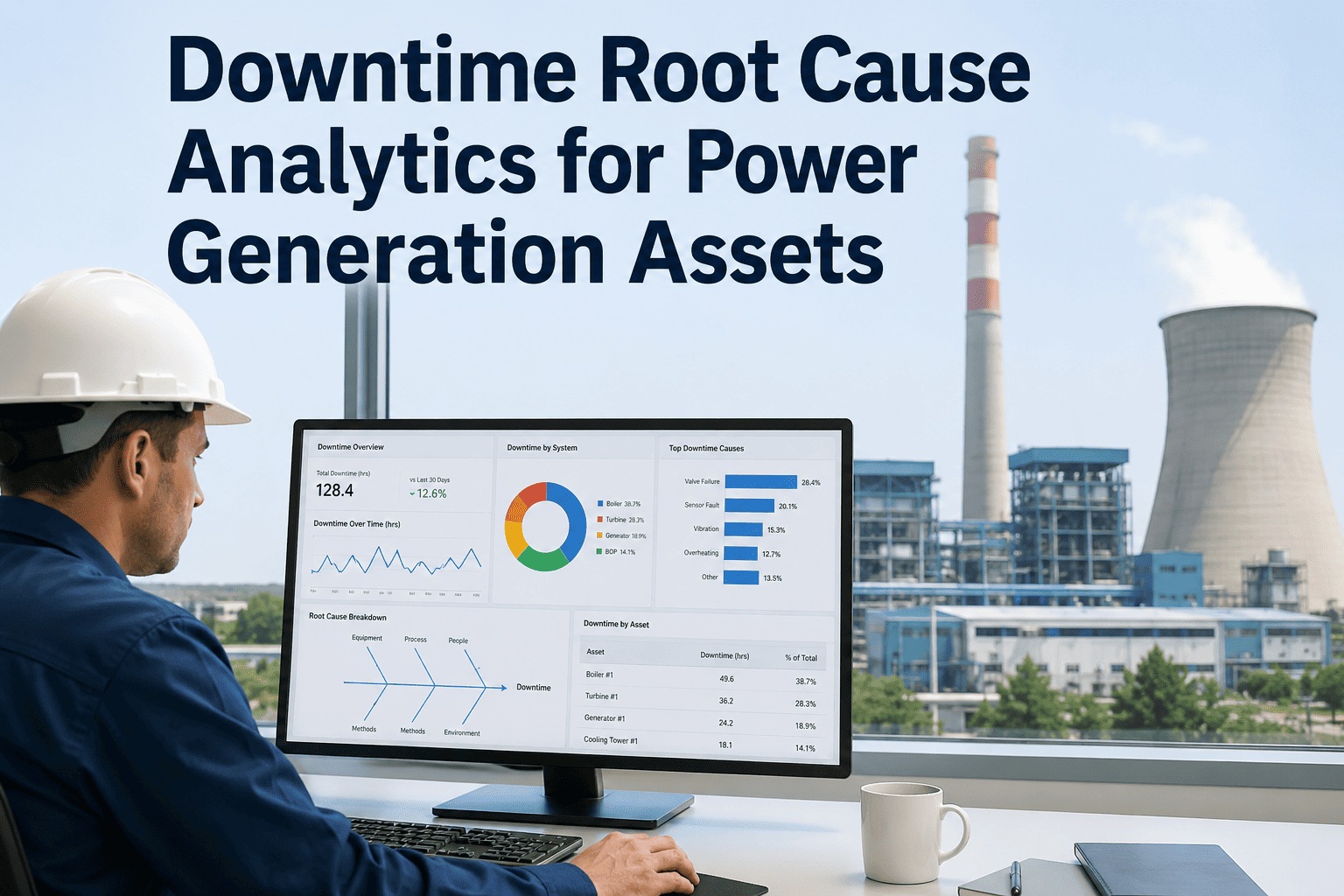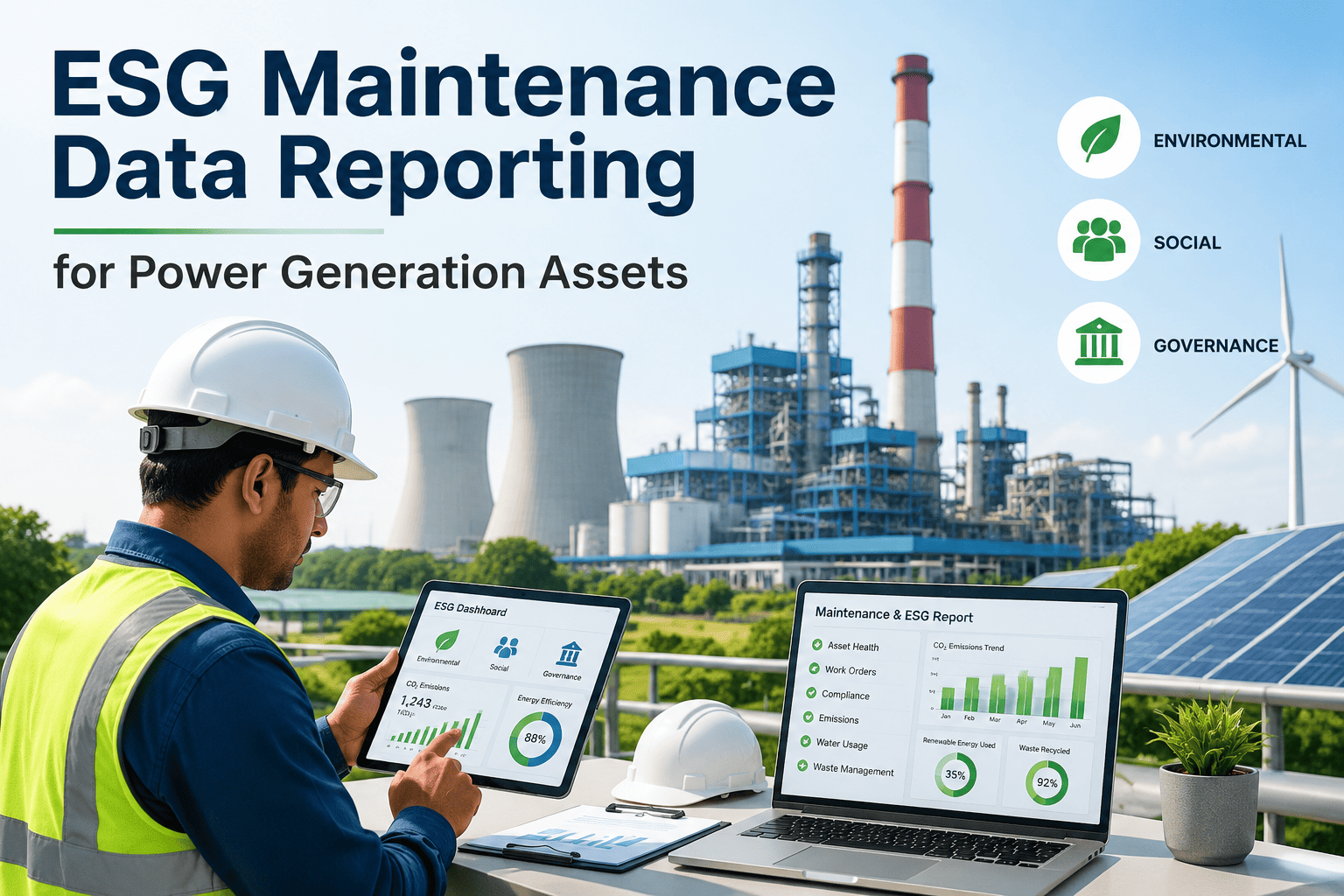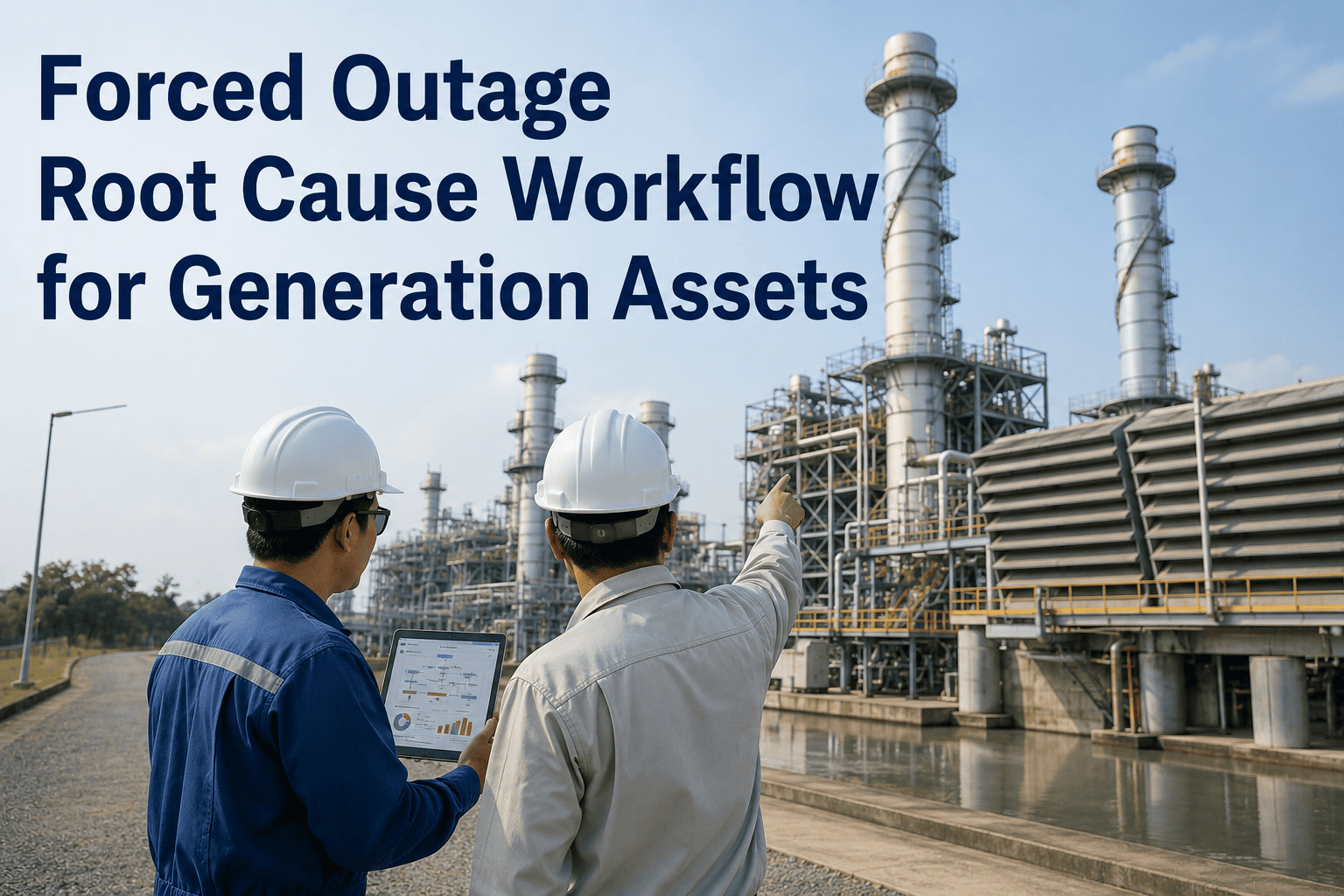
At a coastal 900 MW combined-cycle plant, corrosion on high-pressure steam piping had been progressing for fourteen months before it was identified during a major planned outage. The inspection team found seven locations where wall thickness had reduced to below minimum safe operating limits — all of which had been visually accessible during routine operator rounds. Nobody had seen it because corrosion at its early stage does not look like failure; it looks like surface discolouration, a slight change in texture, or a small patch of rust on a surface covered in similar patches. AI vision for corrosion detection changes this equation entirely. Sign up for Oxmaint to integrate AI vision corrosion detection into your plant's inspection workflow, or book a demo to see AI vision inspection configured live for your asset types.
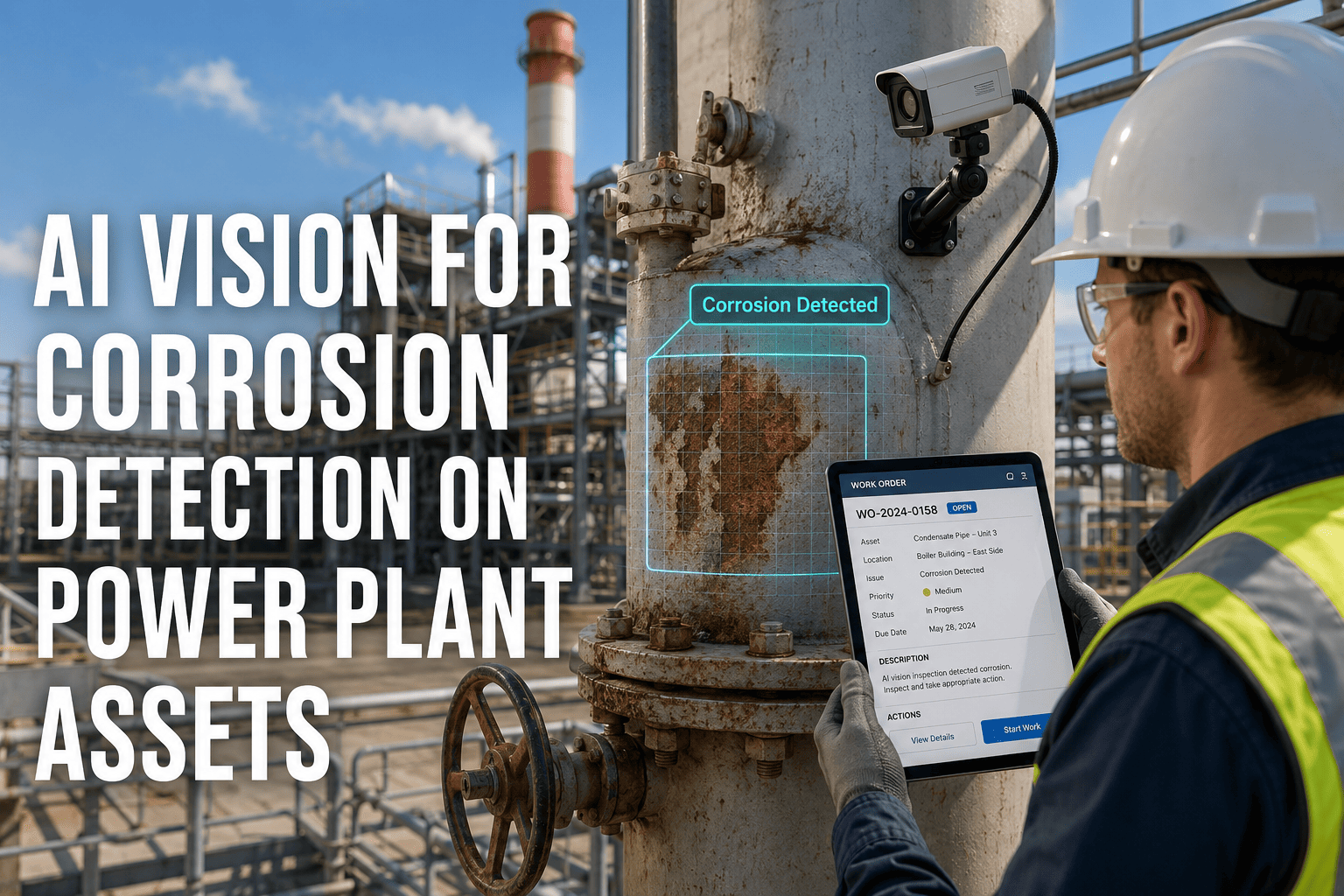
AI Vision for Corrosion Detection on Power Plant Assets
How AI-powered visual inspection identifies surface corrosion, pitting, coating degradation, and structural material loss on plant assets — detecting faults that human rounds consistently miss until damage is critical.
The Four Structural Limits of Human Visual Corrosion Inspection
A technician completing a 2-hour operator round across 80 tagged assets spends an average of 90 seconds per asset. At that pace, subtle surface changes — early pitting, hairline corrosion along a weld seam, partial delamination on insulation jacketing — are simply not perceived. The human visual system prioritises novelty; gradual degradation that has been there since the last round is deprioritised by the brain as background noise.
To detect corrosion progression, an inspector needs to compare what an asset looks like today with what it looked like three months ago. Human memory cannot store reliable baseline visual information across hundreds of assets and months of time. AI vision compares the current image against a stored photographic baseline, calculating pixel-level differences that are invisible to unaided memory.
Many of the highest-risk corrosion zones on power plant assets — behind pipe insulation, inside duct sections, on the underside of structural members, above walkway level — are physically inaccessible to human inspectors without scaffolding or confined space entry. Drone-mounted AI vision cameras access these zones routinely on a scheduled basis without requiring any access preparation.
Two experienced inspectors looking at the same corroded surface may classify the severity differently — one as "minor surface rust, monitor" and another as "active pitting, inspect further." AI vision applies consistent classification criteria across every image, every asset, and every inspection cycle — eliminating the subjectivity that creates gaps in historical corrosion severity data.
Replace Subjective Visual Rounds with AI-Verified Corrosion Detection and Auto Work Order Generation
Oxmaint's AI vision module processes inspection photos from mobile devices, fixed cameras, or drones — detecting corrosion, pitting, coating failure, and material loss with quantified severity scores, trend tracking against prior inspections, and automatic work order generation when threshold conditions are met.
Power Plant Assets Where AI Vision Corrosion Detection Delivers Highest Value
Not all assets carry equal corrosion risk. The following asset classes have the highest combination of corrosion failure consequence and human inspection miss rate — making them the priority deployment targets for AI vision in a power generation context.
From Field Photo to Corrosion Work Order — The Oxmaint AI Vision Workflow
| Step | Action | Who | Output | Time |
|---|---|---|---|---|
| 1 | Inspection photo captured in Oxmaint app at asset QR scan | Field technician | Georeferenced, timestamped image linked to asset | Real-time |
| 2 | AI model processes image against trained corrosion classification model | Oxmaint AI engine | Corrosion severity score (0–100), defect location map, defect type classification | <30 seconds |
| 3 | Score compared against asset baseline and configured threshold | Oxmaint platform | Trend chart: current vs previous 3 inspections. Threshold breach flagged. | Automatic |
| 4 | Work order auto-generated on threshold breach | Oxmaint platform | CMMS work order with AI image analysis, severity score, recommended action, prior inspection history | <2 minutes |
| 5 | Maintenance planner reviews and schedules repair | Maintenance planner | Repair job planned with AI evidence attached — no ambiguity about severity or location | Same day |
AI Vision Corrosion Detection — Technical and Operational Questions
Oxmaint AI vision for corrosion detection works with photos taken on any modern smartphone (12 megapixels or higher) or tablet camera — no specialist camera hardware is required for standard surface corrosion detection. For high-consequence assets or locations requiring closer analysis, Oxmaint integrates with drone-mounted RGB cameras and borescope outputs. Image quality guidelines (minimum resolution, lighting, angle) are embedded in the checklist instructions so technicians capture usable images without specialist training. The AI model handles variable lighting and angle within defined parameters. Book a demo to see live corrosion detection on sample images from your asset types.
Oxmaint's corrosion detection model is trained on a dataset of over 2 million classified industrial corrosion images, including power plant-specific asset types: steam piping, boiler pressure parts, gas turbine components, cooling tower structures, and electrical switchgear enclosures. The model is further calibrated during plant onboarding using baseline images of the specific assets in the plant — capturing the normal appearance of each surface under the plant's typical lighting and environmental conditions. This asset-specific calibration significantly reduces false-positive detection on assets with normal surface patination or protective oxide layers. Sign up to begin baseline image capture for your plant's priority corrosion assets.
Direct CUI detection under insulation requires specialist inspection methods — ultrasonic wall thickness measurement, pulsed eddy current, or neutron backscatter — rather than optical AI vision. Oxmaint integrates with these specialist inspection outputs, ingesting wall thickness readings alongside visual inspection data to build a comprehensive corrosion record. Where AI vision contributes to CUI risk management is in identifying external indicators: insulation jacketing damage, seal degradation, water ingress staining, and rust bleeding through joints — all of which are reliably detectable optically and are the most accessible early warning signals of CUI onset. Book a demo to see integrated visual plus thickness inspection workflows for insulated pipework.
Every AI vision corrosion inspection in Oxmaint is stored permanently against the asset record with a corrosion severity score, defect location map, and inspection timestamp. The asset's corrosion history page displays a trend line of severity scores across all inspection cycles — enabling reliability engineers to see acceleration or deceleration in corrosion rate, compare pre-coating and post-coating inspection results, and project the remaining life of a protective coating based on observed degradation rate. Trend acceleration above a configured rate automatically generates a priority review work order. Sign up to start building longitudinal corrosion trend data for your plant's priority assets.
When AI vision identifies a corrosion condition at or above the configured severity threshold for an asset, Oxmaint auto-generates a CMMS work order containing the AI analysis image with the defect zone highlighted, the severity score and classification (surface rust, active pitting, coating failure, or structural material loss), the trend comparison against the previous inspection, the recommended inspection action for that severity level, and the asset's full prior corrosion history. The work order is assigned to the maintenance planner's queue and — for critical severity findings — sends an immediate notification to the shift supervisor. The entire process from photo capture to planner notification takes under three minutes. Book a demo to walk through a corrosion finding escalation end to end.
The Corrosion Growing on Your Plant's Assets Right Now May Not Be Visible to Your Inspection Team — But It Is Visible to AI
Oxmaint AI vision detects surface corrosion, pitting, coating failure, and material loss at the earliest treatable stage — from standard smartphone photos taken during regular inspection rounds — and auto-generates work orders before damage becomes critical.