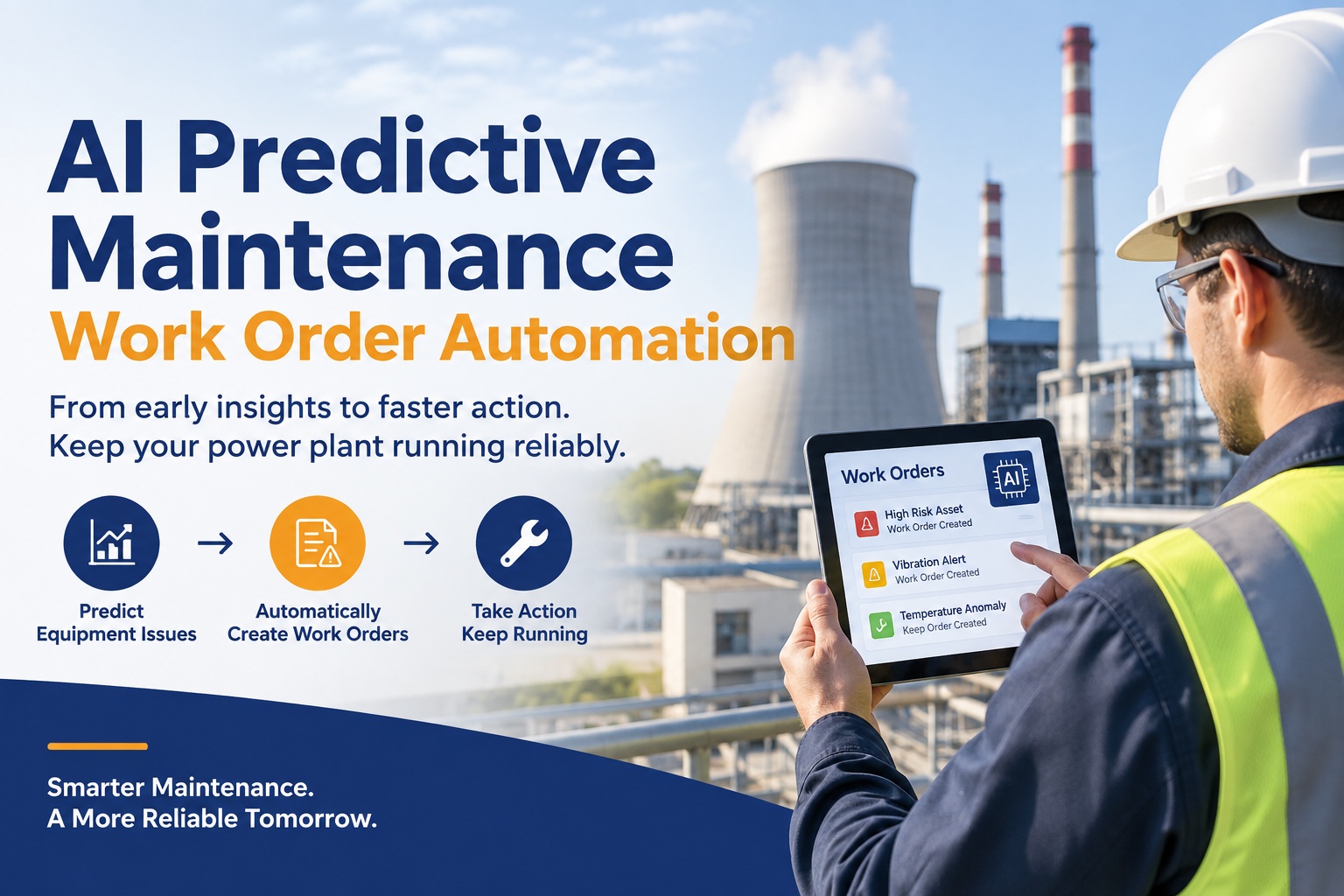
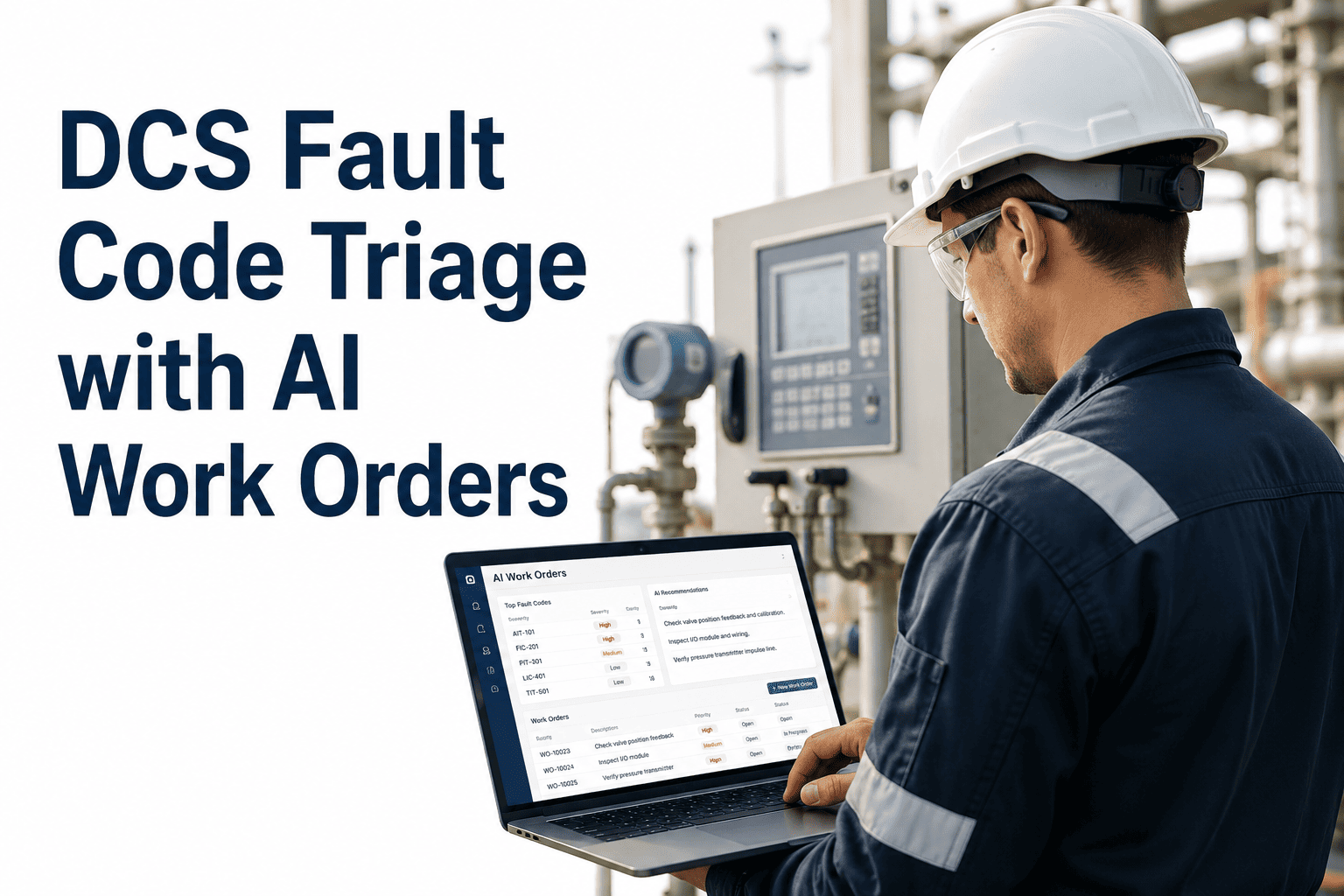
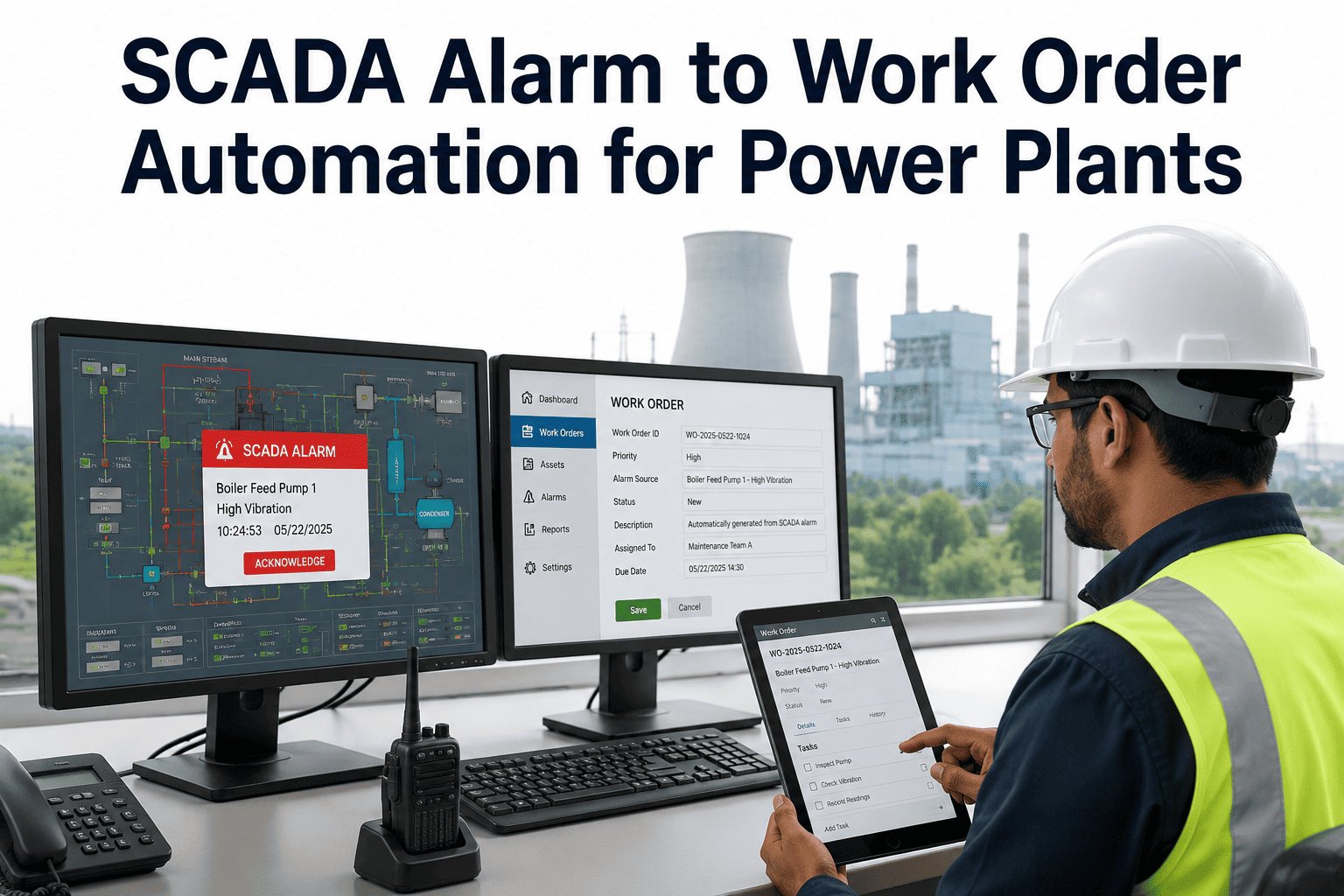
A repeat fault is not a maintenance failure — it is a reliability engineering data point that the maintenance team never had a system to see. When the same fault code reappears on the same equipment within six months, and the work order closes with "repaired" for the third time, the plant has paid for three repairs and still owns the root cause. Repeat faults account for an estimated 22 to 31% of all corrective work orders in Indian thermal power plants, according to CERC performance data — yet fewer than 40% of plants have any systematic process for identifying them. Oxmaint's AI Work Order Automation tracks every fault closure, flags recurrence patterns automatically, and routes repeat fault events to the reliability engineer before the fourth work order is raised on the same piece of equipment.
AI Work Order Automation
Reliability Engineering
Power Plant CMMS
Repeat Fault Detection for Power Plant Work Orders
Your CMMS is closing work orders. Your equipment is re-opening them. Oxmaint's AI detects repeat fault patterns and routes them to reliability review — before the next breakdown, not after.
The Repeat Fault Cost Model — 500 MW Coal Plant
Avg. corrective WOs per fault event
3.1
Avg. labor cost per corrective WO
INR 18,000
Repeat fault rate (industry avg.)
27%
Estimated annual repeat fault cost
INR 45–90L
Reduction with systematic RCA
55–70%
Annual saving potential per unit
INR 25–63L
Why Repeat Faults Persist
The Three Gaps That Let Repeat Faults Hide in Plain Sight
Most maintenance teams know intuitively that certain equipment repeats — the bearing that gets replaced every three months, the seal that is always leaking. The gap is structural: without a system that connects individual work order closures across time, that knowledge stays in the technician's head and never becomes an RCA request.
Gap 1
No Cross-WO Pattern Visibility
Work orders are created, worked, and closed as individual events. Without a system that aggregates closures by asset and fault code over time, no one sees that BFP-2 bearing has generated 6 corrective work orders in 18 months. The 7th work order looks like a first occurrence to the technician assigned to it.
Gap 2
Resolution Codes That Don't Capture Root Cause
When the resolution field on a work order says "Replaced" or "Repaired and tested — OK," it tells you what was done, not why the fault occurred. Without structured root cause capture at closure, repeat fault patterns cannot be distinguished from normal wear patterns — and the maintenance team repairs symptoms indefinitely.
Gap 3
RCA Process Not Triggered Automatically
Most plants have an RCA process. It is triggered by forced outages and major failures — events too large to ignore. Repeat faults that stay below the outage threshold — the bearing that is replaced in 4 hours without a unit trip — never trigger the RCA process, even when they represent more cumulative cost than many outage events over a 12-month period.
AI Detection Logic
How Oxmaint Identifies and Escalates Repeat Faults
Oxmaint's AI monitors every work order closure and applies a three-threshold detection model. When thresholds are crossed, the system escalates automatically — no manual report review required.
Watch2 closures, same fault code, same asset, within 90 days
Possible pattern — flag for monitoring; may be normal maintenance cycle
Flag work order as repeat-watch; add to asset repeat fault log
Maintenance supervisor — informational
Flag3 closures, same fault code, same asset, within 180 days
Probable repeat fault — root cause not addressed by prior repairs
Generate RCA request work order; link all 3 prior WOs as evidence chain
Reliability engineer — action required
Escalate4+ closures OR repeat fault causing any production loss
Chronic fault — systemic root cause requiring engineering intervention
Escalate to plant manager; auto-schedule RCA review meeting; block next similar WO pending RCA completion
Plant manager + reliability engineer — mandatory review
Fault Frequency Data
Repeat Fault Rates by Equipment Type — Thermal Plant Benchmark
Some equipment categories generate disproportionate repeat fault work orders. The table below shows industry benchmark repeat fault rates by major equipment category in thermal power plants, based on CMMS data analysis from Indian and South Asian power generation assets.
| Equipment Category |
Avg. Repeat Fault Rate |
Most Common Repeat Cause |
RCA Success Rate |
Avg. Annual Cost per Asset (INR) |
| Boiler feed pump (BFP) |
34% |
Mechanical seal degradation — root cause: water quality / suction conditions |
78% |
INR 8–22L |
| FD / ID fans |
28% |
Bearing failure — root cause: alignment drift after maintenance |
71% |
INR 5–14L |
| Circulating water pumps |
25% |
Impeller wear — root cause: intake screen fouling / cavitation |
82% |
INR 4–10L |
| Valve actuators (I&C) |
31% |
Positioner calibration loss — root cause: vibration / environmental ingress |
65% |
INR 3–8L |
| Coal mill (bowl/tube) |
22% |
Bowl / liner wear — root cause: coal quality variation beyond design spec |
74% |
INR 12–30L |
How many repeat faults are hiding in your work order history right now?
Import your existing work order history into Oxmaint and the AI repeat fault detection engine will identify your chronic equipment patterns in the first 24 hours — with a ranked list by cumulative cost impact.
Expert Review
What Reliability Engineers Say About Repeat Fault Detection
Repeat faults are the most expensive thing happening in most power plants — and the least visible. The typical plant can tell you exactly what caused its last forced outage. It cannot tell you how many times bearing SB-7 on its circulating water pump was replaced in the last two years, or what the cumulative cost of those replacements was. That data exists in the CMMS — it just has never been surfaced in a form that connects to a reliability engineering response. AI-driven repeat fault detection that automatically identifies patterns, quantifies cumulative cost, and generates an RCA work order does not require new sensors, new data, or new processes — it requires connecting the data that already exists. Plants that implement this systematically typically identify 8 to 15 chronic fault patterns in the first month, and eliminate 55 to 70% of them within 12 months through targeted RCA and engineering changes.
Reliability Engineering Assessment — Thermal Power Plant Operations
Power generation reliability engineering | CMMS analytics and chronic failure elimination programs
8–15
Chronic repeat fault patterns identified in first month of AI detection deployment — per 500 MW unit
55–70%
Elimination rate of identified chronic faults within 12 months through targeted RCA and engineering changes
INR 25–63L
Annual repeat fault cost reduction potential per 500 MW unit with systematic detection and RCA program
FAQ
Frequently Asked Questions
How does Oxmaint distinguish a legitimate repeat repair from a genuine repeat fault?
Oxmaint's repeat fault detection differentiates scheduled consumable replacements — filter changes, lubricant replenishment, seal replacements at design interval — from unscheduled corrective work orders on the same fault code. Consumable replacement work orders are generated from PM schedules and tagged as planned, while corrective work orders generated from DCS alarms, operator findings, or manual creation are tagged as unplanned. Only unplanned corrective work order recurrences trigger the repeat fault detection logic. The thresholds are also configurable by equipment class — a bearing on a critical 100% utilization pump has a lower repeat-fault threshold than a bearing on a standby pump.
Book a demo to see how threshold configuration works for your specific equipment classes.
Does Oxmaint support structured RCA methodology — 5-Why, Fishbone, FMEA — within the platform?
Yes. When an RCA work order is generated from the repeat fault detection logic, Oxmaint pre-populates the RCA template with the fault history, linked work orders, and resolution codes from all prior occurrences. The reliability engineer selects the RCA method (5-Why, Fishbone/Ishikawa, or FMEA template) and completes the analysis within Oxmaint — with findings, root cause confirmation, and corrective action commitments all stored against the asset record. This creates a permanent RCA history per asset that informs future troubleshooting on the same equipment.
Start free and explore the RCA template library in Oxmaint's reliability module.
Can Oxmaint identify repeat faults across multiple units or sites — not just within a single unit?
Yes. Oxmaint's repeat fault detection operates at the asset class level across the entire plant and across multiple plant sites in a multi-site deployment. This means that if FD fan bearing failures are occurring at three different units with similar root causes, Oxmaint identifies the cross-unit pattern and flags it for fleet-level RCA — rather than generating three separate single-unit RCA work orders that may reach different conclusions. Fleet-level repeat fault patterns are particularly valuable for identifying equipment specification issues, procurement quality problems, or installation practice inconsistencies that affect multiple identical assets.
Book a demo to see the multi-site repeat fault dashboard.
What if our work order history is in spreadsheets or a legacy system — can Oxmaint still detect repeat faults from historical data?
Yes. Oxmaint's data import tools support CSV and Excel import of historical work order data from spreadsheet-based maintenance records and common legacy CMMS formats. Once imported, the AI repeat fault detection engine processes the full historical dataset and generates an immediate repeat fault analysis — identifying chronic fault patterns that have been accumulating for months or years without being visible. Most plants that import 12 to 24 months of historical work order data identify their first 5 to 10 chronic fault patterns within 24 hours of import completion.
Start free and use the data import wizard to upload your existing work order history.
How are completed RCA actions tracked to confirm the repeat fault has been eliminated?
Each RCA work order in Oxmaint includes a verification window — a configurable period (typically 6 to 12 months) during which the system monitors the affected asset for recurrence of the same fault code. If the fault does not recur within the verification window, the RCA is automatically marked as effective and the asset's repeat fault counter is reset. If the fault recurs during the verification window, Oxmaint automatically escalates the RCA back to open status and notifies the reliability engineer that the corrective action was insufficient — triggering a second-level RCA.
Book a demo to see the RCA verification tracking workflow.
Stop paying for the same repair three times. Find your repeat faults — and eliminate them.
Oxmaint's AI Work Order Automation detects repeat fault patterns automatically, quantifies their cumulative cost, and routes them to reliability engineering review — before the next breakdown, not after the fourth repair.