Global supply chains have never been more fragile — or more fixable. From pandemic-era shutdowns to port blockages and geopolitical shocks, manufacturers worldwide have discovered that the old model of lean, single-source supply chains carries hidden catastrophic risk. Building resilience is no longer optional: it is the defining competitive advantage for manufacturers in the decade ahead. This guide breaks down exactly how leading operations are rebuilding their supply chains — and how OxMaint helps manufacturing teams maintain the operational visibility that resilience depends on.
Supply Chain Resilience in Manufacturing: Lessons from Global Disruptions
Diversified sourcing, real-time inventory visibility, and digital platforms — the strategic playbook for manufacturers building supply chains that hold under pressure.
Why Supply Chains Break — and the Real Cost
The assumption that global supply chains would always recover quickly was shattered between 2020 and 2023. The disruptions were not random — they followed predictable patterns rooted in structural vulnerabilities that most manufacturers had accepted as normal. Recognizing these patterns is the first step toward building a supply chain that can absorb shock.
The 5 Pillars of Supply Chain Resilience
Resilient manufacturers share five operational characteristics. These are not theoretical frameworks — they are observable, measurable practices that distinguish plants with 95%+ supply continuity from those that absorb disruptions as unavoidable losses.
Most manufacturers know their Tier 1 suppliers well but have zero visibility into Tier 2 and Tier 3. A single Tier 3 component maker going offline can halt a production line with no early warning. Resilient plants map at least two tiers deep and track key supplier health indicators.
For any component whose absence would halt production within 72 hours, a second qualified supplier must exist. Qualification takes time — 6 to 18 months in most industries — meaning this work cannot start after the disruption event.
Pure just-in-time inventory leaves no buffer for supply shocks. Resilient manufacturers carry differentiated safety stock — higher buffers for high-risk, long-lead-time components and tighter buffers for easily sourced commodities.
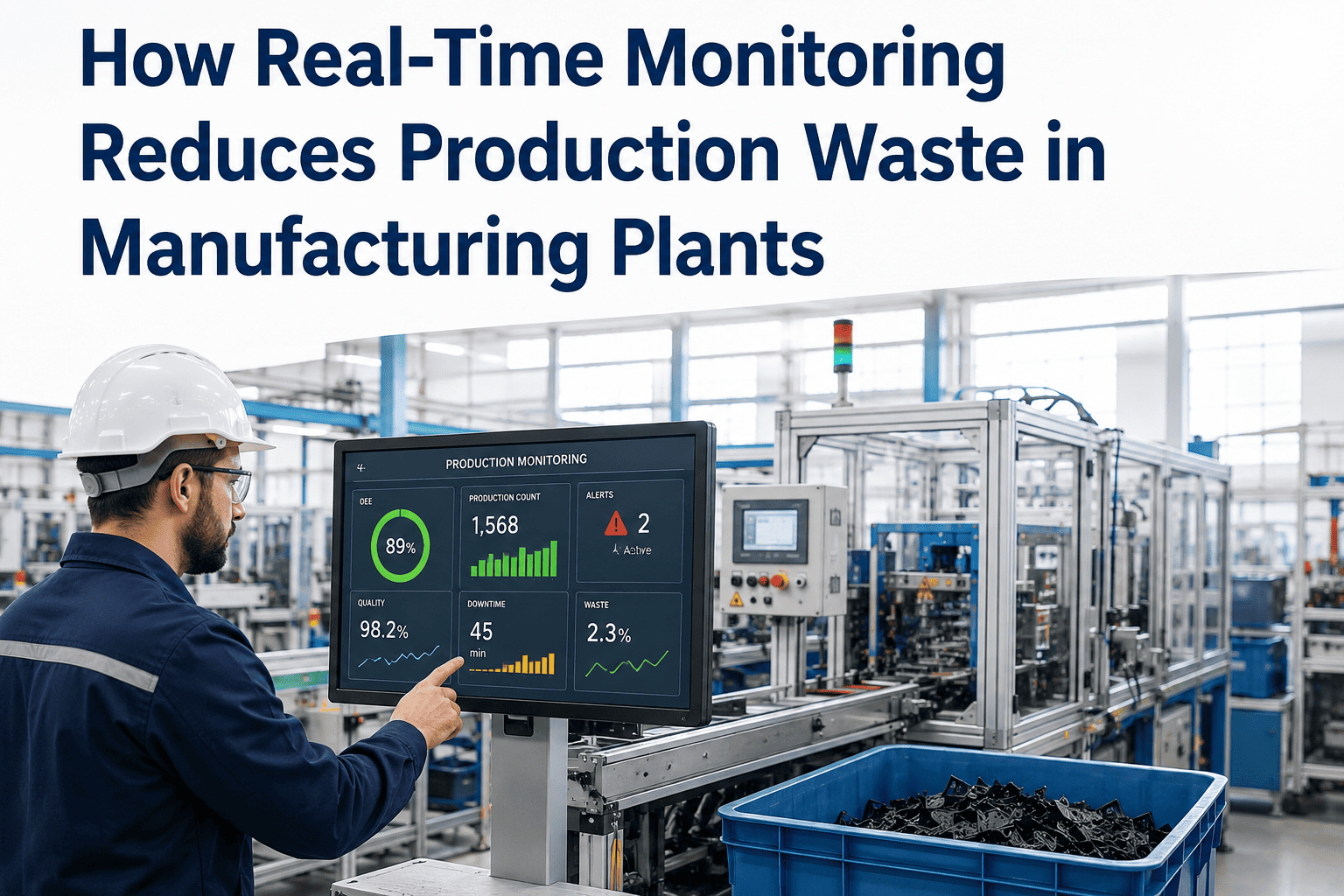
Inventory decisions made on weekly reports are too slow for modern supply shocks. Plants with real-time consumption tracking can identify a potential stockout 18 to 30 days earlier than those relying on manual counts, creating a meaningful response window.
On-time delivery rate, quality rejection rate, and lead time variance should be tracked for every critical supplier on a rolling 90-day basis. Suppliers trending toward risk thresholds should trigger proactive sourcing reviews before the failure event, not after.
OxMaint gives manufacturing operations teams real-time parts inventory visibility, PM scheduling, and asset history — the operational backbone that supply chain resilience runs on.
Sourcing Diversification: A Practical Framework
Diversification is not about having more suppliers — it is about having the right suppliers in the right configurations. The framework below shows how to classify your supply base and apply the correct resilience strategy to each category.
| Component Category | Sourcing Strategy | Safety Stock Target | Review Cadence |
|---|---|---|---|
| Critical, single-source | Dual-source qualification required | 60–90 days | Monthly |
| Critical, multi-source available | Maintain 2+ active suppliers | 30–45 days | Quarterly |
| Non-critical, specialty | Single source with contract buffer | 30 days | Semi-annual |
| Non-critical, commodity | Spot market + 1 preferred supplier | 7–14 days | Annual |
Inventory Visibility: From Blind Spots to Decision Signals
The gap between inventory on paper and inventory in reality is where supply chains fail. The root cause is almost always the same: data that is too old, too aggregated, or collected from too few points in the supply chain to be actionable.
Supplier Risk Scoring: What to Measure
Supplier risk is not binary — it is a spectrum of leading and lagging indicators. The most effective risk scoring systems track five dimensions and aggregate them into a single score that triggers escalation at defined thresholds.
| Risk Dimension | Metric | Alert Threshold | Action |
|---|---|---|---|
| Delivery reliability | On-time delivery rate (rolling 90 days) | Below 92% | Escalate to procurement review |
| Quality | Incoming rejection rate | Above 1.5% | Issue corrective action request |
| Lead time variance | Actual vs. quoted lead time | Variance exceeds 20% | Increase safety stock buffer |
| Financial health | Payment terms change, credit signals | Any negative signal | Qualify backup supplier immediately |
| Concentration | Share of critical spend at one supplier | Above 60% | Initiate diversification plan |
Technology Stack for Supply Chain Resilience
Technology does not create supply chain resilience — but without the right technology, resilience initiatives stall because the data needed to make decisions does not exist in a usable form. Here is how the technology layers connect for a mid-size manufacturing operation.
OxMaint sits at the operations layer — connecting real-time parts consumption data from maintenance work orders to inventory levels and PM schedules, giving operations managers accurate stock visibility without manual counting cycles.
Frequently Asked Questions
Build the Operational Backbone Your Supply Chain Depends On
Supply chain resilience starts with accurate data. OxMaint gives your maintenance and operations teams real-time parts inventory visibility, automated PM scheduling, and full asset history — so your supply chain decisions are built on ground truth, not guesswork.