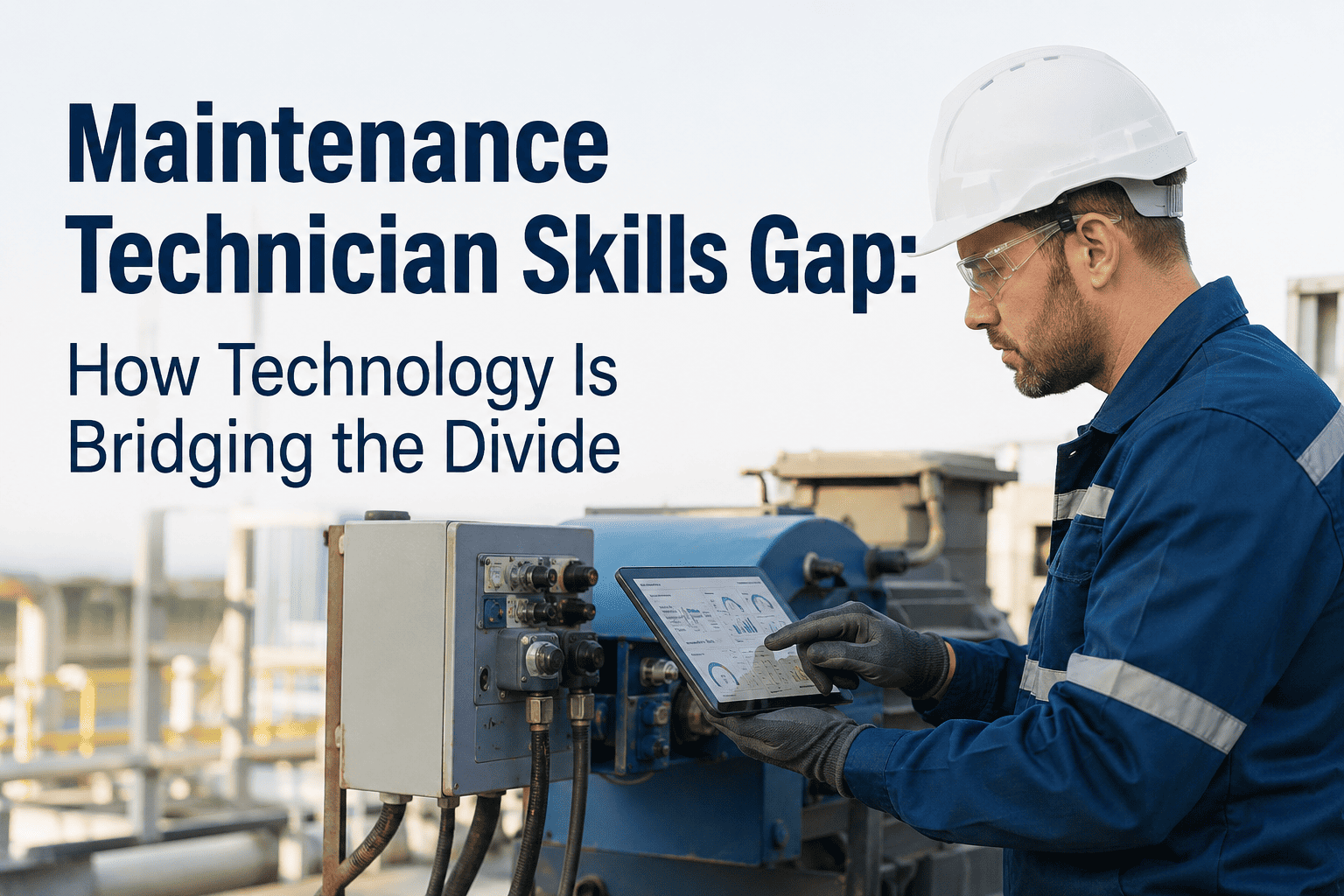
The maintenance workforce is aging faster than it is being replaced. In industrial plants across North America, Europe, and Asia-Pacific, the average age of a skilled maintenance technician is now between 48 and 52 — and the pipeline of replacements is not keeping pace. When experienced technicians retire, they take decades of tacit knowledge with them: how a particular machine sounds before it fails, which lubrication points are actually critical, which shortcuts cause problems six months later. This knowledge gap is not just a human resources problem — it is a production reliability risk that manufacturing leaders need to address strategically. Platforms like OxMaint are part of how forward-looking operations are building institutional knowledge into systems rather than keeping it in individual heads.
Maintenance Technician Skills Gap: How Technology Is Bridging the Divide
AI tools, mobile CMMS, and AR-assisted repair are equipping the next generation of maintenance technicians — and preserving the expertise of the ones retiring.
The Scale of the Problem
The skills gap in industrial maintenance is measurable, documented, and accelerating. These are not projections — they are current conditions that plant managers are navigating today.
What Knowledge Is Actually at Risk
Not all maintenance knowledge is equally at risk. The most dangerous knowledge to lose is the kind that is never written down — the situational expertise that experienced technicians carry as intuition. Understanding what is at risk helps teams prioritize where to focus documentation and technology efforts.
How a specific machine sounds, smells, or behaves before a specific failure mode. This knowledge is almost never documented and takes years to develop. It is the most dangerous knowledge to lose.
Every plant has modifications and adjustments that were made years ago and never formally documented. When the person who made them leaves, the plant may not know why certain settings are the way they are.
Knowing which alternative parts vendor delivers quality, which OEM part numbers have been superseded, and who to call for urgent delivery exists largely in individual contacts and memory.
The story behind a repair decision — what was tried before, what failed, and what finally worked — lives in human memory unless it is actively captured in a CMMS asset record.
Step-by-step maintenance tasks can be captured in SOPs and digital work orders. This knowledge is most transferable and is the lowest-risk category if documentation practices are in place.
LOTO, hazardous material handling, and inspection protocols are typically the best-documented knowledge category in most industrial plants due to regulatory requirements.
OxMaint's CMMS captures asset-level repair history, technician notes, and failure context in structured digital records — so knowledge stays in the system when experienced technicians leave.
Four Technologies Closing the Gap
Technology cannot fully replace the judgment that comes from 20 years on a plant floor. But it can accelerate the development of new technicians, preserve institutional knowledge, and reduce the dependency on individual expertise for routine and semi-routine tasks.
A mobile CMMS transforms a work order from a paper form into a guided workflow. Step-by-step instructions, asset photos, previous repair history, and parts lists are accessible at the machine on a smartphone or tablet. A technician with 6 months of experience can execute a complex PM task with the same accuracy as one with 10 years — as long as the task is well-documented in the system. The key shift is from knowledge-in-heads to knowledge-in-system.
AI tools that analyze vibration patterns, temperature trends, and failure history can surface a probable cause list for a newly assigned technician who does not yet have the diagnostic intuition a senior tech would apply. Rather than replacing judgment, AI-assisted diagnostics narrow the diagnostic search space — telling a newer technician which components to inspect first based on symptoms matching historical failure patterns.
AR-assisted maintenance overlays step-by-step instructions, component labels, and torque values onto a technician's field of view through a tablet or smart glasses. For complex assemblies where sequence and orientation matter, AR guidance reduces errors dramatically and removes the need to reference a paper manual while both hands are working. Several industrial AR platforms now connect directly to CMMS work orders.
The most underused technology solution to the skills gap is structured note capture in a CMMS. When technicians are required to document not just what they did, but what symptoms they observed and what they considered, the CMMS asset record becomes a searchable diagnostic database. A new technician troubleshooting a gearbox can look up the last 15 times it was serviced and see the pattern that experienced technicians learned through experience.
Building a Knowledge Retention Plan
Technology bridges the gap only if there is a structured plan for capturing knowledge before the people who hold it retire. The table below outlines a practical approach for plants with 1 to 5 experienced technicians approaching retirement.
| Timeline | Knowledge Capture Activity | Tool | Owner |
|---|---|---|---|
| 24+ months before retirement | Shadow sessions with documentation obligation — pair new hire with senior tech on all complex repairs | CMMS repair notes, video recordings | Maintenance Manager |
| 12–24 months | Document all machine-specific quirks, undocumented settings, and non-standard procedures | CMMS asset notes, SOP library | Senior Technician + Manager |
| 6–12 months | Transition primary responsibility to new technician with senior as backup reviewer | CMMS work order assignment | Maintenance Manager |
| Final 6 months | Formal knowledge audit — verify all asset records, SOP documents, and contacts are current | CMMS audit report | Plant Manager |
Frequently Asked Questions
Build a Maintenance Team That Can Scale Beyond Any Individual
OxMaint captures the knowledge your experienced technicians carry — and puts it where your newest hire can access it on their first day. Digital work orders, asset history, guided task steps, and repair notes that stay in the system forever. Start free or book a walkthrough today.