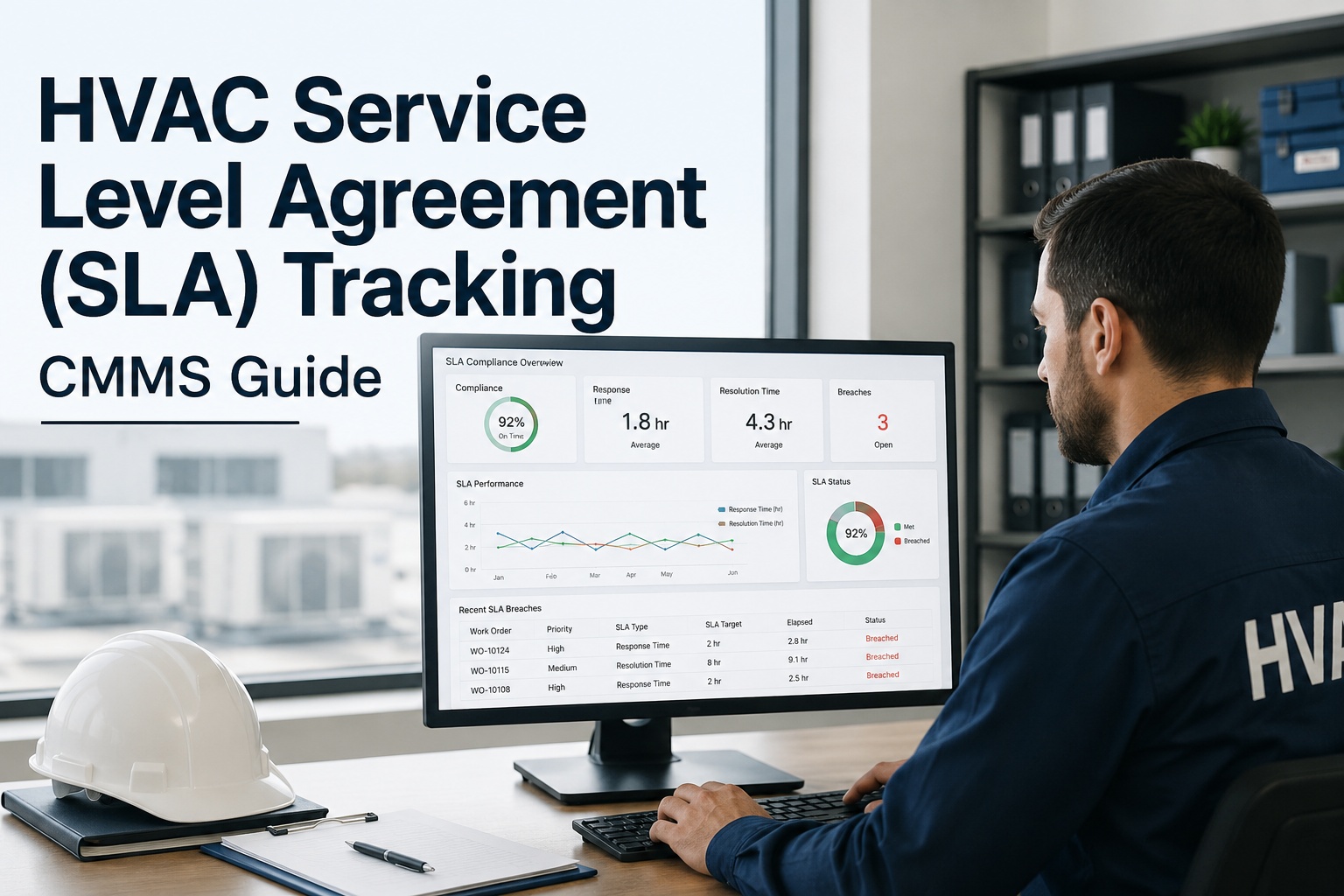
An HVAC service level agreement (SLA) tracking CMMS centralizes every response-time commitment, resolution target and contractor compliance metric so facility teams can prove uptime guarantees instead of guessing at them. For maintenance managers overseeing dozens of rooftop units, chillers and make-up air systems across multiple sites, HVAC SLA compliance is the difference between a predictable operating budget and six-figure penalty clauses. This guide breaks down how modern CMMS SLA tracking works — from automated escalation timers to real-time contractor scorecards — and shows how OxMaint turns HVAC SLA monitoring from a spreadsheet nightmare into a single dashboard. Ready to replace reactive logbooks with intelligent automation? Start Free Trial and see the difference on day one.
Are Your HVAC Contractors Actually Hitting Their SLA Targets?
Most facilities teams lose $40K–$120K annually in unenforced HVAC SLA penalties — credits never claimed, response-time breaches never logged, resolution targets never measured. A CMMS with built-in SLA tracking changes that in the first 30 days.
Without SLA tracking, every missed response window is invisible. With automated CMMS SLA monitoring, every minute is accountable — and every breach is recoverable.
Why HVAC SLA Compliance Breaks Without CMMS Automation
A 500,000-sq-ft commercial portfolio with 180 HVAC assets typically carries 12–18 contractor SLAs covering response time (often 2–4 hours), resolution time (24–72 hours), uptime guarantees (97–99.5%) and seasonal preventive maintenance completion rates (95%+). When those commitments live in email threads, shared spreadsheets and paper logs, compliance tracking collapses under three predictable failures.
A facility with 180 HVAC assets loses an average of $42,000/year in unclaimed SLA credits simply because breaches aren't logged before the 30-day reporting window closes.
Maintenance coordinators spend 2–4 hours per high-priority work order cross-referencing email timestamps, dispatch logs and resolution notes against SLA terms — time CMMS automation reduces to seconds.
Industry benchmarking shows 61% of facilities never enforce liquidated-damage clauses because the documentation burden of proving a breach exceeds the credit value. Automated SLA tracking reverses that math.
The 5 HVAC SLA Metrics Every CMMS Must Track in 2026
A robust HVAC SLA tracking CMMS doesn't just record whether a ticket was closed — it measures the full lifecycle of every work order against contractually defined thresholds. Here are the five metrics that define SLA performance for HVAC maintenance contracts.
Response Time SLA
The elapsed time from work-order creation to contractor acknowledgment on-site. Standard HVAC SLA response targets range from 2 hours (critical: chiller down in peak summer) to 8 hours (routine). CMMS tracking auto-stamps both timestamps and flags breaches in real time, eliminating disputes over "when we were notified."
Resolution Time SLA
The elapsed time from ticket creation to verified equipment restoration. Tier-1 HVAC resolution SLAs typically run 24 hours; complex repairs (compressor replacement, coil work) allow 72 hours. CMMS SLA tracking calculates resolution against priority tier automatically and generates compliance reports per contractor per quarter.
First-Time Fix Rate
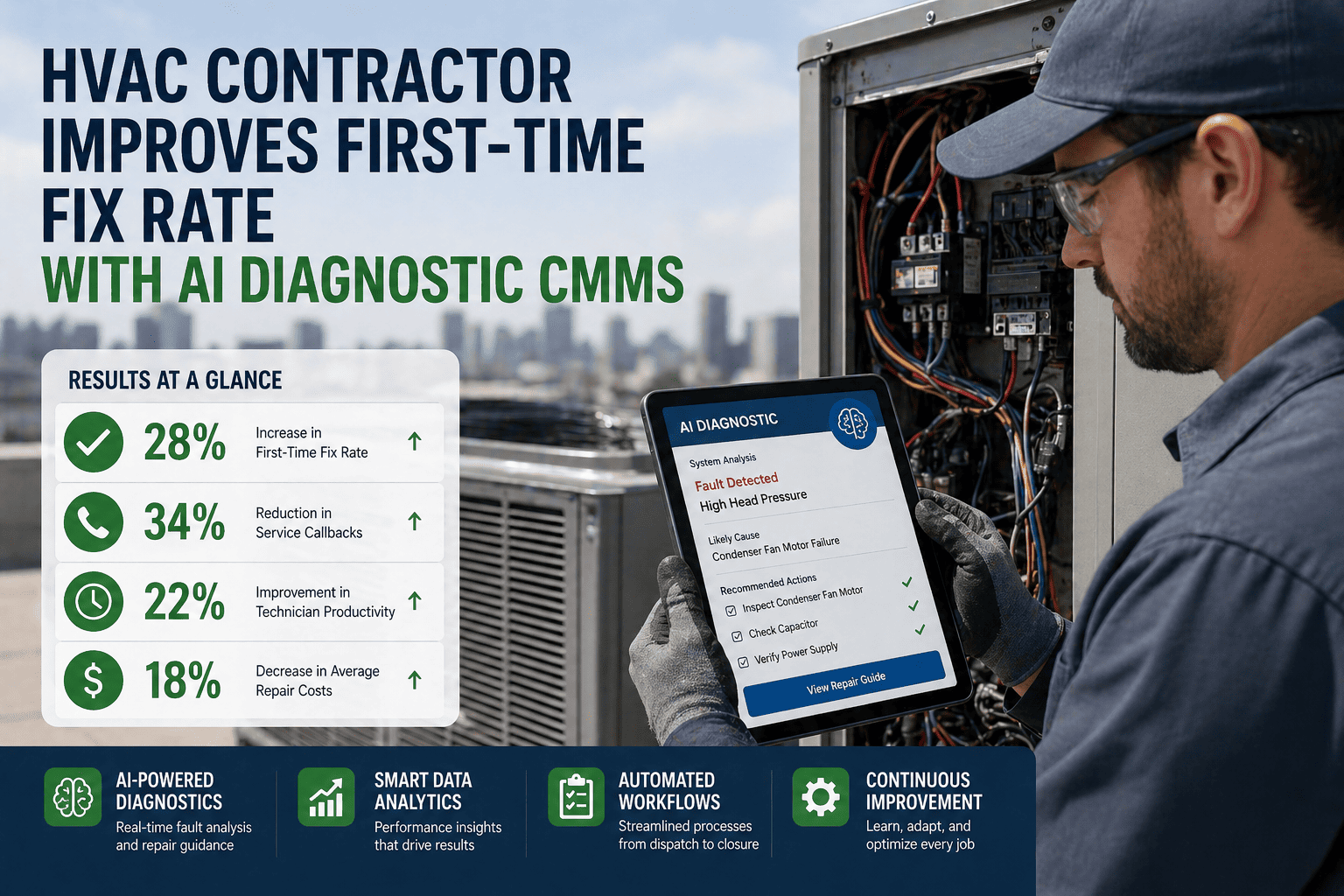
The percentage of HVAC work orders resolved on the first technician visit with no return trip required. World-class first-time fix rates for HVAC contractors sit at 75–85%; anything below 65% signals parts-availability or diagnostic gaps that inflate resolution time and breach upstream SLAs.
Uptime / Equipment Availability Guarantee
Most HVAC service contracts guarantee 97–99.5% uptime per critical asset per quarter. CMMS tracking aggregates downtime hours per asset, compares them against contracted availability thresholds and automatically calculates owed credits when uptime falls below the SLA floor.
Preventive Maintenance Completion Rate
The percentage of scheduled PM tasks (filter changes, belt inspections, coil cleaning) completed within the SLA-defined window — typically 95%+ within ±5 days of due date. Missed PMs are the leading predictor of unplanned HVAC failures and downstream resolution-time breaches.
How to Build an HVAC SLA Dashboard That Actually Drives Compliance
An effective SLA dashboard guide for HVAC maintenance isn't about pretty charts — it's about surfacing breach risk before it becomes a financial loss. The right CMMS SLA tracking configuration shows five data layers simultaneously, each tied to an automated escalation rule.
| Dashboard Layer | What It Shows | SLA Threshold Example | Automated Escalation |
|---|---|---|---|
| Live Response Timer | Countdown from work-order creation to contractor on-site acknowledgment | 2 hrs (critical), 4 hrs (high), 8 hrs (routine) | SMS + email alert to contractor at 75% of threshold; auto-escalate to facility manager at 100% |
| Resolution Clock | Elapsed time since ticket open vs. contracted resolution window | 24 hrs (Tier 1), 72 hrs (Tier 2), 7 days (Tier 3) | Amber flag at 60%; red flag + supervisor notification at 85% |
| Contractor Scorecard | Rolling 90-day compliance rate by vendor, asset class and SLA type | 95% compliance target across all SLA metrics | Auto-generate quarterly vendor performance review; flag vendors below 90% |
| Uptime Tracker | Downtime hours per critical asset vs. quarterly availability guarantee | 98.5% uptime (max 10.9 downtime hrs/quarter) | Auto-calculate owed credit when downtime exceeds allowance |
| PM Compliance Heatmap | Color-coded grid of PM tasks by asset, due date and completion status | 95% of PMs completed within ±5-day window | Auto-reschedule overdue PMs; alert reliability lead at 10-day drift |
Real-World SLA Recovery: A 180-Asset Commercial Portfolio
Consider a 180-asset commercial real estate portfolio (3 office buildings, 2 retail centers) spending $186K/year on HVAC service contracts across four contractors. Their SLA terms included 4-hour response time, 24-hour resolution for critical assets, and 98% uptime guarantees. Before implementing CMMS-based SLA tracking, the facilities team used shared spreadsheets and email timestamps — and recovered exactly $0 in SLA credits over 18 months.
After deploying OxMaint's CMMS SLA tracking, the portfolio recovered $31,200 in SLA credits in the first 12 months — exceeding the projected leakage because automated timestamping surfaced breaches the spreadsheet system had missed entirely. Contractor response times improved 19% within 90 days because vendors knew every minute was being tracked against their contract.
How OxMaint Automates HVAC SLA Tracking End-to-End
OxMaint is an AI-powered CMMS and EAM platform purpose-built for maintenance and reliability teams. For HVAC SLA compliance, OxMaint replaces manual timestamp verification with automated work-order lifecycle tracking, real-time breach alerts and contractor performance scorecards — all configured against your specific contract terms, not generic templates.
Automated SLA Timer Engine
Every work order auto-starts a response-time and resolution-time clock the moment it's created. OxMaint tracks elapsed time against contract-specific thresholds and triggers tiered alerts at 50%, 75% and 100% of each SLA window — so breaches are caught before they happen, not after.
Contractor Compliance Scorecards
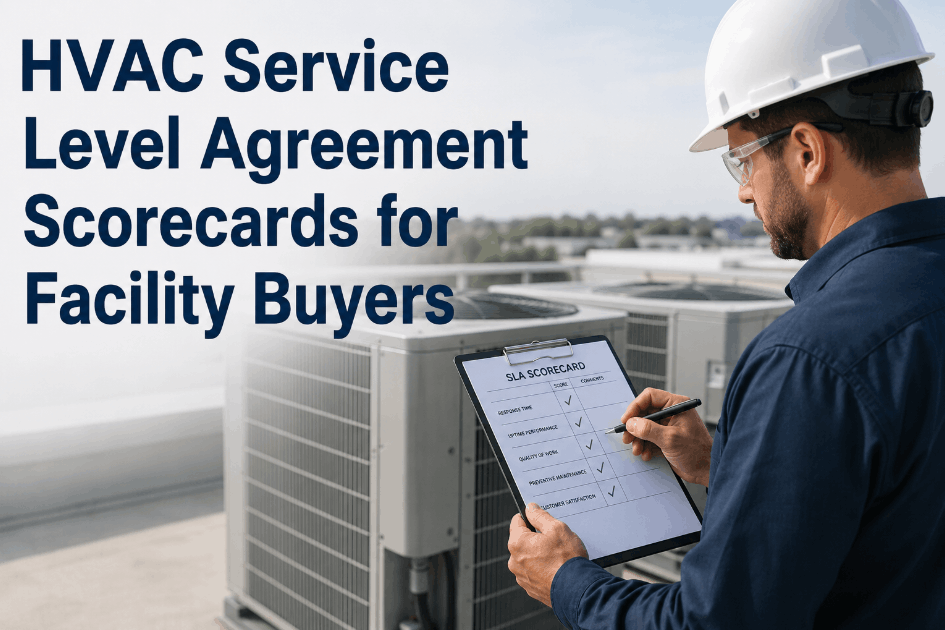
OxMaint auto-generates per-vendor scorecards showing response-time averages, resolution-time trends, first-time fix rates and uptime compliance over any date range. Export-ready for quarterly vendor reviews and contract renewal negotiations — no more manual spreadsheet rollups.
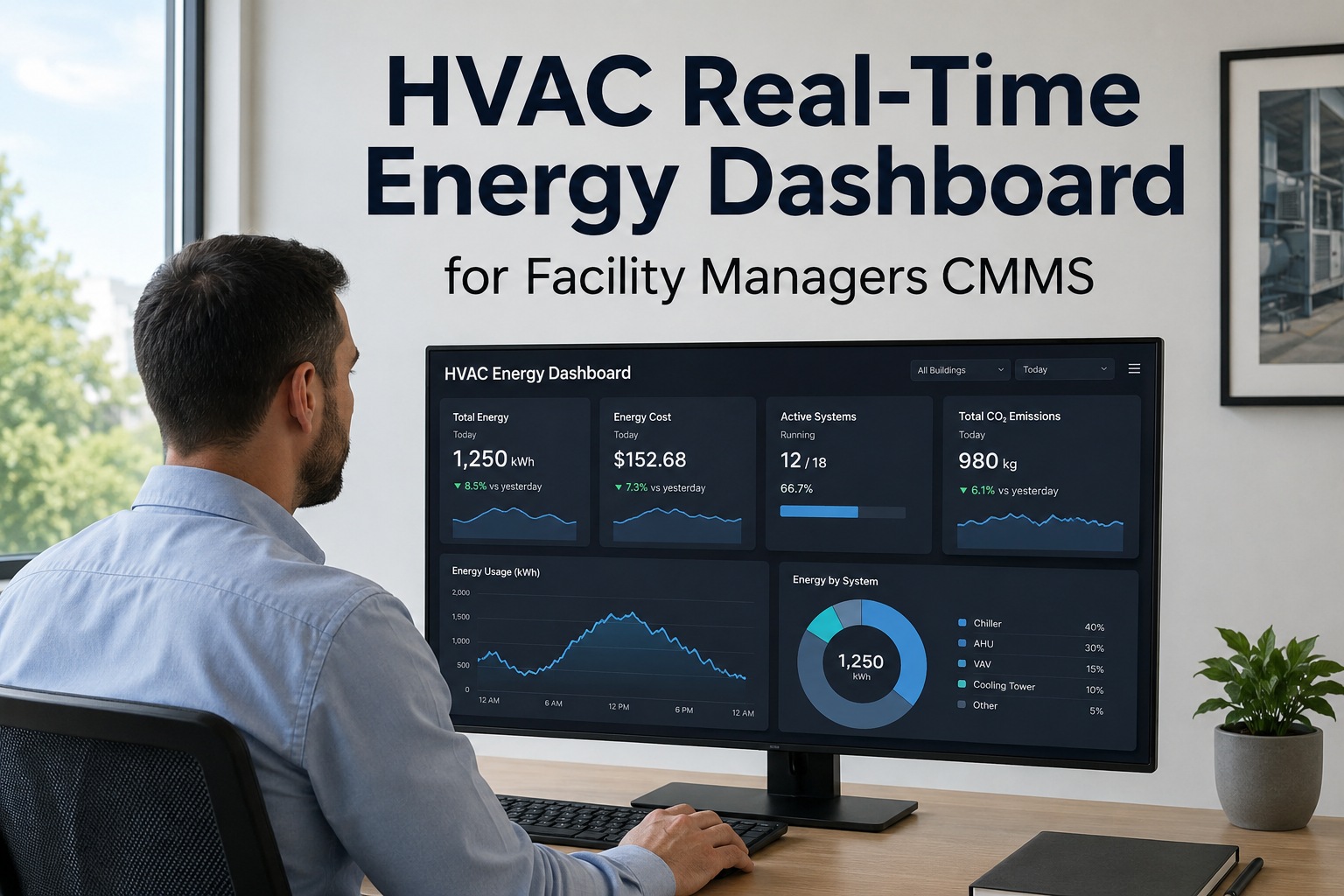
Real-Time SLA Dashboard
A single live dashboard shows every active work order, its SLA countdown, breach risk level and contractor assignment. Filter by building, asset class, vendor or priority tier. The AI engine flags patterns — like a specific contractor consistently breaching on rooftop units — before they compound into budget-breaking losses.
Automated SLA Credit Calculation
When a breach occurs, OxMaint automatically calculates the owed credit based on your contract's liquidated-damages clause, generates a claim document with supporting timestamp evidence and routes it for approval — turning what used to be a 3-hour manual process into a one-click action.
Stop Losing SLA Credits to Spreadsheets and Email Threads
See how OxMaint's CMMS SLA tracking recovers lost revenue, improves contractor accountability and eliminates manual compliance reporting — in a 30-minute walkthrough on your actual asset data.
HVAC SLA Tracking CMMS — Your Questions Answered
What is HVAC SLA tracking in a CMMS?
HVAC SLA tracking in a CMMS is the automated monitoring of contractor response times, resolution times, uptime guarantees and PM completion rates against contractually defined thresholds. The CMMS timestamps every work-order lifecycle event, calculates compliance in real time and flags breaches before they become unrecoverable losses — eliminating the manual verification that causes 60–80% of SLA credits to go unclaimed.
How does CMMS SLA monitoring improve contractor compliance?
CMMS SLA monitoring improves contractor compliance by making every minute visible. When contractors know that response and resolution times are auto-timestamped against their contract terms — and that breaches generate automatic credit claims — response times typically improve 15–25% within the first quarter. OxMaint's contractor scorecards also provide objective data for performance reviews and renewal negotiations. Book a demo to see the scorecard builder in action.
What response time and resolution time targets should an HVAC SLA include?
Standard HVAC SLA response-time targets range from 2 hours for critical failures (chiller down in summer, boiler down in winter) to 8 hours for routine issues. Resolution-time SLAs typically run 24 hours for Tier 1 repairs, 72 hours for complex component replacements and 7 days for non-critical work. The key is tying each priority tier to specific asset criticality and seasonal demand — which OxMaint configures automatically based on your asset hierarchy.
How much does HVAC SLA tracking software cost compared to the credits it recovers?
For a typical 180-asset portfolio, OxMaint's CMMS SLA tracking pays for itself 3–5x in the first year through recovered SLA credits alone — before counting the 15–25% improvement in contractor response times and the reduction in unplanned downtime. Most facilities recover $25K–$40K annually that was previously lost to unlogged breaches. You can start a free 14-day trial with no credit card to evaluate the SLA dashboard on your own data.
Can OxMaint track HVAC SLA compliance across multiple contractors and sites?
Yes. OxMaint supports unlimited contractor accounts, site hierarchies and asset-level SLA configurations. Each vendor sees only their assigned work orders and SLA timers, while facility managers get a unified dashboard showing compliance across all contractors, sites and asset classes. Contractor scorecards can be filtered by vendor, building, asset type or date range — giving you objective, audit-ready data for every quarterly review and contract renewal.
Turn HVAC SLA Tracking From a Cost Center Into a Revenue Recovery Engine
Join the facilities teams recovering $30K+ in annual SLA credits, cutting contractor response times by 20% and eliminating manual compliance reporting. OxMaint's AI-powered CMMS makes it measurable, automated and audit-ready.
Free 14-day trial · No credit card