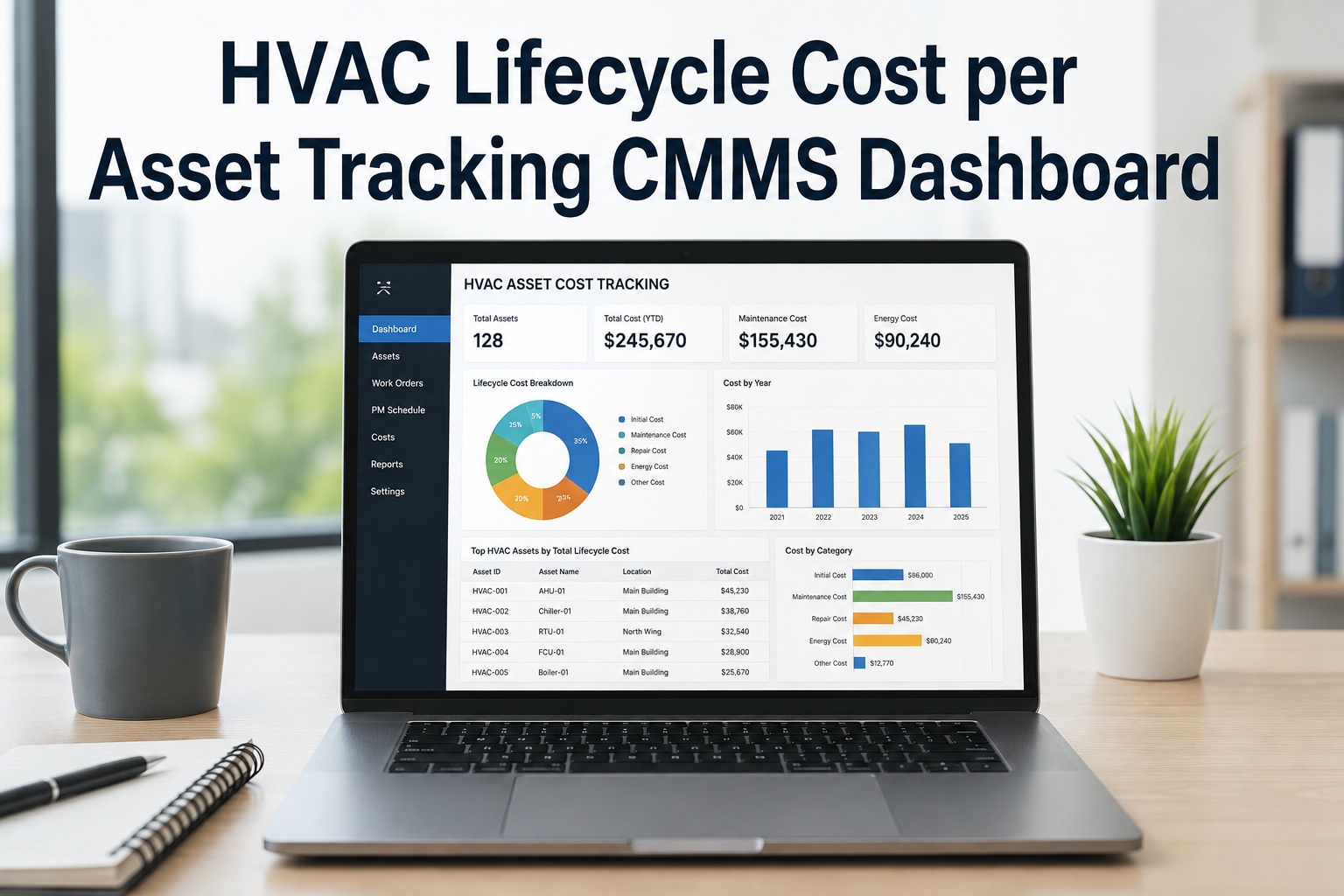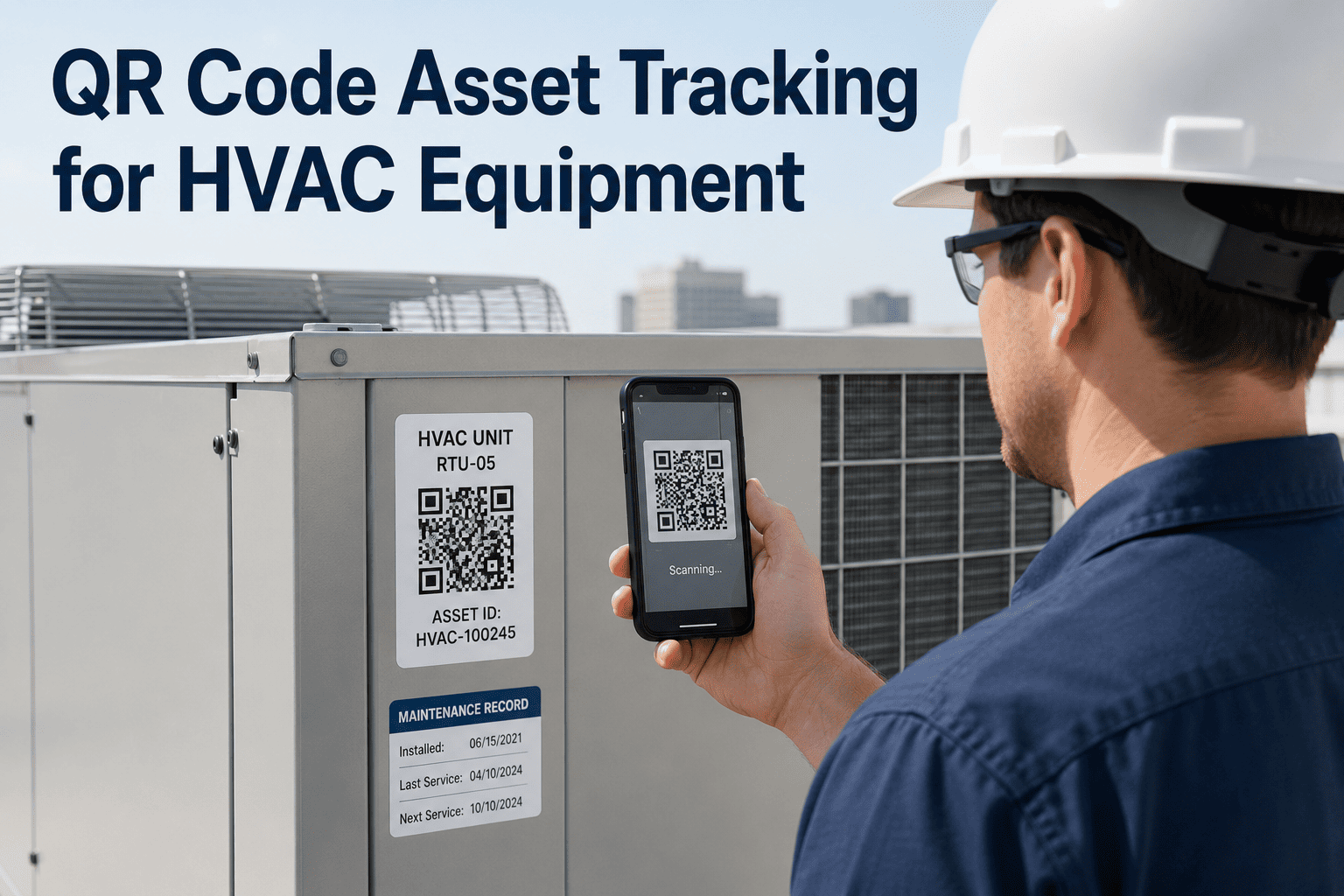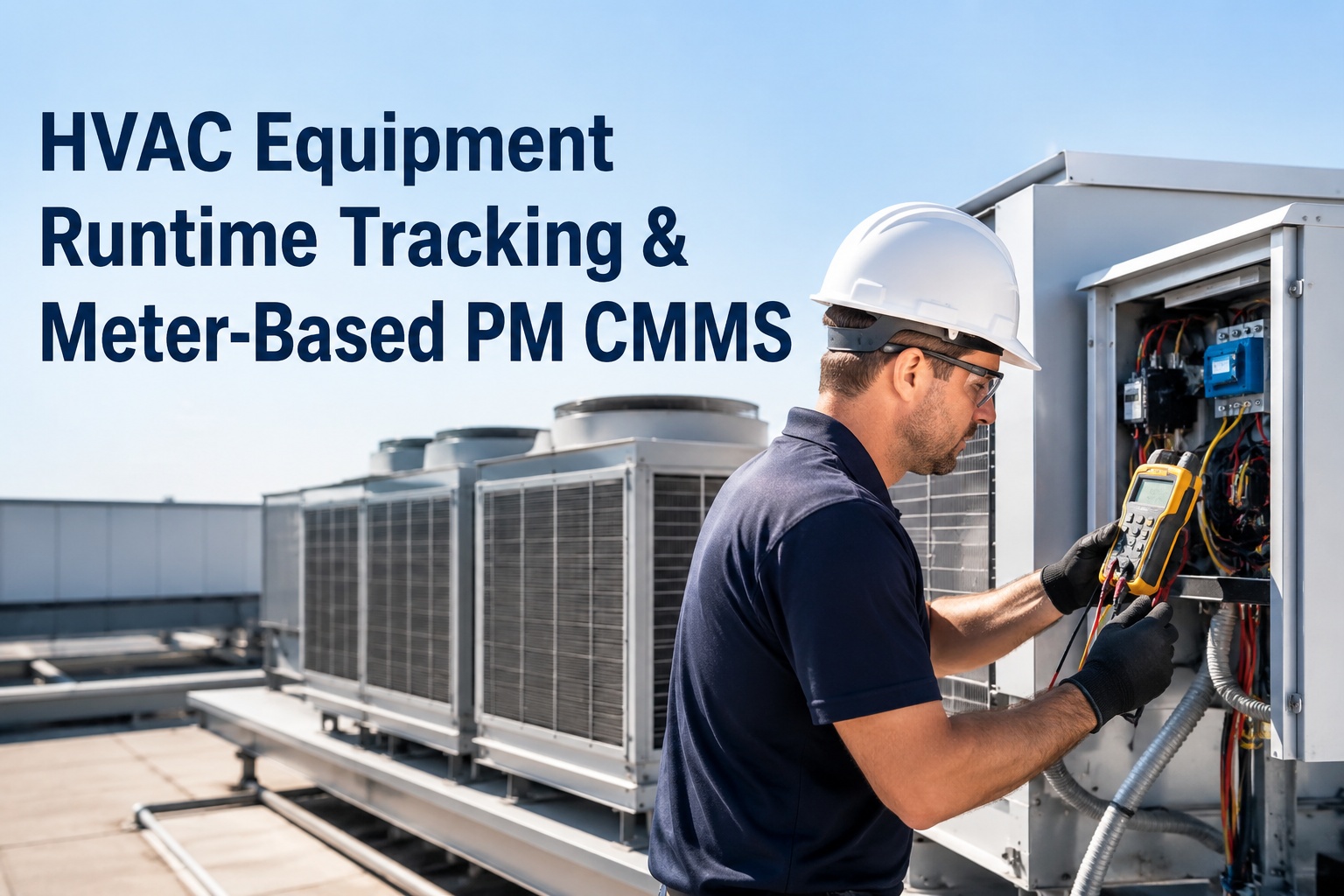
HVAC equipment runtime tracking replaces guesswork with data: instead of servicing a chiller every 90 days regardless of use, a meter-based PM triggers maintenance at exact operating-hour intervals — say, every 2,000 run-hours — so you pay for labor only when wear actually demands it. An HVAC runtime CMMS automatically logs motor runtime from BMS, IoT sensors or manual meter reads, then generates work orders the moment a runtime threshold is crossed. Teams that switch from calendar-based to meter-based maintenance HVAC scheduling typically cut unnecessary PM labor by 20–30% while reducing unplanned downtime. This guide covers operating-hour triggers, motor runtime logging and how a runtime tracking CMMS like OxMaint pays for itself — start a free trial or book a demo to see it on your assets.
HVAC RUNTIME TRACKING GUIDE
Is your HVAC maintenance schedule driven by the calendar — or by how hard your equipment actually runs?
A 500-ton chiller that logged 6,200 run-hours last year does not need the same service as one that ran 2,100. Meter-based PM aligns maintenance with real equipment usage, cutting wasted labor and catching wear before it becomes failure.
OPERATING-HOUR MAINTENANCE
Calendar PM vs. meter-based PM for HVAC: what actually saves money
Calendar-based preventive maintenance assumes every asset degrades at the same rate regardless of load, weather or occupancy. In reality, a rooftop unit serving a high-occupancy data hall accumulates 3–4x more runtime than one in a rarely-used meeting room. Runtime trigger HVAC scheduling replaces that assumption with measured data — and the savings show up fast.
| Dimension | Calendar-Based PM | Meter-Based PM (Runtime) |
|---|---|---|
| Trigger | Fixed date interval (e.g. every 90 days) | Operating hours or meter reading (e.g. every 2,000 run-hrs) |
| Labor efficiency | Over-services low-use assets; under-services high-use ones | Services each asset exactly when wear demands it |
| Failure risk | High — a 24/7 chiller can fail between intervals | Low — threshold crossed triggers work order automatically |
| Compliance evidence | Date stamps only; no runtime proof | Full hour-meter audit trail per asset |
| Typical PM cost savings | Baseline | 20–30% reduction in unnecessary PM labor |
WORKED EXAMPLE
A 180-asset commercial building portfolio spending $42K/yr on flat-calendar HVAC PM switched to an HVAC usage tracking model. After 12 months of runtime-based scheduling, they eliminated 214 unnecessary filter/belt changes on low-use units, caught 9 bearing-wear failures early on high-use AHUs, and cut total PM spend by $11.8K — a 28% reduction — while improving uptime.
SETUP STEPS
How to implement HVAC hour tracking in 5 steps
Moving from calendar-based to operating hour maintenance requires an HVAC runtime CMMS that can read meter values, compare them to thresholds, and auto-generate work orders. Here is the proven 5-step path.
Inventory assets with hour meters
Catalog every chiller, AHU, RTU, exhaust fan and pump that has an hour meter or can receive an IoT runtime sensor. Record baseline reading, rated hours and current PM interval for each.
Define runtime PM triggers per asset class
Set meter thresholds: e.g. belt inspection every 2,000 run-hours, bearing lubrication every 4,000, full oil analysis every 8,000. Base thresholds on OEM specs and failure history.
Connect runtime data sources
Feed motor runtime into your CMMS via BMS/BACnet integration, IoT vibration/temperature sensors, or manual meter reads on a mobile form. OxMaint accepts all three — automatically and in real time.
Activate meter-based PM templates
Convert each calendar PM into a meter-based PM template. When cumulative runtime crosses the threshold, the CMMS generates a work order with parts, labor estimate and safety checklist attached.
Review thresholds quarterly
After 90 days of data, compare actual wear vs. predicted. Tighten thresholds on high-failure assets; loosen on low-use ones. Most teams hit steady-state optimization by the second quarter.
FORMULA & METRICS
The runtime PM savings formula
You can estimate the payback of switching to HVAC runtime tracking before you ever touch a meter. The formula below captures the three value drivers: eliminated unnecessary labor, avoided failure cost and reduced energy waste from poorly-maintained equipment.
HOW OXMAINT HELPS
How OxMaint's HVAC runtime CMMS eliminates the spreadsheet trap
Most maintenance teams still track HVAC operating hours in Excel — or worse, on paper logs that get lost. OxMaint replaces that with an AI-powered runtime tracking CMMS that captures data automatically, triggers work orders at the right interval, and gives reliability leaders a real-time view of every asset's wear trajectory.
Automatic meter-based PM triggers
OxMaint reads runtime from BMS, IoT sensors or mobile meter-entry forms and auto-generates a work order the instant a threshold is crossed — no manual checking, no missed services on high-use assets.
Predictive wear analytics
AI models project when each chiller, AHU or pump will hit its next threshold — so you can batch labor, pre-order parts and cut unplanned downtime 30–50% by catching failures before they happen.
Full audit trail per asset
Every runtime reading, triggered PM and completed work order is timestamped and attached to the asset record — ISO 55000-aligned evidence that satisfies any auditor or insurer.
Spare-parts auto-reservation
When a runtime PM triggers, OxMaint checks parts inventory and reserves filters, belts and oil automatically — eliminating stock-outs and the 2–3 day delays that turn a $200 PM into a $4,000 downtime event.
We stopped over-servicing 60% of our rooftop units the week we turned on OxMaint's meter-based PM. The chiller that ran 24/7 finally gets attention before the bearings fail — not three weeks after.
— Facilities Director, 1.2M sq ft commercial portfolio
See OxMaint track runtime on your HVAC assets
Book a 30-minute demo and we'll show you meter-based PM triggers, predictive wear alerts and audit-ready reporting on your own equipment list.
FREQUENTLY ASKED
HVAC equipment runtime tracking — your questions answered
What is meter-based PM for HVAC equipment?
Meter-based PM triggers maintenance based on equipment usage — typically operating hours or meter readings — instead of a fixed calendar date. For example, an air handler might receive a filter change every 2,000 run-hours rather than every 3 months, ensuring service happens when actual wear demands it. An HVAC runtime CMMS like OxMaint automates the reading, comparison and work-order generation so nothing falls through the cracks.
How do I track HVAC operating hours without manual logs?
Connect your BMS (BACnet/Modbus), install IoT runtime sensors on motors, or use a mobile meter-reading form. OxMaint ingests runtime data from all three sources automatically, updates each asset's cumulative hour count in real time, and triggers a PM work order the moment a threshold is crossed — eliminating paper logs entirely. You can book a demo to see live integrations on your equipment.
How much does HVAC runtime tracking save compared to calendar PM?
Teams typically cut unnecessary PM labor by 20–30% in the first year by eliminating over-service on low-use assets, while avoiding high-cost failures on under-serviced high-use assets. A 180-asset portfolio spending $42K/yr on calendar PM can save $11–12K annually, with payback in under 90 days when energy savings from optimal maintenance are included.
Which HVAC assets benefit most from runtime-based maintenance?
Assets with variable load profiles benefit most: chillers, air handlers, rooftop units, exhaust fans, circulation pumps and cooling towers. Any equipment whose runtime varies seasonally or by occupancy is a strong candidate, because calendar PM either over-services it in low season or under-services it during peak cooling or heating demand.
Can a CMMS handle both calendar-based and meter-based PM simultaneously?
Yes. A modern HVAC runtime CMMS like OxMaint supports both trigger types on the same asset — for instance, a quarterly safety inspection (calendar) plus a 2,000-hour filter change (meter). The system generates whichever work order comes due first, and you can phase the migration asset-by-asset without disrupting existing schedules. Start a free trial to configure both on your assets today.
Stop servicing by the calendar. Start maintaining by runtime.
Join the maintenance teams using OxMaint to cut PM labor 20–30%, catch failures early and prove compliance with a full hour-meter audit trail.
Free 14-day trial · No credit card