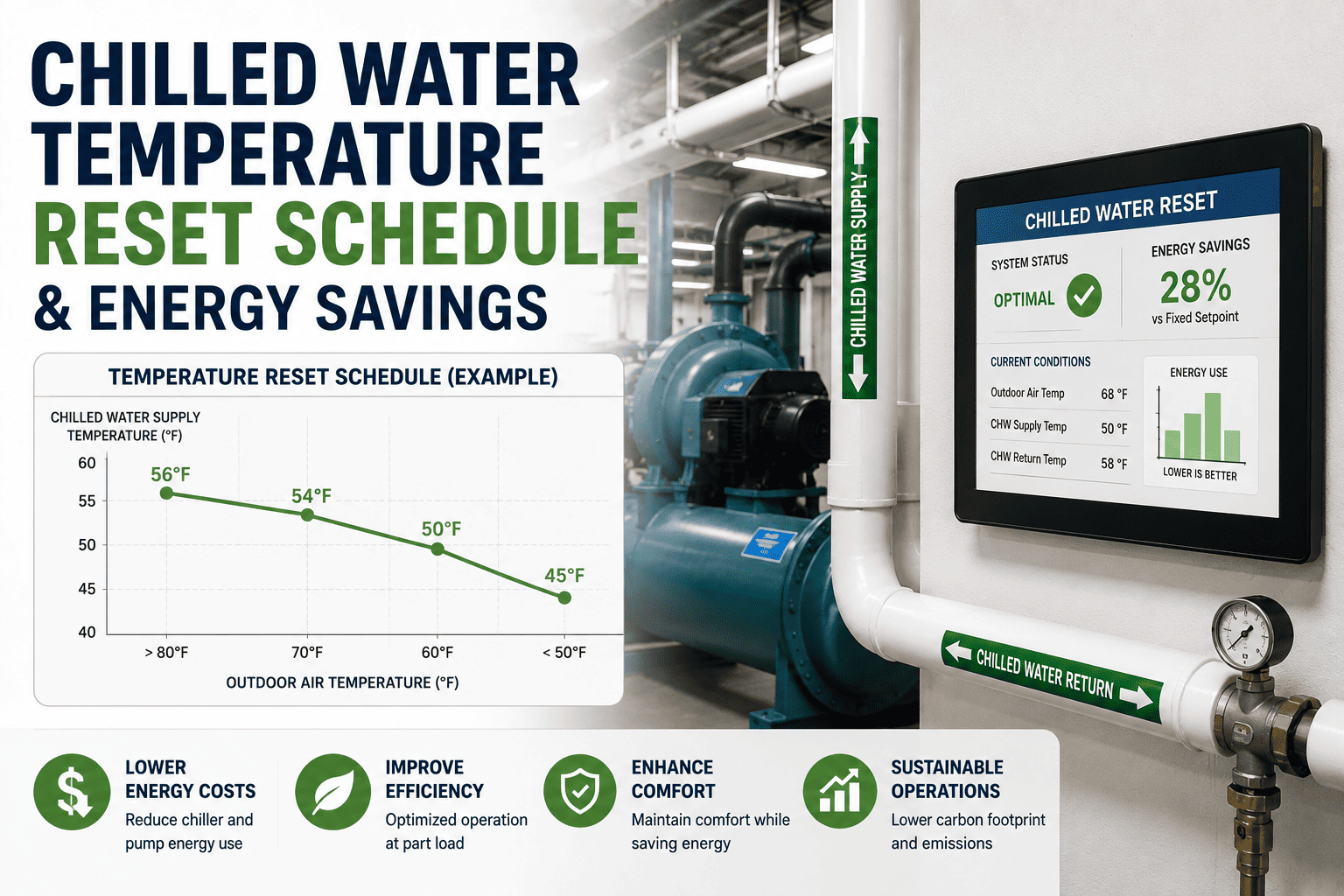
Chilled water reset is one of the highest-ROI optimization strategies for commercial and industrial facilities, often cutting chiller compressor energy use by 15–20% during partial-load conditions without sacrificing occupant comfort. A well-structured chilled water temperature reset schedule raises the supply temperature setpoint—typically from 42°F to 48°F—as building load drops, letting chillers operate at reduced lift and lower kW/ton. This guide breaks down exactly how to implement a defensible reset schedule, calculate energy savings, and enforce the strategy using modern CMMS workflows. Ready to stop wasting compressor hours? Start Free Trial with OxMaint today.
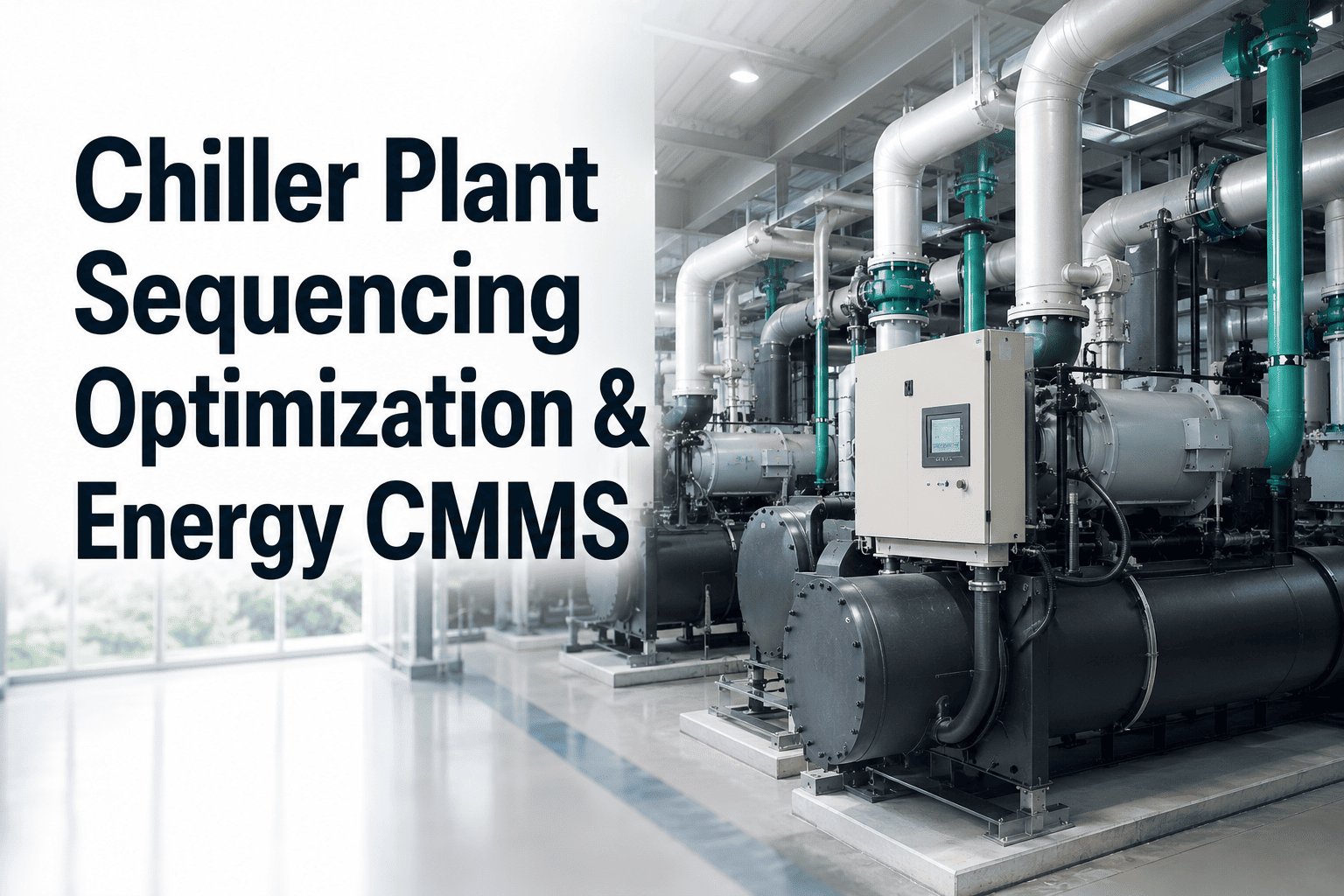
CHILLED WATER RESET OPTIMIZATION
Raise Supply Temp 42°F → 48°F. Cut Compressor kW 15–20%.
A data-driven chilled water temperature schedule lets chillers run at lower lift during partial load—directly slashing energy bills. OxMaint automates the sequence, verifies execution, and documents savings for every asset in your plant.
CHILLER ENERGY SAVINGS RESET
How Chilled Water Reset Slashes Compressor Energy
Chillers consume the most plant energy at high lift—the differential between chilled water supply and condenser return. A chiller temperature reset strategy reduces lift by raising the supply setpoint as load drops. For every 1°F increase in chilled water supply temp, chiller efficiency improves by roughly 1.5–2.5%. Over a cooling season, that translates to thousands in utility savings.
CORE FORMULA
kW Savings = (Baseline kW/ton − Reset kW/ton) × Load (tons) × Operating Hours
Example: A 500-ton chiller operating 2,500 hours/yr at 0.15 kW/ton improvement = 187,500 kWh saved — roughly $18,750/yr at $0.10/kWh.
1°F
Supply Temp Increase
Yields ~1.5–2.5% chiller efficiency improvement under typical partial-load conditions.
6°F
Reset Range (42°F → 48°F)
A standard partial-load reset band, capturing 9–15% total compressor energy reduction.
2–3 Yrs
Typical Payback
Programming, sensors, and CMMS oversight pay for themselves fast in avoided kWh.
PARTIAL LOAD CHILLER SAVINGS
Chilled Water Reset Schedule: Step-by-Step Timeline
Implementing a chilled water reset schedule requires cross-functional coordination between reliability engineers, HVAC technicians, and controls programmers. Here is the standard 5-phase timeline for rolling out a defensible reset program.
Baseline & Audit (Weeks 1–2)
Log existing supply temps, kW/ton, and load profiles. Tag assets in OxMaint and attach OEM performance curves to the asset record.
Define Reset Parameters (Week 3)
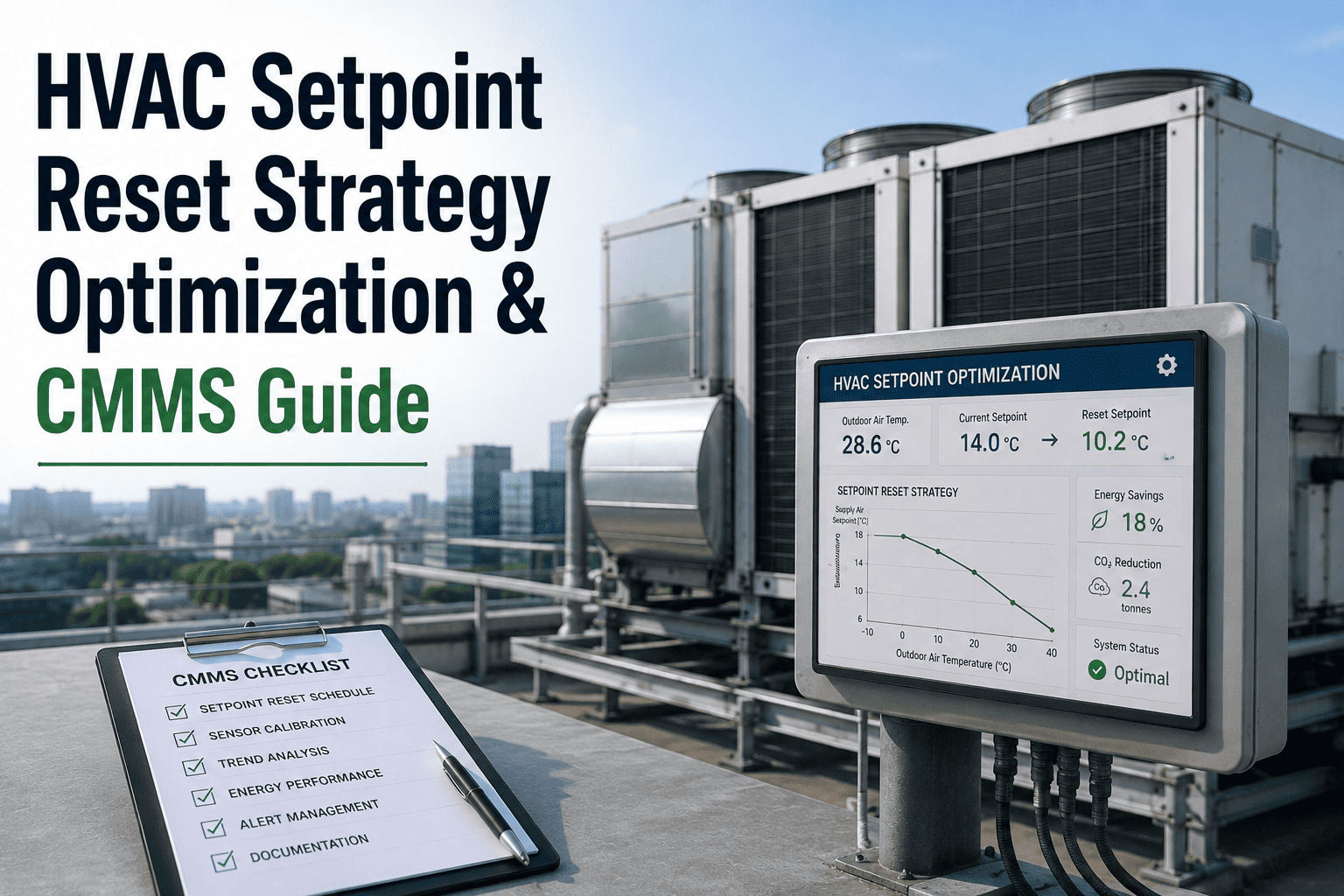
Establish the reset schedule (e.g., 42°F at 100% load, rising 1°F per 10% load drop up to 48°F). Validate humidity and dewpoint constraints.
Program Controls (Week 4)
Implement the reset curve in the BAS. Generate OxMaint preventive maintenance (PM) work orders to verify actuator response and sensor calibration.
Monitor & Measure (Weeks 5–8)
Track actual supply temp vs. setpoint. Use OxMaint analytics to flag deviations. Calculate verified kWh savings against the baseline.
Optimize & Standardize (Ongoing)
Refine reset curves seasonally. Store updated parameters in the CMMS asset library and schedule quarterly reviews.
CHILLED WATER OPTIMIZATION
Fixed Setpoint vs. Dynamic Reset Schedule
Many plants still run chillers at a flat 42°F year-round. The cost of that inertia is massive. The table below contrasts a fixed setpoint approach with an optimized chilled water temperature schedule.
| Metric | Fixed Setpoint (42°F) | Dynamic Reset (42–48°F) |
|---|---|---|
| Average Compressor Lift | High (constant) | Variable (reduced at partial load) |
| Seasonal kW/ton | 0.55 – 0.65 | 0.42 – 0.50 |
| Dehumidification Risk | Very Low | Managed (dewpoint monitoring required) |
| Annual Energy Cost (500-ton chiller) | ~$82,500 | ~$69,000 |
| Maintenance Burden | Reactive, manual logging | Automated, CMMS-tracked PMs |
CMMS CHILLED WATER RESET
How OxMaint Drives Chiller Load Optimization
A reset schedule is only as good as the maintenance discipline behind it. OxMaint's AI-powered CMMS and EAM platform ensures your chilled water optimization strategy is executed, tracked, and continuously improved—no spreadsheets required.
Automated PM Work Orders
Schedule sensor calibration, valve actuator inspections, and BAS verifications automatically. Cut manual scheduling time by 80% and eliminate missed maintenance.
Predictive Analytics
OxMaint AI analyzes vibration, kW/ton, and temp trends to flag chiller degradation before it wrecks your efficiency targets. Predict failures 2–4 weeks in advance.
Asset & Parameter Tracking
Store every chiller's reset curve, OEM specs, and service history in a central asset registry. Stop hunting for binders during commissioning or audits.
Energy & KPI Dashboards
Visualize verified kWh savings, downtime events, and OEE in real-time. Prove ROI to finance with one click, keeping compliance and audit readiness airtight.
Stop Leaving Energy Savings on the Table
See how OxMaint enforces your chilled water reset schedule and tracks real dollar savings. Book a 30-minute demo with our reliability engineers today.
CHILLED WATER RESET GUIDE
Frequently Asked Questions
What is a chilled water reset schedule?
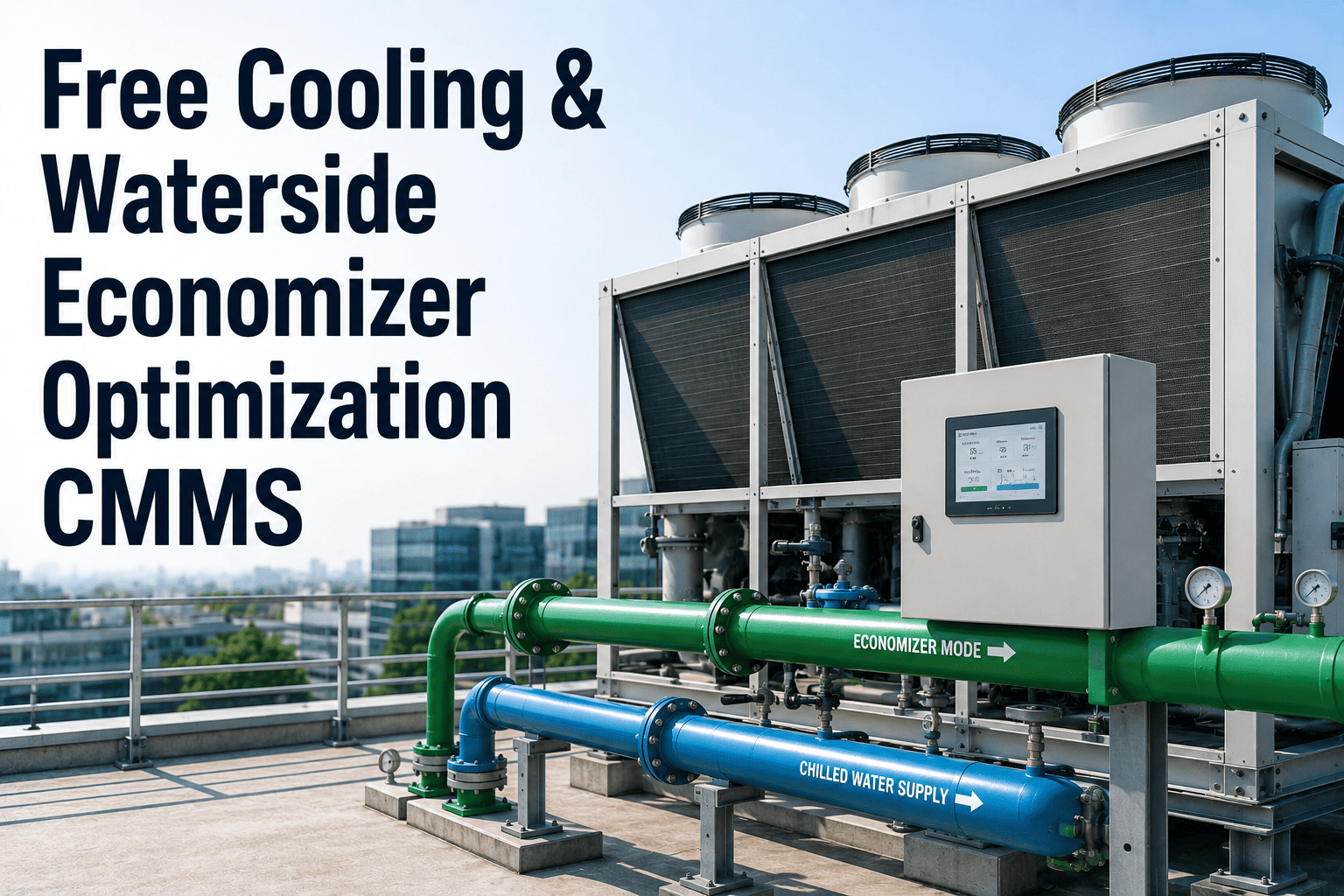
A chilled water reset schedule is a control strategy that adjusts the chilled water supply temperature setpoint based on actual building cooling load. Instead of maintaining a fixed 42°F supply temp, the setpoint rises (e.g., up to 48°F) as load drops, reducing chiller compressor lift and saving 15–20% in energy. You can automate the tracking and maintenance of this schedule using OxMaint CMMS.
How much energy does chilled water temperature reset save?
Chiller energy savings from a properly tuned reset schedule typically range from 15% to 20% on compressor kWh during partial-load operations. For a 500-ton chiller running 2,500 hours per year, this can translate to $13,000–$18,000 in annual utility savings, depending on local electricity rates and load profiles.
Does raising chilled water supply temperature cause humidity issues?
It can if not managed correctly. Supply temp should be raised only when outdoor dewpoint and indoor latent loads permit. Best practice is to cap the reset maximum (e.g., 48°F) and use a dewpoint sensor to override the reset schedule if relative humidity climbs above setpoint, ensuring dehumidification capacity is maintained.
How does a CMMS help with chilled water optimization?
A CMMS like OxMaint schedules and tracks the preventive maintenance required to keep the reset strategy functional—calibrating sensors, inspecting control valves, and verifying BAS logic. It also centralizes asset data and uses predictive analytics to catch efficiency drift early. Book a demo to see the workflow in action.
What is the ideal reset range for a chilled water system?
Most commercial systems use a 42°F to 48°F supply temperature reset range. The exact curve depends on chiller type, coil sizing, and humidity requirements. A common sequence is 42°F at 100% load, increasing 1°F for every 10% drop in load, up to a 48°F maximum at 40% load or below.
Ready to Optimize Your Chillers with OxMaint?
Join reliability teams using OxMaint to cut energy costs, eliminate paper work orders, and predict failures before they happen.
Free 14-day trial · No credit card