Housekeeping and engineering coordination is the single point where hotel operations either flow seamlessly or grind to a halt — every defect handoff and every room release is a critical crossroads. This CMMS guide to housekeeping-engineering cross-department coordination covers shared work order flow, room status integration, communication protocols, and the unified platform structure that makes inter-departmental execution automatic. Hotels that implement a cross-department CMMS hotel strategy routinely cut room-out-of-service time by up to 40% and recover thousands in daily lost revenue. See exactly how OxMaint bridges the gap when you Start Free Trial or book a personalized walkthrough today.
Coordination Guide 2026
Is Your Hotel Losing Revenue Every Time Housekeeping Hands a Room to Engineering?
Miscommunication between housekeeping and engineering costs the average 300-room hotel over $180,000 annually in out-of-service inventory and guest dissatisfaction penalties. A CMMS hotel unified platform eliminates the gap.
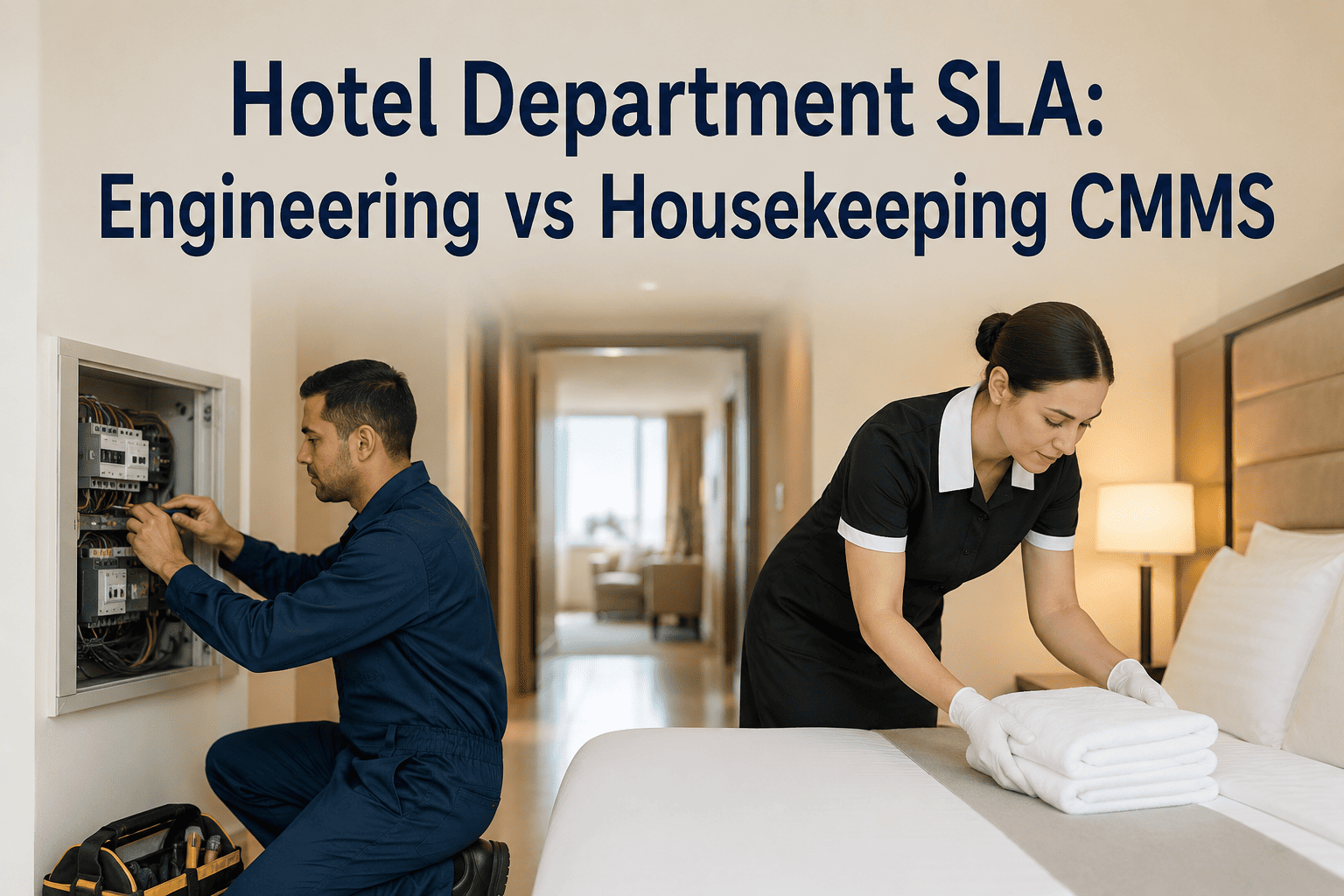
When a guest reports a broken AC unit, housekeeping creates a ticket, engineering scrambles to locate the asset, and the room sits vacant. Shared room status CMMS visibility changes this entirely — both departments see the same live work order, the same room condition, and the same SLA countdown on a single dashboard.
The Cost of Siloed Departments
Why Housekeeping-Engineering Coordination Breaks Down
In most hotels, housekeeping and engineering operate on entirely separate tracking systems — one uses paper logs or a basic hotel PMS module, the other relies on fragmented maintenance spreadsheets or walkie-talkie calls.
The average 200-room hotel experiences over 14 miscommunication events daily between housekeeping and engineering teams.
Rooms with reported defects sit vacant for 4.5 hours on average while teams clarify the issue, locate parts, and dispatch technicians.
A 300-room property loses approximately $185,000 yearly in unrealized room revenue due to coordination delays and extended out-of-order inventory.
22% of negative reviews cite maintenance delays or unresolved room defects, directly impacting repeat booking rates.
Real-World Scenario
A 240-room boutique hotel spending $48K/yr in coordination delays
A 240-room property in Austin tracked maintenance via paper logs and housekeeping via a standalone PMS. Guest-reported defects took an average of 5.8 hours to resolve because engineering had to physically verify the issue, locate the correct asset history, and check spare-parts availability manually. By deploying a CMMS cross-department hotel platform, the property standardized its work order flow. Housekeeping now tags defects directly via a mobile app, engineering receives instant alerts with full asset context, and room turnaround dropped to 2.1 hours — saving $48,000 in recovered room revenue in the first year alone.
Coordination Guide 2026
Step-by-Step Timeline to CMMS Housekeeping-Engineering Integration
Achieving seamless department integration hotel CMMS requires a phased rollout. Here is the standard 4-month implementation timeline used by successful properties.
Asset Mapping & Unified Database Setup
Catalog every room asset — HVAC units, plumbing fixtures, electrical panels, appliances — into the CMMS with QR code tags. Engineering and housekeeping both access the same asset registry, eliminating the "where is it" delay.
Shared Room Status Visibility Configuration
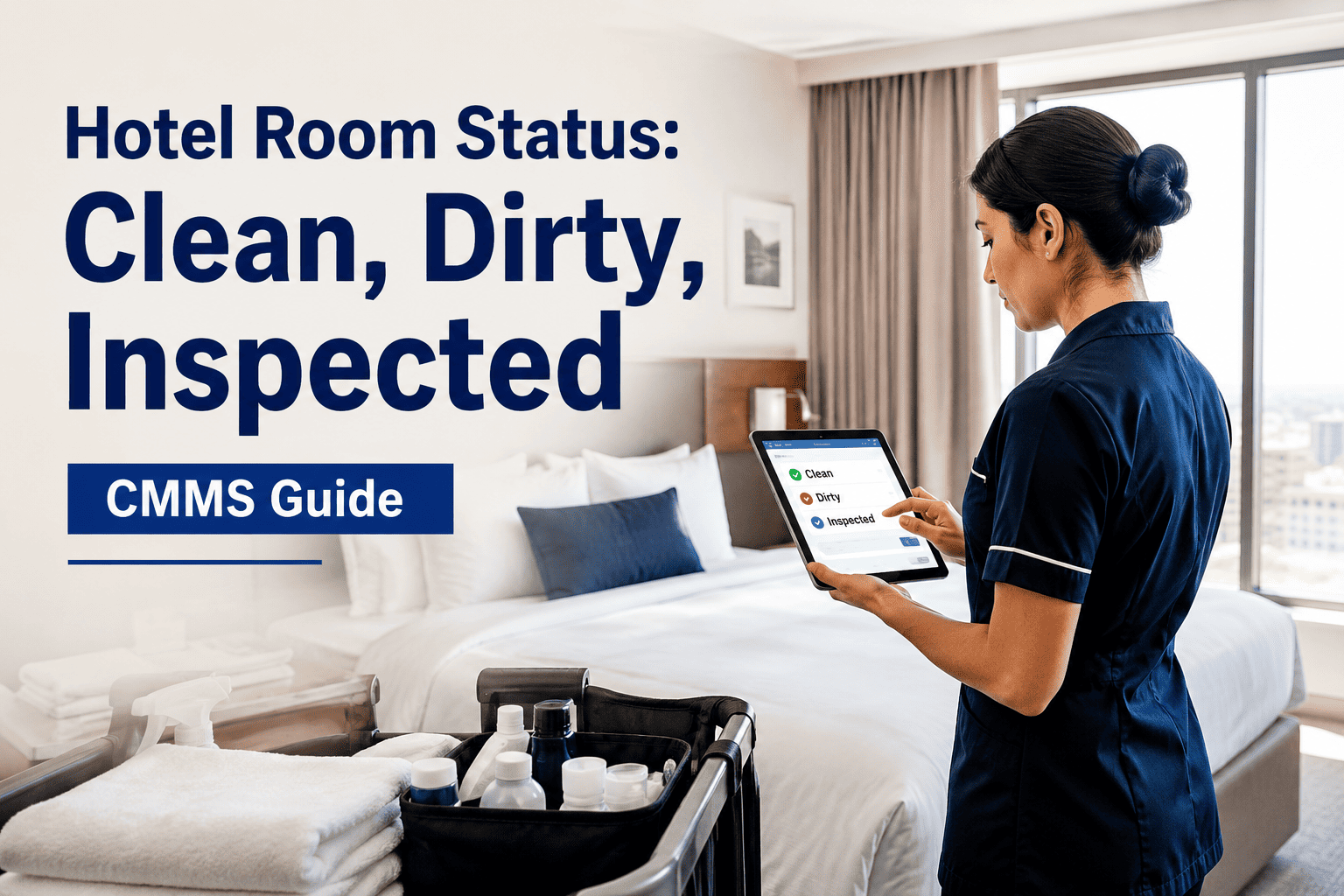
Map room states (Clean, Inspected, Out-of-Order, Out-of-Service) across both departments. Housekeeping updates trigger engineering visibility, and engineering work order completion automatically notifies housekeeping for final turn-down.
Mobile Work Order Flow & Protocol Training
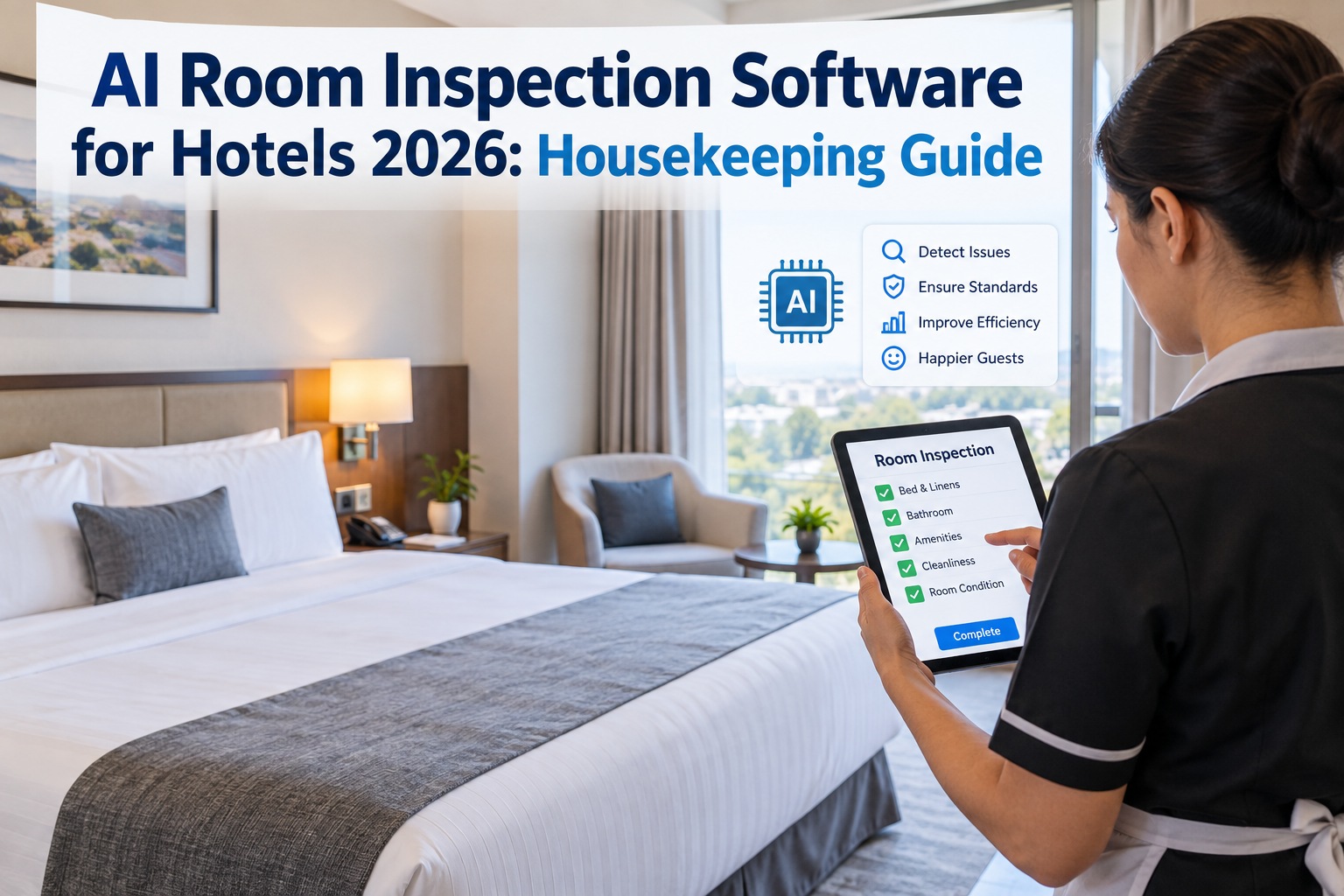
Deploy mobile CMMS apps to all staff. Housekeeping creates defect tickets with photos and QR scans; engineering receives prioritized queues with SLA timers. Train both teams on the new unified protocol.
Predictive Analytics & SLA Optimization
Activate AI-driven preventive maintenance triggers based on usage data and defect history. Establish KPI dashboards tracking mean time to repair (MTTR), repeat defect rates, and inter-departmental handoff speed.
Communication Protocols
Shared Room Status CMMS: The Communication Protocol Framework
A coordination CMMS guide is incomplete without defining the exact communication triggers between departments. The following table outlines the mandatory protocol states.
| Room Status Trigger | Housekeeping Action | Engineering Action | CMMS Automated Response |
|---|---|---|---|
| Guest reports defect | Scan room QR, log defect with photo | Receive instant mobile work order alert | Room flags "Out-of-Service", SLA timer starts |
| Preventive maintenance due | Notified 24 hrs prior to reserve room block | Receive scheduled PM checklist and asset history | Auto-blocks room in PMS, generates parts pick list |
| Repair completed | Receive notification for final cleaning & inspection | Close work order, log parts & labor time | Room status updates to "Dirty", releases PMS block |
| Parts unavailable | Room remains blocked, guest relocated if necessary | Auto-generates purchase order to approved vendor | Updates ETA, notifies Front Office & GM |
| SLA breach risk (2 hrs) | Visual alert on shared dashboard | Escalation notice to Chief Engineer | Triggers escalation workflow, re-prioritizes queue |
Ready to Eliminate the Departmental Gap?
See how OxMaint's unified platform transforms housekeeping-engineering coordination into a seamless, automated workflow.
CMMS Hotel Unified Platform
How OxMaint Solves Cross-Department Hotel Coordination
OxMaint is an AI-powered CMMS and EAM platform designed to unify maintenance, reliability, and operational teams under a single pane of glass. Here is how specific OxMaint capabilities map directly to hotel department integration.
Shared Work Order & Room Status Engine
Both housekeeping and engineering operate on the same live work order dashboard. Room status changes trigger automated cross-department notifications, eliminating radio chatter and paper logs.
Outcome: Cut room out-of-service time by 35–50% within 90 days.
QR-Based Asset Tracking for Every Room
Every HVAC unit, fixture, and appliance gets a QR tag. Housekeeping scans to report; engineering instantly sees full asset history, warranty status, and prior repair notes.
Outcome: Reduce diagnostic time by 60% and eliminate repeat defect cycles.
AI-Powered Predictive Maintenance
OxMaint analyzes usage patterns and vibration/temperature data to predict failures before guests notice. Preventive work orders auto-generate and coordinate with housekeeping for room blocking.
Outcome: Prevent 80% of unplanned equipment failures and eliminate guest-facing defects.
Integrated Spare-Parts Inventory
Engineering sees real-time parts availability before accepting a work order. Low stock triggers automatic purchase orders to approved vendors, ensuring repairs are never delayed by missing components.
Outcome: Cut parts-related repair delays by 70% and reduce inventory carrying costs by 15%.
ROI & Payback
The ROI of a Unified Platform CMMS Guide for Hotels
Switching from reactive, siloed operations to a cross-department CMMS delivers measurable, compounding returns. Use this framework to model your property's payback.
Annual ROI Formula
Recovered Room Revenue + Reduced Labor Hours + Saved Penalty Costs − Annual CMMS Cost = Net Annual ROI
| Property Size | Est. Annual Savings | OxMaint Annual Cost | Net ROI | Payback Period |
|---|---|---|---|---|
| 150 rooms | $128,000 | $9,000 | $119,000 | Under 1 month |
| 300 rooms | $255,000 | $15,000 | $240,000 | Under 1 month |
| 500+ rooms | $420,000+ | $24,000 | $396,000+ | Under 1 month |
Frequently Asked Questions
CMMS Housekeeping-Engineering Coordination FAQs
How does a CMMS improve housekeeping and engineering coordination?
A CMMS creates a single shared platform where both departments see live room statuses, work orders, and asset histories in real time. When housekeeping logs a defect via a mobile QR scan, engineering instantly receives a prioritized work order with full context — eliminating phone calls, paper logs, and miscommunication. This unified visibility typically reduces room out-of-service time by 35–50%.
Can a cross-department CMMS integrate with our existing hotel PMS?
Yes. OxMaint integrates with major Property Management Systems to automatically sync room status changes. When engineering flags a room as Out-of-Order, the PMS updates instantly to prevent new check-ins. You can Book a Demo to see live PMS integration in action and confirm compatibility with your specific system.
What is the average implementation time for a hotel CMMS?
A typical 200–300 room hotel completes full OxMaint deployment in 4 to 6 weeks. This includes asset QR tagging, room status mapping, PMS integration, mobile app rollout, and staff training across both housekeeping and engineering teams. Properties often see measurable ROI within the first 30 days of go-live.
Is the CMMS easy for housekeeping staff to use without technical training?
Modern CMMS platforms like OxMaint are designed with mobile-first simplicity. Housekeeping staff only need to scan a QR code, select a defect category from a visual menu, and optionally snap a photo. The entire workflow takes under 20 seconds per room and requires zero technical background or prior software experience.
How much does a cross-department hotel CMMS cost?
OxMaint pricing scales with property size, typically ranging from $9,000 to $24,000 annually for hotels between 150 and 500+ rooms. Given that the average 300-room property recovers over $255,000 in annual savings, the payback period is generally under one month. You can Start Free Trial to evaluate the platform at no cost for 14 days.
Unify Your Housekeeping & Engineering Teams Today
Join hundreds of hotels using OxMaint to automate defect handoffs, eliminate out-of-service delays, and maximize daily room revenue.
Free 14-day trial · No credit card required