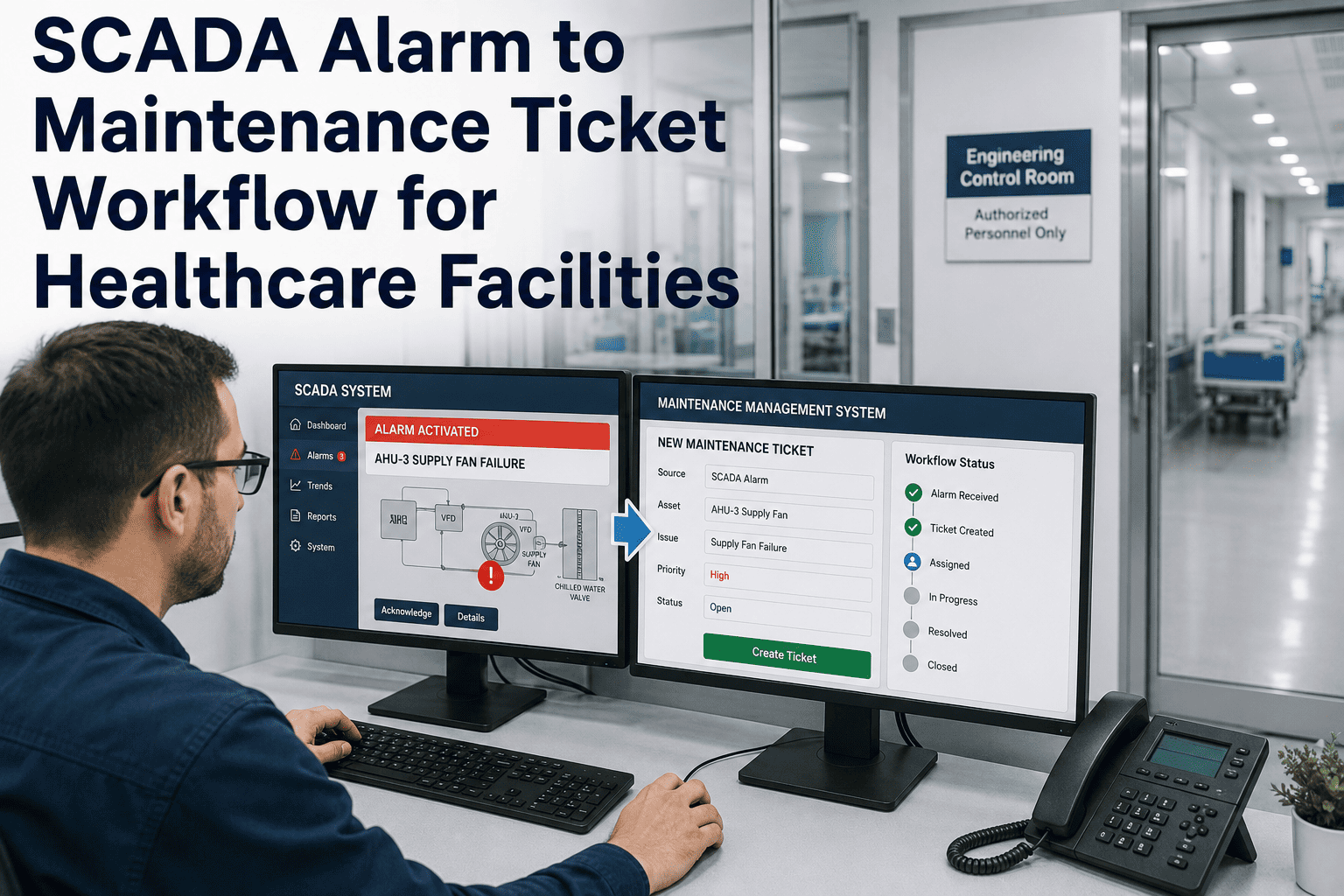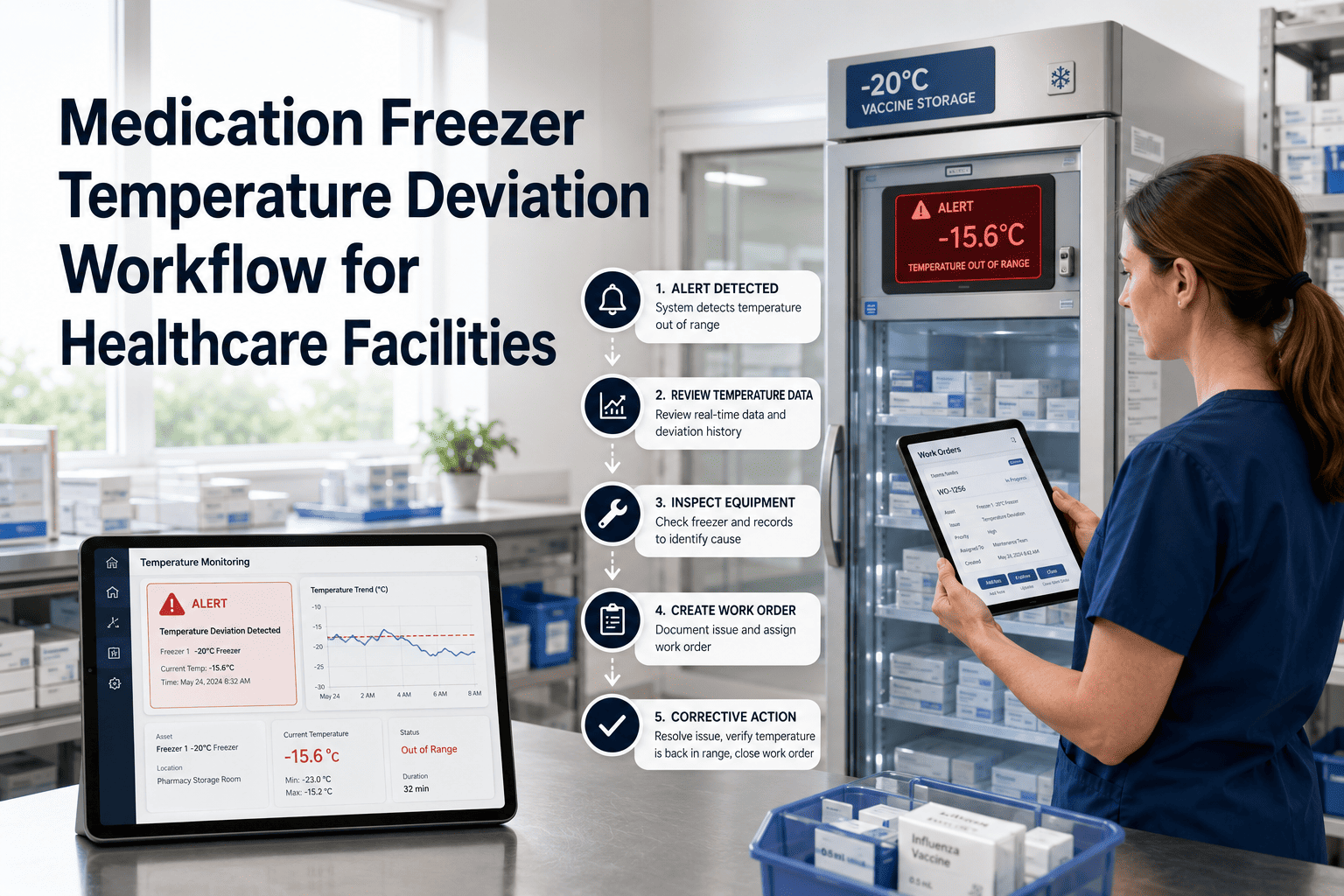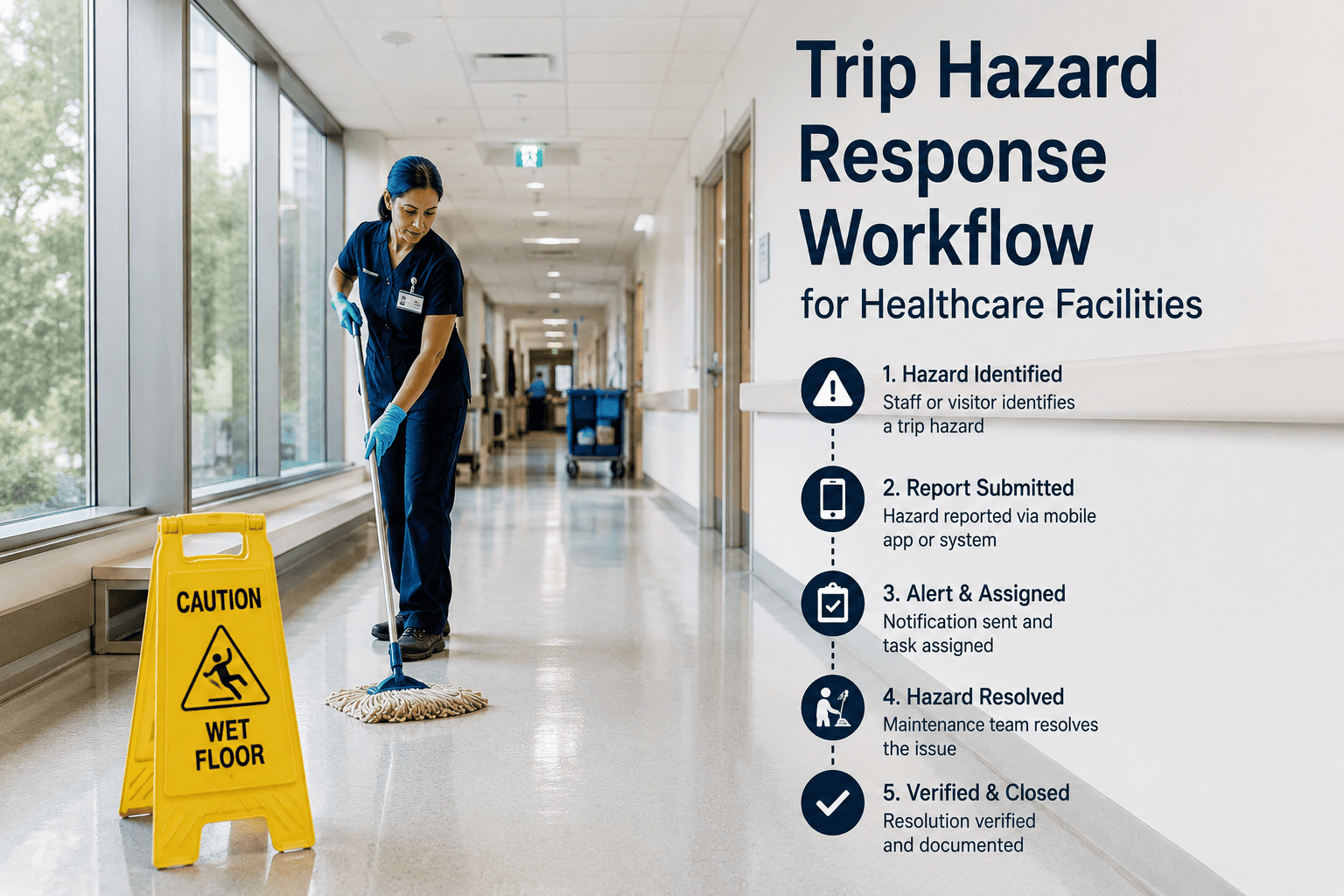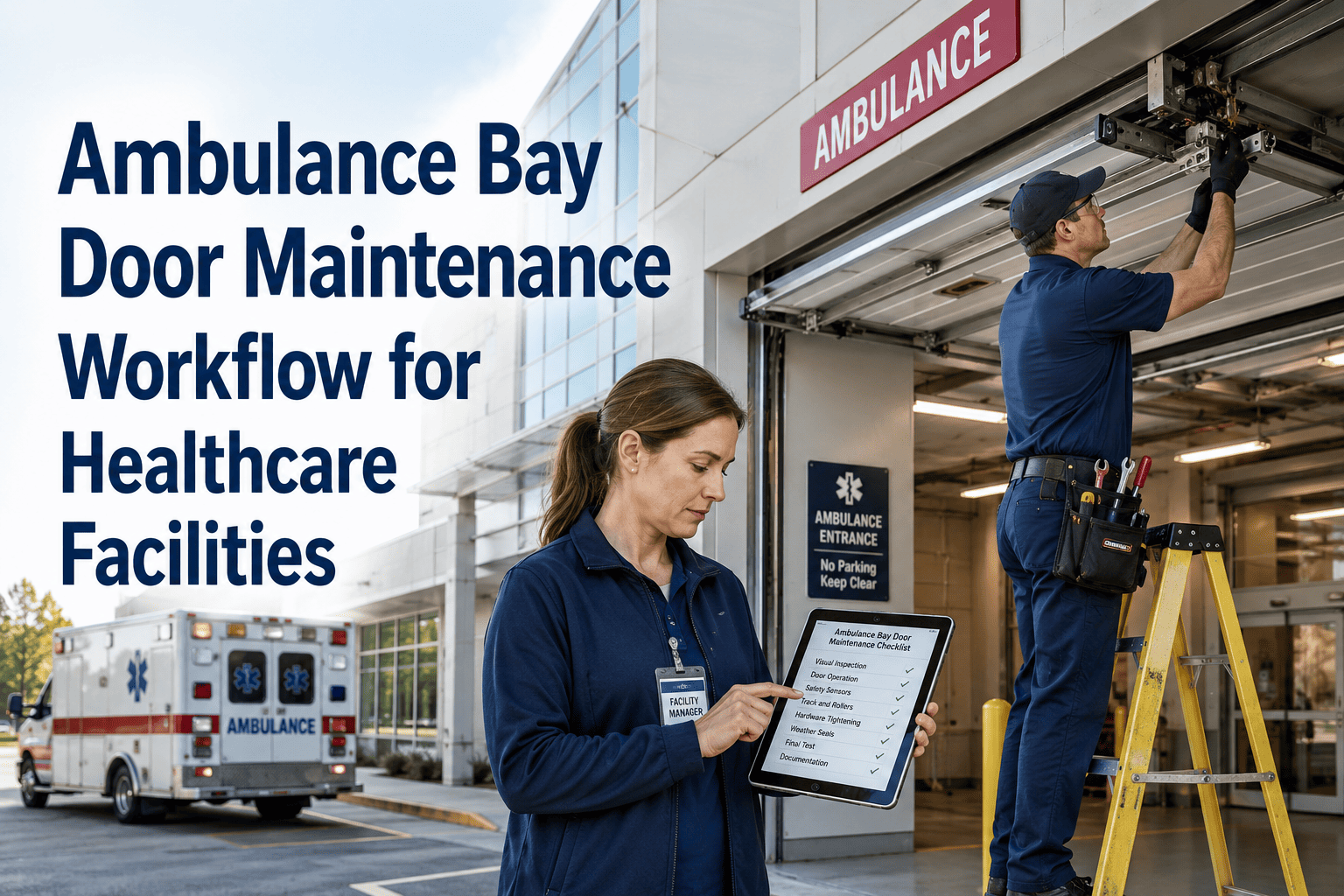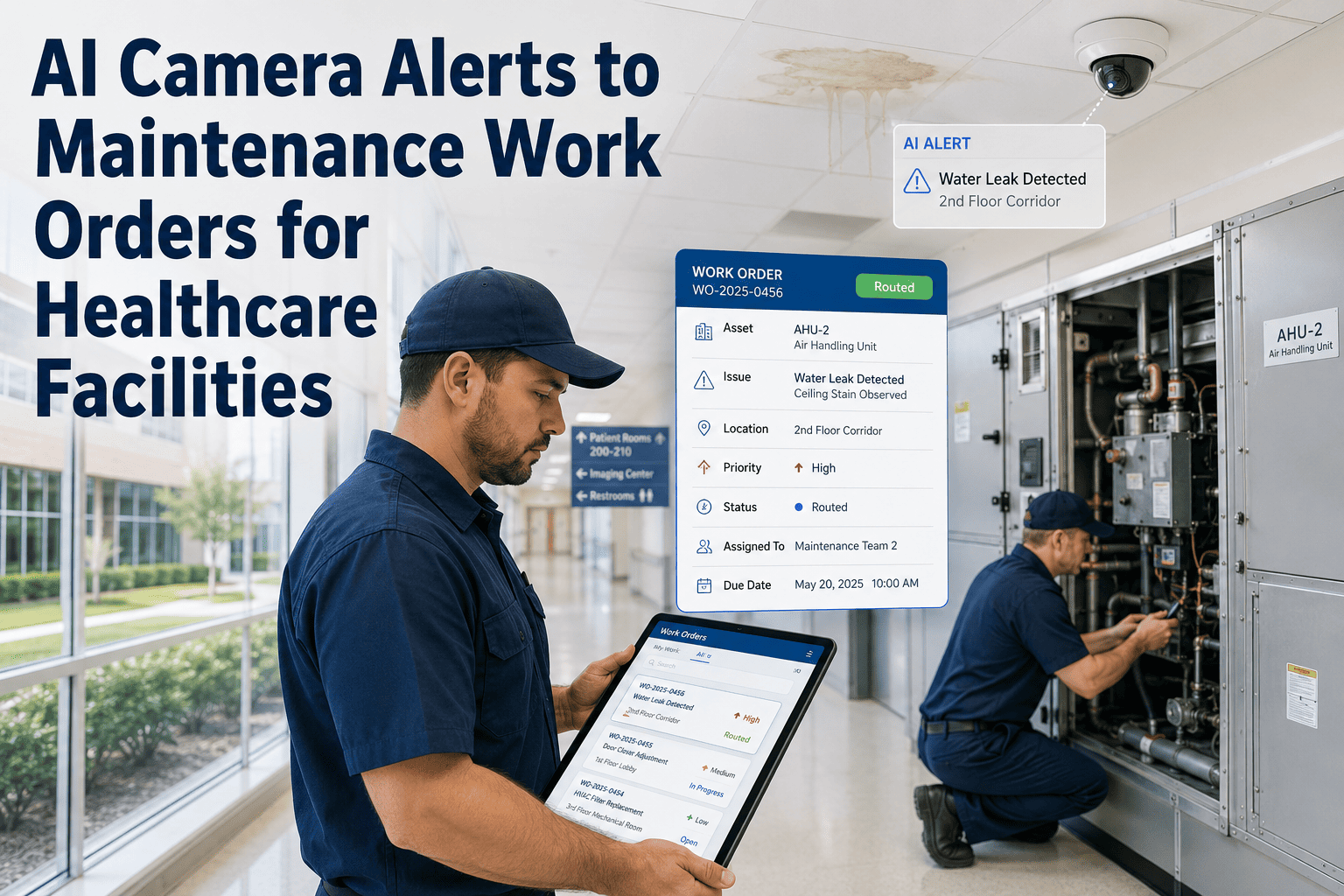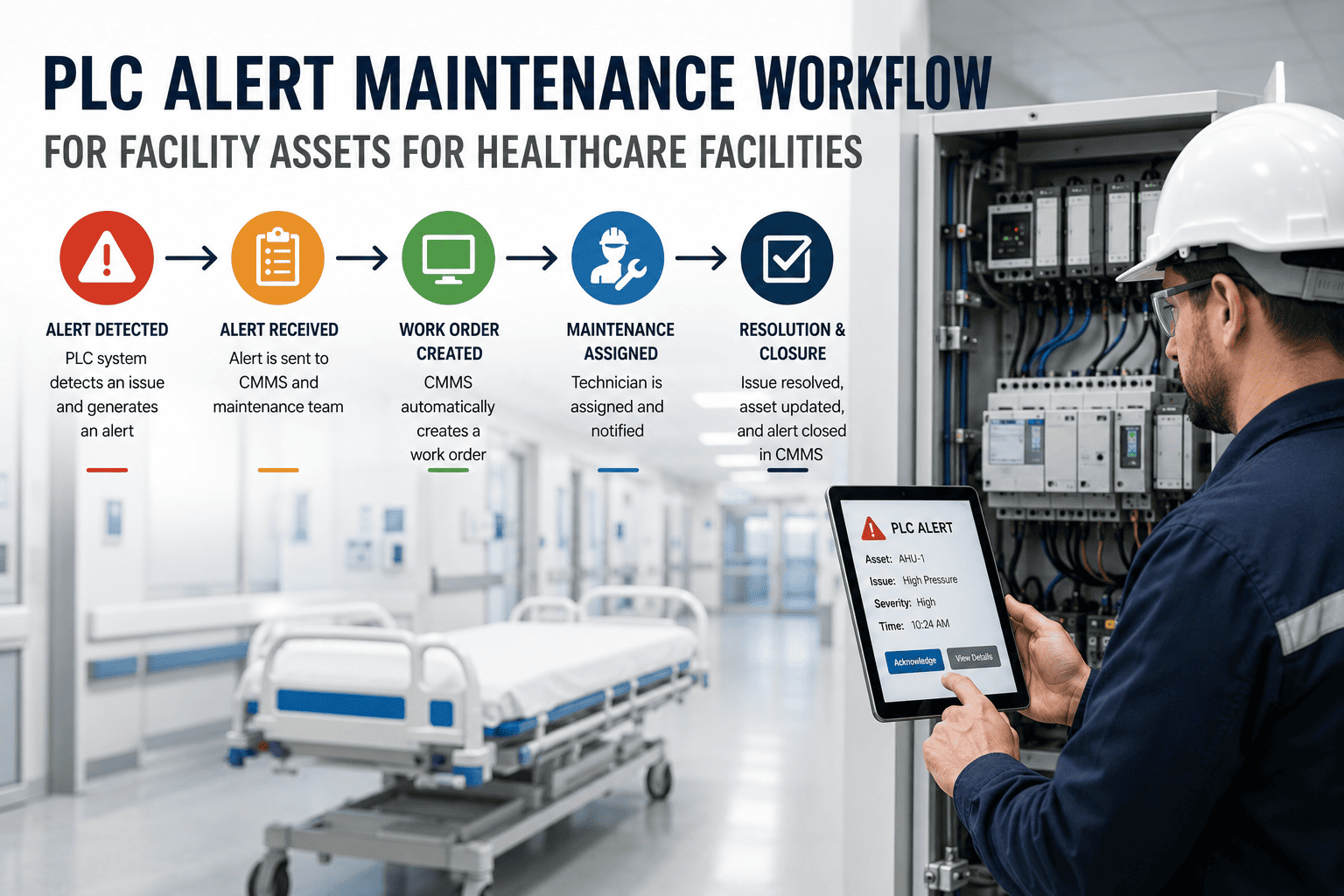
A hospital boiler plant, backup generator, and elevator bank are all run by PLCs that already know something is wrong long before a facilities technician does — a pressure setpoint drifting, a battery voltage sagging, a motor drawing more current than its baseline. The gap is almost never detection; it is what happens to that signal after the PLC raises it. Oxmaint's PLC alert workflow routes every facility-asset signal into a maintenance ticket with a defined escalation path, so a generator battery alarm at 3 AM does not sit in a controller's memory until someone happens to check the panel.
Your Boiler's PLC Knew Three Days Before It Failed. Did Anyone Else?
Facility PLCs are quietly excellent instruments — they track pressure, current draw, run hours, and vibration continuously. The question that matters is not whether the PLC detected the drift. It's whether that detection reached a technician's queue before the drift became a failure.
The Escalation Ladder — What Happens When a PLC Alert Goes Unanswered
A connected PLC alert is only as good as what happens if the first technician does not respond. The escalation ladder below is the default structure Oxmaint applies to critical facility assets — configurable, but never silent past the first step.
Map Your Facility's PLC Assets to This Same Escalation Logic.
Oxmaint's team will walk your critical facility assets — boiler, generator, elevators — and set escalation thresholds specific to your team's shift coverage.
Facility PLC Alert Response Matrix
| Asset | PLC Signal | Response Target | Escalation Path |
|---|---|---|---|
| Emergency Generator | Battery voltage low, transfer switch fault | Immediate | Full ladder — director on Level 4 |
| Boiler Plant | Flame-failure lockout, pressure setpoint drift | Immediate | Full ladder — director on Level 4 |
| Elevator Controller | Motor overcurrent, brake wear trend | Within shift | Ladder capped at Level 3 |
| Water Booster Pump | Discharge pressure drop | Within shift | Ladder capped at Level 2 |
| Air Compressor | Duty cycle overrun | Next business day | Logged, no escalation |
Reactive Facility Monitoring vs Connected PLC Workflow
| Dimension | Reactive / Dashboard-Only | Connected PLC Workflow |
|---|---|---|
| Signal-to-ticket gap | Depends on someone checking the panel | Ticket created the moment threshold breaches |
| Unanswered alerts | No structured escalation, relies on memory | Automatic ladder escalation by response time |
| After-hours coverage | Alarm may sit unseen until next shift | On-call and director notification built in |
| Failure pattern visibility | Each PLC alert treated in isolation | Trend history tied to the specific asset |
KPIs for Facility PLC-Connected Assets
Unacknowledged Critical Alerts
Level-1 alerts on critical assets that reached Level 3 or 4 escalation. Any occurrence means the first-response step is failing.
Average Time to Acknowledge
Time between a PLC alert firing and a technician acknowledging the ticket. The clearest single measure of after-hours response quality.
Signal-to-Ticket Conversion
Share of PLC threshold breaches that generated a tracked work order rather than going unrecorded on the controller alone.
Expert Review — A Critical Facilities Manager's Perspective
Every critical facility manager has a story about a generator that failed its monthly test and nobody found out until the actual power event. Ours was no different — the PLC logged the failed test correctly, it just had nowhere to send that information except its own memory. What changed the outcome was not a better generator. It was building an escalation ladder so that a Level 1 alert that goes unanswered for fifteen minutes automatically becomes a Level 2 problem, then a Level 3, until someone with the authority to act actually knows. The PLC was never the weak link. The path from PLC to person was.
Frequently Asked Questions
How does Oxmaint connect to facility PLCs that were installed years ago?
Most industrial PLCs communicate through standard protocols like Modbus or OPC, which Oxmaint reads directly without requiring a controller replacement. Older or proprietary systems are assessed case by case during onboarding. Book a demo to confirm compatibility with your existing controllers.
Can escalation ladders be customized per shift or per on-call rotation?
Yes — escalation contacts and response windows can be set differently for day shift, night shift, and weekend on-call rotations, so the right person is notified regardless of when the alert fires. Rotation schedules sync automatically once configured.
Does this workflow apply the same escalation logic used for SCADA alarms?
The underlying ticketing and escalation engine is shared, though PLC alerts on discrete facility assets use asset-specific thresholds rather than the broader alarm-rationalization tiers used for continuous SCADA feeds. See the SCADA alarm rationalization workflow for comparison.
How quickly can a facility get its critical assets — generator, boiler, elevators — onto this workflow?
Connecting the highest-criticality assets typically takes one to two weeks, since escalation ladders can be applied before every lower-priority PLC point is fully mapped. Start free to begin with your generator and boiler plant first.
Your PLCs Already Raise the Alarm. Make Sure It Reaches a Person.
Oxmaint routes every facility PLC alert into a tracked ticket with a real escalation path — so a 3 AM generator fault never waits for the morning shift to notice.