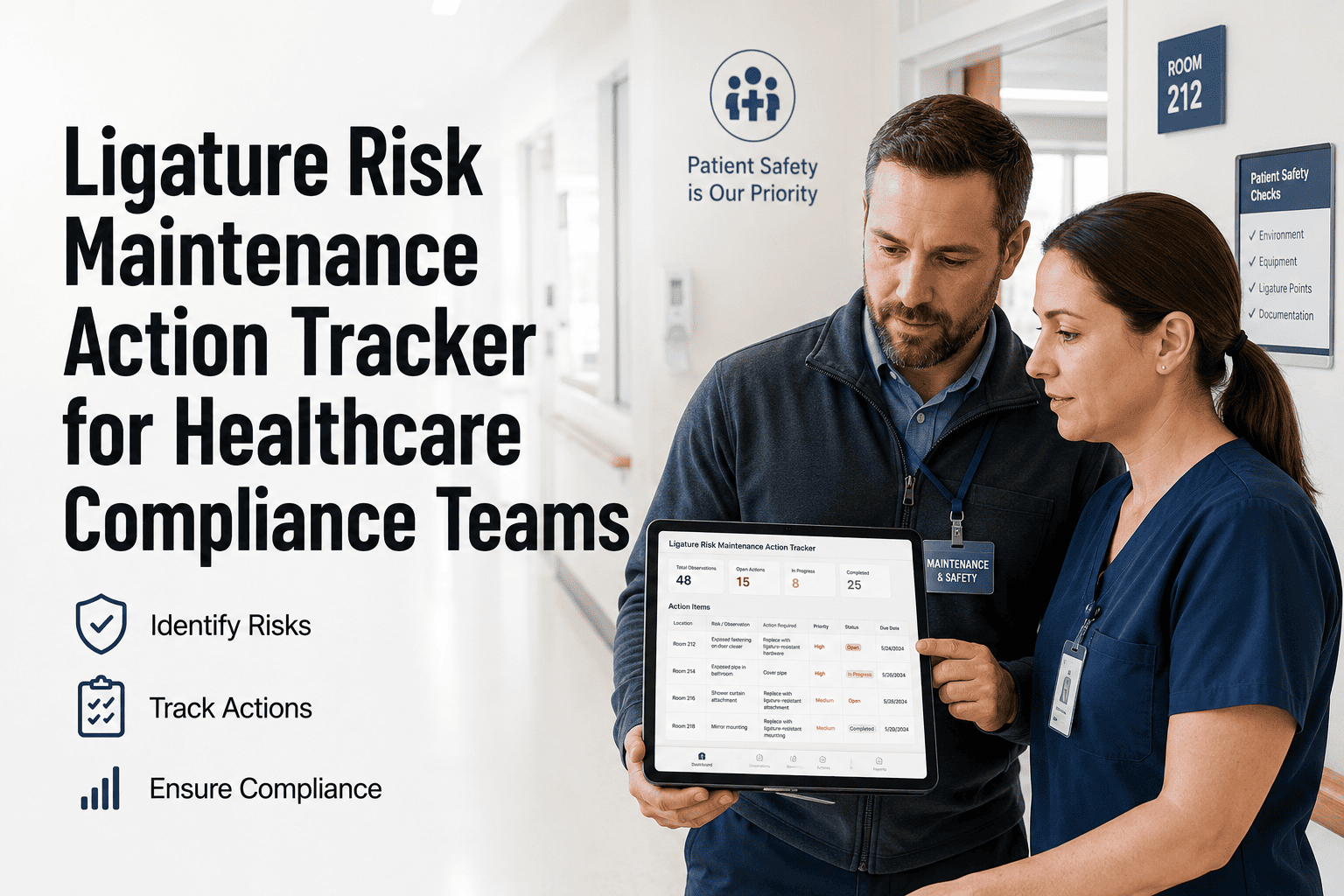
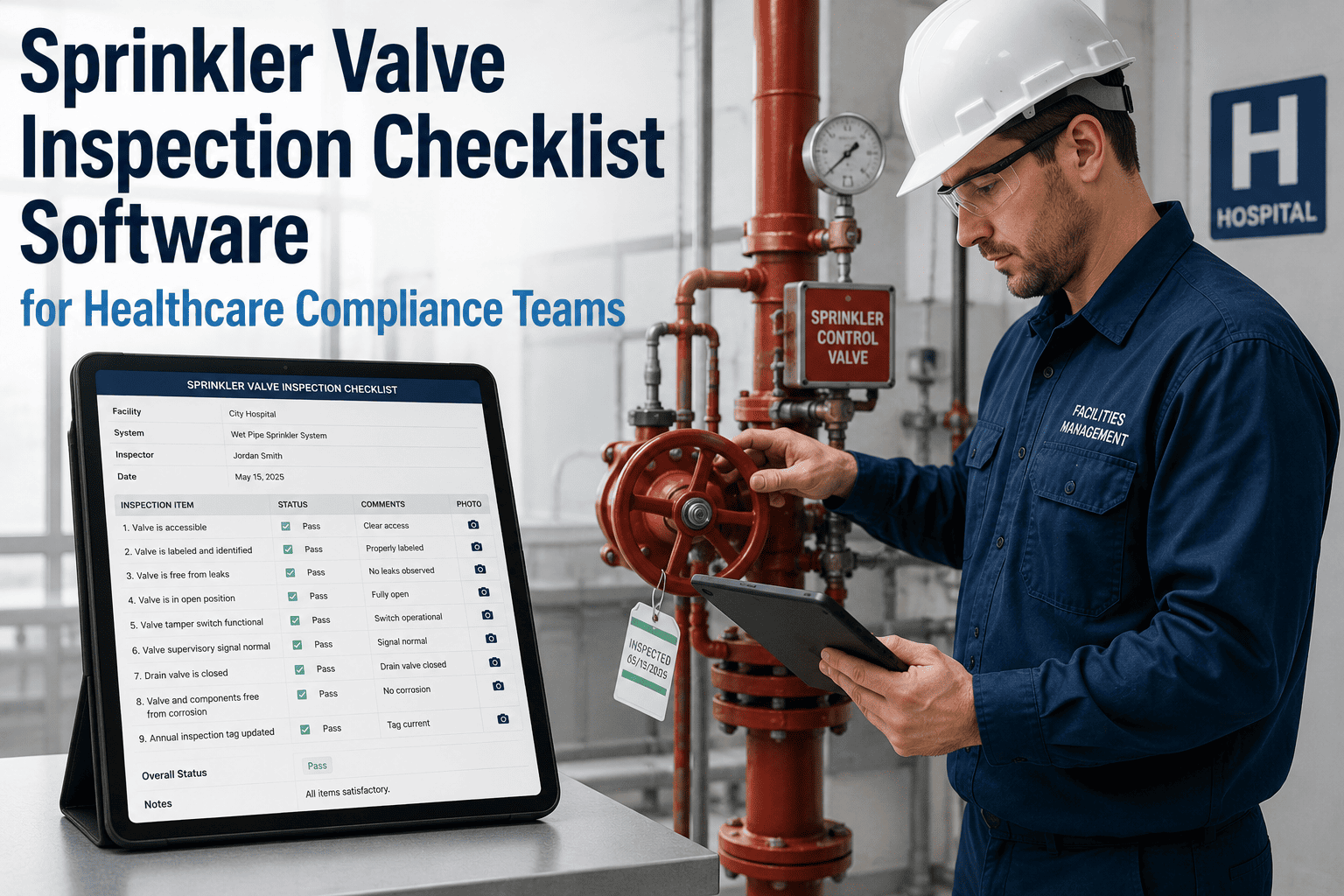
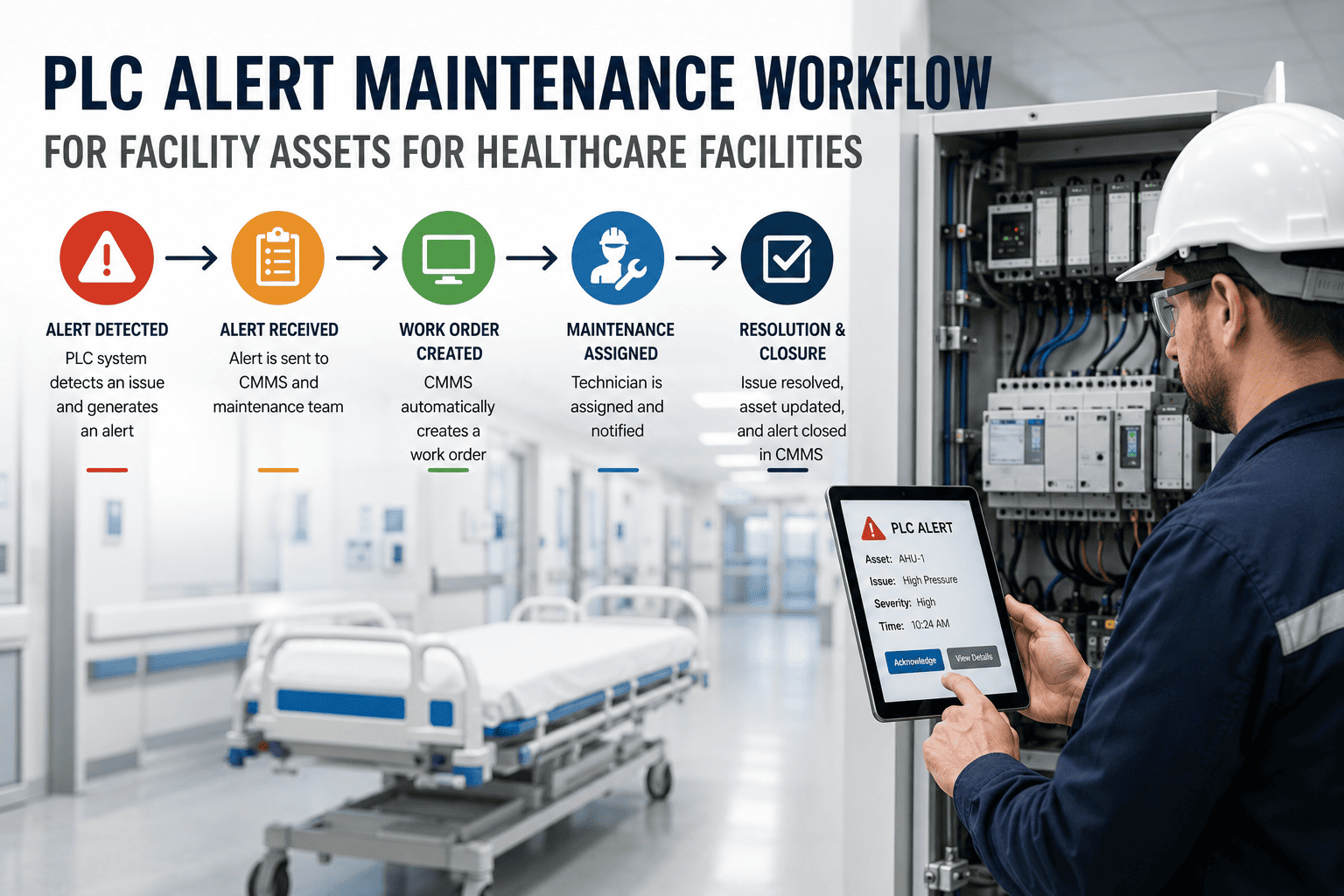
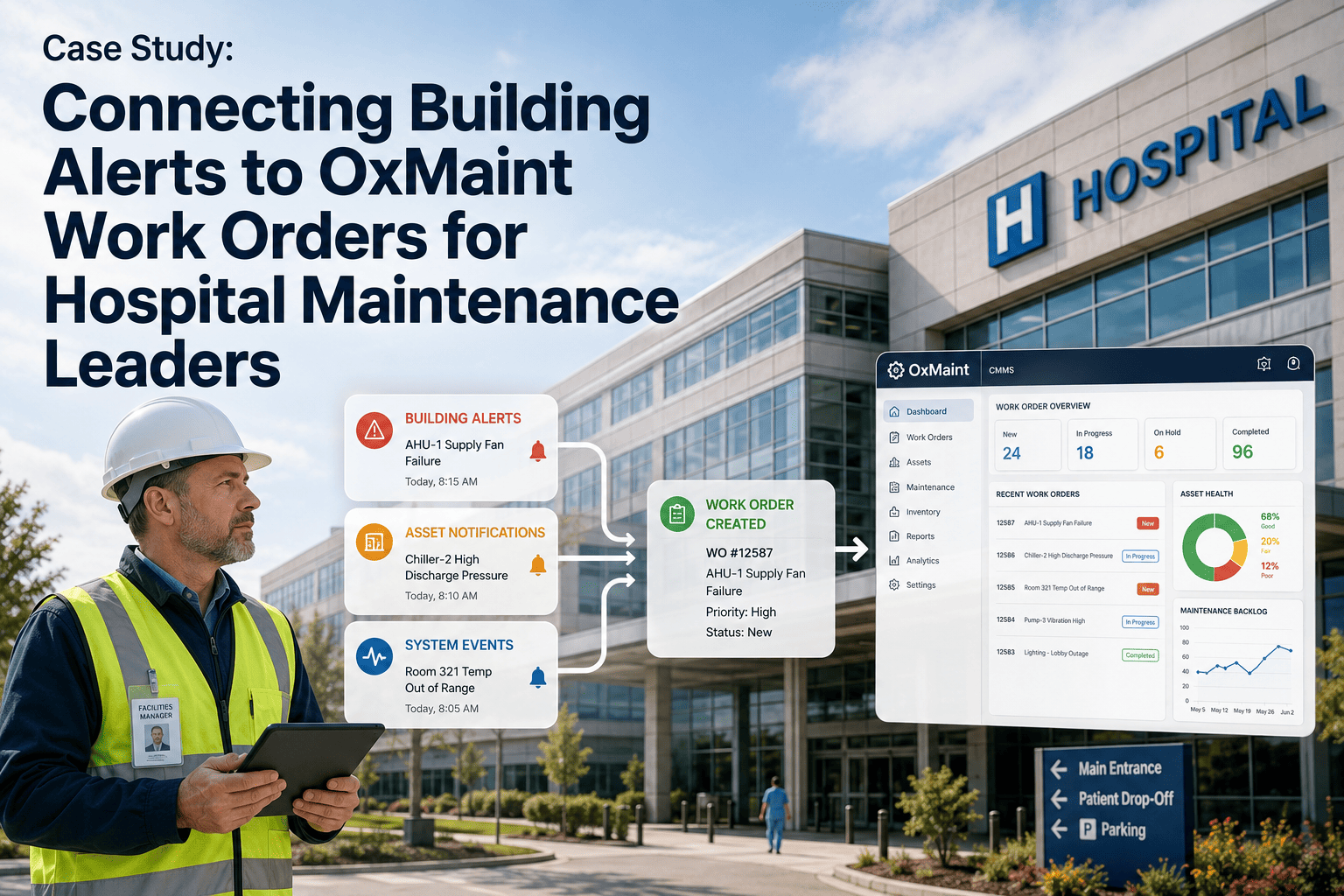
Ligature risk is one of the most compliance-critical environmental hazards in behavioral health and acute psychiatric care — and the maintenance work required to address it is more complex than most hospital CMMS platforms are designed to handle. The Joint Commission's Environment of Care standard EC.02.06.01 requires hospitals to identify and remediate ligature points through a documented, risk-prioritized maintenance action process — not a simple one-time assessment, but an ongoing cycle of inspection, repair, verification, and evidence retention. A 2023 Psychiatric Services study found that 61% of Joint Commission citations in inpatient behavioral health settings involved inadequate documentation of physical environment remediation, not the absence of repair work. OxMaint's Inspection Management and Work Order modules give compliance teams a structured platform to capture every ligature risk finding, prioritize repair actions by clinical risk score, assign to facilities maintenance, collect photo evidence, and generate the audit-ready documentation that surveyors require. Book a demo to see how healthcare compliance teams use OxMaint to close the gap between risk identification and verified remediation.
Joint Commission Standard
EC.02.06.01
Physical environment safety — ongoing risk identification and remediation required
61%
of JC behavioral health citations involved documentation gaps — not missing repairs
48 hrs
Typical surveyor expectation for interim life safety measures after high-risk finding
$1.9M
Average hospital liability exposure per ligature-related patient harm incident
01
Risk Found — No Formal Work Order
Environment of Care rounds identify ligature points verbally or in a spreadsheet. No formal maintenance work order is created. No SLA clock starts. The risk sits unaddressed for days or weeks — and undocumented if a surveyor arrives.
02
Repair Done — No Proof Captured
A facilities technician replaces a door handle or covers an anchor point. The work is done but no before/after photo is captured, no technician sign-off is logged. In a survey, the hospital cannot prove the repair was completed — or when.
03
No Link Between Clinical Risk and Repair Priority
High-acuity patient rooms and low-traffic corridors are treated equally in the maintenance queue. The most clinically urgent ligature risks are not differentiated from routine facility work — creating a dangerous gap in prioritisation.
04
Trend Blind — Same Rooms, Same Problems
Without a structured database, the same room generates the same ligature finding in three consecutive EOC rounds because no one can see the repeat pattern. The maintenance team is reactive — never ahead of the recurring risk.
OxMaint structures ligature risk from finding to verified closure — with every step documented for your next survey
Step 1
EOC Round — Risk Capture
Surveyor or compliance officer uses OxMaint mobile app to photograph ligature point, assign risk severity (Low / Elevated / Immediate), tag room number and asset type, and submit — creating a timestamped finding record in under 60 seconds
Step 2
Auto Work Order — Priority Assigned
OxMaint generates a maintenance work order automatically, with priority mapped to clinical risk score. Immediate risk triggers same-day response SLA. Elevated triggers 48-hour SLA. Interim life safety measures are documented in the work order notes
Step 3
Technician Repair + Evidence Capture
Facilities technician receives work order on mobile, completes repair, captures before and after photos within the app, adds completion notes, and provides digital sign-off — all attached to the work order record permanently
Step 4
Compliance Officer Verification
Compliance team receives completion notification, reviews photo evidence, and marks the finding as verified-closed in OxMaint. If verification is rejected, the work order is re-opened with required action notes — ensuring nothing is falsely closed
Step 5
Survey-Ready Export
At any point, compliance team exports a complete ligature risk action log — showing every finding, response time, repair action, evidence photos, and verification sign-off — formatted for Joint Commission EOC review in minutes
Ligature Risk Categories — OxMaint Action Mapping
| Ligature Risk Category |
Common Examples |
OxMaint Risk Level |
SLA Trigger |
Evidence Required |
| Door hardware |
Lever handles, hinges, closers |
Immediate |
Same shift |
Before/after photo + sign-off |
| Plumbing fixtures |
Towel bars, exposed pipes, shower arms |
Elevated |
48 hours |
Photo + interim measure note |
| Ceiling fixtures |
Exposed sprinkler heads, light fixtures |
Immediate |
Same shift |
Before/after photo + room closure note |
| Furniture & fittings |
Bed frames, chair arms, wardrobes |
Elevated |
72 hours |
Photo + repair type logged |
| HVAC & vents |
Grilles, exposed ductwork, fan guards |
Low |
7 days |
Photo + work order sign-off |
| Window hardware |
Exposed sash locks, blind cords |
Elevated |
48 hours |
Photo + product spec attached |
Expert Review
Patricia Hendershot, RN, HACP — Healthcare Accreditation Consultant, 17 years, former Joint Commission Field Representative
In my experience conducting and advising on behavioral health surveys, the hospitals that receive ligature risk citations are not the ones that failed to identify the hazard — almost every program now conducts EOC rounds. The citations go to hospitals that cannot demonstrate what they did about it. An undocumented repair is, from a regulatory standpoint, an unperformed repair. OxMaint solves this precisely because it links the finding, the work order, the evidence, and the closure in a single auditable chain. When a surveyor asks to see your ligature risk action log, you should be able to produce it in two minutes from any device. That is the standard OxMaint helps teams achieve.
Frequently Asked Questions
How does OxMaint differentiate between ligature risk severity levels and route work orders accordingly?
OxMaint allows compliance administrators to configure severity tiers — Immediate, Elevated, and Low — each mapped to a specific SLA duration and escalation pathway. When a finding is submitted at Immediate severity, the work order is automatically flagged as priority-one, notifies the facilities supervisor, and starts a same-shift SLA clock. Elevated findings trigger 48-hour SLA with automated reminder escalation if unacknowledged.
Book a demo to see how the severity configuration aligns with your hospital's existing risk matrix and Joint Commission standards.
Can OxMaint capture interim life safety measures while permanent repair is pending?
Yes. When a high-severity finding is logged, OxMaint work orders include a structured interim life safety measure (ILSM) field where the compliance officer or charge nurse documents any temporary protective action taken — such as patient relocation, room closure, or enhanced observation — with a timestamp and responsible staff member. This documentation is retained permanently in the work order record and is available for JC surveyor review to demonstrate that risk was managed while the permanent fix was pending.
Start a free trial to explore the ILSM documentation fields and how they are structured for EOC evidence.
How does OxMaint help identify recurring ligature risk problems in the same rooms or units?
OxMaint's analytics dashboard shows work order history per room, unit, and asset type — surfacing rooms with repeat ligature findings across multiple EOC cycles. This trend visibility enables your facilities and compliance team to identify whether a recurring finding is a maintenance backlog issue, a product specification problem, or a structural deficiency requiring capital planning.
Book a demo to see the repeat-finding analytics view and how it integrates with your preventive maintenance schedule to address root causes.
What format does OxMaint use to export ligature risk action documentation for Joint Commission surveys?
OxMaint generates compliance-ready PDF exports that include the complete action log for a selected date range — showing every finding with risk level, date reported, assigned technician, repair action, completion date, photo evidence thumbnails, and verification sign-off. Exports can be filtered by unit, room number, risk severity, or date range to match exactly what a surveyor requests.
Sign in to OxMaint to see a sample ligature risk action export and confirm it meets your accreditation body's documentation requirements.
Can non-maintenance staff — nurses, charge nurses, patient safety officers — submit ligature risk findings through OxMaint?
Yes. OxMaint supports a Requester role that allows clinical staff and patient safety officers to submit findings via the mobile app or a QR code scan in any room — without requiring a full CMMS user account. The finding is immediately routed to the compliance officer queue for risk classification and work order creation. This removes the barrier of routing all findings through a facilities help desk, which often delays documentation by hours or days.
Book a demo to see the Requester workflow and how submission notifications are configured for your compliance team.
OxMaint · Healthcare Compliance · Behavioral Health
Every ligature risk finding deserves a documented action, a verified repair, and an audit-ready record. OxMaint delivers all three.
JC EC.02.06.01 · EOC Rounds · Work Orders · Photo Evidence · ILSM Documentation · Survey Export